Loading...
This comparison has not been analyzed yet.
One-time AI generation (~1 minute). Scores and timeline are already available below.
Abdul Razak Hussein vs Yi Hwang
Yi Hwang leads by 5.4 pts · 2 figures compared
…
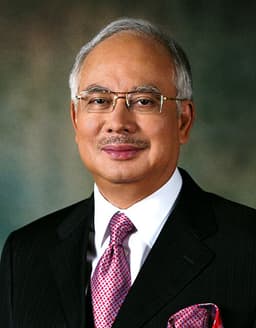
Abdul Razak Hussein
Politician · Modern
47.5Total

Yi Hwang
Politician · Modern
52.9Total
Basic Information
Born
1922
1501
Died
—
1570
Era
Modern
Modern
Nationality
Malaysia
Korea
Occupation
Politician
Politician
Civilization
Eastern
Eastern
Score Comparison
Military (10%)
14.0
13.7
Political (20%)
68.0
39.4
Influence (20%)
51.8
65.0
Legacy (20%)
41.7
70.0
Leadership (15%)
65.7
62.2
Strategy (15%)
26.6
25.2
TOTAL
47.5
52.9
Abdul Razak Hussein — Complete Timeline
1969 AD
Handling of the May 13, 1969 RiotsPolitical Action◆ Major
As Deputy Prime Minister, Abdul Razak Hussein played a key role in restoring order after the May 13 racial riots. He declared a state of emergency and suspended Parliament, leading to the establishment of the National Operations Council that governed until 1971.
Emergency RuleRacial RiotsPolitical Crisis
Impact: nationaldestructive
1971 AD
Introduction of the New Economic Policy (1971)Reform◆ Major
As Prime Minister, Abdul Razak Hussein launched the New Economic Policy (NEP), a 20-year plan aimed at reducing poverty and restructuring society to eliminate the association of race with economic function. The NEP favored Bumiputera (Malay) economic advancement.
Economic PolicyAffirmative ActionBumiputera
Impact: nationalconstructive
1973 AD
Formation of the Barisan Nasional (1973)Political Action◆ Major
Abdul Razak Hussein expanded the Alliance Party into the Barisan Nasional (National Front), a broader coalition of multi-racial parties. This coalition dominated Malaysian politics for decades, ensuring political stability but also concentrating power.
Political CoalitionBarisan NasionalPower Consolidation
Impact: nationalconstructive
Yi Hwang — Complete Timeline
1552 AD
Appointment as Royal Lecturer to King MyeongjongPolitical Action
Yi Hwang was appointed as a royal lecturer (gyeongyeon) to instruct King Myeongjong in Confucian classics. He used this position to advocate for moral governance and the application of Neo-Confucian principles in state administration.
Royal ServiceConfucian GovernanceEducation
Impact: nationalconstructive
1559 AD
Debate with Ki Dae-seung on the Four-Seven ThesisCultural◆ Major
Yi Hwang engaged in a famous philosophical correspondence with Ki Dae-seung over the nature of the Four Beginnings and Seven Emotions. This debate refined Neo-Confucian metaphysics in Korea and established Yi's distinctive dualistic interpretation of principle and material force.
Philosophical DebateNeo-ConfucianismFour-Seven
Impact: nationalconstructive
1568 AD
Publication of the Ten Diagrams on Sage LearningCultural◆ Major
Yi Hwang completed his major philosophical work, the Seonghak sipdo, a series of ten diagrams and explanations summarizing Neo-Confucian principles. This text became a foundational study guide for Korean Confucian scholars and influenced Joseon education.
Neo-ConfucianismPhilosophyEducation
Impact: nationalconstructive
This comparison has not been analyzed yet.
One-time AI generation (~1 minute). Scores and timeline are already available below.
Rankings
🥇
Yi HwangLeader
Mil: 13.7Pol: 39.4Inf: 65.0
52.9
🥈
Abdul Razak Hussein
Mil: 14.0Pol: 68.0Inf: 51.8
47.5
+5.4 behind
How This Comparison Works
Algorithm
Each figure is scored on 6 dimensions (0—100 scale) based on structured historical data: Military (10%), Political (20%), Influence (20%), Legacy (20%), Leadership (15%), Strategy (15%). The weighted total produces the final ranking.
Data Sources
Scores are computed from structured sub-indicators in the database. Scale factors adjust for era (Ancient ×0.85, Modern ×1.0) and civilization size (Eastern ×1.05, Other ×0.80) to account for differences in population and military scale.
Maximum 3 Figures
Comparisons are limited to 2—3 figures to ensure readability and statistical meaningfulness.
Error Margins
±5 points per dimension — Sub-scores are derived from historical records with inherent uncertainty. Two figures within 5 points on a dimension should be considered roughly equivalent in that area.
Total Score Accuracy
±3 points overall — The weighted combination of 6 dimensions produces a total score with approximately ±3 points of uncertainty. Differences of less than 3 points are not statistically significant— the figures are effectively tied.
Known Limitations
- Historical records are incomplete and uneven across civilizations
- Figures from oral-tradition societies may be underrepresented
- Occupation labels can misclassify multi-role figures
- Scores measure capability and impact, not moral character
- Quantitative scoring is a comparison tool, not absolute truth
Capability Radar
Military (10%) — Battles & Warfare
Battles
14
15
Win Rate
16
15
Expansion
21
21
Political (20%) — Governance & Reform
Reform
40
40
Diplomacy
50
30
Economy
45
20
Influence (20%) — Cultural & Global Reach
Cultural
20
80
Global
20
60
Legacy (20%) — Historical Impact
Historical
25
80
Longevity
15
80
Leadership (15%) — Power & Stability
Tenure
35
30
Stability
30
30
Strategy (15%) — Tactics & Innovation
Strategy
26
23
Tactics
25
26
Reform
31
32
Similar Comparisons
Comments & Discussion
No comments yet. Be the first to share your thoughts!