Loading...
This comparison has not been analyzed yet.
One-time AI generation (~1 minute). Scores and timeline are already available below.
Abdullah Ensour vs Miguel Juarez Celman
Abdullah Ensour leads by 10.9 pts · 2 figures compared
…

Abdullah Ensour
Politician · Modern
51.2Total
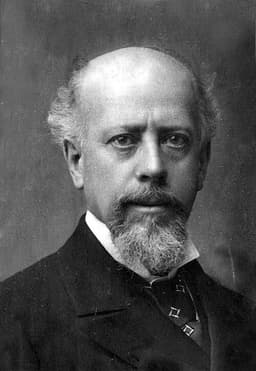
Miguel Juarez Celman
Politician · Modern
40.3Total
Basic Information
Born
1939
1844
Died
—
1909
Era
Modern
Modern
Nationality
Jordan
Argentina
Occupation
Politician
Politician
Civilization
Middle Eastern
Western
Score Comparison
Military (10%)
29.3
50.0
Political (20%)
68.0
26.4
Influence (20%)
51.8
45.5
Legacy (20%)
40.8
35.8
Leadership (15%)
72.0
45.0
Strategy (15%)
40.9
42.2
TOTAL
51.2
40.3
Abdullah Ensour — Complete Timeline
2012 AD
Appointed Prime Minister of JordanPolitical Action◆ Major
Abdullah Ensour was appointed Prime Minister in October 2012, replacing Awn Khasawneh. His appointment came during the Syrian civil war, which caused a massive refugee influx into Jordan.
Jordanian PoliticsPrime MinisterSyrian Crisis
Impact: national
Managed Syrian refugee crisisPolitical Action◆ Major
Ensour's government oversaw the response to the Syrian refugee crisis, with over 1.3 million Syrians entering Jordan by 2015. His administration coordinated with UN agencies to provide shelter, healthcare, and education, straining Jordan's resources.
Syrian RefugeesHumanitarian CrisisUN
Impact: regionalconstructive
2016 AD
Resigned as Prime MinisterPolitical Action◆ Major
Ensour resigned in May 2016 after nearly four years in office, one of the longest tenures in Jordan's modern history. His resignation followed the end of his term and the appointment of a new government under Hani al-Mulki.
Jordanian PoliticsResignation
Impact: national
Miguel Juarez Celman — Complete Timeline
1886 AD
Elected President of ArgentinaPolitical Action◆ Major
Juárez Celman was elected President of Argentina, serving from 1886 to 1890. His presidency continued the policies of Julio Argentino Roca and the National Autonomist Party.
PresidencyElectionArgentina
Impact: nationalconstructive
1890 AD
Faced the 1890 economic crisisPolitical Action◆ Major
Juárez Celman's government was overwhelmed by the Baring Crisis, a severe financial panic caused by excessive foreign borrowing and speculation. The crisis led to bank failures, inflation, and widespread unemployment.
Economic CrisisFinanceBaring Crisis
Impact: nationaldestructive
Resigned during the Revolution of the ParkPolitical Action◆ Major
Facing a civic-military uprising known as the Revolution of the Park, Ju
ResignationRevolutionPolitical Crisis
Impact: nationaltragic
This comparison has not been analyzed yet.
One-time AI generation (~1 minute). Scores and timeline are already available below.
Rankings
🥇
Abdullah EnsourLeader
Mil: 29.3Pol: 68.0Inf: 51.8
51.2
🥈
Miguel Juarez Celman
Mil: 50.0Pol: 26.4Inf: 45.5
40.3
+10.9 behind
How This Comparison Works
Algorithm
Each figure is scored on 6 dimensions (0—100 scale) based on structured historical data: Military (10%), Political (20%), Influence (20%), Legacy (20%), Leadership (15%), Strategy (15%). The weighted total produces the final ranking.
Data Sources
Scores are computed from structured sub-indicators in the database. Scale factors adjust for era (Ancient ×0.85, Modern ×1.0) and civilization size (Eastern ×1.05, Other ×0.80) to account for differences in population and military scale.
Maximum 3 Figures
Comparisons are limited to 2—3 figures to ensure readability and statistical meaningfulness.
Error Margins
±5 points per dimension — Sub-scores are derived from historical records with inherent uncertainty. Two figures within 5 points on a dimension should be considered roughly equivalent in that area.
Total Score Accuracy
±3 points overall — The weighted combination of 6 dimensions produces a total score with approximately ±3 points of uncertainty. Differences of less than 3 points are not statistically significant— the figures are effectively tied.
Known Limitations
- Historical records are incomplete and uneven across civilizations
- Figures from oral-tradition societies may be underrepresented
- Occupation labels can misclassify multi-role figures
- Scores measure capability and impact, not moral character
- Quantitative scoring is a comparison tool, not absolute truth
Capability Radar
Military (10%) — Battles & Warfare
Battles
20
28
Win Rate
24
29
Expansion
27
37
Political (20%) — Governance & Reform
Reform
45
20
Diplomacy
60
15
Economy
50
10
Influence (20%) — Cultural & Global Reach
Cultural
20
5
Global
30
5
Legacy (20%) — Historical Impact
Historical
25
10
Longevity
20
5
Leadership (15%) — Power & Stability
Tenure
65
30
Stability
55
5
Strategy (15%) — Tactics & Innovation
Strategy
33
38
Tactics
31
38
Reform
39
45
Similar Comparisons
Comments & Discussion
No comments yet. Be the first to share your thoughts!