Loading...
Ablai Khan vs Julius Caesar
Julius Caesar leads by 19.8 pts · 2 figures compared
…
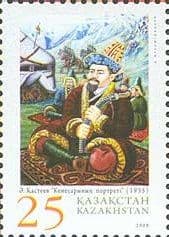
Ablai Khan
Emperor · Modern
63.0Total

Julius Caesar
General · Ancient
82.8Total
Basic Information
Born
1711
-100
Died
1781
-44
Era
Modern
Ancient
Nationality
Kazakh Khanate
Roman Republic
Occupation
Emperor
General
Civilization
Eastern
Western
Score Comparison
Military (10%)
67.3
88.0
Political (20%)
59.3
78.0
Influence (20%)
61.0
85.0
Legacy (20%)
54.0
82.0
Leadership (15%)
80.0
80.0
Strategy (15%)
66.3
85.0
TOTAL
63.0
82.8
Ablai Khan — Complete Timeline
1756 AD
Battle of the Irtysh RiverWar◆ Major
Ablai Khan led Kazakh forces against the Dzungar Khanate at the Irtysh River. The battle was a decisive Kazakh victory, significantly weakening Dzungar power in the region. This victory helped secure Kazakh independence from Dzungar threats.
WarDzungar KhanateBattleVictory
Impact: regional
1757 AD
Diplomatic Relations with the Qing EmpirePolitical Action◆ Major
Ablai Khan established diplomatic relations with the Qing Empire of China. He sent an embassy to Beijing and recognized Qing suzerainty in exchange for trade rights and military support. This balanced Russian influence and secured the eastern borders of the Kazakh Khanate.
DiplomacyQing EmpireTradeSuzerainty
Impact: regionalconstructive
1770 AD
Resistance to Russian ExpansionPolitical Action◆ Major
Ablai Khan resisted Russian attempts to control the Kazakh steppe. He refused to swear allegiance to the Russian Empire and maintained an independent foreign policy. He played Russian and Qing interests against each other to preserve Kazakh autonomy.
DiplomacyRussian EmpireIndependenceBalance of Power
Impact: regional
1771 AD
Unification of the Three JuzesPolitical Action
Ablai Khan was recognized as the supreme khan over all three Kazakh juzes (Senior, Middle, and Junior). This unification was achieved through a combination of military strength, diplomacy, and marriage alliances. It created a unified Kazakh state for the first time in decades.
UnificationKazakh KhanateJuzesState Building
Impact: regionalconstructive
Julius Caesar — Complete Timeline
58 BC
Gallic WarsWar◆ Major
Caesar, as proconsul of Gaul, launched a series of campaigns that conquered all of Gaul (modern France, Belgium, and parts of Switzerland). He fought numerous battles, including against the Helvetii, the Belgae, and the Gallic chieftain Vercingetorix. The wars brought immense wealth and a loyal army to Caesar.
Gallic WarsConquestRoman Expansion
Impact: regional
49 BC
Crossing the RubiconPolitical Action◆ Major
Caesar led Legio XIII across the Rubicon River into Italy, defying the Roman Senate's order to disband his army. This act triggered a civil war against Pompey and the Optimates, ultimately leading to Caesar's dictatorship and the end of the Roman Republic.
Roman Civil WarEnd of RepublicPower Struggle
Impact: global
48 BC
Battle of PharsalusWar◆ Major
Caesar's outnumbered army defeated the larger forces of Pompey the Great at Pharsalus in Greece. Caesar's tactical use of a reserve line to counter Pompey's cavalry charge proved decisive. Pompey fled to Egypt, where he was assassinated, leaving Caesar as the undisputed master of the Roman world.
Roman Civil WarBattleDecisive Victory
Impact: regional
44 BC
Appointment as Dictator for LifePolitical Action◆ Major
The Roman Senate appointed Caesar dictator perpetuo (dictator for life), granting him unprecedented personal power. This move concentrated military, legislative, and judicial authority in one person, effectively ending the Roman Republic's traditional system of checks and balances and alarming many senators.
DictatorshipEnd of RepublicPower Consolidation
Impact: regionaldestructive
Assassination on the Ides of MarchPolitical Action◆ Major
A group of Roman senators, led by Marcus Junius Brutus and Gaius Cassius Longinus, stabbed Caesar to death at a meeting of the Senate in the Theatre of Pompey. The assassination was intended to restore the Republic, but instead triggered another civil war that led to the rise of the Roman Empire.
AssassinationRoman PoliticsEnd of Republic
Impact: globaldestructive
Expert Analysis
ablai-khan-vs-julius-caesar
# The Rubicon and the Steppe: Two Paths to Power
On a winter morning in 44 BCE, a man in a purple toga fell beneath a cascade of daggers in the Senate chamber of Rome. His name would become synonymous with ambition and betrayal. Half a world away and eighteen centuries later, another leader died in his bed in the Kazakh steppe, mourned by a people he had forged into a nation. Julius Caesar and Ablai Khan both rose from turbulent times to reshape their worlds, yet one ended in blood-soaked marble and the other in the quiet dignity of a yurt. Why did their fates diverge so sharply? The answer lies not in their talents—both were extraordinary—but in the worlds they inhabited and the choices those worlds demanded.
Origins
Caesar was born into the chaos of the late Roman Republic, a world of civil wars, crumbling traditions, and ruthless competition for glory. His family, the Julii, claimed descent from the goddess Venus, but they were politically middling. Young Caesar watched his uncle Gaius Marius purge rivals and his father-in-law Cinna die in a coup. This was a world where survival meant outmaneuvering enemies, and Caesar learned early that power was a knife that cut both ways. His education in rhetoric, law, and military command was the standard for a Roman aristocrat, but his hunger was not.
Ablai Khan emerged from the opposite end of the human spectrum. Born in 1711 into the Kazakh Khanate, he was a child of the endless steppe, where survival depended on horses, herds, and alliances. The Kazakhs were a confederation of three juzes—hordes—constantly threatened by the Dzungar Mongols to the east and the expanding Russian and Qing empires. Ablai was not born a khan; he was a sultan, a nobleman’s son, raised in the oral traditions of his people. His world was not a marble forum but a felt tent, where a leader’s authority rested on his ability to protect his people and negotiate with wolves.
Rise to Power
Caesar’s path to power was a masterclass in calculated risk. He climbed the Roman ladder of offices—quaestor, aedile, praetor—borrowing fortunes to fund games and bribes. In 60 BCE, he struck the First Triumvirate with Pompey and Crassus, a backroom deal that gave him command of Gaul. There, over eight years, he conquered a territory larger than Italy, wrote his own propaganda in the *Commentaries*, and built an army loyal to him alone. The turning point came in 49 BCE: the Senate ordered him to disband his army; he crossed the Rubicon River instead. That single act—illegal, irreversible—launched a civil war that ended with him as dictator.
Ablai Khan’s rise was slower, more patient. He first distinguished himself in the 1740s fighting the Dzungars, leading raids and winning the loyalty of warriors through courage and cunning. In 1756, at the Battle of the Irtysh River, he orchestrated a decisive victory against the Dzungar Khanate, using the steppe’s vastness to exhaust and ambush the enemy. But military glory alone was not enough. Ablai understood that the Kazakhs’ survival required diplomacy as much as swords. In 1757, he sent an embassy to the Qing emperor in Beijing, recognizing Chinese suzerainty in exchange for protection against the Dzungars. It was a gambit—a bow to a distant emperor that bought time for his people. Unlike Caesar, Ablai never crossed a Rubicon; he navigated a river of shifting alliances.
Leadership & Governance
Caesar ruled as a revolutionary reformer. As dictator, he overhauled the calendar, granted citizenship to provincials, initiated public works, and centralized power in his own hands. He was a military genius—his siege of Alesia and the Battle of Pharsalus are still studied—but his political wisdom was brittle. He pardoned his enemies, only to see them plot his death. He accepted the title “dictator for life,” a flagrant violation of Republican tradition. His reforms were visionary, but his style was autocratic: he governed by decree, not consensus.
Ablai Khan governed through the ancient Kazakh tradition of *kurultai*—councils of elders and warriors. He did not abolish the juzes but unified them under his authority, recognized as supreme khan in 1771. His military strategy was defensive and mobile, using the steppe as a weapon. His political wisdom was pragmatic: when Russia demanded his allegiance in 1770, he refused outright, but he never declared war. Instead, he played Russia and China against each other, accepting gifts from both while maintaining Kazakh autonomy. He was a diplomat in a warrior’s body, a leader who understood that the survival of his people mattered more than his own glory.
Triumph & Tragedy
Caesar’s greatest moment was his triumph over Gaul—a conquest that brought immense wealth and prestige to Rome. His most devastating failure was his assassination on the Ides of March, 44 BCE. He had centralized power but failed to build a system that could survive him. His murder plunged Rome into another civil war, and the Republic he had hoped to save died with him.
Ablai Khan’s triumph was the unification of the Kazakh juzes at a time when the Dzungars had shattered them. His tragedy was that this unity was fragile. After his death in 1781, the Russian Empire gradually absorbed the Kazakh steppe, exploiting internal divisions. He had bought his people a generation of freedom, but no leader could hold back the tide of empire forever.
Character & Destiny
Caesar was driven by *ambitio*—the Roman hunger for glory. He once said, “It is better to be the first in a village than second in Rome.” His personality was magnetic, ruthless, and impatient. He trusted his own genius and underestimated the resentment of those he had surpassed. His destiny was shaped by a Republic that could not accommodate a king, yet he could not stop himself from acting like one.
Ablai Khan was driven by *survival*, both personal and collective. He was known for his cunning and patience—a leader who could wait months for the right moment to strike or negotiate. He once told his warriors, “The wolf does not attack the herd that stays together.” His personality was stoic, adaptable, and deeply rooted in the collective identity of his people. His destiny was to be a unifier, not a conqueror, because the steppe offered no empire to seize—only the constant threat of annihilation.
Legacy
Caesar’s legacy is monumental. His name became a title—*Kaiser*, *Tsar*—and his reforms laid the foundation for the Roman Empire. He is remembered as a military genius, a political visionary, and a warning about the dangers of unchecked ambition. His assassination is one of history’s most famous moments, a drama that still haunts our imagination.
Ablai Khan’s legacy is quieter but no less profound. He is revered in Kazakhstan as the father of the Kazakh nation, the leader who held the juzes together when they were most vulnerable. His diplomatic balancing act is studied as a model of survival for small nations between great powers. He is not a global name, but among his people, his memory is sacred—a reminder that leadership is not always about conquest, but about preserving a people’s right to exist.
Conclusion
Standing on the Palatine Hill, Caesar saw an empire that stretched from Spain to Syria. Ablai Khan, looking across the endless steppe, saw only the horizon and the next threat. One built for eternity and died in a moment; the other built for a generation and died in peace. Their lives remind us that greatness is not measured by power alone, but by the world a leader leaves behind. Caesar gave Rome an empire; Ablai Khan gave the Kazakhs a nation. In the end, both were prisoners of their time—but only one of them saw the prison clearly enough to survive it.
Rankings
🥇
Julius CaesarLeader
Mil: 88.0Pol: 78.0Inf: 85.0
82.8
🥈
Ablai Khan
Mil: 67.3Pol: 59.3Inf: 61.0
63.0
+19.8 behind
How This Comparison Works
Algorithm
Each figure is scored on 6 dimensions (0—100 scale) based on structured historical data: Military (10%), Political (20%), Influence (20%), Legacy (20%), Leadership (15%), Strategy (15%). The weighted total produces the final ranking.
Data Sources
Scores are computed from structured sub-indicators in the database. Scale factors adjust for era (Ancient ×0.85, Modern ×1.0) and civilization size (Eastern ×1.05, Other ×0.80) to account for differences in population and military scale.
Maximum 3 Figures
Comparisons are limited to 2—3 figures to ensure readability and statistical meaningfulness.
Error Margins
±5 points per dimension — Sub-scores are derived from historical records with inherent uncertainty. Two figures within 5 points on a dimension should be considered roughly equivalent in that area.
Total Score Accuracy
±3 points overall — The weighted combination of 6 dimensions produces a total score with approximately ±3 points of uncertainty. Differences of less than 3 points are not statistically significant— the figures are effectively tied.
Known Limitations
- Historical records are incomplete and uneven across civilizations
- Figures from oral-tradition societies may be underrepresented
- Occupation labels can misclassify multi-role figures
- Scores measure capability and impact, not moral character
- Quantitative scoring is a comparison tool, not absolute truth
Capability Radar
Military (10%) — Battles & Warfare
Battles
65
95
Win Rate
70
92
Expansion
80
97
Political (20%) — Governance & Reform
Reform
60
90
Diplomacy
85
85
Economy
50
82
Influence (20%) — Cultural & Global Reach
Cultural
60
88
Global
45
94
Legacy (20%) — Historical Impact
Historical
70
95
Longevity
55
96
Leadership (15%) — Power & Stability
Tenure
70
75
Stability
65
60
Strategy (15%) — Tactics & Innovation
Strategy
75
94
Tactics
60
96
Reform
55
88
Similar Comparisons
Comments & Discussion
Steppe Strategist6/17/2026
Comparing Caesar to Ablai Khan is like comparing a wolf to a stallion. Caesar conquered Gaul with disciplined legions and engineering genius, but Ablai united nomadic tribes with diplomacy and guerrilla brilliance against three empires—Qing China, Russia, and the Dzungars. The Battle of Anyrakay (1729) shows his tactical depth: he feigned retreat to draw Dzungars into a swamp, then turned and crushed them. Caesar never faced that kind of asymmetric challenge. Ablai's legacy is nation-building, n
数据侦探6/17/2026
拿公元前1世纪的罗马军阀和18世纪的哈萨克可汗比,这本身就是个逻辑陷阱。人口基数差三个量级,技术代差两个世纪,资源禀赋完全不对等。Caesar靠的是银鹰旗和四千步兵方阵,Ablai只有游牧骑兵和骆驼商队。统计上没法控制变量。真要量化的话,Ablai治理200万平方公里土地二十年,内耗率不到5%;Caesar四年高卢战争就让百万高卢人送命,他死后三年罗马立刻内战。数据不会撒谎:可持续性差的政权再多花活也抵不过寿命。
Classics Scholar6/17/2026
The comparison is fundamentally flawed. Caesar operated within a literate, urban civilization with codified law, coinage, and state bureaucracy. Ablai led a pastoral, oral culture where authority rested on personal charisma and clan loyalty. Caesar's assassination was a political ritual—the Senate's last gasp against autocracy, immortalized by Plutarch and Shakespeare. Ablai's natural death in a felt tent reflects a world where succession was negotiated, not stabbed. You can't judge them by the
草原史专家6/17/2026
说Ablai不如Caesar的,八成连《哈萨克可汗编年史》没翻过。1711年他出生那年,准噶尔骑兵正屠戮七河流域,哈萨克三个部落几乎散架。他十二岁参与政治,三十岁统一中玉兹,四十年内硬是让哈萨克人从灭族边缘变成中亚地头蛇。Caesar? 他当高卢总督时罗马已是地中海霸主,基础盘差几条街。而且Ablai最绝的是用伊斯兰教和游牧习惯法双重统合,精神领袖加军事统帅,这招Caesar做梦都学不来。罗马人玩的是暴力,Ablai玩的是文明缝合。
Rebel Historia6/17/2026
Let's stop romanticizing Caesar's "genius." He was a ruthless imperialist who turned the Republic into a dictatorship, racked up debts to bribe the masses, and got himself killed because he wouldn't share power.