Loading...
Julius Caesar vs Kamehameha V
Julius Caesar leads by 37.8 pts · 2 figures compared
…

Julius Caesar
General · Ancient
82.8Total
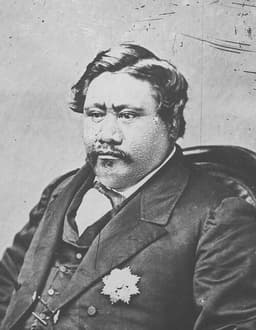
Kamehameha V
Emperor · Modern
45.0Total
Basic Information
Born
-100
1830
Died
-44
1872
Era
Ancient
Modern
Nationality
Roman Republic
Hawaii
Occupation
General
Emperor
Civilization
Western
Other
Score Comparison
Military (10%)
88.0
11.3
Political (20%)
78.0
46.6
Influence (20%)
85.0
50.2
Legacy (20%)
82.0
42.5
Leadership (15%)
80.0
74.0
Strategy (15%)
85.0
26.5
TOTAL
82.8
45.0
Julius Caesar — Complete Timeline
58 BC
Gallic WarsWar◆ Major
Caesar, as proconsul of Gaul, launched a series of campaigns that conquered all of Gaul (modern France, Belgium, and parts of Switzerland). He fought numerous battles, including against the Helvetii, the Belgae, and the Gallic chieftain Vercingetorix. The wars brought immense wealth and a loyal army to Caesar.
Gallic WarsConquestRoman Expansion
Impact: regional
49 BC
Crossing the RubiconPolitical Action◆ Major
Caesar led Legio XIII across the Rubicon River into Italy, defying the Roman Senate's order to disband his army. This act triggered a civil war against Pompey and the Optimates, ultimately leading to Caesar's dictatorship and the end of the Roman Republic.
Roman Civil WarEnd of RepublicPower Struggle
Impact: global
48 BC
Battle of PharsalusWar◆ Major
Caesar's outnumbered army defeated the larger forces of Pompey the Great at Pharsalus in Greece. Caesar's tactical use of a reserve line to counter Pompey's cavalry charge proved decisive. Pompey fled to Egypt, where he was assassinated, leaving Caesar as the undisputed master of the Roman world.
Roman Civil WarBattleDecisive Victory
Impact: regional
44 BC
Appointment as Dictator for LifePolitical Action◆ Major
The Roman Senate appointed Caesar dictator perpetuo (dictator for life), granting him unprecedented personal power. This move concentrated military, legislative, and judicial authority in one person, effectively ending the Roman Republic's traditional system of checks and balances and alarming many senators.
DictatorshipEnd of RepublicPower Consolidation
Impact: regionaldestructive
Assassination on the Ides of MarchPolitical Action◆ Major
A group of Roman senators, led by Marcus Junius Brutus and Gaius Cassius Longinus, stabbed Caesar to death at a meeting of the Senate in the Theatre of Pompey. The assassination was intended to restore the Republic, but instead triggered another civil war that led to the rise of the Roman Empire.
AssassinationRoman PoliticsEnd of Republic
Impact: globaldestructive
Kamehameha V — Complete Timeline
1863 AD
Ascended to the Throne as Kamehameha VPolitical Action◆ Major
Lot Kapuāiwa became King Kamehameha V after the death of his brother Kamehameha IV. He was the last monarch of the Kamehameha dynasty.
Impact: national
1864 AD
Promulgated the 1864 ConstitutionReform◆ Major
Kamehameha V abrogated the 1852 constitution and promulgated a new one that increased royal power. The 1864 constitution abolished the office of kuhina nui (premier), gave the king veto power, and restricted suffrage to property owners.
Impact: national
1865 AD
Oversaw Economic Growth and Public WorksReform
Kamehameha V promoted economic development, including the expansion of the sugar industry, construction of roads and harbors, and the establishment of the Hawaiian Board of Health. His reign saw increased foreign investment and trade.
Impact: nationalconstructive
1867 AD
Refused to Sign the Reciprocity TreatyPolitical Action◆ Major
Kamehameha V refused to sign a reciprocity treaty with the United States that would have reduced tariffs on Hawaiian sugar. He believed the treaty would compromise Hawaiian sovereignty and lead to American domination.
Impact: national
1872 AD
Died Without an HeirOther◆ Major
Kamehameha V died without naming an heir, ending the Kamehameha dynasty. His death triggered a succession crisis that led to the election of Lunalilo as the next king.
Impact: nationaltragic
Expert Analysis
Julius Caesar vs Kamehameha V
# The Weight of a Crown
On the Ides of March, 44 BCE, Julius Caesar fell beneath twenty-three dagger blows in the Senate chamber of Rome. Eighteen centuries later and half a world away, another monarch died quietly in his palace in Honolulu, leaving no heir and no clear successor. Both men had seized history by the throat. Both had tried to reshape their worlds according to their own vision. But the gulf between them—between the conqueror of Gaul and the last great king of Hawaii—is not merely a matter of time and distance. It is a story of what happens when raw ambition meets the constraints of circumstance, and when power is measured not by the lands you take, but by the legacy you leave behind.
Origins
Gaius Julius Caesar was born into a patrician family that had lost its luster. The Rome of 100 BCE was a republic in turmoil—riven by class conflict, civil wars, and the ambitions of generals who commanded armies more loyal to themselves than to the state. Caesar grew up in the shadow of his uncle Marius, a populist general, and learned early that in Rome, survival meant maneuvering between factions. He was educated in rhetoric and philosophy, but his real classroom was the Forum, where alliances shifted like desert sands.
Lot Kapuāiwa, who would become Kamehameha V, was born in 1830 into a very different world. The Hawaiian Islands had been unified by his grandfather, Kamehameha the Great, just two decades before Lot’s birth. But by the time he came of age, the kingdom was already caught in the gravitational pull of Western powers—American missionaries, British traders, and French warships. Lot was educated at the Royal School, where he learned English and absorbed the customs of European nobility. Yet he never forgot that his ancestors had conquered these islands by force of arms, and that the blood of warriors ran in his veins.
Rise to Power
Caesar’s path to supremacy was anything but linear. He served as a military tribune, then as quaestor in Spain, where he saw the body of Alexander the Great and wept, according to Plutarch, because Alexander had conquered the world by his age while Caesar had done nothing. He formed the First Triumvirate with Pompey and Crassus, bought his way into the consulship, and then engineered for himself a five-year command in Gaul. There, between 58 and 50 BCE, he did what no Roman had done before: he conquered the entire region, crossing the Rhine into Germany and the Channel into Britain. His *Commentaries on the Gallic War* were not merely a record of campaigns—they were a political manifesto, designed to make his name immortal.
Kamehameha V ascended the throne in 1863 upon the death of his younger brother, Kamehameha IV. He was thirty-three years old. Unlike Caesar, he did not conquer his kingdom; he inherited it. But he inherited a kingdom that was hemorrhaging sovereignty. The 1852 constitution, imposed under pressure from American advisors, had created a legislature that could override the monarch. Lot saw this as a betrayal of his grandfather’s legacy. Within a year of taking the throne, he called a constitutional convention, and when the delegates refused to give him the powers he demanded, he simply abrogated the old constitution and promulgated a new one—by royal decree.
Leadership & Governance
Caesar governed as he conquered: with audacity and calculation. As dictator, he reformed the calendar, granted citizenship to provincials, launched public works projects that employed the poor, and centralized authority in his own hands. His military genius lay in speed and surprise—he once said, “I came, I saw, I conquered.” But his political wisdom was more fragile. He pardoned his enemies, only to have them stab him. He refused a bodyguard, saying it was better to die once than to live in constant fear. His reforms were brilliant, but they rested on his personal authority alone.
Kamehameha V governed with a different kind of iron. The 1864 Constitution made the king the head of the executive, gave him veto power over legislation, and stripped the legislature of the right to override him. He used this authority to promote economic development—building roads and harbors, expanding the sugar industry, and encouraging immigration. Yet he also understood the limits of his power. When the United States offered a reciprocity treaty that would have slashed tariffs on Hawaiian sugar, Kamehameha V refused to sign it in 1867. He feared that closer economic ties would lead to political domination. It was a prescient decision, but it also isolated Hawaii at a time when the kingdom needed allies.
Triumph & Tragedy
Caesar’s greatest moment was also his most perilous: the crossing of the Rubicon River in 49 BCE. By leading his army into Italy, he declared war on the Roman Senate and on his former ally, Pompey. The civil war that followed lasted four years, but Caesar emerged victorious. He was appointed dictator for life in 44 BCE. His tragedy was that he could not see how his success threatened the very republic he claimed to save. When he was assassinated, Rome did not return to liberty—it descended into another civil war, and then into empire.
Kamehameha V’s triumph was quieter but no less significant. By securing the 1864 Constitution, he preserved Hawaiian sovereignty for a generation. His tragedy was that he could not preserve it forever. He died in 1872 without naming an heir. The Kamehameha dynasty ended with him. Within twenty years of his death, the monarchy was overthrown by American businessmen, and Hawaii was annexed by the United States in 1898. The king who had refused the reciprocity treaty had bought his people time, but not salvation.
Character & Destiny
Caesar was driven by an insatiable hunger for glory. He wrote his own history, literally and figuratively. He believed that he was destined to rule, and he was right—but only for a moment. His arrogance, his refusal to share power, and his contempt for the old aristocracy made him enemies he could not buy or charm. He died because he could not imagine a world in which he was not the center of it.
Kamehameha V was driven by a different force: the desire to protect what his ancestors had built. He was stubborn, proud, and deeply conservative. He believed that the monarchy was the only bulwark against foreign domination, and he was not entirely wrong. But his refusal to modernize the political system or to cultivate a successor left the kingdom vulnerable. He died without an heir not by accident, but because he could not bring himself to share the throne.
Legacy
Caesar’s legacy is the Roman Empire itself. His name became a title—Kaiser, Tsar—and his reforms shaped Western law, language, and governance for two millennia. He is remembered as a military genius, a political revolutionary, and a cautionary tale about the price of ambition.
Kamehameha V’s legacy is more ambiguous. He is remembered as the last of the great Hawaiian kings, the man who tried to hold back the tide of colonialism with a constitution. His 1864 Constitution remained in effect until the monarchy fell, and it gave Hawaii a decade of stability that might otherwise have been lost. But he is also remembered as a king who refused to adapt, who clung to absolute power at a time when the world was changing around him.
Conclusion
In the end, both men faced the same fundamental question: how do you wield power in a world that resents it? Caesar answered by seizing more power, until the world pushed back. Kamehameha V answered by holding what he had, until the world slipped through his fingers. One died at the hands of his enemies; the other died alone. But both understood something that history rarely forgets: that the crown is never light, and that the weight of a kingdom is measured not in gold or glory, but in the choices you make when no one else is watching.
Rankings
🥇
Julius CaesarLeader
Mil: 88.0Pol: 78.0Inf: 85.0
82.8
🥈
Kamehameha V
Mil: 11.3Pol: 46.6Inf: 50.2
45.0
+37.8 behind
How This Comparison Works
Algorithm
Each figure is scored on 6 dimensions (0—100 scale) based on structured historical data: Military (10%), Political (20%), Influence (20%), Legacy (20%), Leadership (15%), Strategy (15%). The weighted total produces the final ranking.
Data Sources
Scores are computed from structured sub-indicators in the database. Scale factors adjust for era (Ancient ×0.85, Modern ×1.0) and civilization size (Eastern ×1.05, Other ×0.80) to account for differences in population and military scale.
Maximum 3 Figures
Comparisons are limited to 2—3 figures to ensure readability and statistical meaningfulness.
Error Margins
±5 points per dimension — Sub-scores are derived from historical records with inherent uncertainty. Two figures within 5 points on a dimension should be considered roughly equivalent in that area.
Total Score Accuracy
±3 points overall — The weighted combination of 6 dimensions produces a total score with approximately ±3 points of uncertainty. Differences of less than 3 points are not statistically significant— the figures are effectively tied.
Known Limitations
- Historical records are incomplete and uneven across civilizations
- Figures from oral-tradition societies may be underrepresented
- Occupation labels can misclassify multi-role figures
- Scores measure capability and impact, not moral character
- Quantitative scoring is a comparison tool, not absolute truth
Capability Radar
Military (10%) — Battles & Warfare
Battles
95
4
Win Rate
92
9
Expansion
97
11
Political (20%) — Governance & Reform
Reform
90
20
Diplomacy
85
30
Economy
82
35
Influence (20%) — Cultural & Global Reach
Cultural
88
30
Global
94
10
Legacy (20%) — Historical Impact
Historical
95
35
Longevity
96
20
Leadership (15%) — Power & Stability
Tenure
75
40
Stability
60
25
Strategy (15%) — Tactics & Innovation
Strategy
94
15
Tactics
96
15
Reform
88
21
Similar Comparisons
Comments & Discussion
GallicSword6/16/2026
Caesar’s crossing of the Rubicon was a calculated coup, not fate—he gambled the Republic for personal glory. Kamehameha V, by contrast, inherited a fragile kingdom and chose stability over conquest. One rewrote history with legions; the other with a constitution. The question isn’t who was braver—it’s who understood power’s limits. Caesar died a dictator; Lot died a king who outlasted the sandalwood trade. I’d rather have a steady hand than a laurel wreath.
数字侦探6/16/2026
数据不会撒谎:恺撒在高卢杀了百万生灵,而卡美哈梅哈五世在世时,夏威夷人口暴跌了近一半——不是战争,是疾病和土地掠夺。但背景不同,不能直接比。恺撒的扩张是罗马帝国的引擎,五世是在拼命堵住殖民地漏水的船。一个屠夫,一个救生员,但历史书只给前者塑雕像。
ClassicsChiron6/16/2026
Caesar was a genius of spectacle—he knew the Roman mob loved bread and circuses, so he gave them both. Kamehameha V, by contrast, rejected the 1864 constitution that would have reduced his power, clinging to monarchical control in an age of imperial predators. One died for crossing the Senate; the other died mourning the loss of his people’s sovereignty. Raw ambition versus doomed resistance—pick your tragic hero.
帝国回响6/16/2026
别忘了,卡美哈梅哈五世曾拒绝美国提出的港口租借条约,而恺撒为了政治资本,把高卢酋长们当成垫脚石。一个捍卫主权到最后一刻,一个把盟友当棋子。五世的“永不言败”听起来保守,但在19世纪的白人扩张潮里,那是真骨气。恺撒的字典里只有“征服”,没有“尊严”。谁才是真正的领袖?答案在尘土里。
IronistHistorian6/16/2026
Let’s be honest: Caesar’s assassination was a marketing failure—he annoyed the wrong aristocrats. Kamehameha V’s quiet death was a tragedy of context: he fought diseases, missionaries, and land grabs without a single victory lap. Caesar built a legacy of gold and marble; Lot built a legacy of fading chants and empty thrones. One is studied in every military academy; the other is a footnote. That says more about our bias for violent drama than about their worth.