Loading...
Abu Bakr vs Ahuitzotl
Abu Bakr leads by 14.5 pts · 2 figures compared
…
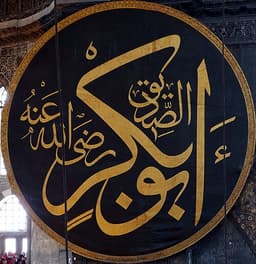
Abu Bakr
Emperor · Medieval
77.1Total
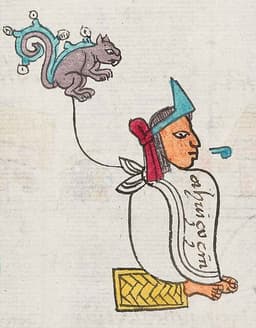
Ahuitzotl
Emperor · Medieval
62.6Total
Basic Information
Born
573
1440
Died
634
1502
Era
Medieval
Medieval
Nationality
Rashidun Caliphate
Aztec Empire
Occupation
Emperor
Emperor
Civilization
Middle Eastern
Other
Score Comparison
Military (10%)
74.7
78.5
Political (20%)
62.7
55.0
Influence (20%)
88.0
61.0
Legacy (20%)
80.0
54.0
Leadership (15%)
77.2
72.0
Strategy (15%)
66.3
70.0
TOTAL
77.1
62.6
Abu Bakr — Complete Timeline
632 AD
Ridda Wars (Apostasy Wars)War◆ Major
Abu Bakr launched military campaigns against Arabian tribes that renounced Islam or refused to pay zakat after Muhammad's death. The wars, led by generals like Khalid ibn al-Walid, reestablished Muslim control over Arabia and consolidated the caliphate.
Ridda WarsConsolidationRashidun
Impact: regional
Election as First CaliphPolitical Action
After the death of Muhammad, Abu Bakr was elected as the first caliph (successor) at Saqifah. His election unified the Muslim community, though it caused controversy among some supporters of Ali. He became the leader of the nascent Islamic state.
CaliphateSuccessionRashidun
Impact: global
633 AD
Compilation of the QuranCultural◆ Major
Abu Bakr ordered the compilation of the Quran into a single written manuscript after many memorizers died in the Ridda Wars. Zayd ibn Thabit collected verses from various sources, creating the first official codex, which later served as the basis for Uthman's standard text.
QuranCompilationRashidun
Impact: globalconstructive
634 AD
Death of Abu BakrPolitical Action◆ Major
Abu Bakr died after a brief illness, having designated Umar as his successor. His caliphate lasted only two years but established the foundations of the Islamic state, including the expansion beyond Arabia and the preservation of the Quran.
DeathSuccessionRashidun
Impact: global
Ahuitzotl — Complete Timeline
1486 AD
Expanded the Aztec Empire to its Greatest ExtentWar
Ahuitzotl launched extensive military campaigns that expanded the Aztec Empire to its maximum territorial extent, conquering regions from the Gulf of Mexico to the Pacific coast, including parts of modern-day Guatemala. He subjugated over 50 city-states.
Aztec ExpansionMilitary ConquestImperial Peak
Impact: regional
1487 AD
Dedicated the Great Temple of TenochtitlanCultural◆ Major
Ahuitzotl presided over the rededication of the Templo Mayor in Tenochtitlan, a massive ceremony involving the sacrifice of thousands of captives. The event reinforced Aztec religious authority and demonstrated the empire's military power.
Human SacrificeReligious CeremonyAztec Religion
Impact: regionaldestructive
1490 AD
Conquest of the Mixtec and Zapotec RegionsWar◆ Major
Ahuitzotl led campaigns into Oaxaca, conquering Mixtec and Zapotec strongholds such as Coixtlahuaca and Tehuantepec. These victories secured control over key trade routes and tribute sources, including gold and cotton.
Military CampaignOaxacaTribute
Impact: regional
Expert Analysis
Origins
**Abu Bakr** (c. 573–634 CE) was born into the Banu Taym clan of the Quraysh tribe in Mecca. A wealthy merchant, he was among the earliest converts to Islam and a close companion of the Prophet Muhammad. His daughter Aisha married Muhammad, cementing their bond. Abu Bakr's pre-Islamic background included expertise in genealogy and trade, which later aided his political acumen.
**Ahuitzotl** (r. 1486–1502 CE) was the eighth Huey Tlatoani of the Aztec Empire, born into the royal lineage of Tenochtitlan. As a younger son of Moctezuma I, he rose through military ranks, commanding campaigns under his predecessor, Tizoc. His upbringing in the militaristic Aztec nobility emphasized warfare, tribute extraction, and religious ceremony.
Rise to Power
Abu Bakr's rise was catalyzed by Muhammad's death in 632 CE. At the Saqifah meeting, he was elected caliph over the Ansar (Medinan helpers) and Ali, despite controversy. His leadership was immediately tested as many Arabian tribes renounced Islam or withheld zakat. He responded by launching the Ridda Wars (632–633 CE), dispatching generals like Khalid ibn al-Walid to crush rebellions. Within a year, Arabia was unified under Muslim control.
Ahuitzotl ascended after Tizoc's suspected poisoning in 1486. His reign began with a massive rededication of the Templo Mayor in Tenochtitlan, where thousands of captives were sacrificed—a display of power intended to legitimize his rule. He then launched rapid military campaigns to expand the empire, targeting the Gulf Coast, Oaxaca, and Soconusco. His conquests brought the empire to its maximum territorial extent.
Leadership & Governance
Abu Bakr's governance was characterized by administrative consolidation. He established the caliphate as a centralized state, maintaining the Islamic tax system (zakat) and appointing governors. His decision to compile the Quran into a single codex (after the Battle of Yamama) preserved Islamic scripture. He also initiated military campaigns into Syria and Iraq, laying groundwork for future expansion. His leadership style was consultative but decisive, favoring consensus among the Sahaba.
Ahuitzotl ruled as an absolute monarch, centralizing power in Tenochtitlan. He expanded the tribute system, demanding goods like cacao, cotton, and sacrificial victims from conquered provinces. He built infrastructure, including aqueducts and roads, to integrate the empire. His governance relied on fear and ritual violence: the Templo Mayor dedication involved an estimated 20,000 sacrifices (sources vary). He also reformed the Aztec military, rewarding warriors with land and titles for valor.
Triumph & Tragedy
Abu Bakr's greatest triumph was unifying Arabia under Islam, suppressing the Ridda rebellions, and preserving the Quran. His caliphate lasted only two years (632–634), but he successfully transitioned power to Umar, ensuring stability. His tragedy was the brevity of his rule: he died before fully consolidating the caliphate's administrative apparatus, leaving some conquests incomplete. Additionally, his election created a schism that later fueled the Sunni-Shia divide.
Ahuitzotl's triumph was expanding the Aztec Empire to its zenith, doubling its size. His conquests brought immense wealth and captives, fueling Tenochtitlan's monumental architecture. His tragedy was that his expansionist policies overstretched the empire, creating resentful tributary states. The massive human sacrifices also alienated potential allies. Furthermore, his military campaigns exhausted resources, and his death in 1502 left a vulnerable empire that collapsed under Spanish assault two decades later.
Character & Destiny
Abu Bakr was known for his piety, humility, and pragmatism. He prioritized unity over personal ambition, designating Umar as successor to prevent civil strife. His decisiveness during the Ridda Wars earned him the title "al-Siddiq" (the Truthful). Historians like Wilferd Madelung note that his leadership was crucial for Islam's survival, though his election remains contested.
Ahuitzotl was ambitious, militaristic, and ruthless. His name means "Water Monster" in Nahuatl, reflecting his aggressive nature. He centralized power through terror and ritual, but his over-reliance on conquest without sustainable integration sowed the seeds of the empire's downfall. The Spanish conquest would exploit these weaknesses.
Legacy
Abu Bakr's legacy is foundational: he established the caliphate, unified Arabia, and preserved the Quran. His actions shaped the Islamic Golden Age and the spread of Islam across three continents. In terms of scores, he achieved 88.0 in influence and 80.0 in legacy, reflecting his enduring impact on over a billion Muslims today.
Ahuitzotl's legacy is tied to the Aztec Empire's peak and its dramatic fall. His conquests expanded the empire but also created instability. The Templo Mayor remains a symbol of Aztec power, but his reign is often cited as a cautionary tale of overexpansion. His scores of 61.0 in influence and 54.0 in legacy reflect the empire's relatively short-lived dominance.
Conclusion
Abu Bakr had greater historical impact than Ahuitzotl. His unification of Arabia and compilation of the Quran created a religious and political entity that endures 1,400 years later. Ahuitzotl's empire collapsed within a generation, whereas Abu Bakr's caliphate evolved into a world civilization. The score gap of 14.5 points (77.1 vs 62.6) reflects this disparity in lasting influence.
Rankings
🥇
Abu BakrLeader
Mil: 74.7Pol: 62.7Inf: 88.0
77.1
🥈
Ahuitzotl
Mil: 78.5Pol: 55.0Inf: 61.0
62.6
+14.5 behind
How This Comparison Works
Algorithm
Each figure is scored on 6 dimensions (0—100 scale) based on structured historical data: Military (10%), Political (20%), Influence (20%), Legacy (20%), Leadership (15%), Strategy (15%). The weighted total produces the final ranking.
Data Sources
Scores are computed from structured sub-indicators in the database. Scale factors adjust for era (Ancient ×0.85, Modern ×1.0) and civilization size (Eastern ×1.05, Other ×0.80) to account for differences in population and military scale.
Maximum 3 Figures
Comparisons are limited to 2—3 figures to ensure readability and statistical meaningfulness.
Error Margins
±5 points per dimension — Sub-scores are derived from historical records with inherent uncertainty. Two figures within 5 points on a dimension should be considered roughly equivalent in that area.
Total Score Accuracy
±3 points overall — The weighted combination of 6 dimensions produces a total score with approximately ±3 points of uncertainty. Differences of less than 3 points are not statistically significant— the figures are effectively tied.
Known Limitations
- Historical records are incomplete and uneven across civilizations
- Figures from oral-tradition societies may be underrepresented
- Occupation labels can misclassify multi-role figures
- Scores measure capability and impact, not moral character
- Quantitative scoring is a comparison tool, not absolute truth
Capability Radar
Military (10%) — Battles & Warfare
Battles
65
85
Win Rate
70
90
Expansion
85
90
Political (20%) — Governance & Reform
Reform
85
70
Diplomacy
80
65
Economy
70
80
Influence (20%) — Cultural & Global Reach
Cultural
70
60
Global
85
45
Legacy (20%) — Historical Impact
Historical
85
65
Longevity
90
50
Leadership (15%) — Power & Stability
Tenure
60
75
Stability
75
70
Strategy (15%) — Tactics & Innovation
Strategy
75
85
Tactics
60
80
Reform
80
70
Similar Comparisons
Comments & Discussion
No comments yet. Be the first to share your thoughts!