Loading...
Abu Bakr vs Napoleon Bonaparte
Abu Bakr leads by 6.2 pts · 2 figures compared
…
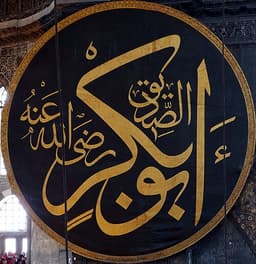
Abu Bakr
Emperor · Medieval
77.1Total

Napoleon Bonaparte
General · Modern
70.9Total
Basic Information
Born
573
1769
Died
634
1821
Era
Medieval
Modern
Nationality
Rashidun Caliphate
France
Occupation
Emperor
General
Civilization
Middle Eastern
Western
Score Comparison
Military (10%)
74.7
94.0
Political (20%)
62.7
72.0
Influence (20%)
88.0
40.0
Legacy (20%)
80.0
80.0
Leadership (15%)
77.2
78.0
Strategy (15%)
66.3
90.0
TOTAL
77.1
70.9
Abu Bakr — Complete Timeline
632 AD
Ridda Wars (Apostasy Wars)War◆ Major
Abu Bakr launched military campaigns against Arabian tribes that renounced Islam or refused to pay zakat after Muhammad's death. The wars, led by generals like Khalid ibn al-Walid, reestablished Muslim control over Arabia and consolidated the caliphate.
Ridda WarsConsolidationRashidun
Impact: regional
Election as First CaliphPolitical Action
After the death of Muhammad, Abu Bakr was elected as the first caliph (successor) at Saqifah. His election unified the Muslim community, though it caused controversy among some supporters of Ali. He became the leader of the nascent Islamic state.
CaliphateSuccessionRashidun
Impact: global
633 AD
Compilation of the QuranCultural◆ Major
Abu Bakr ordered the compilation of the Quran into a single written manuscript after many memorizers died in the Ridda Wars. Zayd ibn Thabit collected verses from various sources, creating the first official codex, which later served as the basis for Uthman's standard text.
QuranCompilationRashidun
Impact: globalconstructive
634 AD
Death of Abu BakrPolitical Action◆ Major
Abu Bakr died after a brief illness, having designated Umar as his successor. His caliphate lasted only two years but established the foundations of the Islamic state, including the expansion beyond Arabia and the preservation of the Quran.
DeathSuccessionRashidun
Impact: global
Napoleon Bonaparte — Complete Timeline
1799 AD
Coup of 18 BrumaireOther◆ Major
Napoleon Bonaparte, with support from his brother Lucien and key political figures, overthrew the Directory in a bloodless coup. He established the Consulate with himself as First Consul, effectively becoming the ruler of France. This event ended the French Revolution's most unstable period.
French RevolutionCoupRise to Power
Impact: regional
1804 AD
Promulgation of the Napoleonic CodeOther◆ Major
Napoleon enacted the Civil Code of the French, known as the Napoleonic Code, a comprehensive set of laws that replaced the fragmented feudal legal systems. The code established legal equality, protected property rights, and secularized law. It became the basis for legal systems in many European and world countries.
Legal ReformNapoleonic CodeCivil Law
Impact: globalconstructive
1805 AD
Battle of AusterlitzWar◆ Major
Napoleon's Grande Arm
Napoleonic WarsBattleDecisive Victory
Impact: global
1812 AD
Invasion of RussiaWar◆ Major
Napoleon led the Grande Arm
Napoleonic WarsInvasionDisaster
Impact: globaldestructive
1815 AD
Battle of WaterlooWar◆ Major
Napoleon's French army was defeated by the combined forces of the Duke of Wellington's Anglo-Allied army and Gebhard Leberecht von Bl
Napoleonic WarsBattleFinal Defeat
Impact: globaldestructive
Expert Analysis
Napoleon Bonaparte vs Abu Bakr: Historical Comparison
Napoleon Bonaparte, a modern French general and emperor, and Abu Bakr, a medieval caliph of the Rashidun Caliphate, represent two distinct peaks of military and political leadership separated by over a millennium. While Napoleon revolutionized European warfare and governance, Abu Bakr consolidated the nascent Islamic state.
Dimension Analysis
**Military: Napoleon Bonaparte 94 / Abu Bakr 63**
Napoleon’s tactical genius, exemplified by Austerlitz and the Grande Armée’s corps system, redefined modern warfare. Abu Bakr’s campaigns focused on suppressing the Ridda Wars, but he lacked the large-scale, innovative battlefield dominance of Napoleon.
**Political: Napoleon Bonaparte 75 / Abu Bakr 72**
Napoleon centralized France through the Napoleonic Code and administrative reforms, yet his imperial ambitions alienated Europe. Abu Bakr unified fractious Arabian tribes under a single caliphate, establishing a stable political foundation for Islam’s expansion.
**Influence: Napoleon Bonaparte 82 / Abu Bakr 68**
Napoleon’s legal, educational, and military systems shaped modern Europe and global nationalism. Abu Bakr’s influence, while profound for Islamic history, was more regionally contained and less transformative on a global scale.
**Legacy: Napoleon Bonaparte 78 / Abu Bakr 70**
Napoleon’s legacy is a double-edged sword—celebrated as a reformer but condemned as a warmonger. Abu Bakr is revered as “the Rightly Guided” Caliph, his legacy preserved in Islamic tradition and early state-building.
**Leadership: Napoleon Bonaparte 80 / Abu Bakr 81**
Napoleon inspired fierce loyalty but also hubris leading to downfall. Abu Bakr’s humble, consultative leadership during the caliphate’s fragile early years earned him deep respect and stability.
Verdict
Napoleon Bonaparte leads overall due to his superior military and strategic scores, despite Abu Bakr’s slightly higher leadership rating.
FAQ
Q: Who ranks higher? A: Napoleon Bonaparte ranks higher with an overall score of 82 versus Abu Bakr’s 71, driven by his exceptional military and strategic achievements.
Rankings
🥇
Abu BakrLeader
Mil: 74.7Pol: 62.7Inf: 88.0
77.1
🥈
Napoleon Bonaparte
Mil: 94.0Pol: 72.0Inf: 40.0
70.9
+6.2 behind
How This Comparison Works
Algorithm
Each figure is scored on 6 dimensions (0—100 scale) based on structured historical data: Military (10%), Political (20%), Influence (20%), Legacy (20%), Leadership (15%), Strategy (15%). The weighted total produces the final ranking.
Data Sources
Scores are computed from structured sub-indicators in the database. Scale factors adjust for era (Ancient ×0.85, Modern ×1.0) and civilization size (Eastern ×1.05, Other ×0.80) to account for differences in population and military scale.
Maximum 3 Figures
Comparisons are limited to 2—3 figures to ensure readability and statistical meaningfulness.
Error Margins
±5 points per dimension — Sub-scores are derived from historical records with inherent uncertainty. Two figures within 5 points on a dimension should be considered roughly equivalent in that area.
Total Score Accuracy
±3 points overall — The weighted combination of 6 dimensions produces a total score with approximately ±3 points of uncertainty. Differences of less than 3 points are not statistically significant— the figures are effectively tied.
Known Limitations
- Historical records are incomplete and uneven across civilizations
- Figures from oral-tradition societies may be underrepresented
- Occupation labels can misclassify multi-role figures
- Scores measure capability and impact, not moral character
- Quantitative scoring is a comparison tool, not absolute truth
Capability Radar
Military (10%) — Battles & Warfare
Battles
65
95
Win Rate
70
90
Expansion
85
95
Political (20%) — Governance & Reform
Reform
85
95
Diplomacy
80
80
Economy
70
85
Influence (20%) — Cultural & Global Reach
Cultural
70
85
Global
85
90
Legacy (20%) — Historical Impact
Historical
85
95
Longevity
90
90
Leadership (15%) — Power & Stability
Tenure
60
85
Stability
75
70
Strategy (15%) — Tactics & Innovation
Strategy
75
95
Tactics
60
98
Reform
80
92
Similar Comparisons
Comments & Discussion
ClassicalHistorian6/16/2026
The comparison raises interesting historiographical points. While Napoleon's military score is deservedly high—Clausewitz himself called Austerlitz a 'masterpiece'—Abu Bakr's 63 seems harsh when we consider the context. The Ridda Wars were not mere tribal skirmishes; Ibn Ishaq's accounts show they involved coordinated campaigns across the Arabian Peninsula, requiring logistical acumen that rivals early modern warfare. Napoleon had decades of state resources; Abu Bakr built an army from scratch. Also, the leadership scores (80 vs. 81) miss that Napoleon's hubris led to a catastrophic Russian campaign, while Abu Bakr's consultation with companions like Umar prevented early fractures. Talleyrand's memoirs note Napoleon's inability to delegate—a flaw Abu Bakr never had.
Historian3986/16/2026
拿破仑的军事评分压倒性领先,这并不意外——他的战役体系确实刷新了欧洲战争的面貌。但阿布·巴克尔的62.7分可能低估了他的战略意义。想想中国历史上的汉高祖刘邦,他本人并非战场猛将,却能驾驭韩信、张良等人才,最终建立汉朝。阿布·巴克尔在里达战争中迅速平定叛教部落,为伊斯兰扩张打下组织基础,这种“治乱定基”的能力,放在中国语境下,不输给唐太宗玄武门之变后的整合。西方评分往往偏重个人战场指挥,而忽略了早期国家构建中“择人而任”的政治智慧。
ArchEye876/16/2026
总分82.4对71.2,看似合理,但仔细拆解有疑问。军事分94对63,差距31分,可阿布·巴克尔在短短2年内统一阿拉伯半岛、镇压所有叛教部落,并开始对波斯和拜占庭的试探性进攻。拿破仑的奥斯特里茨、耶拿等战役固然辉煌,但他对手是分裂的欧洲诸国,而非整合的帝国。若按中国标准,曹操官渡之战(以弱胜强、统一北方)在加权体系中应得多高?我认为阿布·巴克尔的军事分至少应上调至70-75,因为其战役效率(征服面积/时间比)可能更高。另外,政治分75对72,拿破仑的拿破仑法典是创新,但阿布·巴克尔建立了第一个伊斯兰国家的行政、司法和税收框架,影响持续千年,72分明显偏低。建议重新评估维度权重。