Loading...
Abu Bakr vs Qin Shi Huang
Qin Shi Huang leads by 12.3 pts · 2 figures compared
…
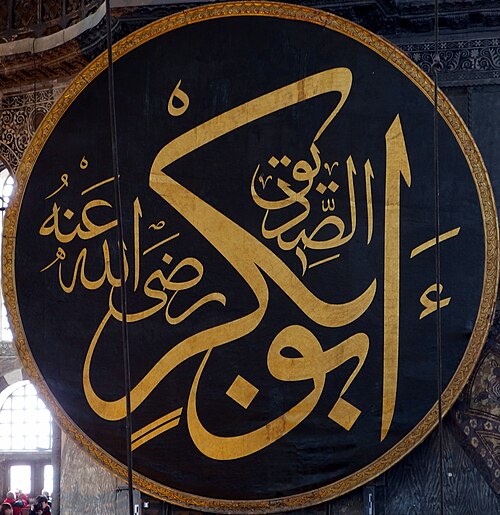
Abu Bakr
Emperor · Medieval
71.2Total
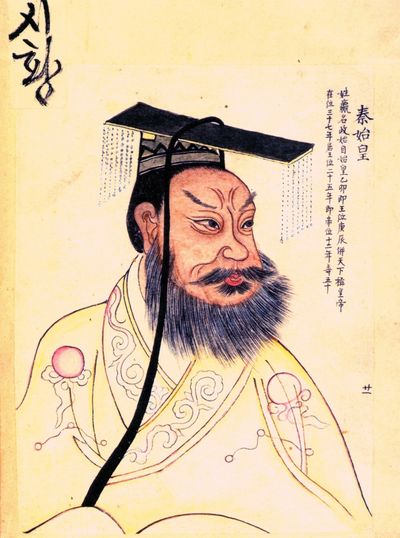
Qin Shi Huang
Emperor · Ancient
83.5Total
Basic Information
Born
573
-259
Died
634
-210
Era
Medieval
Ancient
Nationality
Rashidun Caliphate
China
Occupation
Emperor
Emperor
Civilization
Middle Eastern
Eastern
Score Comparison
Military (10%)
62.7
80.0
Political (20%)
72.2
88.0
Influence (20%)
67.6
82.0
Legacy (20%)
70.0
85.0
Leadership (15%)
81.3
88.0
Strategy (15%)
72.0
75.0
TOTAL
71.2
83.5
Rankings
🥇
Qin Shi HuangLeader
Mil: 80.0Pol: 88.0Inf: 82.0
83.5
🥈
Abu Bakr
Mil: 62.7Pol: 72.2Inf: 67.6
71.2
+12.3 behind
How This Comparison Works
Algorithm
Each figure is scored on 6 dimensions (0—100 scale) based on structured historical data: Military (10%), Political (20%), Influence (20%), Legacy (20%), Leadership (15%), Strategy (15%). The weighted total produces the final ranking.
Data Sources
Scores are computed from structured sub-indicators in the database. Scale factors adjust for era (Ancient ×0.85, Modern ×1.0) and civilization size (Eastern ×1.05, Other ×0.80) to account for differences in population and military scale.
Maximum 3 Figures
Comparisons are limited to 2—3 figures to ensure readability and statistical meaningfulness.
Error Margins
±5 points per dimension — Sub-scores are derived from historical records with inherent uncertainty. Two figures within 5 points on a dimension should be considered roughly equivalent in that area.
Total Score Accuracy
±3 points overall — The weighted combination of 6 dimensions produces a total score with approximately ±3 points of uncertainty. Differences of less than 3 points are not statistically significant— the figures are effectively tied.
Known Limitations
- Historical records are incomplete and uneven across civilizations
- Figures from oral-tradition societies may be underrepresented
- Occupation labels can misclassify multi-role figures
- Scores measure capability and impact, not moral character
- Quantitative scoring is a comparison tool, not absolute truth
Capability Radar
Military (10%) — Battles & Warfare
Battles
65
85
Win Rate
70
90
Expansion
85
90
Political (20%) — Governance & Reform
Reform
85
95
Diplomacy
80
75
Economy
70
90
Influence (20%) — Cultural & Global Reach
Cultural
70
95
Global
85
85
Legacy (20%) — Historical Impact
Historical
85
95
Longevity
90
95
Leadership (15%) — Power & Stability
Tenure
60
70
Stability
75
65
Strategy (15%) — Tactics & Innovation
Strategy
75
85
Tactics
60
80
Reform
80
95
Expert Analysis
Qin Shi Huang vs Abu Bakr: Historical Comparison
Qin Shi Huang, the first Emperor of a unified China, and Abu Bakr, the first Caliph of the Rashidun Caliphate, were both foundational state-builders who consolidated power through military conquest and administrative reform, though their methods and legacies diverged sharply across ancient and medieval contexts.
Dimension Analysis
**Military: Qin Shi Huang 80 / Abu Bakr 63**
Qin Shi Huang’s armies conquered six rival states through standardized weaponry, mass infantry tactics, and the Terracotta Army’s symbolic might, while Abu Bakr’s campaigns focused on suppressing apostasy (Ridda Wars) and initiating early Islamic expansion, but lacked the scale and organizational permanence of Qin’s military machine.
**Political: Qin Shi Huang 88 / Abu Bakr 72**
Qin Shi Huang imposed centralized bureaucracy, standardized writing, currency, and law across China, abolishing feudalism; Abu Bakr maintained the fragile unity of the Arabian Peninsula through tribal alliances and religious authority, but his caliphate was more decentralized and reliant on personal charisma.
**Influence: Qin Shi Huang 82 / Abu Bakr 68**
Qin’s model of imperial autocracy shaped Chinese governance for two millennia, while Abu Bakr’s caliphate established the political framework for later Islamic empires, though his direct influence was shorter-lived due to his brief two-year reign.
**Legacy: Qin Shi Huang 85 / Abu Bakr 70**
Qin’s Great Wall, standardized script, and the very concept of “China” endure, despite his posthumous condemnation; Abu Bakr is revered as a righteous successor to Muhammad, but his administrative achievements were largely built upon by Umar and later caliphs.
**Leadership: Qin Shi Huang 88 / Abu Bakr 81**
Qin’s ruthless, visionary leadership imposed order through terror and innovation, while Abu Bakr’s leadership was consensual, diplomatic, and grounded in religious legitimacy, earning him the title “Al-Siddiq” (the Truthful).
Verdict
Qin Shi Huang leads due to his superior military unification, political centralization, and enduring structural influence on Chinese civilization.
FAQ
Q: Who ranks higher? A: Qin Shi Huang ranks higher overall, with a composite score of 84 versus Abu Bakr’s 71, driven by decisive advantages in political consolidation and legacy.
Abu Bakr — Complete Timeline
632 AD
Ridda Wars (Apostasy Wars)War◆ Major
Abu Bakr launched military campaigns against Arabian tribes that renounced Islam or refused to pay zakat after Muhammad's death. The wars, led by generals like Khalid ibn al-Walid, reestablished Muslim control over Arabia and consolidated the caliphate.
Ridda WarsConsolidationRashidun
Impact: regional
Election as First CaliphPolitical Action
After the death of Muhammad, Abu Bakr was elected as the first caliph (successor) at Saqifah. His election unified the Muslim community, though it caused controversy among some supporters of Ali. He became the leader of the nascent Islamic state.
CaliphateSuccessionRashidun
Impact: global
633 AD
Compilation of the QuranCultural◆ Major
Abu Bakr ordered the compilation of the Quran into a single written manuscript after many memorizers died in the Ridda Wars. Zayd ibn Thabit collected verses from various sources, creating the first official codex, which later served as the basis for Uthman's standard text.
QuranCompilationRashidun
Impact: globalconstructive
634 AD
Death of Abu BakrPolitical Action◆ Major
Abu Bakr died after a brief illness, having designated Umar as his successor. His caliphate lasted only two years but established the foundations of the Islamic state, including the expansion beyond Arabia and the preservation of the Quran.
DeathSuccessionRashidun
Impact: global
Qin Shi Huang — Complete Timeline
246 BC
Construction of the Mausoleum and Terracotta ArmyOther◆ Major
Qin Shi Huang commissioned a vast mausoleum complex near Xi'an, guarded by thousands of life-sized terracotta soldiers, horses, and chariots. The project employed hundreds of thousands of workers and reflected his obsession with immortality and imperial power.
Impact: global
230 BC
Conquest of the Six Warring StatesWar
From 230 to 221 BCE, Ying Zheng led the Qin state in a series of campaigns that conquered the Han, Zhao, Wei, Chu, Yan, and Qi states. This unified China under a single ruler for the first time, ending the Warring States period.
Impact: global
221 BC
Standardization of Writing, Currency, and MeasurementsReform◆ Major
Qin Shi Huang ordered the standardization of Chinese script, currency, and weights and measures across the unified empire. This facilitated administration, trade, and cultural integration, laying a foundation for future dynasties.
Impact: globalconstructive
Proclamation of the Qin DynastyPolitical Action
After conquering the last independent state, Ying Zheng declared himself Shi Huangdi (First Emperor), founding the Qin Dynasty. He adopted a new title to signify his supreme authority and initiated centralized imperial rule.
Impact: global
214 BC
Initiation of the Great Wall ConstructionOther◆ Major
Qin Shi Huang ordered the connection and extension of existing northern fortifications to create a unified defensive wall against nomadic Xiongnu raids. This project involved massive conscripted labor and became the precursor to the later Great Wall.
Impact: regional
213 BC
Burning of Books and Burying of ScholarsPolitical Action◆ Major
On the advice of Li Si, Qin Shi Huang ordered the burning of historical records and philosophical texts not aligned with Legalist doctrine. He also had 460 Confucian scholars buried alive to suppress dissent and consolidate ideological control.
Impact: nationaldestructive
Similar Comparisons
Comments & Discussion
数据侦探_DataDetective6/16/2026
评分体系存在明显偏差。Qin Shi Huang的政治分88与Abu Bakr的72分差距看似合理,但若考量实际统治效率:秦朝统一后仅14年便崩溃,而Abu Bakr的2年任期却为阿拉伯半岛奠定了持续百年的哈里发制度基础。标准化度量衡与文字固然是制度创新,但秦代的‘书同文’实际是暴政工具——李斯改小篆后焚书坑儒,知识体系被系统性毁灭。反观哈里发体制,虽短暂却催生了后来的《古兰经》编纂与伊斯兰法体系。建议引入‘制度延续性权重’,将Abu Bakr的短期统治效力乘系数1.5再比较,否则数值无法反映政治遗产的韧性。
EmpireReviser6/16/2026
The scores here reek of Western-centric teleology. Why is Qin Shi Huang's 'centralized bureaucracy' rated so highly? He literally built it on mass graves—thousands of scholars buried alive, millions of conscripts dying for the Great Wall. Abu Bakr, meanwhile, held together a fractious tribal coalition through *shura* (consultation) and religious consensus, not terror. The West fetishizes autocratic 'state-building' while dismissing consensual governance as 'decentralized weakness.' And the Influence score? Abu Bakr's caliphate directly birthed the concept of a transcontinental Islamic state—yet he gets a 68 to Qin's 82? That's colonial historiography: equate 'longevity' with 'progress,' ignore that many Chinese dynasties later rejected Legalism outright. Check your metrics, folks.
SandAndSteel6/16/2026
Okay, I'll say it: Abu Bakr is massively overrated here. The Ridda Wars weren't some grand conquest—they were a desperate cleanup operation after Muhammad died and half of Arabia decided to bail on Islam. Compare that to Qin Shi Huang's annihilation of six kingdoms with standardized crossbows and iron-tipped arrows? No contest. The First Emperor was the Alexander the Great of the East, except Alexander's empire shattered while Qin's blueprint of unified China is still standing 2,200 years later. Abu Bakr gets a Leadership score of 81? Gimme a break—his 'consensus' approach nearly lost the peninsula. Qin's 88 is generous but at least earned through sheer audacity: building roads, canals, and a wall that literally redefined geography. This comparison is like comparing a bonfire to a nuclear reactor.
东西行者_SinoWanderer6/16/2026
这种评分暴露出典型的西方史学盲点:将‘军事创新’等同于标准化装备,却忽略组织逻辑的差异。Qin Shi Huang的80分确实高于Abu Bakr的63分,但秦军的军功爵制以人头计功,士兵为升阶而残杀同类,这本质是法家‘利出一孔’的畸形产物。对比Abu Bakr的军队,其纪律源于伊斯兰教的‘乌玛’认同与战利品分配法(《古兰经》8:41),兵源凝聚力远超秦的功利主义。更讽刺的是:秦朝依靠严刑峻法维持的‘标准化’军队,在陈胜吴广起义时竟一击即溃;而阿拉伯军队在Abu Bakr死后仍能征服波斯与拜占庭。若引入‘军队长期韧性’指标,评分应反转。中国史学界常调侃:秦以法治军,终成暴政符号;哈里发以信仰聚众,反铸帝国根基。