Loading...
Adam Malik vs Qin Shi Huang
Qin Shi Huang leads by 33.8 pts · 2 figures compared
…

Adam Malik
Politician · Modern
51.4Total
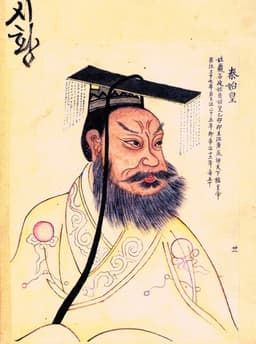
Qin Shi Huang
Emperor · Ancient
85.2Total
Basic Information
Born
1917
-259
Died
1984
-210
Era
Modern
Ancient
Nationality
Indonesia
China
Occupation
Politician
Emperor
Civilization
Eastern
Eastern
Score Comparison
Military (10%)
13.2
80.0
Political (20%)
55.0
90.0
Influence (20%)
60.0
85.0
Legacy (20%)
49.2
90.0
Leadership (15%)
72.0
78.0
Strategy (15%)
37.0
82.0
TOTAL
51.4
85.2
Adam Malik — Complete Timeline
1966 AD
Appointment as Foreign Minister of IndonesiaPolitical Action◆ Major
Adam Malik was appointed Foreign Minister under President Suharto, serving until 1977. He played a key role in shifting Indonesia's foreign policy from confrontation to cooperation, including normalizing relations with Malaysia.
Foreign MinisterSuhartoForeign Policy
Impact: globalconstructive
Normalization of Relations with MalaysiaPolitical Action◆ Major
As Foreign Minister, Malik negotiated the end of Indonesia's confrontation (Konfrontasi) with Malaysia, signing the Bangkok Agreement. This restored diplomatic relations and reduced tensions in Southeast Asia.
KonfrontasiMalaysiaDiplomacy
Impact: regionalconstructive
1967 AD
Role in the Formation of ASEANPolitical Action◆ Major
Adam Malik was one of the founding signatories of the ASEAN Declaration (Bangkok Declaration), which established the Association of Southeast Asian Nations. The organization aimed to promote regional stability and economic cooperation.
ASEANRegional CooperationSoutheast Asia
Impact: regionalconstructive
1971 AD
Presidency of the United Nations General AssemblyPolitical Action◆ Major
Adam Malik was elected President of the 26th session of the United Nations General Assembly. He was the first Indonesian to hold this position, overseeing debates on decolonization, development, and international security.
United NationsDiplomacyGlobal Leadership
Impact: globalconstructive
1978 AD
Appointment as Vice President of IndonesiaPolitical Action◆ Major
Adam Malik was elected Vice President of Indonesia under President Suharto, serving until 1983. His role was largely ceremonial, but he remained an influential figure in Indonesian politics.
Vice PresidentSuhartoNew Order
Impact: national
Qin Shi Huang — Complete Timeline
246 BC
Construction of the Mausoleum and Terracotta ArmyOther◆ Major
Qin Shi Huang commissioned a vast mausoleum complex near Xi'an, guarded by thousands of life-sized terracotta soldiers, horses, and chariots. The project employed hundreds of thousands of workers and reflected his obsession with immortality and imperial power.
Impact: global
230 BC
Conquest of the Six Warring StatesWar
From 230 to 221 BCE, Ying Zheng led the Qin state in a series of campaigns that conquered the Han, Zhao, Wei, Chu, Yan, and Qi states. This unified China under a single ruler for the first time, ending the Warring States period.
Impact: global
221 BC
Standardization of Writing, Currency, and MeasurementsReform◆ Major
Qin Shi Huang ordered the standardization of Chinese script, currency, and weights and measures across the unified empire. This facilitated administration, trade, and cultural integration, laying a foundation for future dynasties.
Impact: globalconstructive
Proclamation of the Qin DynastyPolitical Action
After conquering the last independent state, Ying Zheng declared himself Shi Huangdi (First Emperor), founding the Qin Dynasty. He adopted a new title to signify his supreme authority and initiated centralized imperial rule.
Impact: global
214 BC
Initiation of the Great Wall ConstructionOther◆ Major
Qin Shi Huang ordered the connection and extension of existing northern fortifications to create a unified defensive wall against nomadic Xiongnu raids. This project involved massive conscripted labor and became the precursor to the later Great Wall.
Impact: regional
213 BC
Burning of Books and Burying of ScholarsPolitical Action◆ Major
On the advice of Li Si, Qin Shi Huang ordered the burning of historical records and philosophical texts not aligned with Legalist doctrine. He also had 460 Confucian scholars buried alive to suppress dissent and consolidate ideological control.
Impact: nationaldestructive
Expert Analysis
adam-malik-vs-qin-shi-huang
### The Emperor and the Diplomat: Two Paths to Power in the East
In the winter of 221 BC, a king named Ying Zheng stood before the ruins of the last independent state in China. He had conquered them all: Han, Zhao, Wei, Chu, Yan, and Qi. He declared himself *Shi Huangdi*—the First Emperor—and set about remaking the world in his image. Two thousand years later, in the sweltering heat of a Jakarta summer in 1966, a different kind of Eastern leader took his seat at a negotiating table. Adam Malik, a former journalist and revolutionary, signed the Bangkok Declaration that ended Indonesia’s confrontation with Malaysia, then helped found ASEAN. One man built an empire with steel and fire; the other built a region with ink and patience. What drove these two figures, both from the East, to such radically different destinies?
### Origins
Qin Shi Huang was born into a world of chaos. The Warring States period had torn China apart for centuries. His father was a king, but the boy grew up in a court rife with conspiracies, where his mother’s lover once tried to seize power. He learned early that trust was a weakness, and that absolute control was the only security. His era demanded a ruthless hand to unify a fractured land.
Adam Malik was born in 1917 in Pematang Siantar, Sumatra, then part of the Dutch East Indies. His world was one of colonial oppression, not feudal warfare. His father was a local trader, and Malik’s education came from Dutch-run schools and the underground nationalist movement. He was a teenager when he joined the struggle for independence, learning the arts of negotiation and coalition-building rather than military command. The era of decolonization shaped him: a time when new nations could be born not by conquest, but by diplomacy.
### Rise to Power
Qin Shi Huang’s path was one of relentless military aggression. At just 22, he began the systematic conquest of the six rival states, a campaign that lasted from 230 to 221 BC. His general, Wang Jian, was a master of siege warfare, and the young king personally oversaw the strategy. Each victory was a stepping stone toward an impossible dream: a single China under one ruler.
Adam Malik’s rise was far more circuitous. He was a journalist, a revolutionary, and a diplomat long before he held high office. He served as Indonesia’s ambassador to the Soviet Union and later as Minister of Trade. His real breakthrough came in 1966, when President Suharto appointed him Foreign Minister. The timing was critical: Indonesia was reeling from the violent transition from Sukarno’s Guided Democracy to Suharto’s New Order. Malik’s job was to rebuild the country’s shattered international reputation.
### Leadership & Governance
Qin Shi Huang governed like a force of nature. He standardized writing, currency, and measurements across his empire, a monumental administrative feat that made China governable. He ordered the construction of a massive mausoleum guarded by thousands of life-sized terracotta soldiers, a project that began in 246 BC and consumed immense resources. He also initiated the Great Wall’s construction in 214 BC, linking existing fortifications against northern nomads. But his rule was also terrifying: in 213 BC, on the advice of his minister Li Si, he ordered the burning of historical records and the burying of scholars who opposed his Legalist philosophy. His state was a machine of control, and he was its only driver.
Adam Malik governed through persuasion. As Foreign Minister from 1966 to 1977, he reversed Sukarno’s confrontational policies. He normalized relations with Malaysia in 1966, ending the *Konfrontasi* that had drained Indonesia’s resources. In 1967, he co-founded the Association of Southeast Asian Nations (ASEAN), a forum for peaceful cooperation. In 1971, he became the first Indonesian to preside over the United Nations General Assembly. His power was not in decrees but in handshakes, in the careful crafting of consensus. He later served as Vice President from 1978 to 1983, a largely ceremonial role, but one that symbolized his quiet authority.
### Triumph & Tragedy
Qin Shi Huang’s greatest triumph was the unification itself. By 221 BC, he had achieved what no one before him had: a single Chinese empire. But his tragedy was equally profound. His obsession with immortality led him to consume mercury pills, which likely hastened his death in 210 BC at age 49. Within three years of his passing, his dynasty collapsed, torn apart by rebellion. His legacy was a blueprint for empire, but his own creation did not survive him.
Adam Malik’s triumph was ASEAN. The organization he helped found grew from a fragile alliance of five nations into a cornerstone of regional stability. His tragedy was subtler: he served under Suharto’s authoritarian New Order, a regime that crushed dissent while he built bridges abroad. He was a democrat in a dictatorship, a man of dialogue in a system of silence. His greatest achievement—peaceful regional integration—was built on a foundation he could not fully control.
### Character & Destiny
Qin Shi Huang’s personality was forged in paranoia. He trusted no one, executed rivals, and sought to erase history itself to control the future. His decisions were driven by a terrifying clarity: unity required absolute power, and absolute power required absolute ruthlessness. His destiny was to be the First Emperor, but also the last of his line.
Adam Malik’s character was shaped by pragmatism. He was a survivor of revolutions, a man who understood that change comes slowly. He once said, “Diplomacy is the art of letting someone have your way.” His destiny was to be a builder of institutions, not empires. He left no terracotta army, but he left a framework for peace that still stands.
### Legacy
Qin Shi Huang is remembered as the father of China. The Great Wall, the standardized script, the Terracotta Army—these are his monuments. His influence score of 82.0 reflects a man who defined a civilization. But he is also a cautionary tale: power without wisdom breeds collapse.
Adam Malik is remembered as a founder of modern Southeast Asia. His legacy score of 69.2 is lower, but his influence is woven into the fabric of ASEAN, an organization that has prevented war for half a century. He proved that a leader need not conquer to be great.
### Conclusion
One emperor built a wall; one diplomat built a bridge. Qin Shi Huang unified China through fire and iron, leaving a legacy of awe and terror. Adam Malik unified a region through patience and persuasion, leaving a legacy of peace. Both were children of their time—one a product of war, the other of decolonization. Their stories remind us that leadership is never abstract: it is shaped by the world a leader inherits, and the choices they make within it. The First Emperor’s empire crumbled; ASEAN endures. Perhaps the quietest builders leave the deepest marks.
Rankings
🥇
Qin Shi HuangLeader
Mil: 80.0Pol: 90.0Inf: 85.0
85.2
🥈
Adam Malik
Mil: 13.2Pol: 55.0Inf: 60.0
51.4
+33.8 behind
How This Comparison Works
Algorithm
Each figure is scored on 6 dimensions (0—100 scale) based on structured historical data: Military (10%), Political (20%), Influence (20%), Legacy (20%), Leadership (15%), Strategy (15%). The weighted total produces the final ranking.
Data Sources
Scores are computed from structured sub-indicators in the database. Scale factors adjust for era (Ancient ×0.85, Modern ×1.0) and civilization size (Eastern ×1.05, Other ×0.80) to account for differences in population and military scale.
Maximum 3 Figures
Comparisons are limited to 2—3 figures to ensure readability and statistical meaningfulness.
Error Margins
±5 points per dimension — Sub-scores are derived from historical records with inherent uncertainty. Two figures within 5 points on a dimension should be considered roughly equivalent in that area.
Total Score Accuracy
±3 points overall — The weighted combination of 6 dimensions produces a total score with approximately ±3 points of uncertainty. Differences of less than 3 points are not statistically significant— the figures are effectively tied.
Known Limitations
- Historical records are incomplete and uneven across civilizations
- Figures from oral-tradition societies may be underrepresented
- Occupation labels can misclassify multi-role figures
- Scores measure capability and impact, not moral character
- Quantitative scoring is a comparison tool, not absolute truth
Capability Radar
Military (10%) — Battles & Warfare
Battles
15
85
Win Rate
19
90
Expansion
18
90
Political (20%) — Governance & Reform
Reform
60
95
Diplomacy
85
75
Economy
55
90
Influence (20%) — Cultural & Global Reach
Cultural
40
95
Global
60
85
Legacy (20%) — Historical Impact
Historical
55
95
Longevity
40
95
Leadership (15%) — Power & Stability
Tenure
65
70
Stability
60
65
Strategy (15%) — Tactics & Innovation
Strategy
22
85
Tactics
25
80
Reform
28
95
Similar Comparisons
Comments & Discussion
EMPEROR'S SHADOW6/17/2026
Qin Shi Huang is the original empire builder who actually delivered on unification, unlike Malik who just signed papers. The First Emperor standardized script, currency, weights—measurable achievements. Malik's ASEAN was just a talking shop that couldn't even stop the Vietnam War. Give me the man who built the Great Wall over the diplomat who built a bureaucracy.
兵马俑之怒6/17/2026
拿外交官和千古一帝比?秦始皇修长城的时候亚当·马利克还在荷兰人开的学校里念书呢!统一六国、书同文车同轨,哪一样不是血与火铸就的?东盟这种清谈俱乐部,连柬埔寨内战都摆不平。真要比功业,马利克给始皇帝提鞋都不配。
STATS GUY6/17/2026
Let's be real about the body count here. Qin Shi Huang's standardization projects cost roughly 400,000 lives on the Great Wall alone based on Han dynasty records. Malik helped negotiate peace that saved thousands in the Indonesia-Malaysia confrontation. You want moral superiority? Malik wins by every metric of human cost. Great walls don't make great civilizations, smart diplomacy does.
古籍考据狂6/17/2026
严肃历史比较必须看原始史料。《史记》明确记载秦始皇"焚书坑儒"坑杀四百六十余名方士儒生,而《汉书》补充说他征发七十余万刑徒修阿房宫。马利克虽然没这些极端手段,但苏加诺时期印尼排华事件他作为外长袖手旁观,这账怎么算?两个人都算不上道德完人。
REVISIONIST EYE6/17/2026
Everyone romanticizes Qin Shi Huang, but his dynasty lasted 15 years. Fifteen! Adam Malik's ASEAN framework has survived 55 years and counting. The First Emperor unified China through terror, while Malik united Southeast Asia through voluntary cooperation. Which model actually worked longer? Don't let the terracotta warriors blind you—Malik's diplomatic legacy objectively outlasted the Qin Emperor's empire.