Loading...
This comparison has not been analyzed yet.
One-time AI generation (~1 minute). Scores and timeline are already available below.
Abu Bakr vs Wonjong of Goryeo
Abu Bakr leads by 31.4 pts · 2 figures compared
…
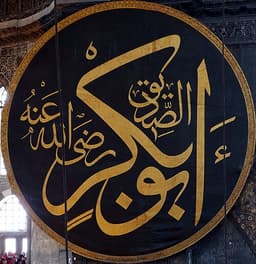
Abu Bakr
Emperor · Medieval
77.1Total

Wonjong of Goryeo
Emperor · Medieval
45.7Total
Basic Information
Born
573
1219
Died
634
1274
Era
Medieval
Medieval
Nationality
Rashidun Caliphate
Korea
Occupation
Emperor
Emperor
Civilization
Middle Eastern
Eastern
Score Comparison
Military (10%)
74.7
21.2
Political (20%)
62.7
46.6
Influence (20%)
88.0
50.2
Legacy (20%)
80.0
45.0
Leadership (15%)
77.2
65.0
Strategy (15%)
66.3
30.3
TOTAL
77.1
45.7
Abu Bakr — Complete Timeline
632 AD
Ridda Wars (Apostasy Wars)War◆ Major
Abu Bakr launched military campaigns against Arabian tribes that renounced Islam or refused to pay zakat after Muhammad's death. The wars, led by generals like Khalid ibn al-Walid, reestablished Muslim control over Arabia and consolidated the caliphate.
Ridda WarsConsolidationRashidun
Impact: regional
Election as First CaliphPolitical Action
After the death of Muhammad, Abu Bakr was elected as the first caliph (successor) at Saqifah. His election unified the Muslim community, though it caused controversy among some supporters of Ali. He became the leader of the nascent Islamic state.
CaliphateSuccessionRashidun
Impact: global
633 AD
Compilation of the QuranCultural◆ Major
Abu Bakr ordered the compilation of the Quran into a single written manuscript after many memorizers died in the Ridda Wars. Zayd ibn Thabit collected verses from various sources, creating the first official codex, which later served as the basis for Uthman's standard text.
QuranCompilationRashidun
Impact: globalconstructive
634 AD
Death of Abu BakrPolitical Action◆ Major
Abu Bakr died after a brief illness, having designated Umar as his successor. His caliphate lasted only two years but established the foundations of the Islamic state, including the expansion beyond Arabia and the preservation of the Quran.
DeathSuccessionRashidun
Impact: global
Wonjong of Goryeo — Complete Timeline
1259 AD
Hostage to the Mongol EmpirePolitical Action◆ Major
As a prince, Wonjong was sent as a hostage to the Mongol court to secure peace after Goryeo's submission. He spent several years in Mongolia, learning Mongol customs and forming ties with the imperial family.
HostageDiplomacyMongol Empire
Impact: national
1260 AD
Accession as pro-Mongol kingPolitical Action◆ Major
Wonjong became king with Mongol support, marking the beginning of direct Mongol influence over Goryeo's throne. He agreed to pay tribute, provide troops, and accept Mongol oversight in exchange for peace.
AccessionMongol AllianceGoryeo
Impact: national
1270 AD
Suppression of the Sambyeolcho RebellionWar◆ Major
Wonjong, with Mongol military aid, crushed the Sambyeolcho (Three Elite Patrols) rebellion, which opposed the peace with the Mongols. The rebels were defeated on Jeju Island, ending the last major military resistance to Mongol domination.
RebellionMongol AllianceGoryeo
Impact: nationaldestructive
1274 AD
Marriage alliance with the Mongol imperial familyPolitical Action◆ Major
Wonjong arranged the marriage of his son (future King Chungnyeol) to a Mongol princess, Kublai Khan's daughter. This established a pattern of intermarriage that tied the Goryeo royal family to the Mongol Yuan dynasty.
Marriage AllianceYuan DynastyGoryeo
Impact: regional
This comparison has not been analyzed yet.
One-time AI generation (~1 minute). Scores and timeline are already available below.
Rankings
🥇
Abu BakrLeader
Mil: 74.7Pol: 62.7Inf: 88.0
77.1
🥈
Wonjong of Goryeo
Mil: 21.2Pol: 46.6Inf: 50.2
45.7
+31.4 behind
How This Comparison Works
Algorithm
Each figure is scored on 6 dimensions (0—100 scale) based on structured historical data: Military (10%), Political (20%), Influence (20%), Legacy (20%), Leadership (15%), Strategy (15%). The weighted total produces the final ranking.
Data Sources
Scores are computed from structured sub-indicators in the database. Scale factors adjust for era (Ancient ×0.85, Modern ×1.0) and civilization size (Eastern ×1.05, Other ×0.80) to account for differences in population and military scale.
Maximum 3 Figures
Comparisons are limited to 2—3 figures to ensure readability and statistical meaningfulness.
Error Margins
±5 points per dimension — Sub-scores are derived from historical records with inherent uncertainty. Two figures within 5 points on a dimension should be considered roughly equivalent in that area.
Total Score Accuracy
±3 points overall — The weighted combination of 6 dimensions produces a total score with approximately ±3 points of uncertainty. Differences of less than 3 points are not statistically significant— the figures are effectively tied.
Known Limitations
- Historical records are incomplete and uneven across civilizations
- Figures from oral-tradition societies may be underrepresented
- Occupation labels can misclassify multi-role figures
- Scores measure capability and impact, not moral character
- Quantitative scoring is a comparison tool, not absolute truth
Capability Radar
Military (10%) — Battles & Warfare
Battles
65
10
Win Rate
70
10
Expansion
85
10
Political (20%) — Governance & Reform
Reform
85
30
Diplomacy
80
70
Economy
70
30
Influence (20%) — Cultural & Global Reach
Cultural
70
20
Global
85
20
Legacy (20%) — Historical Impact
Historical
85
40
Longevity
90
30
Leadership (15%) — Power & Stability
Tenure
60
60
Stability
75
40
Strategy (15%) — Tactics & Innovation
Strategy
75
20
Tactics
60
10
Reform
80
10
Similar Comparisons
Comments & Discussion
No comments yet. Be the first to share your thoughts!