Loading...
Abubakar Tafawa Balewa vs Julius Caesar
Julius Caesar leads by 29.5 pts · 2 figures compared
…
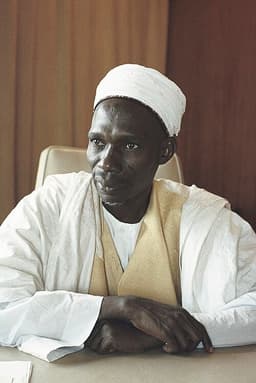
Abubakar Tafawa Balewa
Politician · Modern
53.3Total

Julius Caesar
General · Ancient
82.8Total
Basic Information
Born
1912
-100
Died
1966
-44
Era
Modern
Ancient
Nationality
Nigeria
Roman Republic
Occupation
Politician
General
Civilization
Other
Western
Score Comparison
Military (10%)
44.2
88.0
Political (20%)
62.7
78.0
Influence (20%)
59.0
85.0
Legacy (20%)
49.2
82.0
Leadership (15%)
53.2
80.0
Strategy (15%)
44.9
85.0
TOTAL
53.3
82.8
Abubakar Tafawa Balewa — Complete Timeline
1957 AD
Appointment as Prime Minister of NigeriaPolitical Action
Abubakar Tafawa Balewa was appointed as the first Prime Minister of Nigeria in 1957, leading a coalition government. He oversaw the final stages of Nigeria's transition to independence, which was achieved in 1960. His leadership was marked by efforts to maintain unity among the country's diverse regions.
IndependenceGovernmentNigeria
Impact: nationalconstructive
1960 AD
Signing of the Nigerian Independence ConstitutionPolitical Action◆ Major
Balewa, as Prime Minister, signed the independence constitution on October 1, 1960, formally ending British colonial rule. He became the head of government of the newly sovereign Federation of Nigeria, a position he held until his death.
IndependenceConstitutionNigeria
Impact: nationalconstructive
1966 AD
Assassination in the first military coupPolitical Action
Prime Minister Balewa was abducted and killed by mutinous soldiers during Nigeria's first military coup on January 15, 1966. His body was found days later. The coup ended the First Republic and plunged Nigeria into a series of military regimes and the Biafran War.
CoupAssassinationNigeria
Impact: nationaltragic
Julius Caesar — Complete Timeline
58 BC
Gallic WarsWar◆ Major
Caesar, as proconsul of Gaul, launched a series of campaigns that conquered all of Gaul (modern France, Belgium, and parts of Switzerland). He fought numerous battles, including against the Helvetii, the Belgae, and the Gallic chieftain Vercingetorix. The wars brought immense wealth and a loyal army to Caesar.
Gallic WarsConquestRoman Expansion
Impact: regional
49 BC
Crossing the RubiconPolitical Action◆ Major
Caesar led Legio XIII across the Rubicon River into Italy, defying the Roman Senate's order to disband his army. This act triggered a civil war against Pompey and the Optimates, ultimately leading to Caesar's dictatorship and the end of the Roman Republic.
Roman Civil WarEnd of RepublicPower Struggle
Impact: global
48 BC
Battle of PharsalusWar◆ Major
Caesar's outnumbered army defeated the larger forces of Pompey the Great at Pharsalus in Greece. Caesar's tactical use of a reserve line to counter Pompey's cavalry charge proved decisive. Pompey fled to Egypt, where he was assassinated, leaving Caesar as the undisputed master of the Roman world.
Roman Civil WarBattleDecisive Victory
Impact: regional
44 BC
Appointment as Dictator for LifePolitical Action◆ Major
The Roman Senate appointed Caesar dictator perpetuo (dictator for life), granting him unprecedented personal power. This move concentrated military, legislative, and judicial authority in one person, effectively ending the Roman Republic's traditional system of checks and balances and alarming many senators.
DictatorshipEnd of RepublicPower Consolidation
Impact: regionaldestructive
Assassination on the Ides of MarchPolitical Action◆ Major
A group of Roman senators, led by Marcus Junius Brutus and Gaius Cassius Longinus, stabbed Caesar to death at a meeting of the Senate in the Theatre of Pompey. The assassination was intended to restore the Republic, but instead triggered another civil war that led to the rise of the Roman Empire.
AssassinationRoman PoliticsEnd of Republic
Impact: globaldestructive
Expert Analysis
abubakar-tafawa-balewa-vs-julius-caesar
# The Crossing and the Coalition
On a January morning in 1966, Abubakar Tafawa Balewa, the first Prime Minister of independent Nigeria, was dragged from his home in Lagos by mutinous soldiers. He would be dead before nightfall, his body dumped in a ditch outside the city. Exactly two thousand and ten years earlier, on the Ides of March in 44 BCE, Gaius Julius Caesar fell beneath the daggers of Roman senators in the Theater of Pompey. Both men were killed by those they had trusted. Both had shaped the destinies of their nations. Yet one built an empire that would endure for centuries, while the other’s fragile creation collapsed within six years of his death. What drove these two leaders—one a conquering general, the other a conciliatory prime minister—to such dramatically different fates?
Origins
Julius Caesar was born into the patrician Julian clan in 100 BCE, a time when the Roman Republic was tearing itself apart. His family claimed descent from the goddess Venus, but their political influence had waned. Caesar grew up amid civil wars, proscriptions, and the collapse of traditional republican norms. The system rewarded ruthlessness, and from an early age, he learned that survival meant accumulating power, glory, and wealth—by any means necessary.
Abubakar Tafawa Balewa was born in 1912 in the northern Nigerian town of Bauchi, into the Fulani aristocracy. British colonial rule was at its zenith, and the traditional emirs who governed the north did so with British approval. Balewa was educated in Islamic schools and later at Katsina College, where he trained as a teacher. His world was one of careful negotiation between indigenous authority and colonial power. The lesson he absorbed was not conquest, but compromise—the art of balancing competing interests within a rigid framework.
Rise to Power
Caesar’s path to dominance was forged on battlefields. After serving as a military tribune and quaestor, he won the governorship of Further Spain, where he crushed local tribes and returned to Rome with enough plunder to pay his debts. In 59 BCE, he formed the First Triumvirate with Pompey and Crassus, an alliance that gave him the consulship, then the governorship of Gaul. Over the next nine years, he conquered what is now France and Belgium, crossing the Rhine into Germany and sending expeditions to Britain. His *Commentaries* made him a legend in his own lifetime.
Balewa’s rise was parliamentary. He entered Nigeria’s colonial legislative council in 1947 as a representative of the north, a region wary of domination by the more educated south. In 1957, he was appointed Prime Minister of a coalition government, a role he held through Nigeria’s independence on October 1, 1960. Where Caesar seized power through legions, Balewa received it through constitutions. The difference was absolute.
Leadership & Governance
Caesar governed as a military autocrat. As dictator, he reformed the calendar, extended Roman citizenship to provincials, launched massive public works, and began the reconstruction of Carthage and Corinth. He doubled the size of the Senate, packing it with his supporters, and centralized tax collection. His rule was efficient, innovative, and utterly dependent on his personal authority. He had no interest in sharing power—only in wielding it.
Balewa governed as a federal conciliator. Nigeria was a patchwork of three regions—north, east, and west—each dominated by different ethnic groups and political parties. Balewa’s own Northern People’s Congress ruled the north, but he had to manage a coalition with the southern parties. His style was cautious, even passive. He prioritized stability over reform, preferring to let the regions manage their own affairs. He signed the independence constitution, but he did not transform Nigeria’s economy or military. He was a chairman, not a commander.
Triumph & Tragedy
Caesar’s greatest triumph was the conquest of Gaul, which brought Rome a vast new province and made him the richest man in the Republic. His crossing of the Rubicon in 49 BCE—the moment he defied the Senate and marched on Rome—was the decisive act that ended the Republic. His tragedy was the Ides of March: assassinated by sixty senators who believed they were saving the Republic, only to plunge Rome into a cycle of civil wars that ended with the Empire.
Balewa’s greatest triumph was Nigeria’s independence—a peaceful transition from colonial rule to self-government, achieved without the bloodshed that marked other African struggles. His tragedy was the 1966 coup. The plotters were mostly Igbo officers from the south, resentful of northern political dominance. Balewa was their primary target. His death, and the chaos that followed, led to the Biafran War and decades of military rule. Nigeria would not see another civilian prime minister for over thirty years.
Character & Destiny
Caesar was audacious, calculating, and supremely confident. He pardoned his enemies, slept with their wives, and gambled everything on a single battle. His personality demanded that he be first—and he was willing to destroy the Republic to achieve it. His destiny was shaped by his refusal to accept limits.
Balewa was dignified, reserved, and cautious. He was a devout Muslim who wore Western suits, a northerner who spoke fluent English, a traditionalist who led a modern state. He believed in gradual change and constitutional order. His tragedy was that in a nation of fractures, his moderation was mistaken for weakness. The soldiers who killed him did not want a negotiator; they wanted a strongman.
Legacy
Caesar’s legacy is the Roman Empire. His name became synonymous with absolute power—*Kaiser* in German, *Tsar* in Russian. He changed the course of Western history, for better and worse. His assassination did not restore the Republic; it destroyed it.
Balewa’s legacy is more ambiguous. He is remembered as a founding father, but his Nigeria was a house built on sand. His portrait hangs in government buildings, but the coup that killed him ended the First Republic. He is honored as a martyr of democracy, yet his cautious leadership left the state too weak to withstand the army.
Conclusion
The difference between Caesar and Balewa is not merely a matter of personality or circumstance. It is a difference of worlds. Caesar lived in an age when one man could reshape civilization through force of arms. Balewa lived in an age when a man could only hold together a nation through force of argument. Caesar’s Rome was a machine for conquest; Balewa’s Nigeria was a negotiation for survival. Both were killed by those they trusted. But Caesar’s death opened the door to an empire, while Balewa’s opened the door to chaos. In the end, the crossing of the Rubicon and the signing of a constitution are not just different acts—they are different kinds of power. And the world remembers the conqueror long after the coalition has dissolved.
Rankings
🥇
Julius CaesarLeader
Mil: 88.0Pol: 78.0Inf: 85.0
82.8
🥈
Abubakar Tafawa Balewa
Mil: 44.2Pol: 62.7Inf: 59.0
53.3
+29.5 behind
How This Comparison Works
Algorithm
Each figure is scored on 6 dimensions (0—100 scale) based on structured historical data: Military (10%), Political (20%), Influence (20%), Legacy (20%), Leadership (15%), Strategy (15%). The weighted total produces the final ranking.
Data Sources
Scores are computed from structured sub-indicators in the database. Scale factors adjust for era (Ancient ×0.85, Modern ×1.0) and civilization size (Eastern ×1.05, Other ×0.80) to account for differences in population and military scale.
Maximum 3 Figures
Comparisons are limited to 2—3 figures to ensure readability and statistical meaningfulness.
Error Margins
±5 points per dimension — Sub-scores are derived from historical records with inherent uncertainty. Two figures within 5 points on a dimension should be considered roughly equivalent in that area.
Total Score Accuracy
±3 points overall — The weighted combination of 6 dimensions produces a total score with approximately ±3 points of uncertainty. Differences of less than 3 points are not statistically significant— the figures are effectively tied.
Known Limitations
- Historical records are incomplete and uneven across civilizations
- Figures from oral-tradition societies may be underrepresented
- Occupation labels can misclassify multi-role figures
- Scores measure capability and impact, not moral character
- Quantitative scoring is a comparison tool, not absolute truth
Capability Radar
Military (10%) — Battles & Warfare
Battles
22
95
Win Rate
26
92
Expansion
27
97
Political (20%) — Governance & Reform
Reform
55
90
Diplomacy
65
85
Economy
50
82
Influence (20%) — Cultural & Global Reach
Cultural
45
88
Global
50
94
Legacy (20%) — Historical Impact
Historical
55
95
Longevity
40
96
Leadership (15%) — Power & Stability
Tenure
60
75
Stability
40
60
Strategy (15%) — Tactics & Innovation
Strategy
32
94
Tactics
31
96
Reform
36
88
Similar Comparisons
Comments & Discussion
Julius the Butcher6/17/2026
Caesar didn't just "fall" — he was assassinated because he destroyed 500 years of republican tradition. Balewa, by contrast, was murdered for failing to build a nation. Caesar centralized power in himself and got stabbed for it. Balewa spread power too thin and got dragged from his bed. Both died for opposite sins — one too autocratic, the other too passive. The real tragedy? Balewa was no Caesar, but Nigeria needed one instead of a conciliator who trusted ethnic rivals.历史翻案侠|zh|别把凯撒和巴勒瓦并列。凯撒是军事