Loading...
Abubakari I vs Li Ye
Abubakari I leads by 0.8 pts · 2 figures compared
…

Abubakari I
Emperor · Medieval
37.3Total
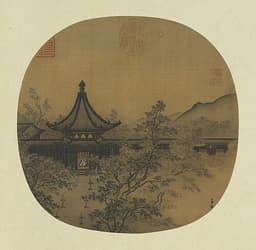
Li Ye
Emperor · Medieval
36.5Total
Basic Information
Born
1270
867
Died
1285
904
Era
Medieval
Medieval
Nationality
Mali Empire
China
Occupation
Emperor
Emperor
Civilization
Other
Eastern
Score Comparison
Military (10%)
21.2
21.2
Political (20%)
26.4
32.1
Influence (20%)
47.9
46.3
Legacy (20%)
37.5
37.5
Leadership (15%)
41.5
31.2
Strategy (15%)
36.8
39.6
TOTAL
37.3
36.5
Li Ye — Complete Timeline
900 AD
Attempted to Restore Imperial AuthorityPolitical Action◆ Major
Li Ye conspired with eunuchs and loyalist officials to reduce the power of the warlord Zhu Wen. The plot was discovered, leading to a purge of his supporters and the emperor's own deposition by eunuchs for a brief period before Zhu Wen restored him as a puppet.
ConspiracyPower StruggleEunuchs
Impact: national
904 AD
Executed by Zhu WenPolitical Action
Li Ye (Tang Zhaozong) was murdered on the orders of the warlord Zhu Wen, who had seized control of the imperial court. Zhu Wen had grown impatient with the emperor's attempts to resist his dominance and ordered his assassination, clearing the way for Zhu to later found the Later Liang dynasty.
AssassinationEnd of TangZhu Wen
Impact: nationaltragic
Expert Analysis
Origins
Abubakari I, also known as Mansa Abubakari I, was a 14th-century emperor of the Mali Empire. He was the first mansa from the line of Sundiata Keita's daughter, marking a shift in dynastic succession. Little is known about his early life, but he belonged to the Keita clan, the ruling family of Mali. His birth year is uncertain, but he reigned in the early 1300s, following Mansa Qu. The Mali Empire was at its height, controlling vast gold resources and trade routes across West Africa.
Li Ye, posthumously known as Emperor Zhaozong of Tang, was born in 867 AD into the Tang dynasty of China. He was the seventh son of Emperor Yizong. His mother was Consort Wang. The Tang dynasty was in terminal decline, plagued by eunuch power, warlord autonomy, and peasant rebellions. Li Ye's early life was overshadowed by court intrigues and the weakening of central authority.
Rise to Power
Abubakari I ascended to the throne after Mansa Qu, likely through dynastic politics. As the first ruler from Sundiata's daughter line, his rise represents a consolidation of power by a collateral branch. The Mali Empire's wealth and stability provided a strong foundation. However, specific dates and events of his accession are not recorded, as West African oral traditions dominate the historiography.
Li Ye became emperor in 888 AD after his brother, Emperor Xizong, died. He was placed on the throne by the powerful eunuch Yang Fugong. From the start, he faced immense challenges: the empire was fragmented, with warlords like Zhu Wen controlling large territories. Li Ye attempted to assert imperial authority but was largely a puppet. His reign lasted until 904 AD, when he was killed on Zhu Wen's orders.
Leadership & Governance
Abubakari I's leadership is poorly documented. As mansa, he oversaw the Mali Empire's continued prosperity, but no major reforms or campaigns are attributed to him. His governance likely followed established patterns: managing trade, collecting tribute, and maintaining the empire's military. His score of 41.5 in leadership reflects a moderate effectiveness, but the lack of records suggests limited personal impact.
Li Ye's governance was constrained by his weak position. He attempted to restore imperial authority by conspiring with eunuchs and loyalists against Zhu Wen. However, his plot was discovered, leading to a purge. His political score of 32.1 indicates his inability to wield power effectively. He scored 39.6 in strategy, reflecting his efforts to outmaneuver warlords, but his execution by Zhu Wen shows his failure.
Triumph & Tragedy
Abubakari I's greatest success was maintaining the Mali Empire's stability during his reign. However, his lack of recorded achievements is a tragedy in itself; he is overshadowed by his predecessors like Mansa Musa. His influence score of 47.9 suggests some impact, but it is likely derived from the empire's prominence rather than his actions.
Li Ye's triumph was his persistent resistance against warlord dominance, even from a weak position. He attempted to restore Tang authority, a noble but doomed effort. His tragedy is his murder by Zhu Wen, who later founded the Later Liang dynasty, ending the Tang. Li Ye's legacy is as a tragic figure who could not save his dynasty.
Character & Destiny
Abubakari I is a shadowy figure; his character is unknown. His destiny was to rule a prosperous empire but leave little personal mark. He scored 37.3 overall, reflecting a minor historical role.
Li Ye is remembered as a determined but unfortunate ruler. His character shows resilience, but his fate was sealed by the collapse of Tang power. He scored 36.5 overall, slightly lower than Abubakari I.
Legacy
Abubakari I's legacy is minimal. He is a footnote in Mali's history, mainly known as the first mansa from a new dynastic line. The Mali Empire continued to thrive after him, but his personal contributions are unknown. His legacy score of 37.5 is tied to the empire's lasting fame.
Li Ye's legacy is as the last emperor of the Tang dynasty. His death marked the end of one of China's greatest dynasties. He is remembered as a martyr of imperial decline. His legacy score of 37.5 matches Abubakari I's, but his impact on Chinese history is more significant as a symbol of the Tang's fall.
Conclusion
Comparing Abubakari I and Li Ye reveals two rulers with similar scores but different historical contexts. Abubakari I ruled a stable empire but left no personal achievements. Li Ye struggled against impossible odds and failed. While both scored 37.5 in legacy, Li Ye's role as the last Tang emperor gives him greater historical weight. His story illustrates the collapse of a dynasty, whereas Abubakari I's reign is a blank slate. Therefore, Li Ye had a greater impact, as his failure marked the end of an era. Abubakari I scored 37.3 overall, Li Ye 36.5, but the significance of Li Ye's position outweighs the slight score difference.
Rankings
🥇
Abubakari ILeader
Mil: 21.2Pol: 26.4Inf: 47.9
37.3
🥈
Li Ye
Mil: 21.2Pol: 32.1Inf: 46.3
36.5
+0.8 behind
How This Comparison Works
Algorithm
Each figure is scored on 6 dimensions (0—100 scale) based on structured historical data: Military (10%), Political (20%), Influence (20%), Legacy (20%), Leadership (15%), Strategy (15%). The weighted total produces the final ranking.
Data Sources
Scores are computed from structured sub-indicators in the database. Scale factors adjust for era (Ancient ×0.85, Modern ×1.0) and civilization size (Eastern ×1.05, Other ×0.80) to account for differences in population and military scale.
Maximum 3 Figures
Comparisons are limited to 2—3 figures to ensure readability and statistical meaningfulness.
Error Margins
±5 points per dimension — Sub-scores are derived from historical records with inherent uncertainty. Two figures within 5 points on a dimension should be considered roughly equivalent in that area.
Total Score Accuracy
±3 points overall — The weighted combination of 6 dimensions produces a total score with approximately ±3 points of uncertainty. Differences of less than 3 points are not statistically significant— the figures are effectively tied.
Known Limitations
- Historical records are incomplete and uneven across civilizations
- Figures from oral-tradition societies may be underrepresented
- Occupation labels can misclassify multi-role figures
- Scores measure capability and impact, not moral character
- Quantitative scoring is a comparison tool, not absolute truth
Capability Radar
Military (10%) — Battles & Warfare
Battles
10
15
Win Rate
10
10
Expansion
10
5
Political (20%) — Governance & Reform
Reform
20
10
Diplomacy
20
10
Economy
20
10
Influence (20%) — Cultural & Global Reach
Cultural
15
10
Global
10
5
Legacy (20%) — Historical Impact
Historical
15
15
Longevity
10
10
Leadership (15%) — Power & Stability
Tenure
30
30
Stability
20
5
Strategy (15%) — Tactics & Innovation
Strategy
10
10
Tactics
10
10
Reform
10
5
Similar Comparisons
Comments & Discussion
No comments yet. Be the first to share your thoughts!