Loading...
This comparison has not been analyzed yet.
One-time AI generation (~1 minute). Scores and timeline are already available below.
Acharya Narendra Dev vs Jorge Eliecer Gaitan
Acharya Narendra Dev leads by 5.4 pts · 2 figures compared
…

Acharya Narendra Dev
Politician · Modern
55.3Total
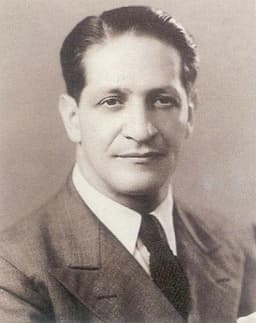
Jorge Eliecer Gaitan
Politician · Modern
49.9Total
Basic Information
Born
1889
1903
Died
1956
1948
Era
Modern
Modern
Nationality
India
Colombia
Occupation
Politician
Politician
Civilization
Indian
Western
Score Comparison
Military (10%)
33.7
49.6
Political (20%)
62.7
54.7
Influence (20%)
54.9
58.0
Legacy (20%)
46.7
52.0
Leadership (15%)
74.0
34.6
Strategy (15%)
60.0
40.9
TOTAL
55.3
49.9
Acharya Narendra Dev — Complete Timeline
1934 AD
Co-founded the Congress Socialist PartyPolitical Action◆ Major
Narendra Dev was a founding member of the Congress Socialist Party within the Indian National Congress. This party aimed to promote socialist ideas and agrarian reform within the independence movement, representing a left-wing faction.
SocialismIndian IndependencePolitical Party
Impact: nationalconstructive
1936 AD
Led the All India Kisan SabhaPolitical Action◆ Major
Narendra Dev became a prominent leader of the All India Kisan Sabha (peasants' union), advocating for the rights of farmers and tenants. He pushed for land reforms and debt relief, mobilizing peasant support for the nationalist cause.
Peasant MovementLand ReformSocialism
Impact: nationalconstructive
1942 AD
Imprisoned during the Quit India MovementPolitical Action◆ Major
Narendra Dev was arrested and imprisoned by British authorities for his participation in the Quit India Movement. He spent several years in jail, enduring harsh conditions as part of the mass civil disobedience campaign.
Quit IndiaImprisonmentCivil Disobedience
Impact: national
1947 AD
Served as Vice-Chancellor of Lucknow UniversityPolitical Action
After independence, Narendra Dev was appointed Vice-Chancellor of Lucknow University. He focused on academic administration and promoting socialist education, though his tenure was marked by political tensions.
EducationUniversity Administration
constructive
Jorge Eliecer Gaitan — Complete Timeline
1946 AD
Presidential candidacy in 1946Political Action◆ Major
Gaitán ran for president in 1946 as the candidate of the Liberal Party, but lost due to a split in the Liberal vote. His populist platform appealed to the urban poor and rural workers, making him a powerful political force.
ElectionPopulismLiberal Party
Impact: national
1947 AD
Leadership of the Liberal PartyPolitical Action◆ Major
Gaitán became the sole leader of the Liberal Party in 1947, uniting its factions. He advocated for land reform, labor rights, and social justice, gaining massive popular support and threatening the conservative establishment.
Political LeadershipReformSocial Justice
Impact: nationalconstructive
1948 AD
Bogotazo and assassinationPolitical Action
Gaitán was assassinated on April 9, 1948, in Bogotá. His death sparked the Bogotazo, a massive riot and uprising that destroyed parts of the city and led to the period of La Violencia, a decade-long civil war in Colombia.
AssassinationBogotazoLa Violencia
Impact: nationaltragic
This comparison has not been analyzed yet.
One-time AI generation (~1 minute). Scores and timeline are already available below.
Rankings
🥇
Acharya Narendra DevLeader
Mil: 33.7Pol: 62.7Inf: 54.9
55.3
🥈
Jorge Eliecer Gaitan
Mil: 49.6Pol: 54.7Inf: 58.0
49.9
+5.4 behind
How This Comparison Works
Algorithm
Each figure is scored on 6 dimensions (0—100 scale) based on structured historical data: Military (10%), Political (20%), Influence (20%), Legacy (20%), Leadership (15%), Strategy (15%). The weighted total produces the final ranking.
Data Sources
Scores are computed from structured sub-indicators in the database. Scale factors adjust for era (Ancient ×0.85, Modern ×1.0) and civilization size (Eastern ×1.05, Other ×0.80) to account for differences in population and military scale.
Maximum 3 Figures
Comparisons are limited to 2—3 figures to ensure readability and statistical meaningfulness.
Error Margins
±5 points per dimension — Sub-scores are derived from historical records with inherent uncertainty. Two figures within 5 points on a dimension should be considered roughly equivalent in that area.
Total Score Accuracy
±3 points overall — The weighted combination of 6 dimensions produces a total score with approximately ±3 points of uncertainty. Differences of less than 3 points are not statistically significant— the figures are effectively tied.
Known Limitations
- Historical records are incomplete and uneven across civilizations
- Figures from oral-tradition societies may be underrepresented
- Occupation labels can misclassify multi-role figures
- Scores measure capability and impact, not moral character
- Quantitative scoring is a comparison tool, not absolute truth
Capability Radar
Military (10%) — Battles & Warfare
Battles
46
29
Win Rate
44
32
Expansion
52
35
Political (20%) — Governance & Reform
Reform
55
55
Diplomacy
45
40
Economy
40
30
Influence (20%) — Cultural & Global Reach
Cultural
35
45
Global
25
35
Legacy (20%) — Historical Impact
Historical
40
60
Longevity
30
50
Leadership (15%) — Power & Stability
Tenure
30
15
Stability
35
5
Strategy (15%) — Tactics & Innovation
Strategy
51
36
Tactics
56
40
Reform
61
42
Similar Comparisons
Comments & Discussion
No comments yet. Be the first to share your thoughts!