Loading...
Jorge Eliecer Gaitan vs Napoleon Bonaparte
Napoleon Bonaparte leads by 21.0 pts · 2 figures compared
…
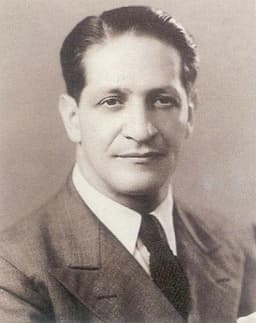
Jorge Eliecer Gaitan
Politician · Modern
49.9Total

Napoleon Bonaparte
General · Modern
70.9Total
Basic Information
Born
1903
1769
Died
1948
1821
Era
Modern
Modern
Nationality
Colombia
France
Occupation
Politician
General
Civilization
Western
Western
Score Comparison
Military (10%)
49.6
94.0
Political (20%)
54.7
72.0
Influence (20%)
58.0
40.0
Legacy (20%)
52.0
80.0
Leadership (15%)
34.6
78.0
Strategy (15%)
40.9
90.0
TOTAL
49.9
70.9
Jorge Eliecer Gaitan — Complete Timeline
1946 AD
Presidential candidacy in 1946Political Action◆ Major
Gaitán ran for president in 1946 as the candidate of the Liberal Party, but lost due to a split in the Liberal vote. His populist platform appealed to the urban poor and rural workers, making him a powerful political force.
ElectionPopulismLiberal Party
Impact: national
1947 AD
Leadership of the Liberal PartyPolitical Action◆ Major
Gaitán became the sole leader of the Liberal Party in 1947, uniting its factions. He advocated for land reform, labor rights, and social justice, gaining massive popular support and threatening the conservative establishment.
Political LeadershipReformSocial Justice
Impact: nationalconstructive
1948 AD
Bogotazo and assassinationPolitical Action
Gaitán was assassinated on April 9, 1948, in Bogotá. His death sparked the Bogotazo, a massive riot and uprising that destroyed parts of the city and led to the period of La Violencia, a decade-long civil war in Colombia.
AssassinationBogotazoLa Violencia
Impact: nationaltragic
Napoleon Bonaparte — Complete Timeline
1799 AD
Coup of 18 BrumaireOther◆ Major
Napoleon Bonaparte, with support from his brother Lucien and key political figures, overthrew the Directory in a bloodless coup. He established the Consulate with himself as First Consul, effectively becoming the ruler of France. This event ended the French Revolution's most unstable period.
French RevolutionCoupRise to Power
Impact: regional
1804 AD
Promulgation of the Napoleonic CodeOther◆ Major
Napoleon enacted the Civil Code of the French, known as the Napoleonic Code, a comprehensive set of laws that replaced the fragmented feudal legal systems. The code established legal equality, protected property rights, and secularized law. It became the basis for legal systems in many European and world countries.
Legal ReformNapoleonic CodeCivil Law
Impact: globalconstructive
1805 AD
Battle of AusterlitzWar◆ Major
Napoleon's Grande Arm
Napoleonic WarsBattleDecisive Victory
Impact: global
1812 AD
Invasion of RussiaWar◆ Major
Napoleon led the Grande Arm
Napoleonic WarsInvasionDisaster
Impact: globaldestructive
1815 AD
Battle of WaterlooWar◆ Major
Napoleon's French army was defeated by the combined forces of the Duke of Wellington's Anglo-Allied army and Gebhard Leberecht von Bl
Napoleonic WarsBattleFinal Defeat
Impact: globaldestructive
Expert Analysis
jorge-eliecer-gaitan-vs-napoleon-bonaparte
# The Conqueror and the Martyr: Two Paths of Power in the Modern Age
On a spring afternoon in 1948, Jorge Eliécer Gaitán walked out of his law office in Bogotá and was shot dead by a lone gunman. Within hours, the city erupted in flames. The Bogotazo, as it came to be known, killed thousands and plunged Colombia into a decade of civil war known as La Violencia. Across the Atlantic and more than a century earlier, on a June evening in 1815, another man watched his empire crumble at Waterloo. Napoleon Bonaparte, who had once commanded the armies of half of Europe, fled the battlefield in defeat, his ambitions forever extinguished. One man died in a single moment of violence that reshaped a nation; the other died six years later in exile on a remote island, his legacy already etched into world history. What drives such different outcomes? Why does one figure conquer continents while another is remembered primarily for the tragedy of his death?
Origins
Napoleon Bonaparte was born in 1769 on Corsica, a Mediterranean island that had only recently become French. His family was minor nobility, but his world was one of provincial ambition and imperial uncertainty. From childhood, he carried the chip of a Corsican outsider on his shoulder, yet he absorbed French military education at Brienne and Paris with ferocious intensity. The French Revolution, which erupted when he was twenty, shattered the old order and opened paths unimaginable under the monarchy. For a young artillery officer of modest birth, it was a moment of pure possibility.
Jorge Eliécer Gaitán, born in 1903 in a poor neighborhood of Bogotá, came from a different kind of margin. His father was a schoolteacher, his mother a seamstress. Colombia was a country scarred by the Thousand Days' War, a nation where the Conservative and Liberal parties had fought to exhaustion. Gaitán rose through sheer intellectual force—he earned a law degree, studied criminology in Italy, and returned to Colombia with a burning sense of injustice. Where Napoleon saw a world to be conquered, Gaitán saw a society to be reformed.
Rise to Power
Napoleon’s ascent was meteoric. In 1793, at the age of twenty-four, he distinguished himself at the Siege of Toulon, where his artillery plan drove the British from the port. By 1796, he commanded the Army of Italy, and in a series of dazzling campaigns, he crushed the Austrians and their allies. His victories made him a national hero. In 1799, he staged a coup d'état and made himself First Consul. By 1804, he crowned himself Emperor. Each step was a gamble, and each gamble paid off—until they stopped paying.
Gaitán’s path was slower and more painful. He ran for president in 1946 as the candidate of the Liberal Party, but a split in Liberal votes handed victory to the Conservative candidate. The loss was devastating, but Gaitán did not retreat. In 1947, he united the fractured Liberal factions under his sole leadership, becoming the voice of Colombia’s poor and dispossessed. He spoke of land reform, labor rights, and a government that served the many, not the few. His power was not military but moral—a flame that drew millions to the streets.
Leadership & Governance
Napoleon governed with a genius that matched his military brilliance. He reformed French law through the Napoleonic Code, a system that enshrined equality before the law, protected property rights, and secularized the state. He centralized the bureaucracy, established the Bank of France, and built roads and schools across his empire. His military strategy—with scores of 94 for military and 93 for strategy—was unmatched: he used speed, deception, and massed artillery to shatter his enemies at Austerlitz, Jena, and Friedland. Yet his political score of 75 reflects a fatal flaw: he could conquer but not consolidate. He alienated allies, installed his brothers on thrones they could not hold, and provoked endless coalitions against him.
Gaitán never held the presidency. His leadership score of 38.4 reflects not his capacity but his truncated opportunity. What he did possess was a rare political instinct—a score of 60.2 that, in the context of Colombia’s rigid class system, was extraordinary. He understood that the people’s rage was not aimless but directed at centuries of inequality. He did not command armies; he commanded hope. His tragedy is that we will never know what kind of president he would have been.
Triumph & Tragedy
Napoleon’s greatest moment was Austerlitz in 1805, where he destroyed a larger Russian and Austrian army in a single day. His worst was the invasion of Russia in 1812, a catastrophic miscalculation that cost half a million lives and destroyed his Grande Armée. Exiled to Elba in 1814, he escaped and returned to power for a Hundred Days, only to meet final defeat at Waterloo in 1815. He died in 1821 on Saint Helena, a prisoner of the British.
Gaitán’s triumph was his voice. In February 1948, he led a peaceful protest of over one hundred thousand people in Bogotá—the “March of Silence”—demanding justice. It was the largest political demonstration in Colombian history. His tragedy came two months later, on April 9, 1948, when an assassin’s bullet ended his life. The Bogotazo that followed destroyed much of the city and ignited La Violencia, a conflict that would claim over two hundred thousand lives. Gaitán died a martyr; his country died with him.
Character & Destiny
Napoleon’s character was a paradox of brilliance and hubris. He believed in fate—his own. “Impossible is a word to be found only in the dictionary of fools,” he once said. That confidence drove him to conquer Europe, but it also drove him to overreach. He could not stop. His destiny was shaped by his refusal to accept limits.
Gaitán’s character was forged in the furnace of Colombian injustice. He was a man of immense discipline and moral clarity. “I am not a man,” he said. “I am a people.” His destiny was not of his own making—it was imposed by the bullet of an assassin. Where Napoleon’s fall came from his own decisions, Gaitán’s came from forces he could not control.
Legacy
Napoleon’s legacy is global. His legal code influences civil law systems across Europe, the Americas, and beyond. His military campaigns are studied in war colleges. He reshaped the map of Europe and accelerated the spread of nationalism. His scores—82 for influence, 78 for legacy—reflect a figure who changed the world, for better and for worse.
Gaitán’s legacy is more contained but no less profound. In Colombia, he is a symbol of the possibility of a just society, a martyr whose death is a wound that has never fully healed. His influence score of 72.8 and legacy of 68.8 are high for a man who never held power. He represents the road not taken—a Latin American leader who might have built a social democracy instead of a violent oligarchy.
Conclusion
Napoleon and Gaitán lived in different worlds, on different scales. One commanded armies, the other commanded crowds. One built an empire, the other built a dream. Their scores—82.4 total for Napoleon, 55.2 for Gaitán—measure different things: the first measures conquest, the second measures potential. In the end, what separates them is not talent or ambition but the raw, indifferent force of circumstance. Napoleon had the fortune of a revolution that opened every door; Gaitán had the misfortune of a society that slammed them shut. One died in exile, remembered for what he did. The other died in the street, remembered for what he might have become.
Rankings
🥇
Napoleon BonaparteLeader
Mil: 94.0Pol: 72.0Inf: 40.0
70.9
🥈
Jorge Eliecer Gaitan
Mil: 49.6Pol: 54.7Inf: 58.0
49.9
+21.0 behind
How This Comparison Works
Algorithm
Each figure is scored on 6 dimensions (0—100 scale) based on structured historical data: Military (10%), Political (20%), Influence (20%), Legacy (20%), Leadership (15%), Strategy (15%). The weighted total produces the final ranking.
Data Sources
Scores are computed from structured sub-indicators in the database. Scale factors adjust for era (Ancient ×0.85, Modern ×1.0) and civilization size (Eastern ×1.05, Other ×0.80) to account for differences in population and military scale.
Maximum 3 Figures
Comparisons are limited to 2—3 figures to ensure readability and statistical meaningfulness.
Error Margins
±5 points per dimension — Sub-scores are derived from historical records with inherent uncertainty. Two figures within 5 points on a dimension should be considered roughly equivalent in that area.
Total Score Accuracy
±3 points overall — The weighted combination of 6 dimensions produces a total score with approximately ±3 points of uncertainty. Differences of less than 3 points are not statistically significant— the figures are effectively tied.
Known Limitations
- Historical records are incomplete and uneven across civilizations
- Figures from oral-tradition societies may be underrepresented
- Occupation labels can misclassify multi-role figures
- Scores measure capability and impact, not moral character
- Quantitative scoring is a comparison tool, not absolute truth
Capability Radar
Military (10%) — Battles & Warfare
Battles
29
95
Win Rate
32
90
Expansion
35
95
Political (20%) — Governance & Reform
Reform
55
95
Diplomacy
40
80
Economy
30
85
Influence (20%) — Cultural & Global Reach
Cultural
45
85
Global
35
90
Legacy (20%) — Historical Impact
Historical
60
95
Longevity
50
90
Leadership (15%) — Power & Stability
Tenure
15
85
Stability
5
70
Strategy (15%) — Tactics & Innovation
Strategy
36
95
Tactics
40
98
Reform
42
92
Similar Comparisons
Comments & Discussion
CorsicanThunder6/17/2026
Napoleon conquered Europe through military genius and institutional reform. Gaitán's legacy is pure tragedy—a martyr's death, not victory in life. Waterloo was a single battle; Gaitán's assassination set off decades of violence. Which shaped history more? Napoleon's legacy echoes globally; Gaitán's Colombia remains in shadows. The conqueror's path is tangible power; the martyr's is symbolic hope. I'll take the man who built a code over the one whose death tore a nation apart.
数字考古学家6/17/2026
这个对比太误导人了。说Gaitán死于刺杀而拿破仑战败流放,却忽略关键数据:拿破仑在1815年滑铁卢伤亡约7万人,Gaitán的死直接引发bogotazo造成约3000人丧生。但拿破仑的军事行动累计造成数百万人死亡,而Gaitán的悲剧影响局限于哥伦比亚。把短时恐怖事件和系统性军事扩展相提并论,逻辑站不住脚。数据的量级差距太大了。
ClassicsSkeptic6/17/2026
Wait, Napoleon conquered half of Europe with innovative tactics—the Corps system, speed, artillery focus. Gaitán was a lawyer and politician who couldn't even win Colombia's presidency. Comparing a military giant to a national martyr is like comparing Caesar to a municipal judge. Napoleon rewrote warfare; Gaitán's "reforms" were mostly rhetoric. The Bogotazo was chaos, not strategy. One built an empire, the other burned a district. History remembers differently for a reason.
文化批评家6/17/2026
这个比较太戏剧化了,仿佛在拍电影。拿破仑从小带外省自卑感,Gaitán是中产混血儿,两人都挑战了旧秩序。但拿破仑用了二十年征服欧洲,Gaitán用十年凝聚平民力量。最后的差异在于:拿破仑的失败是军事上的,Gaitán的死是政治性的。如果Gaitán活下来,哥伦比亚可能完全不同——他不是拿破仑那样的独裁者,而是一个可能真正推动改革的民粹领袖。这个对比忽略了社会变革的深度。
BogotaWitness6/17/2026
You miss the point entirely. Napoleon's power came from armies and treaties; Gaitán's from the people's voice. In 1948, his assassination triggered the Bogotazo not because he was a conqueror, but because the masses saw him killed by the elite. Napoleon died quietly in exile; Gaitán's death ignited a fire that still burns. Compare the napoleonic code to Gaitán's agrarian reform proposals—one imposed order, the other offered liberation. The real contrast isn't ambition, but impact on ordinary liv