Loading...
Ada of Caria vs Hammurabi
Hammurabi leads by 30.9 pts · 2 figures compared
…

Ada of Caria
Emperor · Ancient
38.5Total
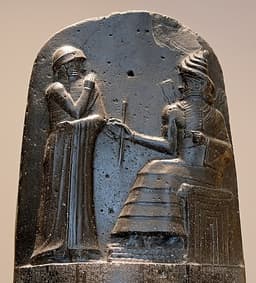
Hammurabi
Emperor · Ancient
69.4Total
Basic Information
Born
-380
-1810
Died
-326
-1750
Era
Ancient
Ancient
Nationality
Caria
Babylon
Occupation
Emperor
Emperor
Civilization
Middle Eastern
Middle Eastern
Score Comparison
Military (10%)
10.2
60.0
Political (20%)
32.2
62.7
Influence (20%)
46.3
68.0
Legacy (20%)
39.2
80.0
Leadership (15%)
45.0
80.0
Strategy (15%)
45.0
50.0
TOTAL
38.5
69.4
Ada of Caria — Complete Timeline
353 BC
Ruled Caria jointly with IdrieusPolitical Action◆ Major
Ada ruled Caria jointly with her brother and husband Idrieus after the death of Mausolus. She co-administered the satrapy, overseeing construction projects and maintaining Carian autonomy under Persian authority.
Joint RuleCarian Dynasty
Impact: regional
340 BC
Deposed by PixodarusPolitical Action◆ Major
After Idrieus' death, Ada was deposed by her younger brother Pixodarus, who seized power in Caria. She was forced into exile, likely at the fortress of Alinda, marking a period of political instability within the Hecatomnid family.
DepositionDynastic Struggle
Impact: regionaldestructive
334 BC
Adopted Alexander the GreatPolitical Action
When Alexander the Great arrived in Caria, Ada adopted him as her son. This act legitimized Alexander's rule in the region and secured his support, as Ada was the rightful Hecatomnid heir. Alexander restored her to power.
AdoptionAlexander the GreatCaria
Impact: regionalconstructive
Restored as Queen of CariaPolitical Action◆ Major
Following Alexander's conquest of Halicarnassus, Ada was restored as the queen of Caria. She ruled as a loyal ally of Alexander, providing him with troops and supplies for his campaign against the Persian Empire.
RestorationAlexander the GreatCaria
Impact: regionalconstructive
326 BC
Death and legacyPolitical Action
Ada died in 326 BC, having ruled Caria under Alexander's suzerainty. Her adoption of Alexander ensured the peaceful transition of Caria into the Hellenistic world, and she is remembered as the last Hecatomnid ruler of Caria.
DeathLegacy
Impact: regional
Hammurabi — Complete Timeline
1763 BC
Conquest of MesopotamiaWar◆ Major
Hammurabi conquered the city-states of Larsa, Mari, and Eshnunna, uniting most of Mesopotamia under Babylonian rule. This created the Babylonian Empire and made Babylon the dominant power in the region.
ConquestEmpireBabylon
Impact: regional
1754 BC
Promulgation of the Code of HammurabiCultural
Hammurabi issued a comprehensive legal code inscribed on a stele, containing 282 laws covering trade, property, family, and crime. The code established the principle of lex talionis (eye for an eye) and influenced later legal systems.
LawCodeMesopotamia
Impact: globalconstructive
1750 BC
Construction of Babylon's fortificationsOther
Hammurabi ordered the construction of extensive city walls, canals, and temples in Babylon. These projects strengthened the city's defenses and infrastructure, solidifying its status as a major urban center.
ConstructionInfrastructureBabylon
constructive
Expert Analysis
Origins
Ada of Caria was born around 390 BC into the Hecatomnid dynasty that ruled Caria, a region in southwestern Anatolia. She was the daughter of Hecatomnus, the satrap of Caria under the Achaemenid Empire. Ada married her brother Idrieus, as was customary among the Carian royalty to keep power within the family. After the death of her brother-husband Mausolus, she co-ruled with Idrieus until his death in 344 BC. Her early life was steeped in the politics of a Persian satrapy, where she learned administration and diplomacy.
Hammurabi was born around 1810 BC in Babylon, the sixth king of the First Babylonian Dynasty. He inherited a small kingdom from his father Sin-Muballit. The early years of his reign were focused on consolidating power and building alliances. He was educated in the traditions of Mesopotamian kingship and law, which would later influence his famous code.
Rise to Power
Ada's rise to power came through family connections. She ruled jointly with Idrieus after Mausolus' death, overseeing building projects and administration. However, after Idrieus died, her younger brother Pixodarus deposed her around 340 BC, forcing her into exile at the fortress of Alinda. Her turning point came in 334 BC when Alexander the Great arrived in Caria. Ada adopted Alexander as her son, legitimizing his rule and securing his support. In return, Alexander restored her as queen of Caria after capturing Halicarnassus.
Hammurabi's rise was marked by military conquest and diplomatic maneuvering. He ascended the throne around 1792 BC. For the first 30 years of his reign, he focused on internal improvements and building alliances. In 1764 BC, he began a series of campaigns against neighboring city-states. He conquered Larsa in 1763 BC, Mari in 1761 BC, and Eshnunna in 1760 BC, uniting most of Mesopotamia under Babylonian rule. His military strategy scored 50.0, while Ada's military score was only 10.2.
Leadership & Governance
Ada's leadership style was diplomatic and collaborative. She co-ruled with her brother-husband, and later ruled as a loyal ally of Alexander. She provided troops and supplies for Alexander's campaigns, ensuring Caria's autonomy within his empire. Her political score of 32.2 reflects her ability to navigate the complex power dynamics of the time, but her influence was limited to a small region.
Hammurabi's governance was centralized and legalistic. He is best known for the Code of Hammurabi, a comprehensive set of 282 laws inscribed on a stele. The code covered trade, property, family, and crime, establishing a uniform legal system across his empire. He also invested in infrastructure, building canals, walls, and temples. His political score of 62.7 and leadership score of 80.0 indicate a more effective and impactful ruler.
Triumph & Tragedy
Ada's greatest triumph was her restoration as queen through her alliance with Alexander. She ruled Caria peacefully for eight years until her death in 326 BC. Her adoption of Alexander ensured Caria's smooth transition into the Hellenistic world. However, her rule was brief and largely dependent on Alexander's favor. Her failure was her inability to maintain power independently, as she was deposed by her own brother.
Hammurabi's greatest triumph was the unification of Mesopotamia and the creation of the Babylonian Empire. His legal code became a model for future civilizations and influenced laws for millennia. His tragedy was that his empire did not long outlast him; it began to decline under his successor Samsu-iluna. His legacy score of 80.0 reflects the enduring impact of his code.
Character & Destiny
Ada was pragmatic and adaptable. By adopting Alexander, she secured her position and Caria's future. She was willing to submit to a foreign conqueror for the sake of her people. Her destiny was tied to Alexander's success, and she died with her realm intact.
Hammurabi was ambitious and systematic. He meticulously planned his conquests and codified laws to stabilize his empire. His character drove him to create a lasting legacy, but his empire's fragility was a result of its reliance on his personal authority. His total score of 69.4 reflects a more influential and effective ruler.
Legacy
Ada's legacy is primarily as a footnote in Alexander's story. Her adoption of Alexander is remembered as a diplomatic masterstroke, but her political influence was limited. She scored 46.3 in influence and 39.2 in legacy. Her rule is studied as an example of how local elites adapted to Hellenistic conquest.
Hammurabi's legacy is immense. The Code of Hammurabi is one of the earliest and most complete written legal codes, influencing Roman law and modern legal systems. His unification of Mesopotamia laid the groundwork for later empires. He scored 68.0 in influence and 80.0 in legacy, far surpassing Ada.
Conclusion
While Ada of Caria successfully navigated a turbulent period through alliance with Alexander, her impact was localized and temporary. Hammurabi, with a total score of 69.4 compared to Ada's 38.5, created a legal and political framework that shaped civilizations for centuries. His Code of Hammurabi remains a foundational text in legal history. Therefore, Hammurabi had a greater and more enduring impact on world history.
Rankings
🥇
HammurabiLeader
Mil: 60.0Pol: 62.7Inf: 68.0
69.4
🥈
Ada of Caria
Mil: 10.2Pol: 32.2Inf: 46.3
38.5
+30.9 behind
How This Comparison Works
Algorithm
Each figure is scored on 6 dimensions (0—100 scale) based on structured historical data: Military (10%), Political (20%), Influence (20%), Legacy (20%), Leadership (15%), Strategy (15%). The weighted total produces the final ranking.
Data Sources
Scores are computed from structured sub-indicators in the database. Scale factors adjust for era (Ancient ×0.85, Modern ×1.0) and civilization size (Eastern ×1.05, Other ×0.80) to account for differences in population and military scale.
Maximum 3 Figures
Comparisons are limited to 2—3 figures to ensure readability and statistical meaningfulness.
Error Margins
±5 points per dimension — Sub-scores are derived from historical records with inherent uncertainty. Two figures within 5 points on a dimension should be considered roughly equivalent in that area.
Total Score Accuracy
±3 points overall — The weighted combination of 6 dimensions produces a total score with approximately ±3 points of uncertainty. Differences of less than 3 points are not statistically significant— the figures are effectively tied.
Known Limitations
- Historical records are incomplete and uneven across civilizations
- Figures from oral-tradition societies may be underrepresented
- Occupation labels can misclassify multi-role figures
- Scores measure capability and impact, not moral character
- Quantitative scoring is a comparison tool, not absolute truth
Capability Radar
Military (10%) — Battles & Warfare
Battles
5
65
Win Rate
5
70
Expansion
5
65
Political (20%) — Governance & Reform
Reform
20
90
Diplomacy
40
75
Economy
20
70
Influence (20%) — Cultural & Global Reach
Cultural
20
85
Global
15
80
Legacy (20%) — Historical Impact
Historical
25
90
Longevity
20
95
Leadership (15%) — Power & Stability
Tenure
30
80
Stability
25
75
Strategy (15%) — Tactics & Innovation
Strategy
5
60
Tactics
5
55
Reform
5
50
Similar Comparisons
Comments & Discussion
No comments yet. Be the first to share your thoughts!