Loading...
Ada of Caria vs Xiao Daocheng
Xiao Daocheng leads by 13.3 pts · 2 figures compared
…

Ada of Caria
Emperor · Ancient
38.5Total
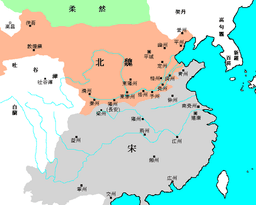
Xiao Daocheng
Emperor · Ancient
51.8Total
Basic Information
Born
-380
427
Died
-326
482
Era
Ancient
Ancient
Nationality
Caria
China
Occupation
Emperor
Emperor
Civilization
Middle Eastern
Eastern
Score Comparison
Military (10%)
10.2
50.0
Political (20%)
32.2
48.0
Influence (20%)
46.3
51.8
Legacy (20%)
39.2
42.5
Leadership (15%)
45.0
67.0
Strategy (15%)
45.0
60.0
TOTAL
38.5
51.8
Ada of Caria — Complete Timeline
353 BC
Ruled Caria jointly with IdrieusPolitical Action◆ Major
Ada ruled Caria jointly with her brother and husband Idrieus after the death of Mausolus. She co-administered the satrapy, overseeing construction projects and maintaining Carian autonomy under Persian authority.
Joint RuleCarian Dynasty
Impact: regional
340 BC
Deposed by PixodarusPolitical Action◆ Major
After Idrieus' death, Ada was deposed by her younger brother Pixodarus, who seized power in Caria. She was forced into exile, likely at the fortress of Alinda, marking a period of political instability within the Hecatomnid family.
DepositionDynastic Struggle
Impact: regionaldestructive
334 BC
Adopted Alexander the GreatPolitical Action
When Alexander the Great arrived in Caria, Ada adopted him as her son. This act legitimized Alexander's rule in the region and secured his support, as Ada was the rightful Hecatomnid heir. Alexander restored her to power.
AdoptionAlexander the GreatCaria
Impact: regionalconstructive
Restored as Queen of CariaPolitical Action◆ Major
Following Alexander's conquest of Halicarnassus, Ada was restored as the queen of Caria. She ruled as a loyal ally of Alexander, providing him with troops and supplies for his campaign against the Persian Empire.
RestorationAlexander the GreatCaria
Impact: regionalconstructive
326 BC
Death and legacyPolitical Action
Ada died in 326 BC, having ruled Caria under Alexander's suzerainty. Her adoption of Alexander ensured the peaceful transition of Caria into the Hellenistic world, and she is remembered as the last Hecatomnid ruler of Caria.
DeathLegacy
Impact: regional
Xiao Daocheng — Complete Timeline
466 AD
Suppression of the Liu Xiufan RebellionWar◆ Major
Xiao Daocheng led forces to suppress the rebellion of Liu Xiufan, a prince of the Liu Song Dynasty. His victory earned him military command and political influence, allowing him to consolidate power in the court.
Liu SongRebellionMilitary Campaign
Impact: nationalconstructive
479 AD
Coup Against Liu SongPolitical Action
Xiao Daocheng forced Emperor Shun of Liu Song to abdicate and proclaimed himself emperor, founding the Southern Qi Dynasty. This ended the Liu Song Dynasty and established the Southern Qi as the new ruling house in southern China.
Southern QiLiu SongAbdicationDynastic Change
Impact: nationaldestructive
Expert Analysis
Origins
Ada of Caria was born around 390 BC into the Hecatomnid dynasty, which ruled Caria (in modern-day Turkey) as satraps of the Achaemenid Empire. She was the daughter of Hecatomnus and sister to Mausolus, Artemisia II, Idrieus, and Pixodarus. Ada married her brother Idrieus, as was common in the dynasty, and ruled jointly with him after Mausolus's death. Her early life was steeped in the politics of the Persian Empire and the cultural achievements of Caria, including the construction of the Mausoleum at Halicarnassus.
Xiao Daocheng was born in 427 AD during the Liu Song dynasty in China. He came from a military family of the Langya Xiao clan, which had a history of service. His father, Xiao Chengzhi, was a county magistrate. Xiao Daocheng began his career as a low-level official and military officer, gradually rising through the ranks. His early life was marked by the tumultuous politics of the Southern Dynasties period, where power shifted frequently through coups and rebellions.
Rise to Power
Ada's rise to power came through her family connections. After Mausolus's death, his wife Artemisia II ruled, then Idrieus. When Idrieus died around 344 BC, Ada became the sole ruler of Caria. However, her younger brother Pixodarus deposed her around 340 BC, forcing her into exile at the fortress of Alinda. Her restoration came in 334 BC when Alexander the Great invaded Asia Minor. Ada, seeing an opportunity, allied with Alexander. She formally adopted him as her son, a gesture that legitimized Alexander's claim to Caria. After Alexander captured Halicarnassus, he restored Ada as queen of Caria. She ruled until her death in 326 BC, governing as a loyal vassal.
Xiao Daocheng's rise was gradual and strategic. He served as a general under the Liu Song dynasty, suppressing rebellions such as that of Liu Xiufan in 466 AD. This victory earned him military command and political influence. He later became a key figure in the court, eventually forcing Emperor Shun of Liu Song to abdicate in 479 AD. Xiao Daocheng then proclaimed himself emperor, founding the Southern Qi dynasty. His coup was bloodless in terms of the emperor's death, but he executed many Liu Song princes to secure his rule.
Leadership & Governance
Ada's leadership style was diplomatic and collaborative. She ruled Caria jointly with Idrieus and later independently, overseeing construction projects and maintaining stability. As a vassal of Alexander, she provided troops and supplies for his campaigns. She scored 45.0 in leadership and strategy, indicating competent but not exceptional skills. Her political score of 32.2 reflects her reliance on Alexander's support rather than independent policy.
Xiao Daocheng's leadership was more authoritarian and reformist. He scored 67.0 in leadership and 60.0 in strategy. He implemented administrative reforms, reducing the power of wealthy landowners and centralizing authority. He also cut government spending and established a census to improve tax collection. His governance aimed to stabilize the Southern Qi dynasty after the chaotic Liu Song period. However, his political score of 48.0 suggests moderate effectiveness, as his reign lasted only four years (479-482 AD).
Triumph & Tragedy
Ada's greatest triumph was her restoration as queen through her alliance with Alexander. This secured Caria's autonomy and prosperity under Hellenistic influence. She also contributed to the cultural legacy of Caria, including the Mausoleum. Her tragedy was her deposition by Pixodarus, which forced her into exile for about six years. She also never produced an heir, leading to the end of the Hecatomnid dynasty after her death.
Xiao Daocheng's triumph was founding the Southern Qi dynasty and successfully consolidating power after the Liu Song collapse. He suppressed rebellions and began reforms. His tragedy was his short reign and the instability that followed. He died in 482 AD, and his son Xiao Ze succeeded him, but the dynasty fell in 502 AD due to internal strife. Xiao Daocheng's military score of 50.0 reflects modest achievements, while his legacy score of 42.5 indicates limited long-term impact.
Character & Destiny
Ada was pragmatic and adaptable. She recognized Alexander's power and used adoption to secure her position. Her character was diplomatic, but her destiny was tied to Alexander's; after his death, Caria likely passed to others. She scored 46.3 in influence, reflecting her connection to Alexander.
Xiao Daocheng was ambitious and calculating. He patiently built power and executed a coup. His character was decisive but ruthless, as seen in the executions of Liu Song princes. His destiny was to found a short-lived dynasty, unable to overcome the systemic problems of the era.
Legacy
Ada's legacy is tied to Alexander the Great and the Hellenization of Asia Minor. She is remembered as a queen who wisely allied with a conqueror. Her total score of 38.5 reflects minor historical impact. Xiao Daocheng's legacy is as the founder of the Southern Qi dynasty, part of the Southern and Northern Dynasties period. His reforms influenced later dynasties, but his dynasty was brief. He scored 51.8 total, indicating greater overall impact.
Conclusion
Xiao Daocheng had a greater historical impact than Ada of Caria. His founding of a dynasty, albeit short-lived, had more lasting political consequences than Ada's localized rule. His total score of 51.8 exceeds Ada's 38.5 by 13.3 points. While Ada's story is fascinating due to her adoption of Alexander, her influence was limited to Caria and dependent on Alexander's favor. Xiao Daocheng's actions shaped Chinese history for a few decades, whereas Ada's legacy is a footnote in Alexander's campaigns. Thus, Xiao Daocheng is the more significant historical figure.
Rankings
🥇
Xiao DaochengLeader
Mil: 50.0Pol: 48.0Inf: 51.8
51.8
🥈
Ada of Caria
Mil: 10.2Pol: 32.2Inf: 46.3
38.5
+13.3 behind
How This Comparison Works
Algorithm
Each figure is scored on 6 dimensions (0—100 scale) based on structured historical data: Military (10%), Political (20%), Influence (20%), Legacy (20%), Leadership (15%), Strategy (15%). The weighted total produces the final ranking.
Data Sources
Scores are computed from structured sub-indicators in the database. Scale factors adjust for era (Ancient ×0.85, Modern ×1.0) and civilization size (Eastern ×1.05, Other ×0.80) to account for differences in population and military scale.
Maximum 3 Figures
Comparisons are limited to 2—3 figures to ensure readability and statistical meaningfulness.
Error Margins
±5 points per dimension — Sub-scores are derived from historical records with inherent uncertainty. Two figures within 5 points on a dimension should be considered roughly equivalent in that area.
Total Score Accuracy
±3 points overall — The weighted combination of 6 dimensions produces a total score with approximately ±3 points of uncertainty. Differences of less than 3 points are not statistically significant— the figures are effectively tied.
Known Limitations
- Historical records are incomplete and uneven across civilizations
- Figures from oral-tradition societies may be underrepresented
- Occupation labels can misclassify multi-role figures
- Scores measure capability and impact, not moral character
- Quantitative scoring is a comparison tool, not absolute truth
Capability Radar
Military (10%) — Battles & Warfare
Battles
5
45
Win Rate
5
50
Expansion
5
35
Political (20%) — Governance & Reform
Reform
20
50
Diplomacy
40
45
Economy
20
40
Influence (20%) — Cultural & Global Reach
Cultural
20
30
Global
15
20
Legacy (20%) — Historical Impact
Historical
25
40
Longevity
20
25
Leadership (15%) — Power & Stability
Tenure
30
55
Stability
25
35
Strategy (15%) — Tactics & Innovation
Strategy
5
45
Tactics
5
40
Reform
5
30
Similar Comparisons
Comments & Discussion
No comments yet. Be the first to share your thoughts!