Loading...
Adolf Frederick vs Julius Caesar
Julius Caesar leads by 43.4 pts · 2 figures compared
…
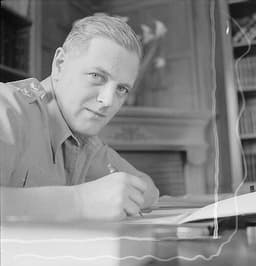
Adolf Frederick
Emperor · Modern
39.4Total

Julius Caesar
General · Ancient
82.8Total
Basic Information
Born
1710
-100
Died
1771
-44
Era
Modern
Ancient
Nationality
Sweden
Roman Republic
Occupation
Emperor
General
Civilization
Western
Western
Score Comparison
Military (10%)
48.8
88.0
Political (20%)
30.7
78.0
Influence (20%)
45.5
85.0
Legacy (20%)
34.2
82.0
Leadership (15%)
31.2
80.0
Strategy (15%)
53.1
85.0
TOTAL
39.4
82.8
Adolf Frederick — Complete Timeline
1751 AD
Coronation of Adolf FrederickPolitical Action◆ Major
Adolf Frederick was crowned King of Sweden after the death of Frederick I. His coronation was conditional on the 1720 constitution, which left him with little real power, as the Riksdag dominated governance.
CoronationConstitutionAge of Liberty
Impact: national
1756 AD
December Crisis (1756)Political Action
Adolf Frederick attempted to increase royal power by dismissing the Hat party government, but the Riksdag forced him to back down. The crisis highlighted the weakness of the monarchy during the Age of Liberty.
CrisisConstitutional Conflict
Impact: national
1771 AD
Death from OvereatingOther
Adolf Frederick died in Stockholm after consuming a large meal of lobster, caviar, sauerkraut, and champagne, followed by 14 servings of his favorite dessert. His death was attributed to digestive issues, symbolizing his weak and indulgent rule.
DeathOvereating
Impact: nationaltragic
Julius Caesar — Complete Timeline
58 BC
Gallic WarsWar◆ Major
Caesar, as proconsul of Gaul, launched a series of campaigns that conquered all of Gaul (modern France, Belgium, and parts of Switzerland). He fought numerous battles, including against the Helvetii, the Belgae, and the Gallic chieftain Vercingetorix. The wars brought immense wealth and a loyal army to Caesar.
Gallic WarsConquestRoman Expansion
Impact: regional
49 BC
Crossing the RubiconPolitical Action◆ Major
Caesar led Legio XIII across the Rubicon River into Italy, defying the Roman Senate's order to disband his army. This act triggered a civil war against Pompey and the Optimates, ultimately leading to Caesar's dictatorship and the end of the Roman Republic.
Roman Civil WarEnd of RepublicPower Struggle
Impact: global
48 BC
Battle of PharsalusWar◆ Major
Caesar's outnumbered army defeated the larger forces of Pompey the Great at Pharsalus in Greece. Caesar's tactical use of a reserve line to counter Pompey's cavalry charge proved decisive. Pompey fled to Egypt, where he was assassinated, leaving Caesar as the undisputed master of the Roman world.
Roman Civil WarBattleDecisive Victory
Impact: regional
44 BC
Appointment as Dictator for LifePolitical Action◆ Major
The Roman Senate appointed Caesar dictator perpetuo (dictator for life), granting him unprecedented personal power. This move concentrated military, legislative, and judicial authority in one person, effectively ending the Roman Republic's traditional system of checks and balances and alarming many senators.
DictatorshipEnd of RepublicPower Consolidation
Impact: regionaldestructive
Assassination on the Ides of MarchPolitical Action◆ Major
A group of Roman senators, led by Marcus Junius Brutus and Gaius Cassius Longinus, stabbed Caesar to death at a meeting of the Senate in the Theatre of Pompey. The assassination was intended to restore the Republic, but instead triggered another civil war that led to the rise of the Roman Empire.
AssassinationRoman PoliticsEnd of Republic
Impact: globaldestructive
Expert Analysis
adolf-frederick-vs-julius-caesar
# The Man Who Crossed the Rubicon and the King Who Ate Himself to Death
On the Ides of March, 44 BCE, a group of Roman senators surrounded Gaius Julius Caesar and stabbed him twenty-three times. He fell at the foot of a statue of his rival Pompey, bleeding out on the marble floor of the Senate chamber. More than eighteen centuries later, in February 1771, King Adolf Frederick of Sweden sat down to a meal that included lobster, caviar, sauerkraut, and champagne, followed by a dessert of fourteen servings of his favorite pastry. He then died of digestive failure. These two deaths—one the climax of a world-historical drama, the other a gluttonous absurdity—capture the chasm between the two men. Caesar remade the world; Adolf Frederick could not even hold his own kingdom. How did two Western monarchs, born into eras of immense possibility, end up so differently?
Origins
Julius Caesar was born in 100 BCE into a patrician family that had seen better days. The Roman Republic was a cauldron of ambition, corruption, and civil strife. His aunt married Gaius Marius, a populist general, and his father died when Caesar was sixteen, leaving him to navigate a world where a man’s worth was measured in military glory and political cunning. From boyhood, Caesar breathed the air of a dying republic, where the Senate’s paralysis and the rise of warlords made the old order tremble.
Adolf Frederick, born in 1710, came into a very different world. Sweden had been a great power in the seventeenth century, but the death of King Charles XII in 1718 and the disastrous Great Northern War had reduced it to a secondary state. The Swedish monarchy was now shackled by the “Age of Liberty,” a constitutional regime where the Riksdag (parliament) held real power. Adolf Frederick was a prince of the House of Holstein-Gottorp, a German dynasty imposed on Sweden by the victorious powers. He was a puppet before he even took the throne—a man chosen not for his abilities, but because he was weak enough to control.
Rise to Power
Caesar’s ascent was a masterpiece of calculated risk. He climbed the Roman political ladder—quaestor, aedile, praetor—borrowing enormous sums to fund games and bribes, building a network of clients and debtors. His military breakthrough came in Gaul, where from 58 to 50 BCE he conquered a vast territory, wrote his own propaganda (the *Commentaries*), and forged an army loyal to him personally, not to the state. When the Senate ordered him to disband his legions, he crossed the Rubicon River in 49 BCE, igniting a civil war. He knew the gamble: “The die is cast.”
Adolf Frederick’s rise was the opposite of a gamble. He became king in 1751 after the death of Frederick I, but his coronation was conditional on the 1720 constitution, which stripped the monarch of nearly all real authority. He was a figurehead, a ceremonial ornament. In 1756, he attempted a desperate grasp at power—the “December Crisis”—by dismissing the Hat party government and trying to restore royal prerogative. The Riksdag responded by forcing him to sign a humiliating capitulation, and his wife, Queen Louisa Ulrika, was implicated in a conspiracy that nearly ended the monarchy. Adolf Frederick learned the lesson: he was not Caesar. He had no army, no loyal faction, no will to cross any river.
Leadership & Governance
Caesar ruled as dictator, first temporarily, then for life. He reformed the calendar, granted citizenship to provincials, reduced debt, and launched public works. He was a military genius—his siege of Alesia in 52 BCE, where he surrounded the Gallic fortress and then built another ring of defenses to fend off a relief army, is still studied in war colleges. But his political wisdom was flawed: he pardoned his enemies, thinking they would be grateful, and centralized power in ways that made the Senate seethe. He was a reformer who could not see that his own success was the Republic’s death warrant.
Adolf Frederick’s governance was a study in impotence. He had no army to command, no policy to shape. His military score of 32.5 reflects not cowardice but irrelevance—he never led troops in battle. His political score of 53.4 is generous for a man who could not even appoint his own ministers. He spent his reign signing documents and presiding over ceremonies, while the Hat and Cap parties fought for control of the Riksdag. He was, in essence, a hostage in his own palace, a king who reigned but did not rule.
Triumph & Tragedy
Caesar’s greatest triumph was his conquest of Gaul, which added a vast, wealthy province to Rome and made him the richest man in the Mediterranean. His greatest tragedy was his assassination—the moment when his clemency and ambition collided. He had spared Brutus, Cassius, and dozens of other senators; they repaid him with daggers. His tragedy was that he could not see that the Republic’s traditions were stronger than his personal charisma.
Adolf Frederick’s greatest moment was arguably his death—not because it was heroic, but because it was so perfectly symbolic. He ate himself to death. It is a tragedy of the absurd: a king who could not achieve anything in life made his only mark by overindulging. The year 1771 saw the end of a reign that had no triumphs, only the quiet humiliation of a monarch who had been reduced to a gourmand’s final binge.
Character & Destiny
Caesar was ruthless, brilliant, and charismatic. He could forgive his enemies and destroy his rivals with equal ease. His personality—the gambler’s nerve, the orator’s tongue, the general’s cold eye—drove him to remake the world in his image. He believed in his own star, and for a time, the universe seemed to agree.
Adolf Frederick was, by all accounts, a mild, unambitious man who loved food and family more than power. He was not stupid, but he was defeated by his own era. The Age of Liberty had made kingship a hollow shell, and he lacked the ferocity to break it. His destiny was to be a footnote—a cautionary tale about the limits of monarchy in an age of parliaments.
Legacy
Caesar’s legacy is incalculable. His name became a title—Kaiser, Tsar, Caesar—and his reforms laid the foundation for the Roman Empire. He is remembered as a military genius, a writer, and a symbol of the dangerous allure of absolute power. His assassination did not restore the Republic; it merely cleared the stage for Augustus.
Adolf Frederick’s legacy is a punchline. He is remembered, if at all, as the king who ate himself to death. His political reforms were nonexistent, his military achievements zero. He left behind a Sweden still trapped in the Age of Liberty, which would eventually collapse into royal absolutism under Gustav III. In the grand sweep of history, he is a minor character—a sad, rotund figure who could not even control his own appetite.
Conclusion
Caesar and Adolf Frederick represent the two poles of monarchy: the man who seized destiny and the man who was crushed by it. One crossed rivers; the other crossed a dinner table. One built an empire; the other built a reputation for indigestion. Their differences were not simply of talent or ambition—they were products of their times. Caesar’s Rome rewarded audacity; Adolf Frederick’s Sweden punished it. Yet even within their constraints, each man made choices. Caesar chose to risk everything; Adolf Frederick chose to eat. History remembers both, but for very different reasons. The Ides of March echo through the ages; the king’s final pastry is merely a curiosity. In the end, the men who shape history are those who refuse to accept the world as they find it—and are willing to die trying to change it.
Rankings
🥇
Julius CaesarLeader
Mil: 88.0Pol: 78.0Inf: 85.0
82.8
🥈
Adolf Frederick
Mil: 48.8Pol: 30.7Inf: 45.5
39.4
+43.4 behind
How This Comparison Works
Algorithm
Each figure is scored on 6 dimensions (0—100 scale) based on structured historical data: Military (10%), Political (20%), Influence (20%), Legacy (20%), Leadership (15%), Strategy (15%). The weighted total produces the final ranking.
Data Sources
Scores are computed from structured sub-indicators in the database. Scale factors adjust for era (Ancient ×0.85, Modern ×1.0) and civilization size (Eastern ×1.05, Other ×0.80) to account for differences in population and military scale.
Maximum 3 Figures
Comparisons are limited to 2—3 figures to ensure readability and statistical meaningfulness.
Error Margins
±5 points per dimension — Sub-scores are derived from historical records with inherent uncertainty. Two figures within 5 points on a dimension should be considered roughly equivalent in that area.
Total Score Accuracy
±3 points overall — The weighted combination of 6 dimensions produces a total score with approximately ±3 points of uncertainty. Differences of less than 3 points are not statistically significant— the figures are effectively tied.
Known Limitations
- Historical records are incomplete and uneven across civilizations
- Figures from oral-tradition societies may be underrepresented
- Occupation labels can misclassify multi-role figures
- Scores measure capability and impact, not moral character
- Quantitative scoring is a comparison tool, not absolute truth
Capability Radar
Military (10%) — Battles & Warfare
Battles
22
95
Win Rate
27
92
Expansion
28
97
Political (20%) — Governance & Reform
Reform
5
90
Diplomacy
10
85
Economy
5
82
Influence (20%) — Cultural & Global Reach
Cultural
5
88
Global
5
94
Legacy (20%) — Historical Impact
Historical
10
95
Longevity
5
96
Leadership (15%) — Power & Stability
Tenure
5
75
Stability
10
60
Strategy (15%) — Tactics & Innovation
Strategy
36
94
Tactics
35
96
Reform
38
88
Similar Comparisons
Comments & Discussion
No comments yet. Be the first to share your thoughts!