Loading...
Adolf of Nassau vs Wedem Arad
Wedem Arad leads by 8.5 pts · 2 figures compared
…
Adolf of Nassau
Emperor · Medieval
40.0Total

Wedem Arad
Emperor · Medieval
48.5Total
Basic Information
Born
1255
1270
Died
1298
1314
Era
Medieval
Medieval
Nationality
Holy Roman Empire
Ethiopia
Occupation
Emperor
Emperor
Civilization
Western
Other
Score Comparison
Military (10%)
50.0
50.0
Political (20%)
30.7
35.1
Influence (20%)
47.9
58.0
Legacy (20%)
37.5
45.8
Leadership (15%)
31.2
55.3
Strategy (15%)
43.7
39.6
TOTAL
40.0
48.5
Adolf of Nassau — Complete Timeline
1292 AD
Elected King of GermanyPolitical Action◆ Major
Adolf of Nassau was elected King of Germany by the prince-electors, succeeding Rudolf of Habsburg. His election was supported by the Archbishop of Mainz and other electors who sought to limit Habsburg influence.
ElectionGerman KingdomNassau
Impact: regional
1294 AD
Purchased the Landgraviate of ThuringiaPolitical Action
Adolf of Nassau purchased the Landgraviate of Thuringia from the Wettin dynasty. This acquisition expanded his territorial base but was criticized by the prince-electors for using imperial funds without their consent.
Territorial AcquisitionThuringiaControversy
Impact: regional
1298 AD
Killed at the Battle of GöllheimWar◆ Major
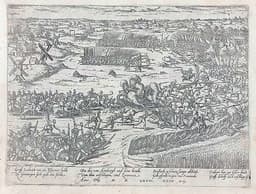
Adolf of Nassau was killed in battle against Albert I of Habsburg at G
BattleDeathHabsburg
Impact: regionaltragic
Deposed by the Prince-ElectorsPolitical Action◆ Major
Adolf of Nassau was deposed by the prince-electors, who accused him of misgovernance and violating imperial laws. This deposition was unprecedented and led to the election of Albert I of Habsburg as his successor.
DepositionGerman KingdomHabsburg
Impact: regionaldestructive
Wedem Arad — Complete Timeline
1306 AD
First Contact with EuropePolitical Action◆ Major
Wedem Arad sent an embassy to Europe, likely to the court of Pope Clement V in Avignon. This was the first recorded diplomatic contact between Ethiopia and a European power since antiquity, establishing a precedent for future Ethiopian-European relations.
Impact: regional
Expert Analysis
Origins
Adolf of Nassau was born around 1255 into the House of Nassau, a comital family in the Holy Roman Empire. His father was Count Walram II of Nassau. Adolf inherited the county in 1276 and expanded his territory through strategic marriages and purchases. His rise was typical of minor German nobles seeking to increase their influence within the empire's fragmented political landscape.
Wedem Arad, whose name means "the only son," became Emperor of Ethiopia in 1299, succeeding his father Yagbe'u Seyon. Ethiopia was a Christian kingdom in the Horn of Africa, isolated from Europe but with a rich history dating back to the Aksumite Empire. Wedem Arad's early life is obscure, but he emerged from a lineage of Solomonic rulers claiming descent from Menelik I, son of King Solomon and the Queen of Sheba.
Rise to Power
Adolf of Nassau was elected King of Germany on May 5, 1292, by the prince-electors, who chose him over Albert of Habsburg, son of the previous king Rudolf I. The electors, led by the Archbishop of Mainz, sought a weaker candidate to limit royal power. Adolf's election was a compromise, and he immediately faced challenges from the Habsburgs and other powerful princes. He attempted to build a power base by purchasing the Landgraviate of Thuringia in 1294 from the Wettin dynasty for 12,000 marks of silver, a move that alienated many nobles.
Wedem Arad's rise was more straightforward. He inherited the throne upon his father's death in 1299. As emperor, he faced internal rebellions and external threats from Muslim sultanates along the Red Sea. His reign is notable for initiating the first recorded diplomatic contact between Ethiopia and Europe. In 1306, he sent an embassy to the court of Pope Clement V in Avignon, seeking an alliance against Muslim powers. This mission, led by 30 Ethiopians, reached Europe and was received by the Pope, but no lasting alliance formed.
Leadership & Governance
Adolf of Nassau's leadership was weak and opportunistic. He lacked the political acumen to balance the competing factions within the empire. His purchase of Thuringia was seen as a violation of imperial laws and a threat to other princes. He also engaged in conflicts with the Count of Holland and the Archbishop of Cologne. His governance score of 31.2 reflects his inability to maintain authority. In 1298, the prince-electors deposed him on grounds of misgovernance, an unprecedented act in German history.
Wedem Arad ruled with more stability, though his political score of 35.1 is still modest. He maintained control over the Ethiopian Highlands and defended against the Sultanate of Ifat. His diplomatic initiative to Europe showed foresight, but it did not yield immediate results. He also faced a rebellion by his brother, who claimed the throne, but Wedem Arad suppressed it. His leadership score of 55.3 indicates a more effective ruler than Adolf, who scored 31.2.
Triumph & Tragedy
Adolf of Nassau's greatest triumph was his election as king, which elevated his family to royal status. He also successfully acquired Thuringia, expanding his territory. However, his deposition and death in battle at Göllheim on July 2, 1298, were his ultimate failures. He was killed by Albert of Habsburg, who then became king. Adolf's reign lasted only six years, and he left no lasting legacy.
Wedem Arad's triumph was his embassy to Europe, which opened a channel of communication that would later be used by Ethiopian rulers to seek Portuguese aid against Muslim invaders. His tragedy was that the embassy did not secure a military alliance, and Ethiopia remained isolated for another two centuries. He died around 1314, succeeded by his son Amda Seyon I, who would become one of Ethiopia's greatest emperors.
Character & Destiny
Adolf of Nassau was ambitious but reckless. He overestimated his ability to manipulate the empire's politics and underestimated the resentment of the princes. His decision to purchase Thuringia without imperial consent showed poor judgment. His military score of 50.0 and strategy of 43.7 suggest he was not a skilled commander; he was killed in a battle where he was outmaneuvered.
Wedem Arad was more cautious and diplomatic. His initiative to contact Europe indicates a strategic mindset, but he lacked the resources to follow through. His strategy score of 39.6 is lower than Adolf's, but his leadership score of 55.3 is higher. He faced fewer existential threats and managed to pass the throne to his son, ensuring dynastic continuity.
Legacy
Adolf of Nassau is remembered as a failed king whose deposition set a precedent for the electors' power to remove a monarch. His total score of 40.0 reflects his lack of lasting impact. He is a footnote in German history, often overshadowed by the Habsburgs.
Wedem Arad's legacy is more significant. His embassy to Europe is considered a milestone in Ethiopian-European relations. His influence score of 58.0 and legacy of 45.8 are higher than Adolf's 47.9 and 37.5. Ethiopia's later alliances with Portugal can trace their roots to his initiative. He also strengthened the Solomonic dynasty, which ruled until 1974.
Conclusion
Wedem Arad had greater historical impact than Adolf of Nassau. His total score of 48.5 surpasses Adolf's 40.0 by 8.5 points. While Adolf's reign was short and disastrous, Wedem Arad's diplomatic breakthrough connected Ethiopia to a wider world. Adolf's deposition was a constitutional crisis, but it did not alter the trajectory of German history. Wedem Arad's outreach to Europe, though not immediately successful, laid the groundwork for future interactions that would shape Ethiopian sovereignty. Therefore, Wedem Arad is the more consequential figure.
Rankings
🥇
Wedem AradLeader
Mil: 50.0Pol: 35.1Inf: 58.0
48.5
🥈
Adolf of Nassau
Mil: 50.0Pol: 30.7Inf: 47.9
40.0
+8.5 behind
How This Comparison Works
Algorithm
Each figure is scored on 6 dimensions (0—100 scale) based on structured historical data: Military (10%), Political (20%), Influence (20%), Legacy (20%), Leadership (15%), Strategy (15%). The weighted total produces the final ranking.
Data Sources
Scores are computed from structured sub-indicators in the database. Scale factors adjust for era (Ancient ×0.85, Modern ×1.0) and civilization size (Eastern ×1.05, Other ×0.80) to account for differences in population and military scale.
Maximum 3 Figures
Comparisons are limited to 2—3 figures to ensure readability and statistical meaningfulness.
Error Margins
±5 points per dimension — Sub-scores are derived from historical records with inherent uncertainty. Two figures within 5 points on a dimension should be considered roughly equivalent in that area.
Total Score Accuracy
±3 points overall — The weighted combination of 6 dimensions produces a total score with approximately ±3 points of uncertainty. Differences of less than 3 points are not statistically significant— the figures are effectively tied.
Known Limitations
- Historical records are incomplete and uneven across civilizations
- Figures from oral-tradition societies may be underrepresented
- Occupation labels can misclassify multi-role figures
- Scores measure capability and impact, not moral character
- Quantitative scoring is a comparison tool, not absolute truth
Capability Radar
Military (10%) — Battles & Warfare
Battles
30
15
Win Rate
20
20
Expansion
15
10
Political (20%) — Governance & Reform
Reform
10
20
Diplomacy
15
55
Economy
10
15
Influence (20%) — Cultural & Global Reach
Cultural
10
20
Global
5
40
Legacy (20%) — Historical Impact
Historical
15
35
Longevity
10
30
Leadership (15%) — Power & Stability
Tenure
25
40
Stability
10
30
Strategy (15%) — Tactics & Innovation
Strategy
20
10
Tactics
25
10
Reform
10
5
Similar Comparisons
Comments & Discussion
No comments yet. Be the first to share your thoughts!