Loading...
Alexander the Great vs Wedem Arad
Alexander the Great leads by 36.7 pts · 2 figures compared
…
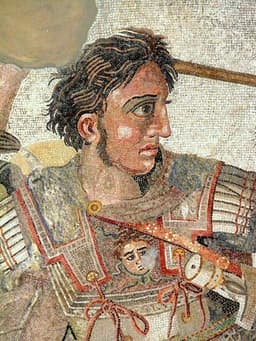
Alexander the Great
General · Ancient
85.2Total
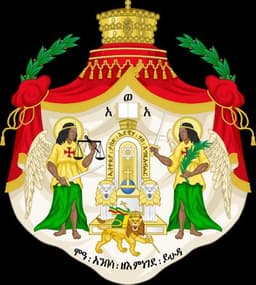
Wedem Arad
Emperor · Medieval
48.5Total
Basic Information
Born
-356
1270
Died
-323
1314
Era
Ancient
Medieval
Nationality
Macedon
Ethiopia
Occupation
General
Emperor
Civilization
Western
Other
Score Comparison
Military (10%)
95.0
50.0
Political (20%)
60.0
35.1
Influence (20%)
92.0
58.0
Legacy (20%)
90.0
45.8
Leadership (15%)
80.0
55.3
Strategy (15%)
92.0
39.6
TOTAL
85.2
48.5
Alexander the Great — Complete Timeline
334 BC
Battle of the Granicus RiverWar◆ Major
Alexander led his Macedonian army across the Hellespont into Asia Minor and defeated a Persian force under local satraps at the Granicus River. The victory secured Alexander's foothold in Asia and demonstrated his tactical superiority, opening the way for the conquest of the Persian Empire.
Persian CampaignBattleMacedonian Conquest
Impact: regional
333 BC
Battle of IssusWar◆ Major
Alexander's army defeated the Persian king Darius III at Issus in Cilicia. Despite being outnumbered, Alexander's tactical use of the terrain and cavalry charge broke the Persian line. Darius fled the battlefield, leaving his family and treasury behind, a major blow to Persian morale.
Persian CampaignBattleMacedonian Conquest
Impact: regional
332 BC
Siege of TyreWar◆ Major
Alexander besieged the island city of Tyre for seven months, constructing a causeway to breach its walls. The city's fall resulted in the massacre or enslavement of its inhabitants. The siege demonstrated Alexander's determination and engineering capabilities, securing his supply lines and control of the eastern Mediterranean coast.
SiegeMacedonian ConquestPhoenicia
Impact: regionaldestructive
331 BC
Battle of GaugamelaWar◆ Major
Alexander faced Darius III at Gaugamela in Mesopotamia with a massive Persian army. Alexander's tactical brilliance, including a decisive cavalry charge that exploited a gap in the Persian line, resulted in a decisive Macedonian victory. Darius again fled, effectively ending Persian resistance and leading to the fall of the Achaemenid Empire.
Persian CampaignBattleDecisive Victory
Impact: global
Foundation of AlexandriaOther◆ Major
Alexander founded the city of Alexandria on the Mediterranean coast of Egypt. He personally selected the site and oversaw the initial planning. Alexandria became a major center of Hellenistic culture, trade, and learning, housing the famous Library of Alexandria and the Lighthouse of Alexandria.
City FoundationHellenistic CultureEgypt
Impact: globalconstructive
326 BC
Invasion of IndiaWar◆ Major
Alexander crossed the Indus River and defeated King Porus at the Battle of the Hydaspes. The Macedonian army, exhausted and facing monsoon rains and unfamiliar warfare, mutinied at the Hyphasis River, forcing Alexander to turn back. This campaign marked the easternmost extent of his conquests.
Indian CampaignBattleMutiny
Impact: regional
Wedem Arad — Complete Timeline
1306 AD
First Contact with EuropePolitical Action◆ Major
Wedem Arad sent an embassy to Europe, likely to the court of Pope Clement V in Avignon. This was the first recorded diplomatic contact between Ethiopia and a European power since antiquity, establishing a precedent for future Ethiopian-European relations.
Impact: regional
Expert Analysis
Alexander the Great vs Wedem Arad
# The Conqueror and the Emissary: Alexander the Great and Wedem Arad
On a dusty road in Cappadocia in 333 BCE, a twenty-two-year-old king galloped toward destiny, his cavalry thundering behind him. Half a world away and sixteen centuries later, another ruler sat in his highland palace in Ethiopia, dictating a letter to a pope he had never seen, in a language his scribes barely understood. Both men stood at the crossroads of civilizations—one to smash them together, the other to open a door. Yet their names echo through history with vastly different resonance. Why did Alexander the Great become a legend while Wedem Arad became a footnote?
Origins
Alexander was born into a world of ambition. His father, Philip II of Macedon, had forged a professional army and united fractious Greek city-states under his heel. Alexander’s mother, Olympias, whispered that he was descended from Achilles. His tutor was Aristotle, who taught him that the world was a place to be understood, catalogued, and conquered. The boy king inherited a war machine and a worldview that saw no borders.
Wedem Arad, by contrast, inherited a kingdom perched on a mountain fortress. Ethiopia in the late thirteenth century was a Christian island in a sea of Muslim sultanates. Its rulers claimed descent from Solomon and the Queen of Sheba, but their world was inward-looking, defined by the highlands and the ancient liturgy of the Ethiopian Orthodox Church. Wedem Arad’s father, Yekuno Amlak, had overthrown the Zagwe dynasty and restored the Solomonic line—a fragile legitimacy that needed careful nurturing. Where Alexander was taught to reach outward, Wedem Arad was taught to hold firm.
Rise to Power
Alexander’s ascent was swift and brutal. At twenty, he became king after Philip’s assassination. He crushed rebellions in Thebes, razing the city to the ground as a warning. By twenty-two, he crossed the Hellespont into Asia, beginning a campaign that would never see him return home. His path was one of relentless motion—Gaugamela, Tyre, Egypt, Persepolis, the Hindu Kush—each victory a stepping stone to the next.
Wedem Arad’s rise was quieter. He took the throne around 1270, likely in his late twenties or early thirties, inheriting a kingdom still consolidating after the Solomonic restoration. He faced no epic battles; his wars were skirmishes against neighboring Muslim states and rebellious provinces. His power was not won on a battlefield but maintained in a court of priests, nobles, and provincial governors. Where Alexander seized power with a sword, Wedem Arad held it with a seal.
Leadership & Governance
Alexander led from the front. At the Battle of Issus, he personally charged into the Persian guard, risking death to break the enemy line. His military score of 96 reflects a tactical genius who never lost a battle. He used the phalanx and cavalry with surgical precision, and his siege of Tyre remains a masterpiece of engineering. But his political score of 65 tells a different story: he struggled to govern what he conquered. He tried to merge Greek and Persian elites through mass marriages and cultural fusion, but his empire fractured the moment he died.
Wedem Arad never commanded an army of note—his military score of 24 suggests he was no general. But his political score of 44.3, while modest, was sufficient for his context. He understood that Ethiopia’s strength lay in its isolation and its faith. In 1306, he sent an embassy to Europe—likely to Pope Clement V in Avignon—seeking diplomatic ties and perhaps military alliance against Muslim powers. This was the first recorded contact between Ethiopia and Europe, a remarkable initiative for a ruler whose realm was cut off by the Sahara and the Red Sea. It was not a conquest; it was a conversation.
Triumph & Tragedy
Alexander’s greatest triumph was the conquest of the Persian Empire, the largest the world had yet seen. His tragedy was that he died at thirty-two in Babylon, possibly poisoned or from fever, leaving no clear heir. His generals carved up his empire, and his dream of a unified Hellenistic world dissolved into warring kingdoms.
Wedem Arad’s triumph was subtler: he placed Ethiopia on the map of global diplomacy. His embassy to Europe opened a channel that would later inspire Portuguese missionaries and, eventually, the myth of Prester John. His tragedy was that this contact bore no immediate fruit. The pope sent no army; the alliance never came. Wedem Arad died around 1314, his kingdom unchanged, his embassy forgotten for centuries. He had reached out to a world that barely noticed.
Character & Destiny
Alexander was driven by an insatiable *pothos*—a Greek word for longing, for yearning to see what lay beyond the horizon. He wept when there were no more worlds to conquer. His character was a furnace of ambition, charisma, and cruelty. He killed his friend Cleitus in a drunken rage and ordered the mass execution of Persian nobles. His destiny was to be remembered as a god, a force of nature, a name that still thrills schoolchildren.
Wedem Arad was cautious, diplomatic, patient. He did not weep for worlds he could not reach; he sent letters instead. His character was shaped by the constraints of his time and place—a Christian king in a hostile region, a Solomonic ruler in a land of ancient traditions. His destiny was to be a footnote, a name in dusty chronicles, a figure of interest only to specialists. He did not fail; he simply did not have the stage.
Legacy
Alexander’s legacy is immense. He spread Greek language, art, and thought across three continents. Cities named Alexandria dotted the map from Egypt to Afghanistan. His tactics are still taught at military academies. His influence score of 90 and legacy score of 90 place him among the most consequential figures in Western civilization.
Wedem Arad’s legacy is fragile but real. His embassy of 1306 is now recognized as a pioneering act of diplomacy. It foreshadowed Ethiopia’s later role as the only African nation to resist full colonization during the Scramble for Africa. His legacy score of 57.8 reflects a figure who matters more to Ethiopian history than to world history—but that, perhaps, is enough. He was not a conqueror; he was a bridge builder, and bridges take time to be noticed.
Conclusion
Standing on the battlefield at Gaugamela, Alexander saw an empire to destroy. Sitting in his palace at Lalibela, Wedem Arad saw a world to connect. One changed history through force, the other through patience. Both were kings, both were visionaries, but their contexts shaped them as much as they shaped their worlds. Alexander’s story is a thunderclap; Wedem Arad’s is a whisper. And yet, in the long arc of history, whispers can travel farther than thunder. The conqueror’s empire crumbled; the emissary’s kingdom endures. Perhaps the difference between triumph and obscurity is not greatness, but geography—and the luck of being born in the right century.
Rankings
🥇
Alexander the GreatLeader
Mil: 95.0Pol: 60.0Inf: 92.0
85.2
🥈
Wedem Arad
Mil: 50.0Pol: 35.1Inf: 58.0
48.5
+36.7 behind
How This Comparison Works
Algorithm
Each figure is scored on 6 dimensions (0—100 scale) based on structured historical data: Military (10%), Political (20%), Influence (20%), Legacy (20%), Leadership (15%), Strategy (15%). The weighted total produces the final ranking.
Data Sources
Scores are computed from structured sub-indicators in the database. Scale factors adjust for era (Ancient ×0.85, Modern ×1.0) and civilization size (Eastern ×1.05, Other ×0.80) to account for differences in population and military scale.
Maximum 3 Figures
Comparisons are limited to 2—3 figures to ensure readability and statistical meaningfulness.
Error Margins
±5 points per dimension — Sub-scores are derived from historical records with inherent uncertainty. Two figures within 5 points on a dimension should be considered roughly equivalent in that area.
Total Score Accuracy
±3 points overall — The weighted combination of 6 dimensions produces a total score with approximately ±3 points of uncertainty. Differences of less than 3 points are not statistically significant— the figures are effectively tied.
Known Limitations
- Historical records are incomplete and uneven across civilizations
- Figures from oral-tradition societies may be underrepresented
- Occupation labels can misclassify multi-role figures
- Scores measure capability and impact, not moral character
- Quantitative scoring is a comparison tool, not absolute truth
Capability Radar
Military (10%) — Battles & Warfare
Battles
98
15
Win Rate
99
20
Expansion
99
10
Political (20%) — Governance & Reform
Reform
75
20
Diplomacy
80
55
Economy
70
15
Influence (20%) — Cultural & Global Reach
Cultural
95
20
Global
95
40
Legacy (20%) — Historical Impact
Historical
98
35
Longevity
95
30
Leadership (15%) — Power & Stability
Tenure
60
40
Stability
55
30
Strategy (15%) — Tactics & Innovation
Strategy
98
10
Tactics
99
10
Reform
85
5
Similar Comparisons
Comments & Discussion
**The_Phalanx_Pundit**6/16/2026
Calling Wedem Arad “an emissary” is diplomatic gaslighting. Alexander didn’t write letters to popes—he built cities at the point of a sarissa. Wedem Arad sent a delegation to Europe and got a couple of monks back. Alexander took 20,000 Persians into his army and reshaped the economic axis of the known world. One changed history through sheer kinetic force; the other sent a memo. Please.
**数据狂人·马克**6/16/2026
别把外交信使和军事天才放在一个天平上。亚历山大横扫波斯时带了四万七千人,跨越两千公里无后勤线作战;Wedem Arad派去欧洲的使团多少人?六个?八个?历史比较不是看谁更“有趣”,而是看谁实实在在地改变了地缘版图。一个是核弹,一个是萤火虫。
**Numismatic_Nomad**6/16/2026
Sure, Alexander had PR advantages—Aristotle and a golden coin empire. But Wedem Arad’s embassy to Rome in 1306 predates most African-European diplomatic contact by two centuries. That’s not a footnote, that’s a tectonic plate shift in Afro-Eurasian relations. Alexander crushed cities; Wedem Arad opened channels. Which one do you think mattered more to the people who actually had to live through the conquest?
**马背上的荷马**6/16/2026
说Alexander是征服者,Wedem Arad是外交家,这没问题。但别忘了,亚历山大死时手下将领立刻分尸帝国,而Wedem Arad的所罗门王朝延续了五百年。持久力也是评价标准。短跑冠军和马拉松选手,你选哪个当历史主角?
**Skeptical_Stele**6/16/2026
Let’s be real—most people only care about Alexander because he was young, blond, and died dramatically. Wedem Arad’s embassy to the Vatican is actually documented in multiple European archives. That’s real history, not a legend polished by Plutarch. If we’re talking about concrete historical impact on diplomacy and cultural exchange, the Ethiopian king blows Alexander out of the water. But hey, who wants to read about a letter when you can watch a movie about a guy crying by a river?