Loading...
This comparison has not been analyzed yet.
One-time AI generation (~1 minute). Scores and timeline are already available below.
Adolfo Lopez Mateos vs Kjell Magne Bondevik
Adolfo Lopez Mateos leads by 0.2 pts · 2 figures compared
…
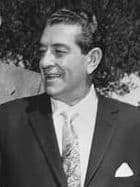
Adolfo Lopez Mateos
Politician · Modern
50.6Total

Kjell Magne Bondevik
Politician · Modern
50.4Total
Basic Information
Born
1909
1947
Died
1969
—
Era
Modern
Modern
Nationality
Mexico
Norway
Occupation
Politician
Politician
Civilization
Western
Western
Score Comparison
Military (10%)
48.6
47.8
Political (20%)
45.0
53.8
Influence (20%)
54.9
49.4
Legacy (20%)
45.0
40.8
Leadership (15%)
66.0
72.0
Strategy (15%)
41.2
41.9
TOTAL
50.6
50.4
Adolfo Lopez Mateos — Complete Timeline
1959 AD
Creation of the Institute for Social Security and Services for State Workers (ISSSTE)Reform◆ Major
López Mateos established ISSSTE to provide healthcare, pensions, and social services for government employees. This expanded the welfare state and institutionalized benefits for a key sector of the workforce.
Social SecurityWelfarePublic Sector
Impact: nationalconstructive
Suppression of the railroad workers' strikePolitical Action◆ Major
López Mateos ordered the arrest of railroad union leaders, including Demetrio Vallejo, and crushed a major strike. The government used police and military force, breaking the strike and jailing thousands, demonstrating a hard line against labor unrest.
Labor RepressionStrikeAuthoritarianism
Impact: nationaldestructive
1960 AD
Nationalization of the electrical industryReform◆ Major
President Adolfo L
NationalizationEnergyEconomic Policy
Impact: nationalconstructive
1963 AD
Hosting of the 1968 Summer Olympics bidCultural◆ Major
López Mateos successfully secured Mexico City as the host for the 1968 Summer Olympics, the first time the games were held in Latin America. This boosted Mexico's international prestige and signaled its modernization.
OlympicsInternational RelationsPrestige
Impact: globalconstructive
Kjell Magne Bondevik — Complete Timeline
1997 AD
First Term as Prime Minister of NorwayPolitical Action◆ Major
Bondevik became Prime Minister in October 1997, leading a centrist coalition government of the Christian Democratic, Centre, and Liberal parties. His first term lasted until 2000.
Norwegian PoliticsCoalition Government
Impact: national
1998 AD
Took Sick Leave for DepressionPolitical Action◆ Major
Bondevik took a three-week sick leave in August 1998 for depression, becoming the first Norwegian PM to publicly disclose mental health issues. He returned to work after treatment.
Mental HealthNorwegian Politics
Impact: national
2001 AD
Second Term as Prime MinisterPolitical Action◆ Major
Bondevik returned as Prime Minister in October 2001, leading a coalition government until 2005. His government focused on immigration policy and international development.
Norwegian PoliticsGovernment
Impact: national
This comparison has not been analyzed yet.
One-time AI generation (~1 minute). Scores and timeline are already available below.
Rankings
🥇
Adolfo Lopez MateosLeader
Mil: 48.6Pol: 45.0Inf: 54.9
50.6
🥈
Kjell Magne Bondevik
Mil: 47.8Pol: 53.8Inf: 49.4
50.4
+0.2 behind
How This Comparison Works
Algorithm
Each figure is scored on 6 dimensions (0—100 scale) based on structured historical data: Military (10%), Political (20%), Influence (20%), Legacy (20%), Leadership (15%), Strategy (15%). The weighted total produces the final ranking.
Data Sources
Scores are computed from structured sub-indicators in the database. Scale factors adjust for era (Ancient ×0.85, Modern ×1.0) and civilization size (Eastern ×1.05, Other ×0.80) to account for differences in population and military scale.
Maximum 3 Figures
Comparisons are limited to 2—3 figures to ensure readability and statistical meaningfulness.
Error Margins
±5 points per dimension — Sub-scores are derived from historical records with inherent uncertainty. Two figures within 5 points on a dimension should be considered roughly equivalent in that area.
Total Score Accuracy
±3 points overall — The weighted combination of 6 dimensions produces a total score with approximately ±3 points of uncertainty. Differences of less than 3 points are not statistically significant— the figures are effectively tied.
Known Limitations
- Historical records are incomplete and uneven across civilizations
- Figures from oral-tradition societies may be underrepresented
- Occupation labels can misclassify multi-role figures
- Scores measure capability and impact, not moral character
- Quantitative scoring is a comparison tool, not absolute truth
Capability Radar
Military (10%) — Battles & Warfare
Battles
29
28
Win Rate
35
34
Expansion
34
37
Political (20%) — Governance & Reform
Reform
65
55
Diplomacy
60
65
Economy
55
55
Influence (20%) — Cultural & Global Reach
Cultural
30
20
Global
30
15
Legacy (20%) — Historical Impact
Historical
40
25
Longevity
30
20
Leadership (15%) — Power & Stability
Tenure
60
60
Stability
55
60
Strategy (15%) — Tactics & Innovation
Strategy
37
35
Tactics
40
44
Reform
42
42
Similar Comparisons
Comments & Discussion
No comments yet. Be the first to share your thoughts!