Loading...
Adolfo Lopez Mateos vs Napoleon Bonaparte
Napoleon Bonaparte leads by 20.3 pts · 2 figures compared
…
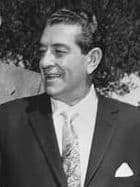
Adolfo Lopez Mateos
Politician · Modern
50.6Total

Napoleon Bonaparte
General · Modern
70.9Total
Basic Information
Born
1909
1769
Died
1969
1821
Era
Modern
Modern
Nationality
Mexico
France
Occupation
Politician
General
Civilization
Western
Western
Score Comparison
Military (10%)
48.6
94.0
Political (20%)
45.0
72.0
Influence (20%)
54.9
40.0
Legacy (20%)
45.0
80.0
Leadership (15%)
66.0
78.0
Strategy (15%)
41.2
90.0
TOTAL
50.6
70.9
Adolfo Lopez Mateos — Complete Timeline
1959 AD
Creation of the Institute for Social Security and Services for State Workers (ISSSTE)Reform◆ Major
López Mateos established ISSSTE to provide healthcare, pensions, and social services for government employees. This expanded the welfare state and institutionalized benefits for a key sector of the workforce.
Social SecurityWelfarePublic Sector
Impact: nationalconstructive
Suppression of the railroad workers' strikePolitical Action◆ Major
López Mateos ordered the arrest of railroad union leaders, including Demetrio Vallejo, and crushed a major strike. The government used police and military force, breaking the strike and jailing thousands, demonstrating a hard line against labor unrest.
Labor RepressionStrikeAuthoritarianism
Impact: nationaldestructive
1960 AD
Nationalization of the electrical industryReform◆ Major
President Adolfo L
NationalizationEnergyEconomic Policy
Impact: nationalconstructive
1963 AD
Hosting of the 1968 Summer Olympics bidCultural◆ Major
López Mateos successfully secured Mexico City as the host for the 1968 Summer Olympics, the first time the games were held in Latin America. This boosted Mexico's international prestige and signaled its modernization.
OlympicsInternational RelationsPrestige
Impact: globalconstructive
Napoleon Bonaparte — Complete Timeline
1799 AD
Coup of 18 BrumaireOther◆ Major
Napoleon Bonaparte, with support from his brother Lucien and key political figures, overthrew the Directory in a bloodless coup. He established the Consulate with himself as First Consul, effectively becoming the ruler of France. This event ended the French Revolution's most unstable period.
French RevolutionCoupRise to Power
Impact: regional
1804 AD
Promulgation of the Napoleonic CodeOther◆ Major
Napoleon enacted the Civil Code of the French, known as the Napoleonic Code, a comprehensive set of laws that replaced the fragmented feudal legal systems. The code established legal equality, protected property rights, and secularized law. It became the basis for legal systems in many European and world countries.
Legal ReformNapoleonic CodeCivil Law
Impact: globalconstructive
1805 AD
Battle of AusterlitzWar◆ Major
Napoleon's Grande Arm
Napoleonic WarsBattleDecisive Victory
Impact: global
1812 AD
Invasion of RussiaWar◆ Major
Napoleon led the Grande Arm
Napoleonic WarsInvasionDisaster
Impact: globaldestructive
1815 AD
Battle of WaterlooWar◆ Major
Napoleon's French army was defeated by the combined forces of the Duke of Wellington's Anglo-Allied army and Gebhard Leberecht von Bl
Napoleonic WarsBattleFinal Defeat
Impact: globaldestructive
Expert Analysis
adolfo-lopez-mateos-vs-napoleon-bonaparte
### The Conqueror and the Conciliator
On a June morning in 1815, Napoleon Bonaparte stood on a muddy field near Waterloo, watching his Imperial Guard march into cannon fire for the last time. A hundred and forty-four years later, on a crisp September afternoon in Mexico City, Adolfo López Mateos inaugurated the first Olympic Games ever held in Latin America, a moment of national pride that would outlast any battlefield victory. One man shaped his age through conquest; the other through consolidation. What separates the emperor who redrew the map of Europe from the president who redrew the social contract of Mexico? The answer lies not merely in their actions, but in the very different worlds they inherited—and the very different fates they chose.
### Origins
Napoleon Bonaparte was born in 1769 on the Mediterranean island of Corsica, a place that had only become French the year before. His family belonged to the minor nobility, but they were poor, and Corsica was a backwater. The young Napoleon spoke Italian-accented French, and his schoolmates mocked him for it. This outsider status bred an acute hunger for acceptance—and for domination. The French Revolution, which erupted when he was twenty, shattered the old order and opened a path for talent. Napoleon seized it. He was a product of chaos, and chaos was his natural element.
Adolfo López Mateos was born in 1909 in the town of Atizapán de Zaragoza, in the shadow of the Mexican Revolution. His father died when he was young, and his mother raised him in modest circumstances. But Mexico in the early twentieth century was not the France of the *ancien régime*. The Revolution had already created a new political class, one that valued stability and institutional loyalty over personal ambition. López Mateos grew up in a world where the question was not how to seize power, but how to manage it. He studied law, became a professor, and entered the bureaucracy of the Institutional Revolutionary Party (PRI), the machine that would dominate Mexican politics for seventy years. His era was one of consolidation, not upheaval.
### Rise to Power
Napoleon’s rise was a series of gambles. At twenty-four, he cleared the streets of Paris of royalist insurgents with a "whiff of grapeshot." At twenty-six, he led a ragged army across the Alps into Italy and won six victories in as many months. By thirty, he had made himself First Consul of France. By thirty-five, he was Emperor. Each step was a risk—and each risk paid off. He understood that in revolutionary France, the man who hesitated was lost.
López Mateos rose differently. He was a career politician, serving as a senator, secretary of labor, and campaign manager before being elected president in 1958 with over ninety percent of the vote. His path was not one of military glory but of political negotiation. He had been a supporter of the left-leaning presidential candidate Miguel Alemán in the 1940s, but he also maintained ties with more conservative factions. He was a moderate, a balancer, a man who understood that in the one-party state of post-revolutionary Mexico, power came not from storming barricades but from building coalitions.
### Leadership & Governance
Napoleon governed as he conquered: with speed, clarity, and force. His Napoleonic Code, introduced in 1804, standardized French law, abolished feudal privileges, and enshrined principles of merit and property rights. It was a reform that outlasted his empire. But his military genius—rated 94 in strategy and 93 in overall military ability—was also his weakness. He could not stop fighting. From the sands of Egypt to the snows of Russia, he pursued victory as an end in itself. By 1812, he had overextended his empire, and the coalition against him grew stronger with each campaign.
López Mateos governed as a reformer within a system. His greatest achievement was the nationalization of the electrical industry in 1960, buying out foreign-owned companies and creating a state monopoly. It was a bold move, but it was not a revolution—it was a negotiation. He also created the Institute for Social Security and Services for State Workers (ISSSTE) in 1959, extending healthcare and pensions to government employees. Yet he was no pacifist. That same year, he crushed a railroad workers' strike, arresting union leader Demetrio Vallejo and thousands of others. His leadership score of 84.6 reflects this duality: he could be both a builder and a suppressor, depending on what the system required.
### Triumph & Tragedy
Napoleon’s greatest triumph was the Battle of Austerlitz in 1805, where he destroyed a combined Russian and Austrian army and cemented his control over central Europe. His greatest tragedy was the invasion of Russia in 1812, where he lost half a million men to winter, disease, and guerilla attacks. He never recovered. Exiled to Elba, he escaped and returned for a final, desperate campaign—Waterloo—and then was sent to die on the remote island of Saint Helena in 1821.
López Mateos’s greatest triumph was securing the 1968 Summer Olympics for Mexico City, the first time the Games were held in Latin America. It was a symbol of Mexico’s emergence as a modern nation. His greatest tragedy came just before that triumph: the Tlatelolco massacre of 1968, when government forces opened fire on student protesters, killing hundreds. López Mateos had left office in 1964, but the repression was carried out by his successor, Gustavo Díaz Ordaz, under the system he had helped build. The tragedy was not his directly, but it was his legacy.
### Character & Destiny
Napoleon was restless, brilliant, and ultimately self-destructive. He once said, "I am not a man; I am a thing." He saw himself as an instrument of history, but his ambition outran his judgment. He could not share power, and he could not stop. His personality drove him to conquer, and that same personality drove him to fall.
López Mateos was cautious, shrewd, and pragmatic. He understood that in Mexico, power was a matter of balance—between left and right, between reform and order, between the state and the people. He once said, "I am a man of the left, but I am a man of the law." His personality allowed him to achieve real reforms without destroying the system that made them possible. But it also meant that he could not—or would not—prevent the violence that the system would later unleash.
### Legacy
Napoleon’s legacy is a paradox. He was a tyrant who spread the ideals of the French Revolution across Europe, a conqueror who inspired nationalism in the nations he defeated, a reformer whose legal code still shapes civil law in much of the world. His military score of 94 and influence score of 82 place him among the most consequential figures in history. But his empire crumbled, and his name is forever linked with war.
López Mateos’s legacy is quieter but more durable. He modernized Mexico’s infrastructure, expanded social security, and brought the Olympics to the developing world. His political score of 76 and leadership score of 84 reflect a man who worked within the system to change it. But his presidency also marked the high tide of the PRI’s authoritarian rule, and the cracks that would later break the party open were already forming.
### Conclusion
Napoleon and López Mateos never met, and their worlds could not have been more different. One commanded armies of hundreds of thousands; the other managed a bureaucracy. One died in exile; the other died in his own bed. Yet both were products of their times—the revolutionary upheaval that demanded a conqueror, and the institutional stability that required a conciliator. Napoleon’s story is a warning about the limits of ambition. López Mateos’s is a reminder that change can also come through patience. In the end, the emperor and the president both shaped history, but in ways that reflect the very different questions their eras asked. Napoleon’s question was: *How do you remake the world?* López Mateos’s was: *How do you make the world work?* The answers, it turns out, are as different as Waterloo and the Olympics.
Rankings
🥇
Napoleon BonaparteLeader
Mil: 94.0Pol: 72.0Inf: 40.0
70.9
🥈
Adolfo Lopez Mateos
Mil: 48.6Pol: 45.0Inf: 54.9
50.6
+20.3 behind
How This Comparison Works
Algorithm
Each figure is scored on 6 dimensions (0—100 scale) based on structured historical data: Military (10%), Political (20%), Influence (20%), Legacy (20%), Leadership (15%), Strategy (15%). The weighted total produces the final ranking.
Data Sources
Scores are computed from structured sub-indicators in the database. Scale factors adjust for era (Ancient ×0.85, Modern ×1.0) and civilization size (Eastern ×1.05, Other ×0.80) to account for differences in population and military scale.
Maximum 3 Figures
Comparisons are limited to 2—3 figures to ensure readability and statistical meaningfulness.
Error Margins
±5 points per dimension — Sub-scores are derived from historical records with inherent uncertainty. Two figures within 5 points on a dimension should be considered roughly equivalent in that area.
Total Score Accuracy
±3 points overall — The weighted combination of 6 dimensions produces a total score with approximately ±3 points of uncertainty. Differences of less than 3 points are not statistically significant— the figures are effectively tied.
Known Limitations
- Historical records are incomplete and uneven across civilizations
- Figures from oral-tradition societies may be underrepresented
- Occupation labels can misclassify multi-role figures
- Scores measure capability and impact, not moral character
- Quantitative scoring is a comparison tool, not absolute truth
Capability Radar
Military (10%) — Battles & Warfare
Battles
29
95
Win Rate
35
90
Expansion
34
95
Political (20%) — Governance & Reform
Reform
65
95
Diplomacy
60
80
Economy
55
85
Influence (20%) — Cultural & Global Reach
Cultural
30
85
Global
30
90
Legacy (20%) — Historical Impact
Historical
40
95
Longevity
30
90
Leadership (15%) — Power & Stability
Tenure
60
85
Stability
55
70
Strategy (15%) — Tactics & Innovation
Strategy
37
95
Tactics
40
98
Reform
42
92
Similar Comparisons
Comments & Discussion
记忆修补匠6/17/2026
拿破仑的传奇多是后天编造,史学家将他塑造为革命之子,实则是机会主义者——他在1799年政变时抛弃了共和理想。洛佩斯·马特奥斯至少留在宪法框架内,完成了铁路国有化和免费教科书。真正的区别不是征服vs妥协,而是谁对后代更有用:一个留下博物馆,另一个留下学生。
CANNONFODDER CRITIC6/17/2026
Waterloo wasn't a defeat—it was a natural consequence of overreach. Napoleon's Grande Armée was a paper tiger by 1815, filled with raw conscripts and lacking the cavalry quality that won Austerlitz. López Mateos didn't need to fight; he inherited a stable PRI machine. Comparing a man who lost 40,000 men in a single day to a president who gave away land reform is like comparing a wildfire to a garden hose.
战役几何师6/17/2026
一个用滑铁卢的泥泞换凯旋门的永恒,另一个用奥运会的光环换墨西哥的贫穷。拿破仑的失败是史诗,留下法典和现代欧洲的骨架;洛佩斯·马特奥斯的成功是短暂烟火,政治改革被腐败吞噬。历史从来不给温和者立像,只记住那些敢把帝国烧成灰烬的疯子。
STATS SCEPTIC6/17/2026
Let's be real: López Mateos governed Mexico for six years—Napoleon dominated Europe for a decade. The French emperor fielded armies of 600,000 across half a continent; the Mexican president's big achievement was keeping the lights on. Compare life expectancy at birth: Mexico in 1960 was 55 years; France in 1800 was 35. Different leagues entirely. This is like comparing a village mayor to a global conqueror.