Loading...
Afonso V of Portugal vs Prithviraj Chauhan
Prithviraj Chauhan leads by 3.5 pts · 2 figures compared
…

Afonso V of Portugal
Emperor · Medieval
52.0Total
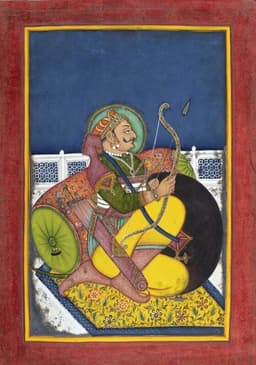
Prithviraj Chauhan
Emperor · Medieval
55.5Total
Basic Information
Born
1432
1166
Died
1481
1192
Era
Medieval
Medieval
Nationality
Portugal
India
Occupation
Emperor
Emperor
Civilization
Western
Indian
Score Comparison
Military (10%)
72.5
60.0
Political (20%)
48.0
39.4
Influence (20%)
56.4
59.0
Legacy (20%)
46.7
54.0
Leadership (15%)
40.0
67.0
Strategy (15%)
57.5
52.5
TOTAL
52.0
55.5
Afonso V of Portugal — Complete Timeline
1458 AD
Conquest of Alcácer CeguerWar◆ Major
Afonso V led a Portuguese expedition that captured the Moroccan city of Alc
Moroccan CampaignPortuguese ExpansionNorth Africa
Impact: regional
1460 AD
Conquest of TangierWar◆ Major
Afonso V's forces captured the strategic port city of Tangier from the Marinid Sultanate. The conquest solidified Portuguese dominance in the region and opened further trade routes, though it required ongoing military commitment to hold the territory.
Moroccan CampaignPortuguese ExpansionNorth Africa
Impact: regional
1471 AD
Conquest of ArzilaWar◆ Major
Afonso V personally led a large Portuguese fleet and army that captured the Moroccan city of Arzila (Asilah) from the Wattasid Sultanate. The victory was followed by the surrender of Tangier, which had been lost earlier, and marked the peak of Portuguese territorial expansion in Morocco.
Moroccan CampaignPortuguese ExpansionNorth Africa
Impact: regional
1475 AD
War of the Castilian SuccessionWar◆ Major
Afonso V intervened in the Castilian succession dispute, marrying Joanna la Beltraneja and claiming the throne of Castile. He invaded Castile but was defeated at the Battle of Toro in 1476, forcing him to abandon his claim and return to Portugal.
Castilian SuccessionIberian PoliticsMilitary Defeat
Impact: regional
1479 AD
Treaty of AlcáçovasPolitical Action◆ Major
Afonso V signed the Treaty of Alc
TreatyIberian PoliticsColonial Division
Impact: global
Prithviraj Chauhan — Complete Timeline
1177 AD
Accession to the Chauhan ThronePolitical Action
Prithviraj Chauhan succeeded his father Someshvara as ruler of the Chauhan kingdom of Ajmer and Delhi. He was a young king who soon faced threats from the Ghurid Empire under Muhammad of Ghor.
ChauhanAjmerDelhi
Impact: regional
1191 AD
First Battle of TarainWar◆ Major
Prithviraj Chauhan defeated Muhammad of Ghor at the First Battle of Tarain near Thanesar. The Ghurid army was routed, and Muhammad was captured but later released. This victory temporarily halted Ghurid expansion into northern India.
TarainGhuridVictory
Impact: regional
1192 AD
Second Battle of TarainWar
Muhammad of Ghor returned with a larger army and defeated Prithviraj Chauhan at the Second Battle of Tarain. Prithviraj was captured and executed, and the Chauhan kingdom was annexed by the Ghurids, leading to the establishment of Muslim rule in Delhi.
TarainGhuridDefeat
Impact: regionaltragic
Capture and Execution by Muhammad of GhorWar◆ Major
After the Second Battle of Tarain, Prithviraj Chauhan was taken prisoner by Muhammad of Ghor. He was executed shortly after, ending the Chauhan dynasty's rule. His death marked the beginning of the Delhi Sultanate.
ExecutionDelhi SultanateChauhan
Impact: regionaltragic
Expert Analysis
Origins
Afonso V of Portugal was born in 1432 in Sintra, the son of King Edward of Portugal and Eleanor of Aragon. He inherited the throne at age six after his father's death from plague, with his mother serving as regent until 1448. His early education emphasized chivalric ideals and crusading spirit, shaped by the Portuguese Reconquista tradition and the legacy of his grandfather, John I, who had captured Ceuta in 1415. Afonso grew up surrounded by nobles eager for expansion in North Africa.
Prithviraj Chauhan was born around 1166 in Ajmer, into the Rajput Chauhan dynasty. His father Someshvara ruled over the kingdom of Ajmer and Delhi. Prithviraj received training in martial arts, statecraft, and literature, becoming a skilled warrior and poet. His early life was marked by the political fragmentation of northern India, where multiple Rajput kingdoms vied for supremacy. He ascended the throne around 1177 after his father's death, facing immediate challenges from neighboring states.
Rise to Power
Afonso V assumed full rule in 1448 at age 16. His first major military campaign was the conquest of Alcácer Ceguer in 1458, where he led an expedition of 25,000 men and 200 ships, capturing the Moroccan city from the Marinid Sultanate. This victory boosted his prestige and set the pattern for his African campaigns. In 1464, he captured Tangier, a strategic port, and in 1471 took Arzila, personally leading the assault. These conquests expanded Portuguese influence in Morocco and secured trade routes.
Prithviraj Chauhan's rise came through military victories. He defeated the Chandela king Paramardi in 1182, expanding his territory. His most famous early success was the First Battle of Tarain in 1191, where he faced Muhammad of Ghor's invading Ghurid army. Prithviraj's forces decisively defeated the Ghurids, and Muhammad was captured but later released. This victory established Prithviraj as the leading Rajput ruler and defender of northern India.
Leadership & Governance
Afonso V ruled as a feudal monarch, relying on the nobility for military support. He centralized authority through his African campaigns, rewarding loyal nobles with lands and titles. Domestically, he focused on consolidating royal power but faced challenges from the powerful Braganza family. His governance was marked by chivalric ideals, as seen in his patronage of chronicles and the Order of the Tower and Sword. However, his political score of 48.0 reflects his limited administrative reforms and reliance on traditional structures.
Prithviraj Chauhan's leadership style was that of a Rajput warrior-king, emphasizing personal valor and honor. He ruled through a network of feudal chiefs and maintained a strong cavalry. His governance was decentralized, with local rulers retaining autonomy as long as they paid tribute. He is remembered for his patronage of Sanskrit literature and his own poetic compositions. His political score of 39.4 indicates weak administrative integration, which proved fatal against a more organized invader.
Triumph & Tragedy
Afonso V's greatest triumph was his Moroccan conquests: Alcácer Ceguer (1458), Tangier (1464), and Arzila (1471). These victories secured Portuguese control over key Atlantic ports and boosted trade. However, his greatest failure was the War of the Castilian Succession (1475-1479). He invaded Castile to claim the throne through his marriage to Joanna la Beltraneja, but after the indecisive Battle of Toro, he was forced to sign the Treaty of Alcáçovas in 1479, renouncing his claim and recognizing Isabella and Ferdinand. This drained Portuguese resources and ended his ambitions in Europe.
Prithviraj Chauhan's triumph was the First Battle of Tarain (1191), where he defeated Muhammad of Ghor, a significant victory that temporarily halted Ghurid expansion. However, his tragedy came at the Second Battle of Tarain in 1192. Muhammad of Ghor returned with a larger, more disciplined army, using tactics that neutralized Rajput cavalry charges. Prithviraj was captured and executed, leading to the collapse of Chauhan power and the opening of northern India to Muslim rule. His failure to consolidate his earlier victory and forge alliances with other Rajput states was critical.
Character & Destiny
Afonso V was characterized by his crusading zeal and personal bravery, often leading troops into battle. He was known as "the African" for his Moroccan campaigns. However, his impulsive decision to invade Castile revealed a lack of strategic foresight. His military score of 72.5 reflects his success in Africa, but his political and leadership scores (48.0 and 40.0) indicate weaknesses in statecraft. His destiny was shaped by the limits of Portuguese resources and the rise of the Catholic Monarchs.
Prithviraj Chauhan embodied the Rajput ethos of honor and courage. His military score of 60.0 and leadership of 67.0 highlight his battlefield prowess and ability to inspire loyalty. However, his political score of 39.4 and strategy of 52.5 show a failure to adapt to changing warfare. He underestimated the Ghurid threat after his victory, neglecting to build alliances or fortify defenses. His capture and execution sealed his fate as a tragic hero in Indian memory.
Legacy
Afonso V's legacy is mixed. His Moroccan conquests laid the foundation for Portugal's later empire, but the Treaty of Alcáçovas limited his European ambitions. His reign saw the beginning of Portuguese overseas expansion, continued by his successors. He scored 46.7 in legacy, with his African campaigns remembered as part of Portugal's Age of Discovery. However, his political failures prevented lasting territorial gains.
Prithviraj Chauhan's legacy is enduring in Indian culture. He is celebrated as a symbol of Rajput resistance against foreign invaders, with numerous ballads and poems, including the epic "Prithviraj Raso." His defeat at Tarain is seen as a turning point leading to Muslim rule in India. His legacy score of 54.0 reflects his iconic status, even though his dynasty fell. He scored 59.0 in influence, inspiring later resistance movements.
Conclusion
While Afonso V scored 52.0 overall and Prithviraj Chauhan 55.5, the gap of 3.5 points is narrow. However, Prithviraj's impact on Indian history is more profound: his defeat at Tarain fundamentally altered the subcontinent's trajectory, leading to the Delhi Sultanate and shaping centuries of Indo-Islamic culture. Afonso V's conquests were important but ultimately limited in scope, with Portugal's global empire emerging later under different rulers. Prithviraj Chauhan, with higher leadership (67.0 vs 40.0) and legacy (54.0 vs 46.7), had a greater historical impact despite his military defeat. His story continues to resonate, while Afonso V is a footnote in Portuguese history. Thus, Prithviraj Chauhan had the greater impact.
Rankings
🥇
Prithviraj ChauhanLeader
Mil: 60.0Pol: 39.4Inf: 59.0
55.5
🥈
Afonso V of Portugal
Mil: 72.5Pol: 48.0Inf: 56.4
52.0
+3.5 behind
How This Comparison Works
Algorithm
Each figure is scored on 6 dimensions (0—100 scale) based on structured historical data: Military (10%), Political (20%), Influence (20%), Legacy (20%), Leadership (15%), Strategy (15%). The weighted total produces the final ranking.
Data Sources
Scores are computed from structured sub-indicators in the database. Scale factors adjust for era (Ancient ×0.85, Modern ×1.0) and civilization size (Eastern ×1.05, Other ×0.80) to account for differences in population and military scale.
Maximum 3 Figures
Comparisons are limited to 2—3 figures to ensure readability and statistical meaningfulness.
Error Margins
±5 points per dimension — Sub-scores are derived from historical records with inherent uncertainty. Two figures within 5 points on a dimension should be considered roughly equivalent in that area.
Total Score Accuracy
±3 points overall — The weighted combination of 6 dimensions produces a total score with approximately ±3 points of uncertainty. Differences of less than 3 points are not statistically significant— the figures are effectively tied.
Known Limitations
- Historical records are incomplete and uneven across civilizations
- Figures from oral-tradition societies may be underrepresented
- Occupation labels can misclassify multi-role figures
- Scores measure capability and impact, not moral character
- Quantitative scoring is a comparison tool, not absolute truth
Capability Radar
Military (10%) — Battles & Warfare
Battles
55
65
Win Rate
60
60
Expansion
65
45
Political (20%) — Governance & Reform
Reform
45
30
Diplomacy
50
40
Economy
40
35
Influence (20%) — Cultural & Global Reach
Cultural
40
55
Global
30
40
Legacy (20%) — Historical Impact
Historical
45
60
Longevity
35
55
Leadership (15%) — Power & Stability
Tenure
70
50
Stability
45
40
Strategy (15%) — Tactics & Innovation
Strategy
55
55
Tactics
50
70
Reform
40
30
Similar Comparisons
Comments & Discussion
No comments yet. Be the first to share your thoughts!