Loading...
Afonso V of Portugal vs Hongwu Emperor
Hongwu Emperor leads by 20.0 pts · 2 figures compared
…

Afonso V of Portugal
Emperor · Medieval
52.0Total
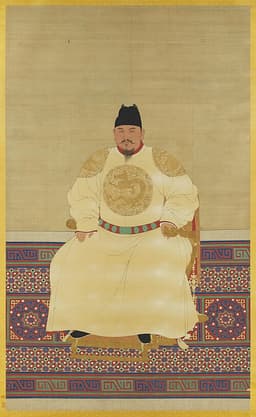
Hongwu Emperor
Emperor · Medieval
72.0Total
Basic Information
Born
1432
1328
Died
1481
1398
Era
Medieval
Medieval
Nationality
Portugal
China
Occupation
Emperor
Emperor
Civilization
Western
Eastern
Score Comparison
Military (10%)
72.5
85.0
Political (20%)
48.0
78.0
Influence (20%)
56.4
68.0
Legacy (20%)
46.7
65.0
Leadership (15%)
40.0
78.0
Strategy (15%)
57.5
68.0
TOTAL
52.0
72.0
Afonso V of Portugal — Complete Timeline
1458 AD
Conquest of Alcácer CeguerWar◆ Major
Afonso V led a Portuguese expedition that captured the Moroccan city of Alc
Moroccan CampaignPortuguese ExpansionNorth Africa
Impact: regional
1460 AD
Conquest of TangierWar◆ Major
Afonso V's forces captured the strategic port city of Tangier from the Marinid Sultanate. The conquest solidified Portuguese dominance in the region and opened further trade routes, though it required ongoing military commitment to hold the territory.
Moroccan CampaignPortuguese ExpansionNorth Africa
Impact: regional
1471 AD
Conquest of ArzilaWar◆ Major
Afonso V personally led a large Portuguese fleet and army that captured the Moroccan city of Arzila (Asilah) from the Wattasid Sultanate. The victory was followed by the surrender of Tangier, which had been lost earlier, and marked the peak of Portuguese territorial expansion in Morocco.
Moroccan CampaignPortuguese ExpansionNorth Africa
Impact: regional
1475 AD
War of the Castilian SuccessionWar◆ Major
Afonso V intervened in the Castilian succession dispute, marrying Joanna la Beltraneja and claiming the throne of Castile. He invaded Castile but was defeated at the Battle of Toro in 1476, forcing him to abandon his claim and return to Portugal.
Castilian SuccessionIberian PoliticsMilitary Defeat
Impact: regional
1479 AD
Treaty of AlcáçovasPolitical Action◆ Major
Afonso V signed the Treaty of Alc
TreatyIberian PoliticsColonial Division
Impact: global
Hongwu Emperor — Complete Timeline
1368 AD
Capture of Dadu (Beijing)War◆ Major
Ming forces under Xu Da captured the Yuan capital of Dadu (modern Beijing). The last Yuan emperor fled to the steppes. This conquest ended Mongol rule in China proper and solidified Ming control over the northern heartland.
Yuan Dynasty FallBeijingMilitary Campaign
Impact: national
Agrarian Reforms and Land RedistributionReform◆ Major
Hongwu implemented land surveys and redistributed land from large estates to peasant farmers. He reduced taxes, promoted irrigation projects, and encouraged cultivation of wasteland. These policies revived agriculture after decades of war and famine.
Land ReformAgriculturePeasant Welfare
Impact: nationalprogressive
Founding of the Ming DynastyPolitical Action
Zhu Yuanzhang proclaimed himself the Hongwu Emperor in Nanjing, founding the Ming dynasty. He led rebel forces to expel the Mongol Yuan dynasty from China, restoring Han Chinese rule after nearly a century of foreign domination.
Dynasty FoundingHan RestorationMing Dynasty
Impact: globalconstructive
1380 AD
Execution of Hu Weiyong and Purge of OfficialsPolitical Action◆ Major
Hongwu accused Chancellor Hu Weiyong of treason and had him executed. This triggered a massive purge that killed tens of thousands of officials and their families. The emperor then abolished the position of chancellor, centralizing all power in his own hands.
PurgeCentralizationPolitical Violence
Impact: nationaldestructive
1382 AD
Establishment of the Jinyiwei (Imperial Guard)Political Action◆ Major
Hongwu created the Jinyiwei, a secret police force under his direct control. They spied on officials, investigated corruption, and suppressed dissent. This institution became a tool of political repression, executing thousands during purges.
Secret PoliceRepressionPolitical Control
Impact: nationaldestructive
Expert Analysis
Origins
Afonso V was born in 1432 in Sintra, Portugal, the son of King Edward and Eleanor of Aragon. He inherited the throne at age six after his father's death, with his mother and uncle Peter acting as regents. His upbringing was steeped in chivalric ideals and crusading traditions. Hongwu Emperor, born Zhu Yuanzhang in 1328 in Haozhou (modern Fengyang, China), came from a destitute peasant family. Orphaned at 16, he became a Buddhist monk wandering for alms before joining a rebel band. His early life gave him firsthand experience of peasant suffering under Mongol rule.
Rise to Power
Afonso V assumed personal rule at 14 after a coup against his uncle Peter, whom he killed at the Battle of Alfarrobeira in 1449. He focused on North African expansion, launching campaigns to capture Moroccan ports. His first major victory was the conquest of Alcácer Ceguer in 1458, followed by Tangier in 1460 and Arzila in 1471. These successes earned him the title "the African." Hongwu Emperor rose through the Red Turban Rebellion against the Yuan dynasty. He emerged as a leader after marrying the daughter of rebel leader Guo Zixing. In 1356, he captured Nanjing, which became his base. By 1368, he proclaimed himself emperor and sent armies north; his general Xu Da captured Dadu (Beijing), ending Yuan rule. His rise was a classic peasant-to-emperor story.
Leadership & Governance
Afonso V governed as a medieval monarch, relying on nobility and military orders. He was personally brave but lacked administrative skill. His court was dominated by chivalric ideals, leading to costly wars. He neglected domestic reforms, and his treasury was drained by Moroccan campaigns. Hongwu Emperor centralized power ruthlessly. He abolished the position of chancellor, executed thousands in purges (like the Hu Weiyong case), and created the Jinyiwei secret police. He implemented land redistribution, reduced taxes, and promoted irrigation. His governance was autocratic but effective in restoring order after years of war. Hongwu scored 78.0 in political leadership versus Afonso's 48.0.
Triumph & Tragedy
Afonso V's triumphs were his Moroccan conquests: Alcácer Ceguer, Tangier, and Arzila, which gave Portugal strategic ports and trade routes. His tragedy was the War of the Castilian Succession (1475-1479). He married Joanna la Beltraneja and invaded Castile, but suffered defeat at the Battle of Toro. The Treaty of Alcáçovas (1479) forced him to renounce claims to Castile, isolating Portugal. Hongwu Emperor's triumph was reunifying China and establishing the Ming dynasty, which lasted 276 years. His land reforms revived agriculture. His tragedy was the extreme purges: Hu Weiyong's execution led to the deaths of over 30,000 officials. Paranoia and brutality tarnished his later years. His military score of 85.0 reflects his success in conquest, while Afonso's 72.5 shows competence but limited scope.
Character & Destiny
Afonso V was a chivalric king, brave in battle but impulsive and poor in statecraft. His obsession with crusading in Morocco and Castile led to overextension. He died in 1481, leaving a kingdom that was financially strained but expanded. Hongwu Emperor was shrewd, suspicious, and hardworking. His peasant background made him distrustful of elites, leading to purges. He died in 1398, having established a strong autocracy. His character shaped his destiny: his paranoia ensured his dynasty's survival but at a human cost. Historians note his strategic score of 68.0 versus Afonso's 57.5, reflecting better foresight.
Legacy
Afonso V's legacy is mixed. His Moroccan conquests laid groundwork for Portugal's later empire, but his failure in Castile limited Portuguese influence in Europe. He is remembered as a crusader king. Hongwu Emperor's legacy is profound: he restored Han Chinese rule, reformed the economy, and created institutions like the Jinyiwei that lasted for centuries. The Ming dynasty centralized bureaucracy and promoted culture. His influence score of 68.0 surpasses Afonso's 56.4. Hongwu's land policies influenced Chinese agriculture for generations.
Conclusion
While Afonso V had localized impact in North Africa, Hongwu Emperor fundamentally reshaped China. Hongwu's scores are higher across all categories: total 72.0 versus 52.0. He led a larger population, founded a long-lasting dynasty, and implemented systemic reforms. Afonso V's achievements were limited to military expansion without political innovation. Therefore, Hongwu Emperor had greater historical impact.
Rankings
🥇
Hongwu EmperorLeader
Mil: 85.0Pol: 78.0Inf: 68.0
72.0
🥈
Afonso V of Portugal
Mil: 72.5Pol: 48.0Inf: 56.4
52.0
+20.0 behind
How This Comparison Works
Algorithm
Each figure is scored on 6 dimensions (0—100 scale) based on structured historical data: Military (10%), Political (20%), Influence (20%), Legacy (20%), Leadership (15%), Strategy (15%). The weighted total produces the final ranking.
Data Sources
Scores are computed from structured sub-indicators in the database. Scale factors adjust for era (Ancient ×0.85, Modern ×1.0) and civilization size (Eastern ×1.05, Other ×0.80) to account for differences in population and military scale.
Maximum 3 Figures
Comparisons are limited to 2—3 figures to ensure readability and statistical meaningfulness.
Error Margins
±5 points per dimension — Sub-scores are derived from historical records with inherent uncertainty. Two figures within 5 points on a dimension should be considered roughly equivalent in that area.
Total Score Accuracy
±3 points overall — The weighted combination of 6 dimensions produces a total score with approximately ±3 points of uncertainty. Differences of less than 3 points are not statistically significant— the figures are effectively tied.
Known Limitations
- Historical records are incomplete and uneven across civilizations
- Figures from oral-tradition societies may be underrepresented
- Occupation labels can misclassify multi-role figures
- Scores measure capability and impact, not moral character
- Quantitative scoring is a comparison tool, not absolute truth
Capability Radar
Military (10%) — Battles & Warfare
Battles
55
85
Win Rate
60
90
Expansion
65
80
Political (20%) — Governance & Reform
Reform
45
90
Diplomacy
50
70
Economy
40
85
Influence (20%) — Cultural & Global Reach
Cultural
40
75
Global
30
70
Legacy (20%) — Historical Impact
Historical
45
85
Longevity
35
80
Leadership (15%) — Power & Stability
Tenure
70
85
Stability
45
80
Strategy (15%) — Tactics & Innovation
Strategy
55
85
Tactics
50
80
Reform
40
75
Similar Comparisons
Comments & Discussion
No comments yet. Be the first to share your thoughts!