Loading...
Agostinho Neto vs Giuseppe Mazzini
Giuseppe Mazzini leads by 3.0 pts · 2 figures compared
…

Agostinho Neto
Revolutionary · Modern
47.7Total
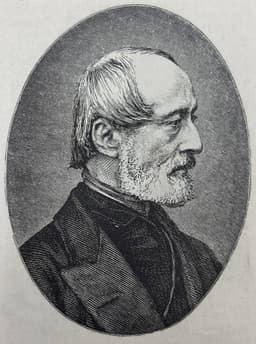
Giuseppe Mazzini
Revolutionary · Modern
50.7Total
Basic Information
Born
1922
1805
Died
—
1872
Era
Modern
Modern
Nationality
Angola
Italy
Occupation
Revolutionary
Revolutionary
Civilization
Other
Western
Score Comparison
Military (10%)
50.0
39.9
Political (20%)
43.7
40.8
Influence (20%)
53.3
60.0
Legacy (20%)
43.3
56.0
Leadership (15%)
55.3
40.9
Strategy (15%)
36.8
54.3
TOTAL
47.7
50.7
Agostinho Neto — Complete Timeline
1975 AD
Outbreak of the Angolan Civil WarWar◆ Major
Immediately after independence, the MPLA faced a civil war against UNITA and the FNLA, backed by the US and South Africa. Neto's government relied on Cuban troops and Soviet arms to survive, initiating a devastating conflict that lasted until 2002.
Civil WarCold War ProxyCuban Intervention
Impact: nationaltragic
Leadership of MPLA and IndependencePolitical Action
Agostinho Neto led the Popular Movement for the Liberation of Angola (MPLA) to victory in the Angolan War of Independence. He became the first President of independent Angola on November 11, 1975, declaring a Marxist-Leninist state and receiving support from Cuba and the Soviet Union.
IndependenceMPLASocialist State
Impact: nationalprogressive
1976 AD
Consolidation of One-Party RulePolitical Action◆ Major
Neto's government suppressed internal dissent within the MPLA, purging rivals like Nito Alves after a failed coup attempt in 1977. He established a one-party state, centralizing power and eliminating political opposition, which set the pattern for future MPLA rule.
PurgeOne-Party StateAuthoritarianism
Impact: nationaldestructive
1979 AD
Death in MoscowOther◆ Major
Neto died in a Moscow hospital following surgery for cancer. His death removed a unifying figure from the MPLA and the civil war, leading to a power struggle within the party. He was succeeded by Jos
DeathSuccessionDos Santos
Impact: nationaltragic
Giuseppe Mazzini — Complete Timeline
1831 AD
Founding of Young ItalyPolitical Action◆ Major
Mazzini founded the secret society Young Italy (Giovine Italia) in Marseille. The organization aimed to achieve Italian unification through popular insurrection and republican government. It recruited thousands of members and inspired uprisings in the 1830s and 1840s.
UnificationRepublicanismSecret Society
Impact: regionalconstructive
1834 AD
Mazzini's Insurrection in SavoyPolitical Action
Mazzini organized an armed invasion of Savoy from Switzerland, intending to spark a republican revolution. The attempt failed due to poor coordination and betrayal, forcing Mazzini into exile. He was sentenced to death in absentia by Piedmontese authorities.
InsurrectionFailureExile
destructive
1849 AD
Roman Republic of 1849Political Action◆ Major
Mazzini became one of the triumvirs governing the short-lived Roman Republic after the pope fled. He implemented progressive reforms including universal male suffrage and freedom of the press. The republic was crushed by French troops in July 1849, and Mazzini returned to exile.
RepublicRevolutionPapal States
Impact: regionalconstructive
1857 AD
Expedition of the SapriPolitical Action
Mazzini organized an ill-fated expedition led by Carlo Pisacane to spark a revolt in the Kingdom of the Two Sicilies. The rebels were quickly defeated and killed by local peasants and Bourbon troops. The failure discredited Mazzini's insurrectionary strategy.
InsurrectionFailureSouthern Italy
tragic
Expert Analysis
Origins
Agostinho Neto was born on September 17, 1922, in Ícolo e Bengo, Angola, to a Methodist pastor and a teacher. He studied medicine at the University of Lisbon, where he became involved in anti-colonial activism. His poetry and political writings reflected his commitment to African liberation.
Giuseppe Mazzini was born on June 22, 1805, in Genoa, Italy, into a middle-class family. He studied law at the University of Genoa but was drawn to revolutionary politics. Influenced by the Carbonari secret societies, he dedicated his life to Italian unification and republicanism.
Rise to Power
Neto rose to prominence as a leader of the Popular Movement for the Liberation of Angola (MPLA) in the 1960s. He was arrested and exiled by Portuguese authorities, but his leadership during the Angolan War of Independence (1961-1974) solidified his position. The Carnation Revolution in Portugal in 1974 led to independence negotiations, and Neto became the first President of Angola on November 11, 1975.
Mazzini founded the Young Italy (Giovine Italia) secret society in 1831 in Marseille, aiming to achieve Italian unification through popular insurrection. His ideas spread rapidly among Italian youth. He organized several uprisings, including the 1848 revolutions, and briefly led the Roman Republic in 1849, which implemented progressive reforms before being crushed by French forces.
Leadership & Governance
Neto governed Angola as a one-party state under MPLA leadership. He nationalized key industries, implemented land reforms, and aligned with the Soviet Union and Cuba. His government faced a severe civil war against UNITA and FNLA, backed by the US and South Africa. Neto maintained control through Soviet support and Cuban troops, but his regime was authoritarian, suppressing dissent within the party, such as the 1977 Nito Alves coup attempt, which led to purges and executions.
Mazzini never held sustained power but was a spiritual leader of the Risorgimento. As a triumvir of the Roman Republic, he introduced universal suffrage, abolished the death penalty, and promoted social reforms. However, his governance was short-lived (February to July 1849). His leadership style was idealistic and inspirational, but he lacked military and organizational skills, leading to failed insurrections like the Savoy expedition (1834) and the Sapri expedition (1857).
Triumph & Tragedy
Neto's greatest triumph was achieving Angola's independence from Portugal in 1975 after 14 years of war. He successfully secured international recognition for the MPLA government, despite internal and external challenges. His greatest tragedy was the outbreak of the Angolan Civil War immediately after independence, which lasted until 2002 and devastated the country. Neto died in 1979 in Moscow from cancer, leaving a fractured nation.
Mazzini's triumph was inspiring the Italian unification movement that ultimately succeeded under Cavour and Garibaldi. His ideas of republicanism and self-determination influenced later nationalists worldwide. His tragedy was his failure to see a unified Italy in his lifetime (he died in 1872), and the eventual monarchy under the House of Savoy, which betrayed his republican ideals.
Character & Destiny
Neto was a pragmatic revolutionary, combining poetry with political strategy. He was determined but authoritarian, willing to use Soviet support and suppress internal rivals to maintain power. His death at 56 removed a unifying figure, leading to power struggles within the MPLA and prolonged civil war.
Mazzini was an idealist and visionary, often called the "soul of Italy." He was charismatic but impractical, organizing failed uprisings due to poor planning and overreliance on popular spontaneity. His character—devoted, ascetic, and uncompromising—made him a moral authority but limited his effectiveness as a leader.
Legacy
Neto's legacy is mixed: he is celebrated as Angola's founding father, with his image on currency and monuments, but his one-party rule and the civil war mar his record. The MPLA continues to dominate Angolan politics, but corruption and authoritarianism persist. His poetry and anti-colonial writings remain influential in African literature.
Mazzini's legacy is profound: he is considered one of the founding fathers of Italian unification, alongside Cavour and Garibaldi. His ideas of nationalism, republicanism, and democracy influenced movements across Europe and Latin America. The modern Italian republic, established after World War II, reflects his ideals more than the monarchy he opposed.
Conclusion
Giuseppe Mazzini had a greater impact than Agostinho Neto, as reflected in their scores (50.7 vs 47.7). Mazzini's ideas shaped not only Italian unification but also global nationalist movements, while Neto's influence is largely confined to Angola and the anti-colonial struggle. Despite Neto's success in leading independence, his legacy is overshadowed by the civil war and authoritarian governance. Mazzini's vision of a democratic republic endured, while Neto's one-party state declined. Thus, Mazzini's ideological reach and historical significance surpass Neto's.
Rankings
🥇
Giuseppe MazziniLeader
Mil: 39.9Pol: 40.8Inf: 60.0
50.7
🥈
Agostinho Neto
Mil: 50.0Pol: 43.7Inf: 53.3
47.7
+3.0 behind
How This Comparison Works
Algorithm
Each figure is scored on 6 dimensions (0—100 scale) based on structured historical data: Military (10%), Political (20%), Influence (20%), Legacy (20%), Leadership (15%), Strategy (15%). The weighted total produces the final ranking.
Data Sources
Scores are computed from structured sub-indicators in the database. Scale factors adjust for era (Ancient ×0.85, Modern ×1.0) and civilization size (Eastern ×1.05, Other ×0.80) to account for differences in population and military scale.
Maximum 3 Figures
Comparisons are limited to 2—3 figures to ensure readability and statistical meaningfulness.
Error Margins
±5 points per dimension — Sub-scores are derived from historical records with inherent uncertainty. Two figures within 5 points on a dimension should be considered roughly equivalent in that area.
Total Score Accuracy
±3 points overall — The weighted combination of 6 dimensions produces a total score with approximately ±3 points of uncertainty. Differences of less than 3 points are not statistically significant— the figures are effectively tied.
Known Limitations
- Historical records are incomplete and uneven across civilizations
- Figures from oral-tradition societies may be underrepresented
- Occupation labels can misclassify multi-role figures
- Scores measure capability and impact, not moral character
- Quantitative scoring is a comparison tool, not absolute truth
Capability Radar
Military (10%) — Battles & Warfare
Battles
25
5
Win Rate
30
5
Expansion
20
5
Political (20%) — Governance & Reform
Reform
40
60
Diplomacy
50
55
Economy
30
10
Influence (20%) — Cultural & Global Reach
Cultural
45
65
Global
45
55
Legacy (20%) — Historical Impact
Historical
50
70
Longevity
40
60
Leadership (15%) — Power & Stability
Tenure
45
20
Stability
25
10
Strategy (15%) — Tactics & Innovation
Strategy
25
10
Tactics
20
5
Reform
15
15
Similar Comparisons
Comments & Discussion
No comments yet. Be the first to share your thoughts!