Loading...
Agustin de Iturbide vs Charles Augustus of Saxe-Weimar
Charles Augustus of Saxe-Weimar leads by 0.5 pts · 2 figures compared
…
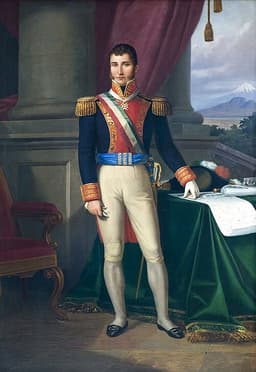
Agustin de Iturbide
Emperor · Modern
55.3Total
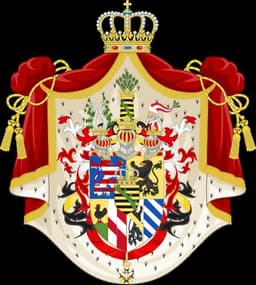
Charles Augustus of Saxe-Weimar
Emperor · Modern
55.8Total
Basic Information
Born
1783
1757
Died
1824
1828
Era
Modern
Modern
Nationality
Mexico
Saxe-Weimar
Occupation
Emperor
Emperor
Civilization
Western
Western
Score Comparison
Military (10%)
52.5
20.0
Political (20%)
53.8
70.0
Influence (20%)
57.2
55.0
Legacy (20%)
46.7
52.0
Leadership (15%)
67.0
82.0
Strategy (15%)
60.0
42.3
TOTAL
55.3
55.8
Agustin de Iturbide — Complete Timeline
1820 AD
Switched sides to join the independence movementPolitical Action
Iturbide, a royalist general who had fought against the insurgents, was appointed to command the army against Vicente Guerrero. Instead of fighting, he negotiated with Guerrero and issued the Plan of Iguala on February 24, 1821, proposing independence, constitutional monarchy, and protection of the Catholic Church.
Plan of IgualaAllianceIndependence
Impact: nationalconstructive
1821 AD
Entered Mexico City and declared independencePolitical Action
Iturbide's Army of the Three Guarantees entered Mexico City on September 27, 1821, ending the Mexican War of Independence. The next day, the Declaration of Independence of the Mexican Empire was signed. Iturbide became the head of a provisional government, effectively ruling Mexico.
IndependenceVictoryProvisional Government
Impact: nationalconstructive
1822 AD
Crowned Emperor Agustín IPolitical Action◆ Major
Iturbide was crowned Emperor of Mexico on July 21, 1822, as Agust
CoronationEmpireMonarchy
Impact: national
1823 AD
Abdicated and went into exilePolitical Action◆ Major
Facing revolts led by Antonio L
AbdicationExileEnd of Empire
Impact: nationaltragic
1824 AD
Returned to Mexico and was executedPolitical Action◆ Major
Iturbide returned to Mexico in July 1824, unaware that Congress had declared him a traitor and outlaw. He was captured upon landing and executed by firing squad on July 19, 1824, in Padilla, Tamaulipas. His death ended any possibility of restoring the monarchy.
ExecutionReturnDeath
Impact: nationaltragic
Charles Augustus of Saxe-Weimar — Complete Timeline
1775 AD
Patronage of Johann Wolfgang von GoetheCultural◆ Major
Charles Augustus invited Goethe to Weimar and appointed him to various governmental positions. This patronage created the Weimar Classicism cultural movement and made Weimar a major intellectual center in Europe.
Weimar ClassicismGoetheCultural Patronage
Impact: globalconstructive
1806 AD
Joined the Rhine ConfederationPolitical Action◆ Major
Charles Augustus allied Saxe-Weimar with Napoleon's Confederation of the Rhine, gaining territorial enlargement and sovereign status. This decision preserved his duchy's autonomy during the Napoleonic Wars but tied it to French hegemony.
Napoleonic WarsConfederation of the RhineAlliance
Impact: regional
1813 AD
Fought at the Battle of LeipzigWar◆ Major
Charles Augustus switched sides and fought with the Allied coalition against Napoleon at the Battle of Leipzig. His troops participated in the decisive defeat of Napoleon, contributing to the liberation of German states from French control.
Battle of LeipzigNapoleonic WarsCoalition
Impact: regional
1816 AD
Granted the Constitution of 1816Political Action◆ Major
Charles Augustus issued a constitution for Saxe-Weimar-Eisenach, making him the first German ruler to grant a constitution. This established a bicameral parliament and guaranteed basic rights, setting a precedent for constitutionalism in the German states.
ConstitutionConstitutionalismGerman States
Impact: nationalprogressive
Expert Analysis
Agustin de Iturbide vs Charles Augustus of Saxe-Weimar
# The Emperor and the Enlightener: Two Paths from Europe's Shadow
On a summer day in 1822, Agustín de Iturbide knelt in Mexico City's Metropolitan Cathedral as a golden crown was placed upon his head, transforming a former royalist general into Emperor Agustín I of Mexico. Four years earlier, across the Atlantic in the small German duchy of Saxe-Weimar, Duke Charles Augustus had done something no German ruler had dared: he granted his people a constitution, voluntarily limiting his own power. One man reached for an imperial throne and lost everything; the other surrendered absolute authority and built a legacy that would outlast his small domain. What drove these two contemporaries—both born into an age of revolution—to such different destinies?
Origins
Iturbide came into the world in 1783 in Valladolid (now Morelia), Mexico, the son of a Spanish Basque father and a Mexican-born mother. He was a *criollo*—a person of Spanish blood born in the Americas, barred from the highest colonial offices but privileged above the indigenous and mixed-race majority. This ambiguous status bred ambition and resentment in equal measure. The French Revolution had shaken Europe, and by Iturbide's youth, the ideas of liberty and self-governance were crossing the Atlantic, though he would spend his early career fighting *against* those ideas.
Charles Augustus was born in 1757 into an ancient but tiny German dynasty. The Duchy of Saxe-Weimar was a patch of land so small that a traveler could cross it in a day, yet its ruler inherited not just territory but a tradition of cultural patronage. When the young duke met Johann Wolfgang von Goethe in 1775, he did something extraordinary for an 18th-century monarch: he invited the poet to Weimar not as a court entertainer, but as a minister of state. This single decision—born of intellectual curiosity rather than political calculation—would transform Weimar into the Athens of Germany.
Rise to Power
Iturbide's path to power was carved by the sword. For a decade, he hunted insurgents in the Mexican War of Independence, earning a reputation for cruelty and competence. He crushed rebel forces with such efficiency that the Spanish viceroy entrusted him with command against the last remaining guerrilla leader, Vicente Guerrero, in 1820. But Iturbide had been watching the wider world: Spain itself had just undergone a liberal revolution, and the old certainties were crumbling. Instead of destroying Guerrero, he negotiated with him. The result was the Plan of Iguala—a clever compromise promising independence, constitutional monarchy, and the preservation of Catholic supremacy. Iturbide's Army of the Three Guarantees marched into Mexico City on September 27, 1821, and the Spanish viceroy, isolated and outmaneuvered, capitulated.
Charles Augustus never needed to seize power; he was born to it. But ruling a minor duchy in the shadow of Prussia and Austria required a different kind of cunning. When Napoleon redrew the map of Germany, Charles Augustus made a pragmatic choice: he joined the Confederation of the Rhine in 1806, becoming a French ally. This decision, however distasteful to German nationalists, doubled his territory and granted his duchy full sovereignty. When Napoleon's star began to fall, Charles Augustus switched sides with equal pragmatism, leading his troops at the Battle of Leipzig in 1813 alongside the Allied coalition that crushed the French.
Leadership & Governance
Here the two men diverge most starkly. Iturbide's empire lasted less than a year. His coronation on July 21, 1822, was a desperate gamble: a military mutiny had pressured him to accept the throne, but he had no administrative experience, no treasury, and no clear vision beyond personal ambition. He alienated the very factions that had brought him to power—the liberals who wanted a republic, the conservatives who wanted a Bourbon prince, and the military officers who saw him as a rival. When Antonio López de Santa Anna raised the banner of revolt in December 1822, Iturbide's empire crumbled in months. By March 1823, he was on a ship to exile.
Charles Augustus governed for over five decades. His greatest act came in 1816, when he granted Saxe-Weimar-Eisenach its constitution—a document that established a representative assembly, guaranteed freedom of the press, and abolished feudal privileges. This was not mere idealism; it was strategic statecraft. By voluntarily limiting his own power, he created a stable, prosperous duchy that attracted intellectuals, artists, and reformers from across Germany. While other German princes clung to absolutism, Charles Augustus understood that in the post-Napoleonic world, legitimacy came from consent, not divine right.
Triumph & Tragedy
Iturbide's triumph was the independence of Mexico itself. He had achieved what a decade of bloody insurgency had failed to accomplish: a negotiated, relatively bloodless break from Spain. His tragedy was that he could not govern what he had won. In July 1824, believing he could still serve his country, he returned from exile to offer his services. But the Mexican Congress had declared him a traitor and an outlaw. He was captured and executed by firing squad—a former emperor dying as a rebel, his body denied Christian burial.
Charles Augustus's triumph was more subtle but more lasting. He created a cultural and political model that influenced the broader German awakening. His tragedy, if it can be called that, was the limits of his stage: Saxe-Weimar remained a duchy in a century of empires, and his enlightened rule could not prevent the forces of Prussian militarism from eventually dominating Germany.
Character & Destiny
Iturbide was a man of action who mistook military command for political leadership. He could win battles and negotiate alliances, but he lacked the patience for the slow, grinding work of building institutions. He was charismatic, brave, and decisive—qualities that served him in war but betrayed him in peace. His fatal flaw was a kind of tragic hubris: he believed that the nation that had followed him to independence would follow him to monarchy.
Charles Augustus was a man of reflection who understood that power was best exercised indirectly. He surrounded himself with genius—not just Goethe, but the poet Schiller, the philosopher Herder, and the theologian Wieland—and let their ideas shape his governance. He was patient, subtle, and willing to compromise. His great strength was knowing what he did not know, and trusting those who did.
Legacy
Iturbide is a contested figure in Mexican memory. For decades, he was dismissed as a pretender and a traitor to republican ideals. Today, his name appears on the Column of Independence in Mexico City, but his empire is remembered as a false start. He is the cautionary tale of a liberator who mistook personal ambition for national destiny.
Charles Augustus is remembered as one of the great enlightened rulers of the German states. The constitution of 1816 remained in force until the German Revolution of 1918, and the cultural flowering he sponsored—the "Weimar Classicism" of Goethe and Schiller—became the foundation of German national identity. His legacy lives not in monuments or battles, but in the idea that a small ruler with big ideas can shape history more profoundly than an emperor with a sword.
Conclusion
Standing at the edge of the modern world, both men faced the same fundamental question: how does a ruler legitimize authority in an age when divine right is dying? Iturbide answered with a crown and a throne, and the people rejected him. Charles Augustus answered with a constitution and a library, and the people embraced him. One sought to rule from above, the other to govern from within. Their divergent fates suggest that in the end, the most durable power is not the power to command, but the wisdom to share.
Rankings
🥇
Charles Augustus of Saxe-WeimarLeader
Mil: 20.0Pol: 70.0Inf: 55.0
55.8
🥈
Agustin de Iturbide
Mil: 52.5Pol: 53.8Inf: 57.2
55.3
+0.5 behind
How This Comparison Works
Algorithm
Each figure is scored on 6 dimensions (0—100 scale) based on structured historical data: Military (10%), Political (20%), Influence (20%), Legacy (20%), Leadership (15%), Strategy (15%). The weighted total produces the final ranking.
Data Sources
Scores are computed from structured sub-indicators in the database. Scale factors adjust for era (Ancient ×0.85, Modern ×1.0) and civilization size (Eastern ×1.05, Other ×0.80) to account for differences in population and military scale.
Maximum 3 Figures
Comparisons are limited to 2—3 figures to ensure readability and statistical meaningfulness.
Error Margins
±5 points per dimension — Sub-scores are derived from historical records with inherent uncertainty. Two figures within 5 points on a dimension should be considered roughly equivalent in that area.
Total Score Accuracy
±3 points overall — The weighted combination of 6 dimensions produces a total score with approximately ±3 points of uncertainty. Differences of less than 3 points are not statistically significant— the figures are effectively tied.
Known Limitations
- Historical records are incomplete and uneven across civilizations
- Figures from oral-tradition societies may be underrepresented
- Occupation labels can misclassify multi-role figures
- Scores measure capability and impact, not moral character
- Quantitative scoring is a comparison tool, not absolute truth
Capability Radar
Military (10%) — Battles & Warfare
Battles
60
5
Win Rate
65
5
Expansion
50
5
Political (20%) — Governance & Reform
Reform
45
75
Diplomacy
55
60
Economy
30
55
Influence (20%) — Cultural & Global Reach
Cultural
40
65
Global
35
40
Legacy (20%) — Historical Impact
Historical
50
60
Longevity
30
50
Leadership (15%) — Power & Stability
Tenure
30
70
Stability
20
65
Strategy (15%) — Tactics & Innovation
Strategy
60
5
Tactics
55
5
Reform
40
10
Similar Comparisons
Comments & Discussion
No comments yet. Be the first to share your thoughts!