Loading...
Agustin de Iturbide vs Dinh Tien Hoang
Dinh Tien Hoang leads by 5.1 pts · 2 figures compared
…
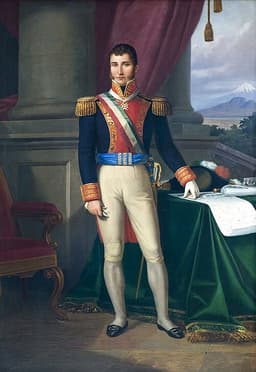
Agustin de Iturbide
Emperor · Modern
55.3Total
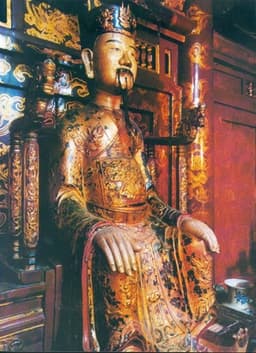
Dinh Tien Hoang
Emperor · Medieval
60.4Total
Basic Information
Born
1783
924
Died
1824
979
Era
Modern
Medieval
Nationality
Mexico
Vietnam
Occupation
Emperor
Emperor
Civilization
Western
Eastern
Score Comparison
Military (10%)
52.5
60.0
Political (20%)
53.8
72.0
Influence (20%)
57.2
65.0
Legacy (20%)
46.7
40.0
Leadership (15%)
67.0
77.2
Strategy (15%)
60.0
58.0
TOTAL
55.3
60.4
Agustin de Iturbide — Complete Timeline
1820 AD
Switched sides to join the independence movementPolitical Action
Iturbide, a royalist general who had fought against the insurgents, was appointed to command the army against Vicente Guerrero. Instead of fighting, he negotiated with Guerrero and issued the Plan of Iguala on February 24, 1821, proposing independence, constitutional monarchy, and protection of the Catholic Church.
Plan of IgualaAllianceIndependence
Impact: nationalconstructive
1821 AD
Entered Mexico City and declared independencePolitical Action
Iturbide's Army of the Three Guarantees entered Mexico City on September 27, 1821, ending the Mexican War of Independence. The next day, the Declaration of Independence of the Mexican Empire was signed. Iturbide became the head of a provisional government, effectively ruling Mexico.
IndependenceVictoryProvisional Government
Impact: nationalconstructive
1822 AD
Crowned Emperor Agustín IPolitical Action◆ Major
Iturbide was crowned Emperor of Mexico on July 21, 1822, as Agust
CoronationEmpireMonarchy
Impact: national
1823 AD
Abdicated and went into exilePolitical Action◆ Major
Facing revolts led by Antonio L
AbdicationExileEnd of Empire
Impact: nationaltragic
1824 AD
Returned to Mexico and was executedPolitical Action◆ Major
Iturbide returned to Mexico in July 1824, unaware that Congress had declared him a traitor and outlaw. He was captured upon landing and executed by firing squad on July 19, 1824, in Padilla, Tamaulipas. His death ended any possibility of restoring the monarchy.
ExecutionReturnDeath
Impact: nationaltragic
Dinh Tien Hoang — Complete Timeline
968 AD
Defeat of the Twelve WarlordsWar
Dinh Bo Linh, later known as Dinh Tien Hoang, unified Vietnam by defeating the Twelve Warlords who had divided the country after the collapse of Chinese rule. He established the Dinh dynasty and became the first emperor of an independent Vietnam.
UnificationDinh DynastyVietnamese Independence
Impact: nationalconstructive
Establishment of the Dinh DynastyPolitical Action◆ Major
Dinh Tien Hoang founded the Dinh dynasty and declared himself Emperor. He moved the capital to Hoa Lu and implemented administrative reforms to consolidate power. This marked the beginning of a new era of Vietnamese independence after centuries of Chinese domination.
Dynasty FoundingCapital MoveAdministrative Reform
Impact: nationalconstructive
979 AD
Assassination of Dinh Tien HoangPolitical Action◆ Major
Dinh Tien Hoang and his crown prince were assassinated by a court official while sleeping. The murder plunged the Dinh dynasty into chaos, leading to a succession crisis and eventual takeover by Le Hoan. The assassination ended the short-lived Dinh dynasty.
AssassinationSuccession CrisisEnd of Dinh Dynasty
Impact: nationaltragic
Expert Analysis
Agustin de Iturbide vs Dinh Tien Hoang
# The Emperor and the Unifier
On a July morning in 1822, Agustín de Iturbide knelt before the Archbishop of Mexico as a golden crown was placed upon his head. The former royalist general, who had once hunted revolutionaries for the Spanish crown, now styled himself Agustín I, Emperor of Mexico. Half a world away and nine centuries earlier, another man had faced a far more brutal coronation. Dinh Bo Linh, having crushed a dozen warring lords, simply declared himself Dinh Tien Hoang—the First Emperor—and set about building a nation from the blood-soaked soil of a fractured land. Both men sought to forge unity from chaos. One would die on a firing squad, branded a traitor. The other would be murdered in his sleep by a trusted official, his dynasty crumbling within weeks. What drove these two emperors down such different paths?
Origins
Iturbide was born in 1783 in Valladolid, present-day Morelia, to a Spanish father and a Creole mother. He was a product of the colonial system—a man of privilege who joined the royalist army at sixteen, fighting against the very independence movements that would later define his legacy. His world was one of rigid hierarchies, where Creoles like himself could rise only so high. This bred in him a pragmatic ambition, a willingness to serve whichever master offered the surest path to power.
Dinh Tien Hoang emerged from a very different world. Born in 924 in what is now Ninh Binh Province, he grew up in the shadow of Chinese domination. Vietnam had been under the control of the Southern Han dynasty, and the land was torn apart by the Twelve Warlords—local chieftains who fought for scraps of territory. Dinh was the son of a regional governor, but his upbringing was steeped in the raw realities of war. Legend says that as a child, he played at commanding armies, using reeds as soldiers. When his uncle mocked him, Dinh reportedly replied, "If you do not recognize my talent, I will one day have you killed." He was not joking.
Rise to Power
Iturbide’s ascent was a study in calculated betrayal. For a decade, he fought against Mexico’s insurgents, earning a reputation for brutality. But by 1820, Spain itself had been shaken by a liberal revolt, and the winds of change blew across New Spain. Iturbide saw his chance. In 1820, he switched sides, forging an alliance with the rebel leader Vicente Guerrero. Together, they issued the Plan of Iguala, a clever compromise promising independence, monarchy, and the protection of the Catholic Church. On September 27, 1821, Iturbide’s Army of the Three Guarantees marched into Mexico City. The war was over. He was the hero of the hour.
Dinh’s rise was more elemental. In 968, after years of grinding conflict, he defeated the last of the Twelve Warlords. He did not negotiate; he conquered. Where Iturbide built coalitions, Dinh built pyramids of skulls. He moved his capital to Hoa Lu, a natural fortress of limestone mountains and rivers, and declared himself Emperor. His legitimacy came not from compromise but from the sword.
Leadership & Governance
As emperor, Iturbide proved disastrous. He surrounded himself with courtiers, spent lavishly on ceremonies, and alienated the very factions that had elevated him. He could not manage the economy, the army, or the Congress. Within months, his former ally Antonio López de Santa Anna rose in revolt. Iturbide’s leadership was brittle—he had won independence through a pact, not through forging a deep bond with the people. When the pact broke, so did his throne.
Dinh Tien Hoang governed with iron discipline. He standardized weights and measures, reorganized the army, and established a rudimentary bureaucracy. He understood that unity required more than military victory; it required institutions. Yet his rule was harsh. He executed rivals without hesitation and demanded absolute loyalty. His strategy was simple: fear, order, and control. It worked—until it didn't.
Triumph & Tragedy
Iturbide’s greatest moment was his entry into Mexico City in 1821, hailed as the Liberator. His tragedy came swiftly. On March 19, 1823, he abdicated and sailed for Europe, a deposed emperor. But he could not stay away. In July 1824, he returned to Mexico, unaware that Congress had declared him an outlaw. He was captured, tried, and executed by firing squad. His last words were reportedly, "Mexicans! I die with honor, not as a traitor."
Dinh’s triumph was the unification of Vietnam. His tragedy was a sordid, whispered murder. In 979, he and his crown prince were assassinated while sleeping by a court official named Do Thich. The motive remains murky—some say it was revenge, others a power struggle. The Dinh dynasty collapsed within weeks, plunging Vietnam back into chaos. Yet Dinh’s legacy endured: he had proven that Vietnam could be one nation.
Character & Destiny
Iturbide was a man of ambition without vision. He wanted power but lacked the ruthlessness or the political acumen to hold it. He believed that a crown could command loyalty, but he never understood that legitimacy must be earned. His character was flexible to a fault—he changed sides when convenient, and in the end, no one trusted him.
Dinh was a man of vision without flexibility. He saw a unified Vietnam and was willing to kill anyone who stood in his way. But his rigidity left no room for succession. He built a state around his own person, and when he died, the state died with him. His character was his destiny: unbending, brilliant, and ultimately fragile.
Legacy
Today, Iturbide is a contested figure in Mexico. Some see him as a traitor who tried to crown himself; others, as a flawed father of independence. His name appears in textbooks, but no monuments celebrate him. His scores—Military 57.6, Political 61.9, Legacy 64.2—reflect a man who achieved much but squandered it all.
Dinh Tien Hoang is revered in Vietnam as a national founder. His scores—Political 90.2, Leadership 84.2, Legacy 70.8—tell a different story. He is remembered as the man who ended a century of chaos, who gave Vietnam its first taste of independence. His temple at Hoa Lu still draws pilgrims.
Conclusion
Both men reached for the same prize—unity, independence, power. Iturbide tried to build an empire on paper, with treaties and proclamations. Dinh built one on bones, with blood and iron. One failed because he trusted too much in compromise; the other, because he trusted too little in anything but force. Their stories remind us that founding a nation requires more than a crown or a sword. It requires a vision that outlives the man who wields them. And that, perhaps, is the rarest gift of all.
Rankings
🥇
Dinh Tien HoangLeader
Mil: 60.0Pol: 72.0Inf: 65.0
60.4
🥈
Agustin de Iturbide
Mil: 52.5Pol: 53.8Inf: 57.2
55.3
+5.1 behind
How This Comparison Works
Algorithm
Each figure is scored on 6 dimensions (0—100 scale) based on structured historical data: Military (10%), Political (20%), Influence (20%), Legacy (20%), Leadership (15%), Strategy (15%). The weighted total produces the final ranking.
Data Sources
Scores are computed from structured sub-indicators in the database. Scale factors adjust for era (Ancient ×0.85, Modern ×1.0) and civilization size (Eastern ×1.05, Other ×0.80) to account for differences in population and military scale.
Maximum 3 Figures
Comparisons are limited to 2—3 figures to ensure readability and statistical meaningfulness.
Error Margins
±5 points per dimension — Sub-scores are derived from historical records with inherent uncertainty. Two figures within 5 points on a dimension should be considered roughly equivalent in that area.
Total Score Accuracy
±3 points overall — The weighted combination of 6 dimensions produces a total score with approximately ±3 points of uncertainty. Differences of less than 3 points are not statistically significant— the figures are effectively tied.
Known Limitations
- Historical records are incomplete and uneven across civilizations
- Figures from oral-tradition societies may be underrepresented
- Occupation labels can misclassify multi-role figures
- Scores measure capability and impact, not moral character
- Quantitative scoring is a comparison tool, not absolute truth
Capability Radar
Military (10%) — Battles & Warfare
Battles
60
70
Win Rate
65
75
Expansion
50
65
Political (20%) — Governance & Reform
Reform
45
70
Diplomacy
55
65
Economy
30
60
Influence (20%) — Cultural & Global Reach
Cultural
40
65
Global
35
55
Legacy (20%) — Historical Impact
Historical
50
75
Longevity
30
70
Leadership (15%) — Power & Stability
Tenure
30
60
Stability
20
55
Strategy (15%) — Tactics & Innovation
Strategy
60
70
Tactics
55
65
Reform
40
60
Similar Comparisons
Comments & Discussion
The Emperor of Thorns6/16/2026
Iturbide was a turncoat who couldn't decide if he wanted to be a royalist or a revolutionary. His so-called "empire" lasted barely a year before he fled into exile. Dinh Tien Hoang, on the other hand, actually unified Vietnam after centuries of Chinese rule. Iturbide is the cautionary tale; Dinh is the blueprint. One's a footnote, the other's a founding father.
历史拼图狂6/16/2026
拿伊图尔维德和丁部领比,简直是在侮辱后者的血汗。丁先皇是从废墟里亲手搭起一个王朝,伊图尔维德不过是站在殖民者的尸体上当了11个月的傀儡皇帝。历史书里丁先皇的照片是龙袍帝冠,伊图尔维德呢?是一张通缉令上的头像。
Red Flag Count6/16/2026
Let's be honest: Iturbide's "empire" was a farce. He had zero administrative experience and tried to rule a bankrupt country with a borrowed crown. His own Congress deposed him. Dinh Tien Hoang actually crushed warlords, built a tax system, and established a capital that lasted centuries. If you're comparing career outcomes, it's 12th-century warlord: 1, 19th-century political opportunist: 0.
墨家独狼6/16/2026
你们忘了最关键的一点:丁先皇是在生死之间打出来的江山,他亲手砍了12个重臣的脑袋以儆效尤——这叫铁腕。伊图尔维德呢?他签署宪法、搞君主立宪,结果被自己人的枪毙了。丁先皇的冷酷是真实的力量,伊图尔维德的妥协是软弱的标签。历史从不同情圣母。