Loading...
Agustin de Iturbide vs Nurhaci
Nurhaci leads by 15.9 pts · 2 figures compared
…
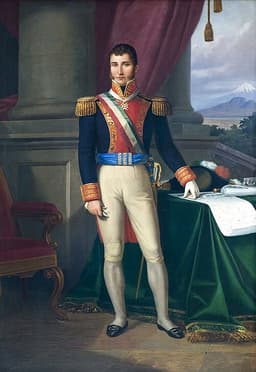
Agustin de Iturbide
Emperor · Modern
55.3Total
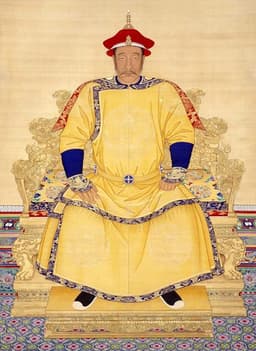
Nurhaci
Emperor · Modern
71.2Total
Basic Information
Born
1783
1559
Died
1824
1626
Era
Modern
Modern
Nationality
Mexico
China
Occupation
Emperor
Emperor
Civilization
Western
Eastern
Score Comparison
Military (10%)
52.5
79.9
Political (20%)
53.8
85.0
Influence (20%)
57.2
40.0
Legacy (20%)
46.7
84.0
Leadership (15%)
67.0
79.0
Strategy (15%)
60.0
76.0
TOTAL
55.3
71.2
Agustin de Iturbide — Complete Timeline
1820 AD
Switched sides to join the independence movementPolitical Action
Iturbide, a royalist general who had fought against the insurgents, was appointed to command the army against Vicente Guerrero. Instead of fighting, he negotiated with Guerrero and issued the Plan of Iguala on February 24, 1821, proposing independence, constitutional monarchy, and protection of the Catholic Church.
Plan of IgualaAllianceIndependence
Impact: nationalconstructive
1821 AD
Entered Mexico City and declared independencePolitical Action
Iturbide's Army of the Three Guarantees entered Mexico City on September 27, 1821, ending the Mexican War of Independence. The next day, the Declaration of Independence of the Mexican Empire was signed. Iturbide became the head of a provisional government, effectively ruling Mexico.
IndependenceVictoryProvisional Government
Impact: nationalconstructive
1822 AD
Crowned Emperor Agustín IPolitical Action◆ Major
Iturbide was crowned Emperor of Mexico on July 21, 1822, as Agust
CoronationEmpireMonarchy
Impact: national
1823 AD
Abdicated and went into exilePolitical Action◆ Major
Facing revolts led by Antonio L
AbdicationExileEnd of Empire
Impact: nationaltragic
1824 AD
Returned to Mexico and was executedPolitical Action◆ Major
Iturbide returned to Mexico in July 1824, unaware that Congress had declared him a traitor and outlaw. He was captured upon landing and executed by firing squad on July 19, 1824, in Padilla, Tamaulipas. His death ended any possibility of restoring the monarchy.
ExecutionReturnDeath
Impact: nationaltragic
Nurhaci — Complete Timeline
1616 AD
Unified the Jurchen TribesWar
Nurhaci completed the unification of the fragmented Jurchen tribes of Manchuria. He organized them into the Eight Banners system, a military and social structure that became the foundation of his power. He then proclaimed the Later Jin dynasty.
JurchenUnificationEight Banners
Impact: regionalconstructive
Proclaimed the Later Jin DynastyPolitical Action◆ Major
Nurhaci proclaimed the establishment of the Later Jin dynasty in Manchuria, claiming legitimacy as a successor to the Jin dynasty. This act formally declared his independence from the Ming dynasty and established a rival state.
Later JinDynastyFoundation
Impact: regionalconstructive
1618 AD
Issued the Seven GrievancesPolitical Action◆ Major
Nurhaci issued the Seven Grievances, a formal declaration of war against the Ming dynasty. The grievances listed alleged Ming injustices against the Jurchens, including interference in tribal affairs and killing of Jurchen leaders. This justified his invasion of Ming territory.
Ming-Qing TransitionDeclaration of WarPropaganda
Impact: regionaldestructive
1619 AD
Battle of SarhuWar
Nurhaci's forces decisively defeated a large Ming army at the Battle of Sarhu. The Ming sent four separate armies into Manchuria, but Nurhaci used interior lines to defeat them in detail. This victory secured his control over Manchuria.
Ming-Qing TransitionBattleManchuria
Impact: regionalconstructive
1626 AD
Defeated by Yuan Chonghuan at NingyuanWar◆ Major
Nurhaci led an invasion of Ming territory but was defeated at the Battle of Ningyuan by Ming general Yuan Chonghuan. The Ming used European-style cannons to repel the Later Jin forces. Nurhaci was wounded during the battle and died shortly after.
Ming-Qing TransitionBattleDefeat
Impact: regionaltragic
Expert Analysis
Agustin de Iturbide vs Nurhaci
# The Emperor and the Khan: Two Paths to Power in a Revolutionary Age
On a July morning in 1822, Agustín de Iturbide stood beneath a canopy of gold brocade in Mexico City’s Metropolitan Cathedral, accepting a crown from trembling hands. The former royalist general had, in the span of two dizzying years, crushed the Spanish army, declared independence, and now crowned himself Emperor Agustín I. Half a world away and two centuries earlier, another man had built an empire from nothing—Nurhaci, a Jurchen chieftain who unified warring tribes, created a military machine of terrifying efficiency, and laid the foundations for a dynasty that would rule China for nearly three centuries. Both men sought supreme power. One would be dead within two years, executed by his own people. The other would die in battle, but his legacy would outlast the Ming dynasty itself. What made the difference?
Origins
Iturbide was born into the twilight of Spanish colonialism, a criollo—a person of Spanish descent born in the Americas—who grew up in a world of rigid hierarchies. His father was a Basque merchant, his mother from a wealthy Mexican family. The young Iturbide absorbed the contradictions of New Spain: the pride of a colonial elite that could never quite match the prestige of Peninsulares born in Spain, the simmering resentments of a society stratified by race and class. By the time he joined the royal army at sixteen, the French Revolution had already shaken Europe, and the seeds of independence were germinating across Latin America.
Nurhaci’s world was older, harsher, and more fluid. Born in 1559 to a minor Jurchen chieftain in the forests of Manchuria, he grew up in a land of shifting alliances and blood feuds. His father and grandfather were killed in a raid when he was ten, and he barely escaped with his life. Where Iturbide learned command in the orderly ranks of a colonial army, Nurhaci learned survival in the chaos of tribal warfare—a school that taught him patience, cunning, and the art of turning enemies into allies.
Rise to Power
Their paths to power could not have been more different. Iturbide rose through the Spanish military system, fighting against the independence movement for a decade. He was efficient, ruthless—he once ordered the execution of 300 captured insurgents—and thoroughly loyal to the crown. Then, in 1820, a liberal revolt in Spain threatened the privileges of the Mexican elite. Iturbide saw his opportunity. He switched sides, proposing the Plan of Iguala: independence, constitutional monarchy, and the preservation of Catholic and criollo power. It was a masterstroke of political calculation. By September 1821, he rode into Mexico City at the head of the Army of the Three Guarantees, hailed as the Liberator.
Nurhaci’s rise was slower, bloodier, and more organic. He spent decades patiently unifying the Jurchen tribes through a combination of marriage alliances, military conquest, and sheer force of will. In 1616, he proclaimed the Later Jin dynasty, deliberately invoking the memory of a previous Jurchen dynasty that had once ruled northern China. His genius lay not in a single dramatic switch but in the systematic creation of the Eight Banners—a military and social organization that turned every Manchu into a soldier, every family into a unit of war. By 1618, he was ready to challenge the Ming dynasty itself, issuing his Seven Grievances against the Chinese emperor.
Leadership & Governance
Iturbide’s rule as Emperor Agustín I lasted exactly ten months. He governed as he had commanded: with a sense of entitlement and a fatal lack of political imagination. He surrounded himself with old royalist cronies, alienated the liberals who had supported him, and bankrupted the treasury with lavish court ceremonies. When General Antonio López de Santa Anna rebelled, Iturbide tried to crush him with force—but the rebellion spread like wildfire. By March 1823, he had abdicated and fled into European exile.
Nurhaci governed differently. He never called himself emperor in the Chinese style until his son’s reign; he was a khan, a warrior-leader who ate with his men and shared their hardships. His Eight Banners were not just a military innovation but a social revolution—they dissolved old tribal loyalties and created a new identity, Manchu, that transcended clan. He was a master of propaganda, presenting his war against the Ming as a righteous campaign against corruption. And he was patient: after his devastating defeat at the Battle of Ningyuan in 1626, where Ming general Yuan Chonghuan’s cannon tore through his ranks, he retreated, regrouped, and died knowing his son would finish what he had started.
Triumph & Tragedy
Iturbide’s greatest triumph was also his tragedy. The moment he entered Mexico City in September 1821, he had achieved what no one before him had: a unified, independent Mexico. But he could not govern what he had won. His coronation was a desperate gamble to consolidate power, and it failed catastrophically. When he returned from exile in 1824, hoping to rally support, he was captured and shot by a firing squad—a traitor to the republic he had helped create.
Nurhaci’s tragedy was more personal. He died from wounds sustained at Ningyuan, his first major defeat in decades. But even in failure, he had built something enduring. The Manchu state he created would conquer China within twenty years of his death, and the Qing dynasty he founded would rule until 1912. His death was a setback, not an ending.
Character & Destiny
Iturbide was a man of his moment—brilliant, ambitious, and dangerously impatient. He saw power as something to be seized, not built. His charisma won him followers, but his arrogance lost them. He believed that the same military decisiveness that had won independence could govern a nation, and he was wrong. History remembers him as a cautionary tale: the liberator who became a tyrant, the emperor who could not see beyond his own reflection.
Nurhaci was a builder. He thought in decades, not months. He understood that power required institutions—the Banners, the civil service, the legal codes—that would outlast any single leader. He was ruthless but patient, ambitious but strategic. When he failed, he learned. When he won, he consolidated. His character was shaped by the unforgiving world of the Manchurian frontier, where a single mistake could mean annihilation.
Legacy
Iturbide’s legacy is deeply ambiguous. He is remembered as both a father of Mexican independence and a failed emperor, a figure who embodies the instability that would plague Mexico for a century. His name appears in history books, but his empire is a footnote. Today, he lies in the Mexico City Cathedral, a symbol of a path not taken.
Nurhaci’s legacy is monumental. He is the founding father of the Qing dynasty, the last imperial dynasty of China. His Eight Banners became the backbone of a military machine that conquered the largest empire in East Asian history. His descendants ruled over 400 million people. In China, he is remembered as a unifier, a lawgiver, and a strategist whose vision shaped the modern nation.
Conclusion
Standing at the edge of their respective revolutions, both men faced the same question: how does one turn military victory into lasting power? Iturbide answered with a crown, a court, and a desperate gamble. Nurhaci answered with an army, a system, and a dynasty. One died a traitor, the other a founder. Their stories remind us that in the brutal calculus of history, ambition is not enough. The difference between an emperor and a footnote is not vision—it is the patience to build something that outlasts the builder.
Rankings
🥇
NurhaciLeader
Mil: 79.9Pol: 85.0Inf: 40.0
71.2
🥈
Agustin de Iturbide
Mil: 52.5Pol: 53.8Inf: 57.2
55.3
+15.9 behind
How This Comparison Works
Algorithm
Each figure is scored on 6 dimensions (0—100 scale) based on structured historical data: Military (10%), Political (20%), Influence (20%), Legacy (20%), Leadership (15%), Strategy (15%). The weighted total produces the final ranking.
Data Sources
Scores are computed from structured sub-indicators in the database. Scale factors adjust for era (Ancient ×0.85, Modern ×1.0) and civilization size (Eastern ×1.05, Other ×0.80) to account for differences in population and military scale.
Maximum 3 Figures
Comparisons are limited to 2—3 figures to ensure readability and statistical meaningfulness.
Error Margins
±5 points per dimension — Sub-scores are derived from historical records with inherent uncertainty. Two figures within 5 points on a dimension should be considered roughly equivalent in that area.
Total Score Accuracy
±3 points overall — The weighted combination of 6 dimensions produces a total score with approximately ±3 points of uncertainty. Differences of less than 3 points are not statistically significant— the figures are effectively tied.
Known Limitations
- Historical records are incomplete and uneven across civilizations
- Figures from oral-tradition societies may be underrepresented
- Occupation labels can misclassify multi-role figures
- Scores measure capability and impact, not moral character
- Quantitative scoring is a comparison tool, not absolute truth
Capability Radar
Military (10%) — Battles & Warfare
Battles
60
85
Win Rate
65
90
Expansion
50
88
Political (20%) — Governance & Reform
Reform
45
85
Diplomacy
55
80
Economy
30
70
Influence (20%) — Cultural & Global Reach
Cultural
40
85
Global
35
80
Legacy (20%) — Historical Impact
Historical
50
90
Longevity
30
88
Leadership (15%) — Power & Stability
Tenure
30
75
Stability
20
78
Strategy (15%) — Tactics & Innovation
Strategy
60
85
Tactics
55
88
Reform
40
92
Similar Comparisons
Comments & Discussion
经典考据派6/16/2026
拿奥古斯丁和努尔哈赤比?你这是拿墨西哥玉米饼比满汉全席。努尔哈赤统一女真用了三十年,创制满文,创立八旗制度,打下辽东重镇。伊图尔比德呢?1821年签个《伊瓜拉计划》就当皇帝,第二年就被自己人赶下台。一个是缔造王朝的真功夫,一个是赶时髦的速成皇帝。查查历史就知道,努尔哈赤的后代坐了268年龙椅,伊图尔比德的"帝国"连两年都撑不过。这叫比较?这叫羞辱。
Militant Skeptic6/16/2026
Founding Emperor? Please. Iturbide was a turncoat who switched sides only when the royalist cause was collapsing — that's not genius, that's reading the room. His "empire" never controlled more than the capital and a few roads. Meanwhile, Nurhaci captured Shenyang, Liaoyang, and crushed the Ming's best armies before his grandson even got to Beijing. Iturbide got himself shot within seven months of abdicating. Nurhaci died in battle at 67, still undefeated. One was a footnote, the other founded a
历史辩论师6/16/2026
数据不说谎:伊图尔比德的墨西哥第一帝国领土有454万平方公里,努尔哈赤的后金鼎盛期也就130万左右。但面积大有用吗?伊图尔比德连基本的行政体系都没建立,13个月就垮台。努尔哈赤的八旗制度管了两亿多人口三百年。这叫"粗放型创业"和"精细化经营"的区别。更搞笑的是,伊图尔比德被处决后,墨西哥人把他当叛徒祭奠了50年才翻案。努尔哈赤呢?清朝历代皇帝年年祭祀。数据比完,高下立判。
Armchair Strategist6/16/2026
Let's talk strategy. Iturbide's "genius move" was the Plan of Iguala — a political compromise, not a military victory. He won because the royalists were exhausted after 11 years of guerrilla war. Nurhaci actually innov
Historian7356/16/2026
The "Eight Banners" claim is overblown. Nurhaci's banners at formation were basically hunting parties with delusions of grandeur — maybe 10,000 total. Iturbide's Army of the Three Guarantees had 16,000 disciplined troops plus artillery. If we're measuring military achievement by institutional complexity, Iturbide actually beats Nurhaci. But Iturbide's fatal mistake? He never formed a ruling class structure. Nurhaci turned his personal prestige into the Qing nobility system. That's the real diffe