Loading...
This comparison has not been analyzed yet.
One-time AI generation (~1 minute). Scores and timeline are already available below.
Ahab of Israel vs Pushyamitra Shunga
Pushyamitra Shunga leads by 13.8 pts · 2 figures compared
…

Ahab of Israel
Emperor · Ancient
43.0Total
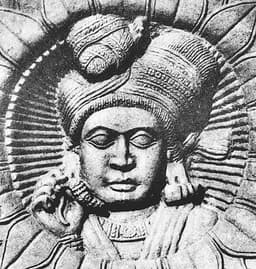
Pushyamitra Shunga
Emperor · Ancient
56.8Total
Basic Information
Born
-874
-195
Died
-853
-149
Era
Ancient
Ancient
Nationality
Israel
India
Occupation
Emperor
Emperor
Civilization
Middle Eastern
Indian
Score Comparison
Military (10%)
55.0
47.5
Political (20%)
26.4
68.0
Influence (20%)
48.6
54.9
Legacy (20%)
43.3
47.5
Leadership (15%)
41.5
68.0
Strategy (15%)
43.7
60.0
TOTAL
43.0
56.8
Ahab of Israel — Complete Timeline
874 BC
Marriage to JezebelPolitical Action◆ Major
Ahab married Jezebel, daughter of Ethbaal, king of Sidon. This alliance with Phoenicia brought Baal worship into Israel, as Jezebel promoted the cult of Baal-Melqart, leading to conflict with the prophet Elijah and the worship of Yahweh.
MarriageBaal WorshipJezebel
Impact: nationaldestructive
870 BC
Construction of the Temple of Baal in SamariaCultural◆ Major
Ahab built a temple and altar for Baal in Samaria, the capital of Israel. He also erected an Asherah pole, institutionalizing the worship of Baal and Asherah in the royal court, which the biblical narrative condemns as evil.
Baal WorshipSamariaIdolatry
Impact: nationaldestructive
860 BC
Conflict with Elijah on Mount CarmelCultural◆ Major
The prophet Elijah challenged 450 prophets of Baal to a contest on Mount Carmel. After Baal failed to ignite a sacrifice, Yahweh consumed Elijah's offering with fire. Elijah then slaughtered the Baal prophets, a major victory for Yahwism.
ElijahBaalProphet
Impact: national
853 BC
Battle of QarqarWar◆ Major
Ahab joined a coalition of twelve kings, including Ben-Hadad of Damascus, to fight the Assyrian king Shalmaneser III at Qarqar. The battle was indecisive, but it temporarily halted Assyrian expansion into the Levant, as recorded in Assyrian inscriptions.
AssyriaCoalitionBattle
Impact: regional
Pushyamitra Shunga — Complete Timeline
185 BC
Overthrew the Maurya DynastyPolitical Action
Pushyamitra Shunga, a Mauryan general, assassinated the last Maurya emperor Brihadratha during a military parade and established the Shunga dynasty. This coup ended the Maurya Empire and marked a return to Brahmanical rule after Buddhist patronage.
CoupDynasty Change
Impact: regional
180 BC
Fought the Battle of the IndusWar◆ Major
Pushyamitra Shunga repelled an invasion by the Indo-Greek king Menander I (Milinda) near the Indus River. The Shunga victory preserved the kingdom's independence and prevented Greek expansion into the Gangetic plain.
BattleIndo-Greek War
Impact: regional
Patronized Brahmanical RevivalCultural
Pushyamitra Shunga supported the restoration of Brahmanical Hinduism, building temples and sponsoring Vedic scholars. This shift from Mauryan Buddhist patronage influenced Indian religious and cultural development for centuries.
ReligionCultural Revival
Impact: regionalconstructive
175 BC
Performed the Ashvamedha YajnaCultural◆ Major
Pushyamitra Shunga performed the Vedic horse sacrifice (Ashvamedha) to assert his sovereignty and legitimacy. The ritual involved releasing a horse to roam for a year, followed by a grand ceremony, reaffirming Brahmanical traditions after Mauryan Buddhist influence.
RitualBrahmanism
Impact: nationalconstructive
This comparison has not been analyzed yet.
One-time AI generation (~1 minute). Scores and timeline are already available below.
Rankings
🥇
Pushyamitra ShungaLeader
Mil: 47.5Pol: 68.0Inf: 54.9
56.8
🥈
Ahab of Israel
Mil: 55.0Pol: 26.4Inf: 48.6
43.0
+13.8 behind
How This Comparison Works
Algorithm
Each figure is scored on 6 dimensions (0—100 scale) based on structured historical data: Military (10%), Political (20%), Influence (20%), Legacy (20%), Leadership (15%), Strategy (15%). The weighted total produces the final ranking.
Data Sources
Scores are computed from structured sub-indicators in the database. Scale factors adjust for era (Ancient ×0.85, Modern ×1.0) and civilization size (Eastern ×1.05, Other ×0.80) to account for differences in population and military scale.
Maximum 3 Figures
Comparisons are limited to 2—3 figures to ensure readability and statistical meaningfulness.
Error Margins
±5 points per dimension — Sub-scores are derived from historical records with inherent uncertainty. Two figures within 5 points on a dimension should be considered roughly equivalent in that area.
Total Score Accuracy
±3 points overall — The weighted combination of 6 dimensions produces a total score with approximately ±3 points of uncertainty. Differences of less than 3 points are not statistically significant— the figures are effectively tied.
Known Limitations
- Historical records are incomplete and uneven across civilizations
- Figures from oral-tradition societies may be underrepresented
- Occupation labels can misclassify multi-role figures
- Scores measure capability and impact, not moral character
- Quantitative scoring is a comparison tool, not absolute truth
Capability Radar
Military (10%) — Battles & Warfare
Battles
30
55
Win Rate
30
50
Expansion
20
40
Political (20%) — Governance & Reform
Reform
10
50
Diplomacy
20
45
Economy
20
40
Influence (20%) — Cultural & Global Reach
Cultural
30
40
Global
20
30
Legacy (20%) — Historical Impact
Historical
40
50
Longevity
40
45
Leadership (15%) — Power & Stability
Tenure
40
60
Stability
10
45
Strategy (15%) — Tactics & Innovation
Strategy
20
45
Tactics
25
40
Reform
10
35
Similar Comparisons
Comments & Discussion
No comments yet. Be the first to share your thoughts!