Loading...
Ahilyabai Holkar vs Frederick III of Germany
Ahilyabai Holkar leads by 19.1 pts · 2 figures compared
…
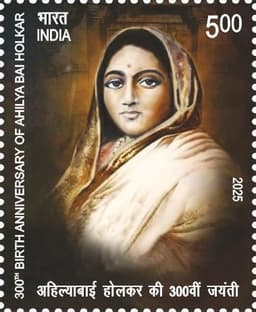
Ahilyabai Holkar
Emperor · Modern
59.6Total

Frederick III of Germany
Emperor · Modern
40.5Total
Basic Information
Born
1725
1831
Died
1795
1888
Era
Modern
Modern
Nationality
India
Germany
Occupation
Emperor
Emperor
Civilization
Indian
Western
Score Comparison
Military (10%)
50.0
21.2
Political (20%)
75.0
40.8
Influence (20%)
60.0
51.0
Legacy (20%)
52.0
40.0
Leadership (15%)
78.0
34.6
Strategy (15%)
36.8
43.7
TOTAL
59.6
40.5
Ahilyabai Holkar — Complete Timeline
1767 AD
Became Queen of IndorePolitical Action◆ Major
After the death of her husband Khanderao and father-in-law Malhar Rao Holkar, Ahilyabai Holkar assumed the throne of Indore. She became the de facto ruler, governing with the support of the Maratha Peshwa.
SuccessionHolkar DynastyFemale Ruler
Impact: regionalconstructive
1770 AD
Built the Ahilya Fort in MaheshwarCultural◆ Major
Ahilyabai Holkar constructed the Ahilya Fort on the banks of the Narmada River in Maheshwar, which became her capital. The fort complex included temples, ghats, and administrative buildings.
ArchitectureMaheshwarFort
Impact: regionalconstructive
1775 AD
Implemented Just Tax and Welfare PoliciesReform◆ Major
Ahilyabai Holkar introduced a fair tax system based on land productivity and established public works including roads, wells, and rest houses. Her rule was noted for low corruption and efficient administration.
Tax ReformWelfareAdministration
Impact: regionalprogressive
1780 AD
Reconstructed the Kashi Vishwanath TempleCultural◆ Major
Ahilyabai Holkar funded and oversaw the reconstruction of the Kashi Vishwanath Temple in Varanasi after it was destroyed by Aurangzeb. This act restored a major Hindu pilgrimage site.
Temple ReconstructionHinduismVaranasi
Impact: nationalconstructive
1785 AD
Defended Indore from External AttacksWar
Ahilyabai Holkar successfully defended her kingdom against invasions by the Bhils and other neighboring states. She maintained a strong military and ensured the security of her realm.
DefenseMilitaryHolkar Kingdom
Impact: regional
1790 AD
Patronized Arts and LiteratureCultural
Ahilyabai Holkar supported poets, scholars, and artists at her court. She commissioned literary works and promoted Marathi and Sanskrit culture, contributing to a cultural renaissance in central India.
PatronageArtsLiterature
Impact: regionalconstructive
Frederick III of Germany — Complete Timeline
1858 AD
Married Victoria, Princess Royal of the United KingdomPolitical Action
Frederick III married Victoria, the eldest daughter of Queen Victoria of the United Kingdom. The marriage was intended to strengthen Anglo-Prussian ties and influenced Frederick's liberal views, but also created tensions with Bismarck's conservative policies.
MarriageDiplomacyAnglo-Prussian Relations
Impact: regionalconstructive
1887 AD
Diagnosed with Throat CancerOther◆ Major
Frederick III was diagnosed with laryngeal cancer in 1887. Despite a tracheotomy and treatment, the cancer proved fatal. His illness and death prevented the implementation of his liberal-leaning policies, which might have altered Germany's political trajectory.
HealthCancerSuccession
Impact: nationaltragic
1888 AD
Reigned as German Emperor for 99 DaysPolitical Action◆ Major
Frederick III ascended the German throne on March 9, 1888, but died of throat cancer on June 15, 1888, after only 99 days. His brief reign, known as the Year of the Three Emperors, prevented any significant policy changes or reforms.
SuccessionDeathYear of Three Emperors
Impact: nationaltragic
Expert Analysis
Origins
Ahilyabai Holkar was born in 1725 in the village of Chondi, in present-day Maharashtra, into a Maratha Brahmin family. Her father, Mankoji Shinde, was a local commander. She received an education uncommon for women at the time, learning to read and write. At age 8, she was married to Khanderao Holkar, son of Malhar Rao Holkar, a powerful Maratha general. Ahilyabai's early life was shaped by her father-in-law, who recognized her intelligence and trained her in administrative and military affairs.
Frederick III was born on October 18, 1831, in Potsdam, Prussia, to Prince William (later Emperor William I) and Princess Augusta of Saxe-Weimar-Eisenach. He was the first Hohenzollern monarch educated in liberal arts and sciences, influenced by his mother's progressive views. He studied at the University of Bonn and served in the Prussian army, but his liberal leanings often clashed with his father's conservative policies.
Rise to Power
Ahilyabai's rise began after the death of her husband Khanderao in 1754 during the siege of Kumher. Malhar Rao Holkar, devastated by his son's death, appointed Ahilyabai as the co-ruler of Indore in 1757. After Malhar Rao's death in 1766, she faced opposition from her son, Male Rao, who briefly ruled but was mentally unstable and died in 1767. Ahilyabai then assumed full control of the Holkar kingdom, with the support of the Maratha leadership. She moved the capital to Maheshwar on the Narmada River in 1767.
Frederick III's rise was more straightforward. He became Crown Prince in 1861 after his father's accession. He served as a commander in the Austro-Prussian War (1866) and the Franco-Prussian War (1870-1871), though his role was largely symbolic. He was a vocal critic of Chancellor Otto von Bismarck's policies, advocating for a constitutional monarchy and liberal reforms. His long wait for the throne ended on March 9, 1888, when his father died, but his reign was cut short by throat cancer.
Leadership & Governance
Ahilyabai Holkar's leadership style was characterized by direct involvement in governance and justice. She held daily public audiences to hear petitions and grievances, a practice known as 'darbar'. She implemented a land revenue system based on soil quality and productivity, with taxes ranging from 20% to 40% of produce. She funded public works: roads connecting major towns, stepwells, and rest houses for travelers. She also patronized the arts, building the Ahilya Fort in Maheshwar with temples and ghats. Her military strategy was defensive; she maintained a standing army of about 50,000 troops but rarely engaged in aggressive expansion. Her political score of 75.0 reflects her effective administration.
Frederick III, in his 99-day reign, had little opportunity to govern. He was bedridden with cancer, and his wife Victoria acted as a regent in practice. He did manage to dismiss the conservative Interior Minister Robert von Puttkamer, a victory for liberals. However, his inability to enact reforms led to his son William II reversing his policies. Frederick's leadership score of 34.6 reflects his lack of impact.
Triumph & Tragedy
Ahilyabai's greatest triumph was the reconstruction of the Kashi Vishwanath Temple in Varanasi in 1780, after its destruction by Aurangzeb. She also built the Vishnu Temple at Gaya and many others. Her fair taxation and welfare policies led to prosperity; trade flourished and crime dropped. Her tragedy was the early deaths of her husband and son, and the constant threat from rivals like the Bhils and the Pindaris. She also faced a devastating fire in Maheshwar in 1773 that destroyed much of the city.
Frederick III's triumph was his liberal vision, which influenced German politics even if not enacted. His tragedy was his untimely death, which prevented the liberalization of Germany. His son William II's autocratic rule led to World War I. Frederick's legacy score of 40.0 reflects his unrealized potential.
Character & Destiny
Ahilyabai was known for her piety, justice, and compassion. She personally oversaw the construction of temples and wells, and she was an able administrator who kept detailed accounts. Her character shaped her destiny: her fairness earned loyalty, and her caution preserved her kingdom. She scored 78.0 in leadership.
Frederick III was a liberal idealist trapped in a conservative system. His illness and death at age 56 sealed his fate. His character, while noble, was not assertive enough to overcome Bismarck's opposition. He scored 43.7 in strategy.
Legacy
Ahilyabai Holkar's legacy is tangible: the temples she built, the fort in Maheshwar, and the administrative systems that continued after her death in 1795. She is remembered as a 'philosopher queen' and a model of good governance. Her influence score of 60.0 reflects her lasting impact in Indian history.
Frederick III's legacy is more abstract. He is known as the '99-day emperor', a symbol of what might have been. His letters and diaries influenced later German liberals. However, his impact on actual governance was minimal.
Conclusion
Ahilyabai Holkar had a greater impact than Frederick III. She ruled effectively for 28 years, leaving a legacy of infrastructure, religious restoration, and just administration. Frederick III, despite his noble intentions, reigned for only 99 days and died before enacting any significant change. Ahilyabai's total score of 59.6 versus Frederick's 40.5 underscores this difference. Her military score of 50.0, political 75.0, and leadership 78.0 all exceed his 21.2, 40.8, and 34.6 respectively. While Frederick's potential was high, his actual accomplishments were limited. Ahilyabai's reign demonstrates that consistent, compassionate governance can leave a lasting mark.
Rankings
🥇
Ahilyabai HolkarLeader
Mil: 50.0Pol: 75.0Inf: 60.0
59.6
🥈
Frederick III of Germany
Mil: 21.2Pol: 40.8Inf: 51.0
40.5
+19.1 behind
How This Comparison Works
Algorithm
Each figure is scored on 6 dimensions (0—100 scale) based on structured historical data: Military (10%), Political (20%), Influence (20%), Legacy (20%), Leadership (15%), Strategy (15%). The weighted total produces the final ranking.
Data Sources
Scores are computed from structured sub-indicators in the database. Scale factors adjust for era (Ancient ×0.85, Modern ×1.0) and civilization size (Eastern ×1.05, Other ×0.80) to account for differences in population and military scale.
Maximum 3 Figures
Comparisons are limited to 2—3 figures to ensure readability and statistical meaningfulness.
Error Margins
±5 points per dimension — Sub-scores are derived from historical records with inherent uncertainty. Two figures within 5 points on a dimension should be considered roughly equivalent in that area.
Total Score Accuracy
±3 points overall — The weighted combination of 6 dimensions produces a total score with approximately ±3 points of uncertainty. Differences of less than 3 points are not statistically significant— the figures are effectively tied.
Known Limitations
- Historical records are incomplete and uneven across civilizations
- Figures from oral-tradition societies may be underrepresented
- Occupation labels can misclassify multi-role figures
- Scores measure capability and impact, not moral character
- Quantitative scoring is a comparison tool, not absolute truth
Capability Radar
Military (10%) — Battles & Warfare
Battles
15
10
Win Rate
20
10
Expansion
10
10
Political (20%) — Governance & Reform
Reform
80
30
Diplomacy
75
30
Economy
85
20
Influence (20%) — Cultural & Global Reach
Cultural
60
20
Global
40
15
Legacy (20%) — Historical Impact
Historical
65
25
Longevity
55
15
Leadership (15%) — Power & Stability
Tenure
70
5
Stability
90
15
Strategy (15%) — Tactics & Innovation
Strategy
15
20
Tactics
10
20
Reform
20
30
Similar Comparisons
Comments & Discussion
No comments yet. Be the first to share your thoughts!