Loading...
Ahmad Yani vs Nguyen Van Thieu
Nguyen Van Thieu leads by 4.9 pts · 2 figures compared
…

Ahmad Yani
General · Modern
43.3Total
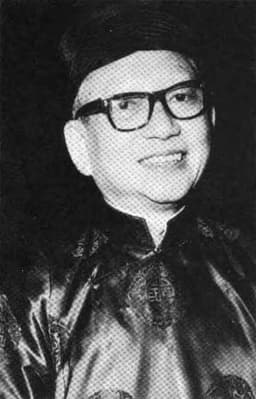
Nguyen Van Thieu
General · Modern
48.2Total
Basic Information
Born
1922
1923
Died
—
—
Era
Modern
Modern
Nationality
Indonesia
Vietnam
Occupation
General
General
Civilization
Eastern
Eastern
Score Comparison
Military (10%)
50.0
35.0
Political (20%)
30.8
43.7
Influence (20%)
51.8
53.3
Legacy (20%)
44.2
45.0
Leadership (15%)
36.9
67.0
Strategy (15%)
41.7
35.0
TOTAL
43.3
48.2
Ahmad Yani — Complete Timeline
1962 AD
Appointed Army Chief of StaffPolitical Action◆ Major
Ahmad Yani was appointed Chief of Staff of the Indonesian Army. He was a key figure in the military's modernization and its role in national politics under President Sukarno.
MilitaryAppointmentIndonesia
Impact: national
1965 AD
Kidnapped and Killed in the 30 September MovementWar
Yani was kidnapped and executed by members of the 30 September Movement, a coup attempt by leftist forces. His death triggered a violent anti-communist purge led by General Soeharto.
CoupDeathPolitical Violence
Impact: nationaltragic
Nguyen Van Thieu — Complete Timeline
1967 AD
Election as President of South VietnamPolitical Action◆ Major
Nguyen Van Thieu was elected president of South Vietnam in a US-supervised election, with Nguyen Cao Ky as vice president. The election was marred by fraud and limited participation, but it provided a veneer of legitimacy for the military-dominated government during the Vietnam War.
ElectionSouth VietnamVietnam War
Impact: national
1968 AD
Tet OffensiveWar
North Vietnamese and Viet Cong forces launched the Tet Offensive, a massive surprise attack on cities and military bases across South Vietnam. Thieu's government survived the assault, but the offensive exposed the vulnerability of the regime and shifted US public opinion against the war.
Tet OffensiveVietnam WarTurning Point
Impact: globaltragic
1973 AD
Paris Peace AccordsPolitical Action◆ Major
Thieu reluctantly signed the Paris Peace Accords, which called for a ceasefire and US withdrawal from Vietnam. The agreement allowed North Vietnamese troops to remain in the South, and Thieu's government was left to fight alone, leading to its eventual collapse.
Paris AccordsPeaceVietnam War
Impact: globaldestructive
1975 AD
Fall of Saigon and ResignationPolitical Action
As North Vietnamese forces advanced on Saigon, Nguyen Van Thieu resigned the presidency and fled to Taiwan. His departure marked the end of South Vietnam, which surrendered unconditionally days later, leading to the reunification of Vietnam under communist rule.
Fall of SaigonResignationReunification
Impact: globaltragic
Expert Analysis
Origins
Ahmad Yani was born on June 19, 1922, in Jenar, Purworejo, Dutch East Indies. His father was a clerk in a sugar factory. Yani attended middle school and then joined the Dutch colonial army (KNIL) in 1940. After Indonesia's independence, he joined the newly formed Indonesian army, rising through the ranks.
Nguyen Van Thieu was born on April 5, 1923, in Phan Rang, French Indochina, into a modest fishing family. He attended a Catholic school and later joined the Vietnamese National Army (VNA) under French command. He studied at the Dalat Military Academy and served in various positions.
Rise to Power
Yani's rise came during the Indonesian National Revolution (1945-1949). He commanded troops against Dutch forces, and after independence, he held key positions in the army. In 1962, he was appointed Army Chief of Staff under President Sukarno. He oversaw the modernization of the army and its growing political role. By 1965, he was a powerful figure, opposing the growing influence of the Indonesian Communist Party (PKI).
Thieu rose through the ranks of the Army of the Republic of Vietnam (ARVN). He supported the 1963 coup that overthrew President Ngo Dinh Diem. In 1965, he became a member of the military junta and was elected President in 1967 under US supervision. His presidency was dominated by the Vietnam War.
Leadership & Governance
Yani's leadership style was professional and focused on military modernization. He kept the army out of direct politics but was a staunch anti-communist. His governance approach was to strengthen the army's capabilities and maintain internal stability. He scored 36.9 in leadership and 41.7 in strategy.
Thieu's leadership was more political. He centralized power, suppressed dissent, and relied on US support. He implemented land reforms and pacification programs but was criticized for corruption and authoritarianism. His leadership score is 67.0, reflecting his ability to navigate a complex political environment.
Triumph & Tragedy
Yani's greatest success was modernizing the Indonesian Army into a professional force. His tragic end came on October 1, 1965, when he was kidnapped and killed by leftist forces in the 30 September Movement. His death triggered a violent anti-communist purge that killed hundreds of thousands. His total score is 43.3.
Thieu's success was maintaining South Vietnam's sovereignty for a decade. He oversaw the 1972 Easter Offensive defeat and the Paris Peace Accords in 1973. His tragedy was the Fall of Saigon in 1975, when North Vietnamese forces conquered the South. He resigned and fled to Taiwan, dying in exile in 2001. His total score is 48.2.
Character & Destiny
Yani was known as a competent, disciplined officer. His anti-communist stance made him a target. His death turned him into a martyr for the New Order regime. His character shaped his destiny as a symbol of military professionalism.
Thieu was a pragmatic but authoritarian leader. He was cautious and often indecisive, relying on US support. His refusal to accept the Paris Accords initially and eventual resignation marked his character. He is often blamed for the collapse of South Vietnam.
Legacy
Yani's legacy is as a national hero in Indonesia. His death paved the way for Suharto's rise and the New Order. He is remembered as a symbol of anti-communism. His influence score is 51.8.
Thieu's legacy is more complex. He is seen as a failed leader who could not prevent the fall of the South. However, some credit him with maintaining stability. His legacy score is 45.0.
Conclusion
While Thieu has a higher total score (48.2 vs 43.3), Yani's impact on Indonesia was more profound. His death triggered a regime change that shaped Indonesia's history. Thieu's leadership, though more politically adept, ended in catastrophic failure. Yani's influence on his nation's trajectory was greater, making him the more impactful figure.
Rankings
🥇
Nguyen Van ThieuLeader
Mil: 35.0Pol: 43.7Inf: 53.3
48.2
🥈
Ahmad Yani
Mil: 50.0Pol: 30.8Inf: 51.8
43.3
+4.9 behind
How This Comparison Works
Algorithm
Each figure is scored on 6 dimensions (0—100 scale) based on structured historical data: Military (10%), Political (20%), Influence (20%), Legacy (20%), Leadership (15%), Strategy (15%). The weighted total produces the final ranking.
Data Sources
Scores are computed from structured sub-indicators in the database. Scale factors adjust for era (Ancient ×0.85, Modern ×1.0) and civilization size (Eastern ×1.05, Other ×0.80) to account for differences in population and military scale.
Maximum 3 Figures
Comparisons are limited to 2—3 figures to ensure readability and statistical meaningfulness.
Error Margins
±5 points per dimension — Sub-scores are derived from historical records with inherent uncertainty. Two figures within 5 points on a dimension should be considered roughly equivalent in that area.
Total Score Accuracy
±3 points overall — The weighted combination of 6 dimensions produces a total score with approximately ±3 points of uncertainty. Differences of less than 3 points are not statistically significant— the figures are effectively tied.
Known Limitations
- Historical records are incomplete and uneven across civilizations
- Figures from oral-tradition societies may be underrepresented
- Occupation labels can misclassify multi-role figures
- Scores measure capability and impact, not moral character
- Quantitative scoring is a comparison tool, not absolute truth
Capability Radar
Military (10%) — Battles & Warfare
Battles
15
35
Win Rate
20
25
Expansion
10
10
Political (20%) — Governance & Reform
Reform
15
30
Diplomacy
20
40
Economy
10
20
Influence (20%) — Cultural & Global Reach
Cultural
25
20
Global
15
30
Legacy (20%) — Historical Impact
Historical
35
40
Longevity
20
20
Leadership (15%) — Power & Stability
Tenure
20
55
Stability
10
15
Strategy (15%) — Tactics & Innovation
Strategy
20
30
Tactics
25
30
Reform
30
40
Similar Comparisons
Comments & Discussion
No comments yet. Be the first to share your thoughts!