Loading...
Nguyen Van Thieu vs Sun Kewang
Nguyen Van Thieu leads by 6.5 pts · 2 figures compared
…
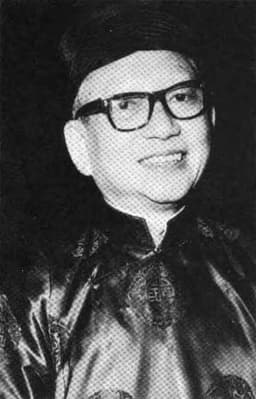
Nguyen Van Thieu
General · Modern
48.2Total

Sun Kewang
General · Modern
41.7Total
Basic Information
Born
1923
1618
Died
—
1660
Era
Modern
Modern
Nationality
Vietnam
China
Occupation
General
General
Civilization
Eastern
Eastern
Score Comparison
Military (10%)
35.0
20.0
Political (20%)
43.7
30.8
Influence (20%)
53.3
49.4
Legacy (20%)
45.0
40.0
Leadership (15%)
67.0
45.0
Strategy (15%)
35.0
60.0
TOTAL
48.2
41.7
Nguyen Van Thieu — Complete Timeline
1967 AD
Election as President of South VietnamPolitical Action◆ Major
Nguyen Van Thieu was elected president of South Vietnam in a US-supervised election, with Nguyen Cao Ky as vice president. The election was marred by fraud and limited participation, but it provided a veneer of legitimacy for the military-dominated government during the Vietnam War.
ElectionSouth VietnamVietnam War
Impact: national
1968 AD
Tet OffensiveWar
North Vietnamese and Viet Cong forces launched the Tet Offensive, a massive surprise attack on cities and military bases across South Vietnam. Thieu's government survived the assault, but the offensive exposed the vulnerability of the regime and shifted US public opinion against the war.
Tet OffensiveVietnam WarTurning Point
Impact: globaltragic
1973 AD
Paris Peace AccordsPolitical Action◆ Major
Thieu reluctantly signed the Paris Peace Accords, which called for a ceasefire and US withdrawal from Vietnam. The agreement allowed North Vietnamese troops to remain in the South, and Thieu's government was left to fight alone, leading to its eventual collapse.
Paris AccordsPeaceVietnam War
Impact: globaldestructive
1975 AD
Fall of Saigon and ResignationPolitical Action
As North Vietnamese forces advanced on Saigon, Nguyen Van Thieu resigned the presidency and fled to Taiwan. His departure marked the end of South Vietnam, which surrendered unconditionally days later, leading to the reunification of Vietnam under communist rule.
Fall of SaigonResignationReunification
Impact: globaltragic
Sun Kewang — Complete Timeline
1630 AD
Joined the Xiying rebel armyPolitical Action◆ Major
Sun Kewang joined the peasant rebellion led by Zhang Xianzhong. He became one of Zhang's adopted sons and a leading general in the Xiying army that fought against the Ming.
RebellionXiying
Impact: regionaldestructive
1647 AD
Became leader of the Xiying armyPolitical Action◆ Major
After Zhang Xianzhong's death, Sun Kewang took command of the Xiying army. He led the remnants into Guizhou and Yunnan, establishing a base and allying with the Southern Ming.
LeadershipXiying
Impact: regionalconstructive
Allied with the Yongli EmperorPolitical Action◆ Major
Sun Kewang formally allied with the Yongli Emperor, offering military support in exchange for official recognition. This alliance temporarily strengthened the Southern Ming against the Qing.
AllianceSouthern Ming
Impact: nationalconstructive
1656 AD
Betrayed the Yongli EmperorPolitical Action◆ Major
Sun Kewang attempted to usurp the Yongli Emperor's authority and seize control of the Southern Ming court. He plotted to depose the emperor, leading to a split with Li Dingguo and internal conflict.
BetrayalSouthern Ming
Impact: nationaldestructive
1657 AD
Defeated by Li DingguoWar◆ Major
Sun Kewang's forces were defeated by Li Dingguo in a civil war within the Southern Ming. He fled to the Qing and surrendered, ending his role in the resistance.
Civil WarDefeat
Impact: regionaldestructive
Surrendered to the QingPolitical Action◆ Major
After his defeat, Sun Kewang surrendered to the Qing dynasty. He was given a rank and later died in obscurity, remembered as a traitor to the Ming cause.
SurrenderQing Dynasty
Impact: nationaldestructive
Expert Analysis
Origins
Nguyen Van Thieu was born on April 5, 1923, in Ninh Thuan Province, French Indochina. His family was of modest means; his father was a small landowner. Thieu attended the National Military Academy in Da Lat and later trained in France. He rose through the ranks of the Vietnamese National Army, which served the French-backed State of Vietnam.
Sun Kewang was born around 1606 in Shaanxi, China. Little is known of his early life. He joined the peasant rebellion led by Zhang Xianzhong in the 1630s, becoming one of Zhang's adopted sons. Sun fought in the Xiying army, which seized control of Sichuan. After Zhang's death in 1647, Sun emerged as a leader.
Rise to Power
Nguyen Van Thieu's rise accelerated after the Geneva Accords (1954) divided Vietnam. He became a general in the Army of the Republic of Vietnam (ARVN). In 1965, he participated in a coup that installed Nguyen Cao Ky as prime minister, with Thieu as a figurehead. By 1967, under US pressure, a national election was held; Thieu ran for president and won with 34.8% of the vote, taking office on October 31, 1967. The election was criticized for fraud and manipulation.
Sun Kewang rose to command the Xiying army after Zhang Xianzhong's death. He led the remnants to Guizhou and Yunnan, establishing a base. In 1651, he allied with the Yongli Emperor of the Southern Ming, offering military support in exchange for official recognition. Sun was granted the title of prince, effectively controlling the emperor's court.
Leadership & Governance
Thieu governed South Vietnam as a strongman. He relied on a narrow base of Catholic and military elites, suppressing Buddhist opposition. His regime was marked by corruption and nepotism. He implemented the 'Four Nos' policy: no negotiation with the Viet Cong, no coalition government, no territorial concessions, and no neutralization. This rigid stance hindered peace efforts. Thieu's leadership score is 67.0, reflecting his ability to maintain power but with flawed governance.
Sun Kewang's leadership was autocratic and self-serving. After allying with the Yongli Emperor, he sought to control the court, sidelining other loyalist generals. He imposed heavy taxes and conscription, alienating local populations. In 1656, he attempted to depose the emperor, triggering a civil war with Li Dingguo, another Ming loyalist. Sun's political score is 30.8, indicating poor strategic alliances.
Triumph & Tragedy
Thieu's greatest success was stabilizing South Vietnam after the chaotic 1963-1965 period. He oversaw the ARVN's expansion and pacification programs. However, the 1968 Tet Offensive exposed the fragility of his regime, despite being a military defeat for the North. Thieu's refusal to implement the Paris Peace Accords fully led to US withdrawal and the eventual fall of Saigon in 1975. He resigned on April 21, 1975, fleeing to Taiwan. His legacy score is 45.0, reflecting his role in a lost war.
Sun Kewang's triumph was keeping the Southern Ming alive for a decade. He expanded territory and gathered forces. But his betrayal of the Yongli Emperor fractured the loyalist movement. In 1658, Li Dingguo defeated him; Sun fled to the Qing and surrendered. He died in obscurity around 1660. His military score is 20.0, indicating ineffective combat leadership.
Character & Destiny
Thieu was cautious, indecisive, and distrustful. He micromanaged the war effort, often ignoring advice from US allies. His paranoia led to purges of capable officers. This contributed to the ARVN's collapse. Sun Kewang was ambitious but short-sighted, prioritizing personal power over the cause. His betrayal alienated potential allies and led to his downfall.
Legacy
Thieu is remembered as the last president of South Vietnam, a symbol of a failed regime. His policies prolonged the war but could not prevent defeat. Sun Kewang is largely forgotten, a footnote in Ming history as a traitor who weakened the resistance. Neither left positive long-term impacts.
Conclusion
Nguyen Van Thieu had greater impact, scoring 48.2 total vs Sun Kewang's 41.7. Thieu's decisions shaped the Vietnam War's outcome, affecting millions. Sun's influence was limited to a short-lived rebellion. While both failed, Thieu's role in a major 20th-century conflict outweighs Sun's minor historical role.
Rankings
🥇
Nguyen Van ThieuLeader
Mil: 35.0Pol: 43.7Inf: 53.3
48.2
🥈
Sun Kewang
Mil: 20.0Pol: 30.8Inf: 49.4
41.7
+6.5 behind
How This Comparison Works
Algorithm
Each figure is scored on 6 dimensions (0—100 scale) based on structured historical data: Military (10%), Political (20%), Influence (20%), Legacy (20%), Leadership (15%), Strategy (15%). The weighted total produces the final ranking.
Data Sources
Scores are computed from structured sub-indicators in the database. Scale factors adjust for era (Ancient ×0.85, Modern ×1.0) and civilization size (Eastern ×1.05, Other ×0.80) to account for differences in population and military scale.
Maximum 3 Figures
Comparisons are limited to 2—3 figures to ensure readability and statistical meaningfulness.
Error Margins
±5 points per dimension — Sub-scores are derived from historical records with inherent uncertainty. Two figures within 5 points on a dimension should be considered roughly equivalent in that area.
Total Score Accuracy
±3 points overall — The weighted combination of 6 dimensions produces a total score with approximately ±3 points of uncertainty. Differences of less than 3 points are not statistically significant— the figures are effectively tied.
Known Limitations
- Historical records are incomplete and uneven across civilizations
- Figures from oral-tradition societies may be underrepresented
- Occupation labels can misclassify multi-role figures
- Scores measure capability and impact, not moral character
- Quantitative scoring is a comparison tool, not absolute truth
Capability Radar
Military (10%) — Battles & Warfare
Battles
35
45
Win Rate
25
40
Expansion
10
30
Political (20%) — Governance & Reform
Reform
30
10
Diplomacy
40
20
Economy
20
15
Influence (20%) — Cultural & Global Reach
Cultural
20
15
Global
30
10
Legacy (20%) — Historical Impact
Historical
40
20
Longevity
20
10
Leadership (15%) — Power & Stability
Tenure
55
25
Stability
15
10
Strategy (15%) — Tactics & Innovation
Strategy
30
35
Tactics
30
40
Reform
40
20
Similar Comparisons
Comments & Discussion
No comments yet. Be the first to share your thoughts!