Loading...
Ahmad Zia Massoud vs Julius Caesar
Julius Caesar leads by 43.3 pts · 2 figures compared
…
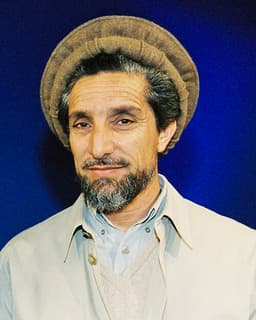
Ahmad Zia Massoud
Politician · Modern
39.5Total

Julius Caesar
General · Ancient
82.8Total
Basic Information
Born
1956
-100
Died
—
-44
Era
Modern
Ancient
Nationality
Afghanistan
Roman Republic
Occupation
Politician
General
Civilization
Middle Eastern
Western
Score Comparison
Military (10%)
50.0
88.0
Political (20%)
25.0
78.0
Influence (20%)
47.1
85.0
Legacy (20%)
37.5
82.0
Leadership (15%)
34.6
80.0
Strategy (15%)
44.1
85.0
TOTAL
39.5
82.8
Ahmad Zia Massoud — Complete Timeline
2005 AD
Served as Ambassador to RussiaPolitical Action
Ahmad Zia Massoud served as Afghanistan's ambassador to Russia from 2005 to 2010. He worked to strengthen bilateral relations and secure Russian support for Afghanistan's reconstruction and counter-terrorism efforts.
AfghanistanDiplomacyRussia
Impact: nationalconstructive
2009 AD
Ran for Afghan Presidency in 2009Political Action
Ahmad Zia Massoud ran as a candidate in the 2009 Afghan presidential election. He received a small percentage of the vote and later withdrew, endorsing Abdullah Abdullah in the runoff against Hamid Karzai.
AfghanistanElectionPresidential
Impact: national
2014 AD
Appointed First Vice President of AfghanistanPolitical Action◆ Major
Ahmad Zia Massoud was appointed First Vice President of Afghanistan under President Ashraf Ghani in 2014. He served in this role until 2020, focusing on security and reconciliation efforts, drawing on his Northern Alliance background.
AfghanistanVice PresidencyGovernment
Impact: nationalconstructive
Julius Caesar — Complete Timeline
58 BC
Gallic WarsWar◆ Major
Caesar, as proconsul of Gaul, launched a series of campaigns that conquered all of Gaul (modern France, Belgium, and parts of Switzerland). He fought numerous battles, including against the Helvetii, the Belgae, and the Gallic chieftain Vercingetorix. The wars brought immense wealth and a loyal army to Caesar.
Gallic WarsConquestRoman Expansion
Impact: regional
49 BC
Crossing the RubiconPolitical Action◆ Major
Caesar led Legio XIII across the Rubicon River into Italy, defying the Roman Senate's order to disband his army. This act triggered a civil war against Pompey and the Optimates, ultimately leading to Caesar's dictatorship and the end of the Roman Republic.
Roman Civil WarEnd of RepublicPower Struggle
Impact: global
48 BC
Battle of PharsalusWar◆ Major
Caesar's outnumbered army defeated the larger forces of Pompey the Great at Pharsalus in Greece. Caesar's tactical use of a reserve line to counter Pompey's cavalry charge proved decisive. Pompey fled to Egypt, where he was assassinated, leaving Caesar as the undisputed master of the Roman world.
Roman Civil WarBattleDecisive Victory
Impact: regional
44 BC
Appointment as Dictator for LifePolitical Action◆ Major
The Roman Senate appointed Caesar dictator perpetuo (dictator for life), granting him unprecedented personal power. This move concentrated military, legislative, and judicial authority in one person, effectively ending the Roman Republic's traditional system of checks and balances and alarming many senators.
DictatorshipEnd of RepublicPower Consolidation
Impact: regionaldestructive
Assassination on the Ides of MarchPolitical Action◆ Major
A group of Roman senators, led by Marcus Junius Brutus and Gaius Cassius Longinus, stabbed Caesar to death at a meeting of the Senate in the Theatre of Pompey. The assassination was intended to restore the Republic, but instead triggered another civil war that led to the rise of the Roman Empire.
AssassinationRoman PoliticsEnd of Republic
Impact: globaldestructive
Expert Analysis
ahmad-zia-massoud-vs-julius-caesar
# The Shadow and the Light
On a spring morning in 44 BCE, the most powerful man in the Roman world fell to twenty-three dagger blows at the foot of a statue of his defeated rival, Pompey. Two thousand years later, in a mud-brick village in the Panjshir Valley, another man would watch his brother—a figure of almost mythical resistance—be assassinated by Al-Qaeda operatives posing as journalists. Julius Caesar and Ahmad Zia Massoud: one a titan who remade the ancient world, the other a politician who spent a lifetime navigating the wreckage of a modern one. What drives the vast gulf between these two lives—the conqueror who shaped an empire and the vice president who could not save his own nation from collapse? The answer lies not merely in circumstance, but in the very nature of power itself.
Origins
Caesar was born into the twilight of the Roman Republic, a world of senatorial intrigue, civil wars, and restless legions. His family, the Julii, claimed descent from the goddess Venus, but their political fortunes had faded. Young Gaius learned early that in Rome, prestige was a currency—and he intended to spend it. His education in rhetoric, law, and military command prepared him for a world where ambition was measured in provinces conquered and enemies vanquished.
Ahmad Zia Massoud was born in 1956 in the village of Bazarak, deep in the Panjshir Valley of northeastern Afghanistan. His family were ethnic Tajiks, a minority in a country long dominated by Pashtuns. His older brother, Ahmad Shah Massoud, would become the legendary "Lion of Panjshir," the guerrilla commander who fought first the Soviet occupation, then the Taliban. Ahmad Zia grew up in the shadow of that legend, in a land where survival depended on clan loyalty and the ability to navigate shifting alliances between warlords, foreign powers, and religious factions.
The difference in their origins is not just one of time and place. Caesar inherited a world of institutions—the Senate, the courts, the legions—that could be bent to a single will. Massoud inherited a world of fragments: a country with no functioning state, a resistance movement perpetually short of weapons, and a brother whose charisma cast a shadow over his own ambitions.
Rise to Power
Caesar’s ascent was a masterpiece of calculated risk. He borrowed fortunes to buy political office, formed the First Triumvirate with Pompey and Crassus, then spent eight years conquering Gaul—a campaign that gave him wealth, a veteran army, and a reputation that made him dangerous. When the Senate ordered him to disband his legions, he crossed the Rubicon River in 49 BCE, declaring *"Alea iacta est"*—the die is cast. Within four years, he was dictator for life.
Ahmad Zia Massoud’s path was more constrained. He served as Afghanistan’s ambassador to Russia from 2005 to 2010, a diplomatic post that required him to balance between Moscow’s interests and Kabul’s fragile government. In 2009, he ran for president but received only a small fraction of the vote—a reminder that in Afghanistan, political success depended on tribal networks and the backing of armed factions, not personal charisma. In 2014, he was appointed First Vice President under Ashraf Ghani, a position of nominal power but little real authority.
Caesar rose by breaking the rules; Massoud rose by working within them. The difference was not merely personal—it was structural. The Roman Republic, for all its corruption, offered a ladder to the top. Post-Taliban Afghanistan offered a series of revolving doors.
Leadership & Governance
Caesar’s leadership was transformative. He reformed the calendar, granted citizenship to provincials, initiated public works, and centralized tax collection. His military genius was absolute: at the Siege of Alesia (52 BCE), he defeated a Gallic army three times his size by building a ring of fortifications around both the besieged town and the relief force. His political wisdom, however, was flawed. He pardoned his enemies, only to be killed by them. He centralized power, but failed to build institutions that could survive him.
Massoud’s leadership was cautious and administrative. As vice president, he focused on reconciliation between rival factions, particularly between the Tajik-dominated Northern Alliance and the Pashtun political establishment. His military score of 30.2 reflects a man who never commanded armies, only attended cabinet meetings. His political score of 45.9 suggests a figure who was competent but never decisive—a supporting actor in a drama where his brother had been the star.
Where Caesar rewrote the rules of governance, Massoud could only try to preserve a fragile peace. One built an empire; the other tried to keep a country from disintegrating.
Triumph & Tragedy
Caesar’s greatest triumph was the conquest of Gaul, which added a vast territory to the Roman world and made him the richest man in the Republic. His greatest tragedy was the Ides of March—44 BCE—when his refusal to accept the limits of republican government led to his assassination by senators who called themselves liberators.
Massoud’s greatest triumph was arguably his survival. In a country where politicians were routinely assassinated, he served a full term as vice president. His greatest tragedy was the collapse of the Afghan government in 2021, when the Taliban retook Kabul—a defeat that rendered his years of political work meaningless. He fled the country, his legacy tied to a failed state.
The difference is stark: Caesar died at the height of his power, his murder a dramatic act that launched a civil war and ultimately an empire. Massoud lived to see his work undone, a quieter tragedy but no less profound.
Character & Destiny
Caesar was audacity incarnate. He pardoned his enemies, slept with his allies’ wives, and believed that fortune favored the bold. His personality shaped every decision: the crossing of the Rubicon, the refusal of a crown, the dismissal of warnings about the conspiracy. He believed himself invincible—and that belief became a self-fulfilling prophecy until it became a fatal one.
Massoud was cautious, diplomatic, and overshadowed. His personality was shaped by the need to protect his brother’s legacy while carving out his own identity. He lacked Caesar’s vision—or perhaps he lacked Caesar’s opportunity. In a world where power was fragmented, he chose incrementalism over audacity.
Destiny, for Caesar, meant remaking the world. For Massoud, it meant merely surviving in it.
Legacy
Caesar’s legacy is monumental. His name became synonymous with imperial power—*Kaiser* in German, *Tsar* in Russian. His reforms shaped Western governance for two millennia. His assassination, far from ending his influence, ensured his immortality.
Massoud’s legacy is more ambiguous. His brother Ahmad Shah is remembered as a martyr and a symbol of resistance. Ahmad Zia is remembered, if at all, as a footnote—a vice president in a government that collapsed, a politician who tried to build bridges but could not stop the flood. His legacy score of 48.9 reflects a life of service, but not of transformation.
Conclusion
The comparison between Caesar and Massoud is, in some ways, unfair. One lived in the heart of the ancient world’s greatest power; the other in a fractured country at the margins of global attention. Yet that unfairness is precisely the point. Caesar’s story tells us that great individuals can reshape history. Massoud’s story tells us that even capable individuals can be overwhelmed by history’s currents.
Perhaps the deepest lesson is this: Caesar died because he had too much power; Massoud lived because he had too little. One was killed by his enemies; the other was saved by his irrelevance. In the end, both men were prisoners of their times—Caesar of an empire he could not finish building, Massoud of a nation he could not save from itself. The difference between them is not just character, but circumstance—and the cruel lottery of when and where we are born.
Rankings
🥇
Julius CaesarLeader
Mil: 88.0Pol: 78.0Inf: 85.0
82.8
🥈
Ahmad Zia Massoud
Mil: 50.0Pol: 25.0Inf: 47.1
39.5
+43.3 behind
How This Comparison Works
Algorithm
Each figure is scored on 6 dimensions (0—100 scale) based on structured historical data: Military (10%), Political (20%), Influence (20%), Legacy (20%), Leadership (15%), Strategy (15%). The weighted total produces the final ranking.
Data Sources
Scores are computed from structured sub-indicators in the database. Scale factors adjust for era (Ancient ×0.85, Modern ×1.0) and civilization size (Eastern ×1.05, Other ×0.80) to account for differences in population and military scale.
Maximum 3 Figures
Comparisons are limited to 2—3 figures to ensure readability and statistical meaningfulness.
Error Margins
±5 points per dimension — Sub-scores are derived from historical records with inherent uncertainty. Two figures within 5 points on a dimension should be considered roughly equivalent in that area.
Total Score Accuracy
±3 points overall — The weighted combination of 6 dimensions produces a total score with approximately ±3 points of uncertainty. Differences of less than 3 points are not statistically significant— the figures are effectively tied.
Known Limitations
- Historical records are incomplete and uneven across civilizations
- Figures from oral-tradition societies may be underrepresented
- Occupation labels can misclassify multi-role figures
- Scores measure capability and impact, not moral character
- Quantitative scoring is a comparison tool, not absolute truth
Capability Radar
Military (10%) — Battles & Warfare
Battles
24
95
Win Rate
25
92
Expansion
27
97
Political (20%) — Governance & Reform
Reform
10
90
Diplomacy
20
85
Economy
10
82
Influence (20%) — Cultural & Global Reach
Cultural
10
88
Global
10
94
Legacy (20%) — Historical Impact
Historical
15
95
Longevity
10
96
Leadership (15%) — Power & Stability
Tenure
15
75
Stability
5
60
Strategy (15%) — Tactics & Innovation
Strategy
28
94
Tactics
33
96
Reform
38
88
Similar Comparisons
Comments & Discussion
AQUILA_RISES6/17/2026
Caesar’s twenty-three stab wounds compose the West’s greatest political murder-mystery: Brutus, his would-be son, striking the groin. That single betrayal rewrote history’s DNA. Zia Massoud’s brother Ahmad Shah is far more compelling—he bled the Soviets dry in Panjshir using donkey-carried Stingers and cave logistics, a guerrilla genius. Zia was a shadow, not the sun. Caesar was the storm that broke the Republic; Massoud was merely the politician who couldn’t hold the umbrella when the Taliban w
沙漠铁骑6/17/2026
别拿恺撒和一个小角色比。恺撒在高卢杀了超过百万敌人,自己毫发无损,把元老院玩弄于股掌之中。马苏德呢?他弟弟艾哈迈德·沙阿才是抵抗的灵魂,而他自己只是个在喀布尔办公室喝茶的二流政客。阿富汗的悲剧在于,真正有能力的人死了,剩下的只能眼睁睁看国家瓦解。恺撒若活在21世纪,塔利班连坎大哈都待不了三天。
SPQR_GHOST6/17/2026
As a military historian, I see apples and nukes. Caesar’s Tenth Legion could crush any army Ahmad Zia Massoud ever faced. Caesar conquered Gaul with engineering—bridges in ten days, siege towers at Alesia. Massoud lost a country to a rabble in sandals. The Talibs didn’t have catapults or cohorts; they had pickup trucks and IEDs. But here’s the rub: Caesar’s civil war shattered Rome for decades, while Massoud’s factional sabotage of the Northern Alliance after 2001 ensured Afghanistan would bleed
唐朝刀客6/17/2026
我查了资料,马苏德当过阿富汗副总统,但2001年塔利班倒台后,他那帮人尽忙着分赃,根本没想过建国。恺撒再独裁,至少搞了日历改革、修了广场、稳定了高卢。马苏德家族的所谓“抵抗”更多是部落内斗,既无理想也无体系。别给失败者披上英雄外衣。历史从不同情那些连自家后院都守不住的人。
NUMISMATIST_4EVER6/17/2026
Caesar’s face is on coins minted centuries after his death—his portrait defined imperial image across three continents. Zia Massoud? I can’t find a single official coin or medal with his likeness. Numismatics doesn’t lie: whoever stamps the currency, stamps history. Caesar controlled the mint; Massoud couldn’t even control the Kabul airport’s parking lot. This comparison is a travesty for any serious historian.