Loading...
This comparison has not been analyzed yet.
One-time AI generation (~1 minute). Scores and timeline are already available below.
Ahmed Dini Ahmed vs William Pitt the Younger
William Pitt the Younger leads by 10.3 pts · 2 figures compared
…
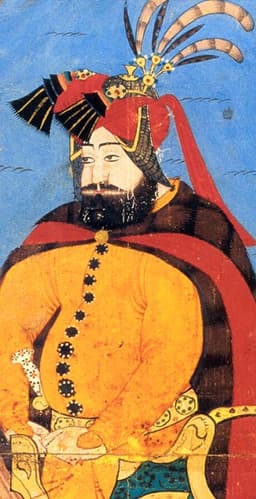
Ahmed Dini Ahmed
Politician · Modern
47.7Total

William Pitt the Younger
Politician · Modern
58.0Total
Basic Information
Born
1932
1759
Died
—
1806
Era
Modern
Modern
Nationality
Djibouti
United Kingdom
Occupation
Politician
Politician
Civilization
Other
Western
Score Comparison
Military (10%)
39.4
21.2
Political (20%)
46.6
75.0
Influence (20%)
51.0
58.3
Legacy (20%)
40.0
55.0
Leadership (15%)
65.7
80.0
Strategy (15%)
42.1
43.3
TOTAL
47.7
58.0
Ahmed Dini Ahmed — Complete Timeline
1977 AD
Appointed First Prime Minister of DjiboutiPolitical Action◆ Major
Ahmed Dini Ahmed was appointed the first Prime Minister of Djibouti after independence from France. He served under President Hassan Gouled Aptidon and helped establish the new nation's government.
IndependenceDjiboutiLeadership
Impact: nationalconstructive
1978 AD
Resigned as Prime MinisterPolitical Action◆ Major
Ahmed Dini Ahmed resigned as Prime Minister due to disagreements with President Gouled over political direction and ethnic representation. His resignation marked a split in the ruling party and led to his move into opposition.
ResignationPoliticsDjibouti
Impact: national
1991 AD
Founded the Front for the Restoration of Unity and DemocracyPolitical Action◆ Major
Ahmed Dini Ahmed founded the Front for the Restoration of Unity and Democracy (FRUD), an armed opposition group that launched a rebellion against President Gouled's government. The conflict lasted until a peace agreement in 1994.
RebellionCivil WarDjibouti
Impact: nationaldestructive
William Pitt the Younger — Complete Timeline
1783 AD
Became Prime Minister at Age 24Political Action
William Pitt the Younger became Prime Minister on December 19, 1783, at the age of 24, the youngest in British history. He formed a government after the fall of the Fox-North Coalition, winning a general election in 1784 that gave him a strong parliamentary majority.
Prime MinisterYouthGovernment
Impact: national
1784 AD
India Act 1784Reform◆ Major
Pitt's India Act established dual control of British India by the British government and the East India Company. It created a Board of Control in London to oversee political and military affairs, while leaving commercial operations to the Company. This reformed colonial administration.
IndiaColonial AdministrationReform
Impact: globalconstructive
1793 AD
Led Britain in Napoleonic WarsWar◆ Major
Pitt led Britain into the French Revolutionary Wars in 1793 and continued as prime minister during the early Napoleonic Wars. He organized coalitions against France, secured naval victories, and managed domestic unrest, but resigned in 1801 after military setbacks and the Act of Union with Ireland.
Napoleonic WarsCoalitionMilitary Strategy
Impact: global
1800 AD
Act of Union with IrelandPolitical Action◆ Major
Pitt secured the passage of the Act of Union in 1800, which united Great Britain and Ireland into the United Kingdom on January 1, 1801. He intended to follow this with Catholic emancipation, but King George III's opposition led to Pitt's resignation in 1801.
UnionIrelandCatholic Emancipation
Impact: national
1806 AD
Returned to Office and DiedPolitical Action◆ Major
Pitt returned as Prime Minister in May 1804, but his health declined. He died on January 23, 1806, shortly after hearing news of Napoleon's victory at Austerlitz. His last words were reported as 'Oh, my country!' His death marked the end of an era in British politics.
DeathNapoleonic WarsLegacy
Impact: nationaltragic
This comparison has not been analyzed yet.
One-time AI generation (~1 minute). Scores and timeline are already available below.
Rankings
🥇
William Pitt the YoungerLeader
Mil: 21.2Pol: 75.0Inf: 58.3
58.0
🥈
Ahmed Dini Ahmed
Mil: 39.4Pol: 46.6Inf: 51.0
47.7
+10.3 behind
How This Comparison Works
Algorithm
Each figure is scored on 6 dimensions (0—100 scale) based on structured historical data: Military (10%), Political (20%), Influence (20%), Legacy (20%), Leadership (15%), Strategy (15%). The weighted total produces the final ranking.
Data Sources
Scores are computed from structured sub-indicators in the database. Scale factors adjust for era (Ancient ×0.85, Modern ×1.0) and civilization size (Eastern ×1.05, Other ×0.80) to account for differences in population and military scale.
Maximum 3 Figures
Comparisons are limited to 2—3 figures to ensure readability and statistical meaningfulness.
Error Margins
±5 points per dimension — Sub-scores are derived from historical records with inherent uncertainty. Two figures within 5 points on a dimension should be considered roughly equivalent in that area.
Total Score Accuracy
±3 points overall — The weighted combination of 6 dimensions produces a total score with approximately ±3 points of uncertainty. Differences of less than 3 points are not statistically significant— the figures are effectively tied.
Known Limitations
- Historical records are incomplete and uneven across civilizations
- Figures from oral-tradition societies may be underrepresented
- Occupation labels can misclassify multi-role figures
- Scores measure capability and impact, not moral character
- Quantitative scoring is a comparison tool, not absolute truth
Capability Radar
Military (10%) — Battles & Warfare
Battles
19
10
Win Rate
26
10
Expansion
28
30
Political (20%) — Governance & Reform
Reform
35
80
Diplomacy
45
75
Economy
20
85
Influence (20%) — Cultural & Global Reach
Cultural
20
40
Global
15
60
Legacy (20%) — Historical Impact
Historical
25
70
Longevity
15
65
Leadership (15%) — Power & Stability
Tenure
40
85
Stability
25
70
Strategy (15%) — Tactics & Innovation
Strategy
29
60
Tactics
35
10
Reform
38
65
Similar Comparisons
Comments & Discussion
No comments yet. Be the first to share your thoughts!