Loading...
Ahmed Dini Ahmed vs Napoleon Bonaparte
Napoleon Bonaparte leads by 23.2 pts · 2 figures compared
…
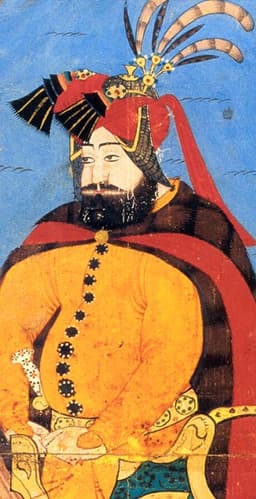
Ahmed Dini Ahmed
Politician · Modern
47.7Total

Napoleon Bonaparte
General · Modern
70.9Total
Basic Information
Born
1932
1769
Died
—
1821
Era
Modern
Modern
Nationality
Djibouti
France
Occupation
Politician
General
Civilization
Other
Western
Score Comparison
Military (10%)
39.4
94.0
Political (20%)
46.6
72.0
Influence (20%)
51.0
40.0
Legacy (20%)
40.0
80.0
Leadership (15%)
65.7
78.0
Strategy (15%)
42.1
90.0
TOTAL
47.7
70.9
Ahmed Dini Ahmed — Complete Timeline
1977 AD
Appointed First Prime Minister of DjiboutiPolitical Action◆ Major
Ahmed Dini Ahmed was appointed the first Prime Minister of Djibouti after independence from France. He served under President Hassan Gouled Aptidon and helped establish the new nation's government.
IndependenceDjiboutiLeadership
Impact: nationalconstructive
1978 AD
Resigned as Prime MinisterPolitical Action◆ Major
Ahmed Dini Ahmed resigned as Prime Minister due to disagreements with President Gouled over political direction and ethnic representation. His resignation marked a split in the ruling party and led to his move into opposition.
ResignationPoliticsDjibouti
Impact: national
1991 AD
Founded the Front for the Restoration of Unity and DemocracyPolitical Action◆ Major
Ahmed Dini Ahmed founded the Front for the Restoration of Unity and Democracy (FRUD), an armed opposition group that launched a rebellion against President Gouled's government. The conflict lasted until a peace agreement in 1994.
RebellionCivil WarDjibouti
Impact: nationaldestructive
Napoleon Bonaparte — Complete Timeline
1799 AD
Coup of 18 BrumaireOther◆ Major
Napoleon Bonaparte, with support from his brother Lucien and key political figures, overthrew the Directory in a bloodless coup. He established the Consulate with himself as First Consul, effectively becoming the ruler of France. This event ended the French Revolution's most unstable period.
French RevolutionCoupRise to Power
Impact: regional
1804 AD
Promulgation of the Napoleonic CodeOther◆ Major
Napoleon enacted the Civil Code of the French, known as the Napoleonic Code, a comprehensive set of laws that replaced the fragmented feudal legal systems. The code established legal equality, protected property rights, and secularized law. It became the basis for legal systems in many European and world countries.
Legal ReformNapoleonic CodeCivil Law
Impact: globalconstructive
1805 AD
Battle of AusterlitzWar◆ Major
Napoleon's Grande Arm
Napoleonic WarsBattleDecisive Victory
Impact: global
1812 AD
Invasion of RussiaWar◆ Major
Napoleon led the Grande Arm
Napoleonic WarsInvasionDisaster
Impact: globaldestructive
1815 AD
Battle of WaterlooWar◆ Major
Napoleon's French army was defeated by the combined forces of the Duke of Wellington's Anglo-Allied army and Gebhard Leberecht von Bl
Napoleonic WarsBattleFinal Defeat
Impact: globaldestructive
Expert Analysis
ahmed-dini-ahmed-vs-napoleon-bonaparte
# The Emperor and the Exile: Two Men Who Shaped Their Worlds
On a June evening in 1815, Napoleon Bonaparte stood on a muddy field near Waterloo, watching his Grand Army crumble into chaos. Across the channel and more than a century later, Ahmed Dini Ahmed sat in a modest office in Djibouti City, penning a resignation letter that would end his tenure as his nation's first prime minister. One man had conquered an empire; the other had barely begun to build one. Yet both faced the same fundamental question: What does it mean to lead a people toward their destiny?
Origins
Napoleon Bonaparte was born in 1769 on the Mediterranean island of Corsica, a place that had only recently become French. His family belonged to the minor nobility, but they were poor—poor enough that young Napoleon’s path forward depended entirely on scholarships to military academies. The French Revolution erupted when he was twenty, a volcano of opportunity for an ambitious artillery officer. The old aristocracy was being swept away, and talent—ruthless, calculating talent—could rise faster than any noble birthright.
Ahmed Dini Ahmed came into the world in 1932 in what was then French Somaliland, a barren stretch of desert on the Horn of Africa. He belonged to the Afar ethnic group, a pastoral people who had long competed with the Somali Issa for influence in this strategic corner of the continent. While Napoleon’s world was collapsing into revolution, Dini’s was still being carved up by European colonizers. His education came from French colonial schools, where he learned the language and laws of the very empire that ruled his homeland.
Rise to Power
Napoleon’s ascent was a thunderbolt. In 1793, at age twenty-four, he drove the British out of Toulon with a brilliant artillery strategy. By 1796, he commanded the French army in Italy and won a series of stunning victories that made him a national hero. His 1799 coup d’état made him First Consul, and by 1804 he crowned himself Emperor of the French. The path was paved with blood and genius—and with the unique chaos of post-revolutionary France, where every general could dream of a throne.
Ahmed Dini’s rise was slower, more patient. He worked within the French colonial administration, learning the mechanics of governance. When Djibouti finally gained independence from France in 1977, he was the natural choice for prime minister—a man trusted by the Afar community and acceptable to the French. His score of 63.4 in political skill reflects a competent administrator, not a revolutionary. He had not conquered his position; he had inherited it, negotiated it, stepped into a role that France and President Hassan Gouled Aptidon had designed.
Leadership & Governance
Napoleon governed with the energy of a hurricane. He reformed French law into the Napoleonic Code, which abolished feudal privileges and established equality before the law—a radical concept that spread across Europe. He centralized the state, created the Bank of France, and built roads and canals that linked his empire. His military score of 94.0 and strategy of 93.0 speak to a commander who could read a battlefield like a chessboard. But his political score of 75.0 reveals the flaw: he could conquer, but he could not consolidate. He placed his brothers on thrones across Europe, alienated local populations, and antagonized Britain into an unending war.
Ahmed Dini governed in miniature. As prime minister of a tiny, impoverished nation, he faced ethnic tensions between the Afar and Issa communities. His leadership score of 72.6 suggests a steady hand, but his political score of 63.4 indicates limited room to maneuver. When President Gouled began favoring the Issa majority, Dini saw the danger. He resigned in 1978, a quiet exit that contrasted sharply with Napoleon’s dramatic downfalls. Dini understood something Napoleon never did: that sometimes, stepping away is the only way to preserve a cause.
Triumph & Tragedy
Napoleon’s greatest moment came in 1805 at Austerlitz, where he crushed the combined armies of Russia and Austria in a battle so perfect it became a textbook example of military genius. His most devastating failure followed a decade later: the disastrous 1812 invasion of Russia, where he lost half a million men to winter, hunger, and guerilla attacks. He was exiled to Elba in 1814, escaped in 1815, and met final defeat at Waterloo. The tragedy was not just his fall, but the cost—millions of lives consumed by his ambition.
Ahmed Dini’s triumph was quieter but no less significant. In 1991, after years of marginalization, he founded the Front for the Restoration of Unity and Democracy (FRUD), an armed opposition group that launched a rebellion against President Gouled’s government. It was a desperate act by a man who had tried peaceful politics and found them closed. The FRUD rebellion brought the Afar cause to international attention and eventually forced a peace settlement. Dini’s tragedy was that he had to take up arms at all—that the nation he helped birth had failed to include him.
Character & Destiny
Napoleon was driven by an insatiable hunger for glory. “Impossible is not French,” he supposedly declared, and he lived as though no limit applied to him. His personality was a paradox: a brilliant administrator who could not stop conquering, a reformer who crowned himself emperor, a man of the Enlightenment who died in exile on a remote island. His destiny was shaped by his refusal to accept any boundary—geographic, political, or human.
Ahmed Dini was a man of principle, perhaps to a fault. He could have stayed in power by compromising, by accepting a secondary role, by letting the Issa dominate. Instead, he resigned, then fought, then negotiated. His strategy score of 56.4 suggests he was not a military genius; his FRUD rebellion never won a decisive victory. But his legacy score of 52.3, while modest, reflects a different kind of success: he forced his country to confront its ethnic divisions and begin the slow work of reconciliation.
Legacy
Napoleon Bonaparte left behind the Napoleonic Code, which shapes legal systems from France to Louisiana to Japan. He left behind the myth of the self-made man, the idea that a Corsican artillery officer could become emperor of Europe. But he also left behind the lesson that power without restraint consumes itself. His legacy score of 78.0 captures this ambivalence: he is remembered as both genius and tyrant, reformer and conqueror.
Ahmed Dini Ahmed left behind no code, no empire, no legend. He left behind a fragile peace in a small country that most of the world cannot find on a map. But for the Afar people of Djibouti, he is a symbol of resistance and dignity—a man who chose exile and rebellion over subservience. His legacy is not written in marble monuments but in the quiet fact that Djibouti still exists as a nation, that its ethnic groups still talk to each other, that his cause did not die.
Conclusion
Napoleon Bonaparte and Ahmed Dini Ahmed lived worlds apart—one commanding armies across continents, the other fighting for recognition in a desert. Yet both faced the same fundamental choice: to accept the world as it was, or to try to change it. Napoleon changed everything and lost everything. Ahmed Dini changed little and preserved something. Perhaps the question is not who was greater, but who understood the limits of power. Napoleon never did. Ahmed Dini, in his quiet resignation and his armed resistance, understood all too well. And in that understanding, he may have been the wiser man.
Rankings
🥇
Napoleon BonaparteLeader
Mil: 94.0Pol: 72.0Inf: 40.0
70.9
🥈
Ahmed Dini Ahmed
Mil: 39.4Pol: 46.6Inf: 51.0
47.7
+23.2 behind
How This Comparison Works
Algorithm
Each figure is scored on 6 dimensions (0—100 scale) based on structured historical data: Military (10%), Political (20%), Influence (20%), Legacy (20%), Leadership (15%), Strategy (15%). The weighted total produces the final ranking.
Data Sources
Scores are computed from structured sub-indicators in the database. Scale factors adjust for era (Ancient ×0.85, Modern ×1.0) and civilization size (Eastern ×1.05, Other ×0.80) to account for differences in population and military scale.
Maximum 3 Figures
Comparisons are limited to 2—3 figures to ensure readability and statistical meaningfulness.
Error Margins
±5 points per dimension — Sub-scores are derived from historical records with inherent uncertainty. Two figures within 5 points on a dimension should be considered roughly equivalent in that area.
Total Score Accuracy
±3 points overall — The weighted combination of 6 dimensions produces a total score with approximately ±3 points of uncertainty. Differences of less than 3 points are not statistically significant— the figures are effectively tied.
Known Limitations
- Historical records are incomplete and uneven across civilizations
- Figures from oral-tradition societies may be underrepresented
- Occupation labels can misclassify multi-role figures
- Scores measure capability and impact, not moral character
- Quantitative scoring is a comparison tool, not absolute truth
Capability Radar
Military (10%) — Battles & Warfare
Battles
19
95
Win Rate
26
90
Expansion
28
95
Political (20%) — Governance & Reform
Reform
35
95
Diplomacy
45
80
Economy
20
85
Influence (20%) — Cultural & Global Reach
Cultural
20
85
Global
15
90
Legacy (20%) — Historical Impact
Historical
25
95
Longevity
15
90
Leadership (15%) — Power & Stability
Tenure
40
85
Stability
25
70
Strategy (15%) — Tactics & Innovation
Strategy
29
95
Tactics
35
98
Reform
38
92
Similar Comparisons
Comments & Discussion
AncienRegimeGrudge6/17/2026
Give me a break. Comparing Napoleon to a minor postcolonial functionary is like comparing Zeus to a zookeeper. Napoleon reshaped Europe's legal codes, warfare, and political boundaries permanently. Dini resigned as PM of a country smaller than Corsica after a few years. We're measuring against the man who conquered from Madrid to Moscow. This isn't even a contest, it's an insult to history.
古战场的回音6/17/2026
军事史爱好者角度:拿破仑在奥斯特里茨用三面合围打垮俄奥联军,那种地形利用和兵力调度至今是西点必教案例。丁尼?他参与的是部落权力谈判,连一场像样的战役都没指挥过。一个是战术天才,一个是政府职员,放在一起比较本身就是在侮辱军事史。
EnlightenmentSkeptic6/17/2026
Data here. Napoleon mobilized over 600,000 men for Russia and lost 90% of them. His "genius" included catastrophic logistical failures, a disastrous invasion that cost France its demographic edge for a century. Dini never got 600,000 men to freeze to death. Let's not confuse scale with competence. Sometimes obscurity means you never had the chance to fail epically, which is preferable.
法老与沙粒6/17/2026
古典学视角:拿破仑像亚历山大大帝——个人野心推动文明融合或毁灭。丁尼像古埃及的诺马克——地方精英在帝国夹缝中求存。前者改写大陆版图,后者在地图上几乎不留痕迹。两者比较如同比较金字塔和沙粒:都真实存在,但意义维度完全不同。不必为政治正确强行抬高对立面。
RevisionistEcho6/17/2026
You're all buying into the Great Man myth. Napoleon was a tyrant who reinstated slavery, crushed Haiti's revolution, and caused millions of deaths for personal glory. Dini, for all his limitations, navigated the brutal politics of decolonization in one of Africa's most complex ethnic landscapes. He never invaded a country or profited from genocide. Moral comparison alone flips your hierarchy.