Loading...
Ahmed Sanjar vs Ulugh Muhammad
Ahmed Sanjar leads by 5.3 pts · 2 figures compared
…
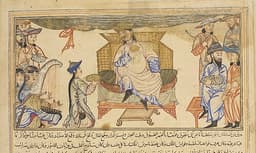
Ahmed Sanjar
Emperor · Medieval
61.0Total
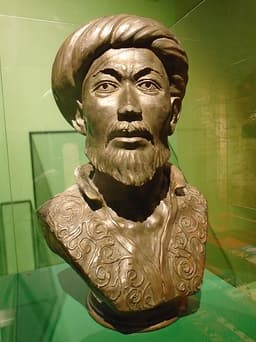
Ulugh Muhammad
Emperor · Medieval
55.7Total
Basic Information
Born
1085
1380
Died
1157
1445
Era
Medieval
Medieval
Nationality
Seljuk Empire
Golden Horde
Occupation
Emperor
Emperor
Civilization
Middle Eastern
Eastern
Score Comparison
Military (10%)
64.4
52.5
Political (20%)
68.0
54.7
Influence (20%)
59.0
57.2
Legacy (20%)
49.2
49.2
Leadership (15%)
74.0
64.0
Strategy (15%)
62.5
60.0
TOTAL
61.0
55.7
Ahmed Sanjar — Complete Timeline
1141 AD
Battle of QatwanWar◆ Major
Ahmed Sanjar was defeated by the Kara Khitai at the Battle of Qatwan near Samarkand. This defeat ended Seljuk dominance in Transoxiana and led to the loss of Khorasan to the Kara Khitai, marking the beginning of the Seljuk decline.
BattleKara KhitaiSeljuk Decline
Impact: regionaltragic
1153 AD
Revolt of the Oghuz TurksWar◆ Major
Oghuz Turk tribes in Khorasan revolted against Sanjar's rule, capturing him in battle. Sanjar was held captive for three years, during which the Oghuz plundered Khorasan and destroyed Seljuk authority in the region.
RevoltOghuzCaptivity
Impact: regionaltragic
1156 AD
Restoration and DeathPolitical Action◆ Major
Sanjar escaped Oghuz captivity in 1156 and returned to Merv, but his authority was shattered. He died the following year, and his death marked the end of the Great Seljuk Empire, as his successors could not reunite the fragmented territories.
EscapeDeathEnd of Empire
Impact: regionaltragic
Ulugh Muhammad — Complete Timeline
1438 AD
Foundation of the Khanate of KazanPolitical Action
Ulugh Muhammad, after losing the throne of the Golden Horde, established the independent Khanate of Kazan on the middle Volga. This created a new Tatar state that would be a major political and military power in the region for over a century.
State FoundationKazan KhanateVolga Region
Impact: regionalconstructive
1439 AD
Raid on MoscowWar◆ Major
Shortly after founding the Khanate, Ulugh Muhammad led a military campaign against the Grand Principality of Moscow. His forces raided the outskirts of Moscow, demonstrating the new khanate's military capability and securing tribute from the Russians.
Russo-Kazan WarsRaidMoscow
Impact: regionaldestructive
1445 AD
Battle of SuzdalWar◆ Major
Ulugh Muhammad's forces defeated a larger Russian army near Suzdal. The Russian Grand Prince Vasily II was captured. This victory forced Moscow to pay a large ransom and recognize Kazan's independence, solidifying the Khanate's position.
Russo-Kazan WarsBattleVasily II Captured
Impact: regional
Expert Analysis
Origins
Ahmed Sanjar was born in 1085, the son of Sultan Malik Shah I of the Seljuk Empire. He grew up in the imperial court, receiving education in governance and military command. His early experience included governing Khorasan as a prince, which gave him practical administrative skills.
Ulugh Muhammad was born around 1390, a descendant of Jochi, son of Genghis Khan. He emerged from the fracturing Golden Horde, where he initially served as a khan before losing power. His background was shaped by the steppe traditions of warfare and tribal politics.
Rise to Power
Sanjar became Sultan of the Seljuk Empire in 1118 after the death of his brother Muhammad I. He consolidated control over Khorasan and Transoxiana, facing challenges from the Seljuk branch in the west. His authority was recognized by vassals like the Khwarezm shahs. Key allies included the powerful vizier al-Mu'ayyad.
Ulugh Muhammad rose to prominence during the civil wars of the Golden Horde. He was elected khan in 1419 but was deposed in 1423. After regaining power briefly, he was defeated by his rivals and fled to the Volga region. In 1437, he founded the independent Khanate of Kazan, marking his definitive rise. His turning point was the defeat of a larger Russian army at the Battle of Suzdal in 1445.
Leadership & Governance
Sanjar ruled a vast empire with a feudal system, relying on iqta land grants and a professional army of Turkish slave soldiers (ghulams). He maintained stability through patronage of Sunni orthodoxy and suppression of the Ismailis. His governance was centralized but faced challenges from nomadic Oghuz tribes whom he had settled in Khorasan.
Ulugh Muhammad led a smaller, more mobile khanate based on tribal confederation. He used raiding as a tool of statecraft, extracting tribute from Muscovy. His governance was less bureaucratic, relying on personal loyalty and military success. He established Kazan as a trading hub, balancing Islam with steppe traditions.
Triumph & Tragedy
Sanjar's greatest triumph was his long reign of nearly 40 years, during which he maintained Seljuk dominance in the east. He scored 64.4 in military and 74.0 in leadership, reflecting his ability to command loyalty. However, his tragedy was the Battle of Qatwan in 1141, where he was defeated by the Kara Khitai, losing Transoxiana. Worse was the Oghuz revolt in 1153, where he was captured and humiliated. He escaped but died in 1157 with his empire shattered.
Ulugh Muhammad's triumph was the foundation of the Khanate of Kazan, which lasted over a century. His raid on Moscow in 1439 and victory at Suzdal forced Moscow to pay tribute, boosting his prestige. His tragedy was the eventual decline of his dynasty; he was assassinated in 1445 by his own son, reflecting the volatile nature of steppe politics. He scored 52.5 military and 54.7 political, lower than Sanjar.
Character & Destiny
Sanjar was a capable administrator but overconfident in his later years. He misjudged the threat from the Kara Khitai and failed to integrate the Oghuz tribes peacefully. His character of benevolent autocracy led to reliance on a rigid system that could not adapt to nomadic challenges. Historians view him as the last great Seljuk, but his destiny was sealed by external pressures and internal revolt.
Ulugh Muhammad was a pragmatic survivor, willing to retreat and rebuild. He capitalized on Muscovite weakness but could not secure succession. His character combined ambition with caution, but his reliance on personal rule led to instability. His fate—murder by his son—was common among steppe rulers.
Legacy
Sanjar's legacy is mixed: he is remembered as the last effective Seljuk sultan, but his defeat at Qatwan opened Central Asia to Kara Khitai domination. He scored 49.2 in legacy, reflecting his limited long-term impact. The Seljuk Empire fragmented after his death, and his name is not widely known outside specialist circles.
Ulugh Muhammad's legacy is more enduring: the Khanate of Kazan persisted as a major Tatar state until conquered by Ivan the Terrible in 1552. He scored 49.2 in legacy as well, but his foundation shaped Russian-Tatar relations for centuries. Kazan became a center of Islamic culture and trade.
Conclusion
Ahmed Sanjar had greater immediate power and a higher total score (61.0 vs 55.7), but his impact was transient. Ulugh Muhammad, despite lower scores, founded a political entity that lasted over a century and influenced Russian expansion. In terms of lasting historical impact, Ulugh Muhammad edges ahead because the Khanate of Kazan directly shaped the development of the Russian state, while Sanjar's empire dissolved without creating a successor state. Thus, Ulugh Muhammad had greater long-term impact, even if Sanjar was more powerful in his time.
Rankings
🥇
Ahmed SanjarLeader
Mil: 64.4Pol: 68.0Inf: 59.0
61.0
🥈
Ulugh Muhammad
Mil: 52.5Pol: 54.7Inf: 57.2
55.7
+5.3 behind
How This Comparison Works
Algorithm
Each figure is scored on 6 dimensions (0—100 scale) based on structured historical data: Military (10%), Political (20%), Influence (20%), Legacy (20%), Leadership (15%), Strategy (15%). The weighted total produces the final ranking.
Data Sources
Scores are computed from structured sub-indicators in the database. Scale factors adjust for era (Ancient ×0.85, Modern ×1.0) and civilization size (Eastern ×1.05, Other ×0.80) to account for differences in population and military scale.
Maximum 3 Figures
Comparisons are limited to 2—3 figures to ensure readability and statistical meaningfulness.
Error Margins
±5 points per dimension — Sub-scores are derived from historical records with inherent uncertainty. Two figures within 5 points on a dimension should be considered roughly equivalent in that area.
Total Score Accuracy
±3 points overall — The weighted combination of 6 dimensions produces a total score with approximately ±3 points of uncertainty. Differences of less than 3 points are not statistically significant— the figures are effectively tied.
Known Limitations
- Historical records are incomplete and uneven across civilizations
- Figures from oral-tradition societies may be underrepresented
- Occupation labels can misclassify multi-role figures
- Scores measure capability and impact, not moral character
- Quantitative scoring is a comparison tool, not absolute truth
Capability Radar
Military (10%) — Battles & Warfare
Battles
75
55
Win Rate
70
50
Expansion
68
60
Political (20%) — Governance & Reform
Reform
55
45
Diplomacy
60
55
Economy
58
40
Influence (20%) — Cultural & Global Reach
Cultural
50
40
Global
45
35
Legacy (20%) — Historical Impact
Historical
55
50
Longevity
40
45
Leadership (15%) — Power & Stability
Tenure
65
60
Stability
45
35
Strategy (15%) — Tactics & Innovation
Strategy
74
50
Tactics
72
45
Reform
60
40
Similar Comparisons
Comments & Discussion
No comments yet. Be the first to share your thoughts!