Loading...
Ahmed Sanjar vs Taejo of Joseon
Taejo of Joseon leads by 9.4 pts · 2 figures compared
…
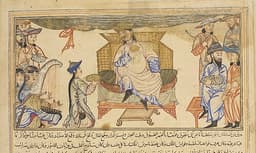
Ahmed Sanjar
Emperor · Medieval
61.0Total
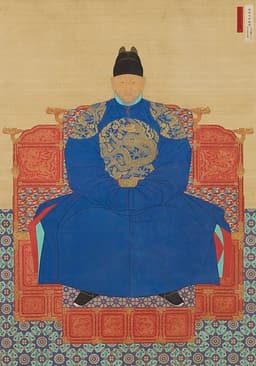
Taejo of Joseon
Emperor · Medieval
70.4Total
Basic Information
Born
1085
1335
Died
1157
1408
Era
Medieval
Medieval
Nationality
Seljuk Empire
Korea
Occupation
Emperor
Emperor
Civilization
Middle Eastern
Eastern
Score Comparison
Military (10%)
64.4
74.7
Political (20%)
68.0
65.0
Influence (20%)
59.0
65.0
Legacy (20%)
49.2
80.0
Leadership (15%)
74.0
72.0
Strategy (15%)
62.5
61.2
TOTAL
61.0
70.4
Ahmed Sanjar — Complete Timeline
1141 AD
Battle of QatwanWar◆ Major
Ahmed Sanjar was defeated by the Kara Khitai at the Battle of Qatwan near Samarkand. This defeat ended Seljuk dominance in Transoxiana and led to the loss of Khorasan to the Kara Khitai, marking the beginning of the Seljuk decline.
BattleKara KhitaiSeljuk Decline
Impact: regionaltragic
1153 AD
Revolt of the Oghuz TurksWar◆ Major
Oghuz Turk tribes in Khorasan revolted against Sanjar's rule, capturing him in battle. Sanjar was held captive for three years, during which the Oghuz plundered Khorasan and destroyed Seljuk authority in the region.
RevoltOghuzCaptivity
Impact: regionaltragic
1156 AD
Restoration and DeathPolitical Action◆ Major
Sanjar escaped Oghuz captivity in 1156 and returned to Merv, but his authority was shattered. He died the following year, and his death marked the end of the Great Seljuk Empire, as his successors could not reunite the fragmented territories.
EscapeDeathEnd of Empire
Impact: regionaltragic
Taejo of Joseon — Complete Timeline
1380 AD
Battle of HwangsanWar
General Yi Seong-gye defeated a Japanese pirate (wokou) force at Hwangsan. This victory enhanced his military reputation and demonstrated his capability as a commander.
WokouGoryeo Military
1388 AD
Wihwado RetreatPolitical Action
General Yi Seong-gye, ordered to invade the Ming dynasty's Liaodong region, turned his army back at Wihwado Island. This act of defiance against the Goryeo court led to a coup that eventually brought him to power.
CoupGoryeo-Ming RelationsPower Shift
Impact: national
1391 AD
Land Reform and the Gwajeon LawReform◆ Major
Taejo implemented the Gwajeon Law, a land reform that redistributed land from the old Goryeo aristocracy to his supporters and the state. This weakened the old elite and strengthened the new Joseon ruling class.
Land ReformSocial ChangeJoseon
Impact: nationalconstructive
1392 AD
Founding of the Joseon DynastyPolitical Action
Yi Seong-gye deposed the last Goryeo king and founded the Joseon dynasty, with its capital at Hanyang (modern Seoul). He established a new ruling class based on Confucian ideology, replacing the Buddhist-influenced Goryeo system.
Joseon DynastyConfucianismKorean History
Impact: regionalconstructive
1394 AD
Promulgation of the Gyeongguk DaejeonReform◆ Major
Taejo of Joseon ordered the compilation of the Gyeongguk Daejeon, a comprehensive legal code that established the administrative and social structure of the Joseon dynasty. This code remained in effect for centuries.
Legal CodeGovernanceConfucianism
Impact: nationalconstructive
Expert Analysis
Origins
Ahmed Sanjar was born in 1085 as the son of Sultan Malik Shah I, the powerful Seljuk ruler. He grew up in the Seljuk court, exposed to the complexities of ruling a vast empire. His early education focused on military and administrative skills, preparing him for governance. Sanjar was appointed governor of Khorasan in 1097, a key province of the Seljuk Empire. His formative years were marked by the decline of central authority after his father's death, leading to internal strife among Seljuk princes.
Taejo of Joseon, born Yi Seong-gye in 1335, came from a military family in the Goryeo dynasty. His father, Yi Ja-chun, was a minor official. Yi Seong-gye grew up in a period of political turmoil, with Goryeo facing threats from Mongol Yuan dynasty and Japanese pirates. He received military training and rose through the ranks due to his skill in archery and leadership. His early experiences in border conflicts shaped his pragmatic and decisive character.
Rise to Power
Sanjar's rise began when he was appointed governor of Khorasan. He consolidated power by suppressing rebellions and expanding his influence. In 1118, after the death of his brother Muhammad I, Sanjar became the de facto sultan of the eastern Seljuk Empire, with his capital at Merv. He defeated rival claimants and secured recognition from the Abbasid caliph. By 1130, he had established himself as the supreme Seljuk ruler, though his authority was challenged by vassals and external enemies.
Taejo's rise was marked by the Wihwado Retreat in 1388. Ordered by the Goryeo king to invade Ming China, Yi Seong-gye turned his army back, defying the king. This act of rebellion gained him popular support. He then allied with reformist scholar-officials and gradually seized power. In 1392, he deposed the last Goryeo king and founded the Joseon dynasty. His military reputation was bolstered by victories against Japanese pirates, such as the Battle of Hwangsan in 1380.
Leadership & Governance
Sanjar's leadership style was autocratic but relied on a network of vassals and regional governors. He maintained the Seljuk administrative system, with iqta land grants to military commanders. However, his governance was weakened by over-reliance on Turkic tribes, who eventually revolted. Sanjar failed to integrate diverse groups, leading to fragmentation. His military strategy scored 62.5, reflecting his inability to adapt to new threats like the Kara Khitai.
Taejo implemented sweeping reforms to centralize power. He issued the Gwajeon Law in 1391, redistributing land from the Goryeo aristocracy to his supporters and the state, weakening the old elite. He ordered the compilation of the Gyeongguk Daejeon, a comprehensive legal code that structured Joseon's bureaucracy. Taejo also moved the capital to Hanyang (Seoul) and promoted Confucianism as state ideology, laying foundations for a stable dynasty. His political score of 65.0 reflects effective state-building.
Triumph & Tragedy
Sanjar's greatest triumph was maintaining Seljuk authority in Khorasan for decades, but his major failure was the Battle of Qatwan in 1141. He was decisively defeated by the Kara Khitai, losing control of Transoxiana. This defeat shattered his reputation. His second tragedy was the Oghuz revolt in 1153, where he was captured and held for three years. After escaping, he found his empire in ruins, dying in 1157 with little power.
Taejo's triumph was founding the Joseon dynasty, which lasted over 500 years. He successfully stabilized Korea after Goryeo's decline. His land reform and legal code created a strong central government. However, his tragedy was the internal conflict among his sons over succession. He abdicated in 1398 after a coup by his son Yi Bang-won (later King Taejong), leading to bloodshed within his family. Taejo's legacy score of 80.0 reflects the dynasty's endurance.
Character & Destiny
Sanjar was known for his generosity and cultural patronage, but he was indecisive in crisis. He underestimated the Oghuz threat and failed to maintain loyalty among his troops. His character of tolerance towards different cultures was a strength, but his reliance on Turkic tribes backfired. Historians note his inability to adapt to changing military tactics, leading to his downfall. His total score of 61.0 reflects a competent but flawed ruler.
Taejo was pragmatic, ruthless, and visionary. He made calculated risks, as seen in the Wihwado Retreat. His military skill scored 74.7, and leadership 72.0. However, his ambition led to family strife. He was decisive in reform but struggled with succession. His character of prioritizing state stability over personal relationships shaped his destiny. Taejo's higher total score of 70.4 indicates superior effectiveness.
Legacy
Sanjar's legacy is mixed. He is remembered as the last great Seljuk sultan, but his reign marked the empire's decline. His defeat at Qatwan opened the door for Kara Khitai and later Khwarezmian expansion. Seljuk influence waned after his death, and his name is often associated with the end of an era. His influence score of 59.0 reflects limited long-term impact.
Taejo's legacy is immense. The Joseon dynasty he founded became one of Korea's longest-lasting, with cultural achievements like the Korean alphabet (Hangul) created under later kings. His legal and land reforms shaped Korean society for centuries. Taejo is revered as a national founder, with his tomb and memorials in Seoul. His legacy score of 80.0 underscores his enduring importance.
Conclusion
While both rulers faced challenges, Taejo's impact is clearly greater. He founded a dynasty that endured for over 500 years, implemented reforms that shaped Korean society, and his military and political scores (74.7 and 65.0) surpass Sanjar's (64.4 and 68.0). Sanjar's reign, though significant, ended in decline and fragmentation. Taejo's total score of 70.4 against Sanjar's 61.0 reflects a more effective and lasting leadership. The founder of Joseon had a more profound and positive influence on his nation's history.
Rankings
🥇
Taejo of JoseonLeader
Mil: 74.7Pol: 65.0Inf: 65.0
70.4
🥈
Ahmed Sanjar
Mil: 64.4Pol: 68.0Inf: 59.0
61.0
+9.4 behind
How This Comparison Works
Algorithm
Each figure is scored on 6 dimensions (0—100 scale) based on structured historical data: Military (10%), Political (20%), Influence (20%), Legacy (20%), Leadership (15%), Strategy (15%). The weighted total produces the final ranking.
Data Sources
Scores are computed from structured sub-indicators in the database. Scale factors adjust for era (Ancient ×0.85, Modern ×1.0) and civilization size (Eastern ×1.05, Other ×0.80) to account for differences in population and military scale.
Maximum 3 Figures
Comparisons are limited to 2—3 figures to ensure readability and statistical meaningfulness.
Error Margins
±5 points per dimension — Sub-scores are derived from historical records with inherent uncertainty. Two figures within 5 points on a dimension should be considered roughly equivalent in that area.
Total Score Accuracy
±3 points overall — The weighted combination of 6 dimensions produces a total score with approximately ±3 points of uncertainty. Differences of less than 3 points are not statistically significant— the figures are effectively tied.
Known Limitations
- Historical records are incomplete and uneven across civilizations
- Figures from oral-tradition societies may be underrepresented
- Occupation labels can misclassify multi-role figures
- Scores measure capability and impact, not moral character
- Quantitative scoring is a comparison tool, not absolute truth
Capability Radar
Military (10%) — Battles & Warfare
Battles
75
75
Win Rate
70
80
Expansion
68
65
Political (20%) — Governance & Reform
Reform
55
85
Diplomacy
60
70
Economy
58
65
Influence (20%) — Cultural & Global Reach
Cultural
50
80
Global
45
60
Legacy (20%) — Historical Impact
Historical
55
85
Longevity
40
80
Leadership (15%) — Power & Stability
Tenure
65
70
Stability
45
75
Strategy (15%) — Tactics & Innovation
Strategy
74
75
Tactics
72
70
Reform
60
60
Similar Comparisons
Comments & Discussion
No comments yet. Be the first to share your thoughts!