Loading...
This comparison has not been analyzed yet.
One-time AI generation (~1 minute). Scores and timeline are already available below.
Ahmed Shah Abdali vs Mir Ahmed Ali Khan
Ahmed Shah Abdali leads by 13.7 pts · 2 figures compared
…

Ahmed Shah Abdali
Emperor · Modern
62.2Total
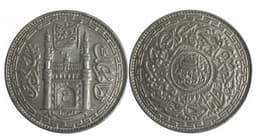
Mir Ahmed Ali Khan
Emperor · Modern
48.5Total
Basic Information
Born
1722
1857
Died
1772
1869
Era
Modern
Modern
Nationality
Afghanistan
India
Occupation
Emperor
Emperor
Civilization
Middle Eastern
Indian
Score Comparison
Military (10%)
82.0
20.0
Political (20%)
59.3
68.0
Influence (20%)
55.0
51.0
Legacy (20%)
55.0
40.0
Leadership (15%)
72.0
64.0
Strategy (15%)
68.1
39.6
TOTAL
62.2
48.5
Ahmed Shah Abdali — Complete Timeline
1747 AD
Founding of the Durrani EmpirePolitical Action
After the assassination of Nadir Shah, Abdali was elected as the leader of the Abdali Pashtuns at a loya jirga in Kandahar. He founded the Durrani Empire, uniting Pashtun tribes and establishing the modern state of Afghanistan.
FoundingEmpirePashtun Unity
Impact: regionalconstructive
Consolidation of Pashtun RulePolitical Action◆ Major
Abdali established the Durrani dynasty and consolidated Pashtun rule over Kandahar, Herat, and Kabul. He implemented a centralized administration and expanded the empire's borders to include parts of modern-day Pakistan, Iran, and Uzbekistan.
ConsolidationEmpire BuildingAdministration
Impact: regionalconstructive
1748 AD
Invasions of IndiaWar◆ Major
Abdali launched multiple invasions of India between 1748 and 1767, plundering Delhi, Mathura, and other cities. These campaigns brought immense wealth to the Durrani Empire but also caused widespread destruction and depopulation.
InvasionsPlunderMughal Decline
Impact: regionaldestructive
1761 AD
Battle of Panipat (1761)War◆ Major
Abdali led Afghan forces to a decisive victory over the Maratha Empire at the Third Battle of Panipat. The battle shattered Maratha power in northern India and established Afghan dominance in the region for decades.
BattleMaratha EmpireIndian Subcontinent
Impact: regional
Mir Ahmed Ali Khan — Complete Timeline
1869 AD
Accession as Nizam of HyderabadPolitical Action◆ Major
Mir Ahmed Ali Khan became the 6th Nizam of Hyderabad at a young age after his father's death. His reign was short and marked by regency.
SuccessionRegency
Impact: regional
Death from IllnessOther◆ Major
Mir Ahmed Ali Khan died from an illness after ruling for only a few months. His death led to his uncle, Mir Mahbub Ali Khan, becoming the next Nizam.
DeathShort Reign
Impact: regionaltragic
This comparison has not been analyzed yet.
One-time AI generation (~1 minute). Scores and timeline are already available below.
Rankings
🥇
Ahmed Shah AbdaliLeader
Mil: 82.0Pol: 59.3Inf: 55.0
62.2
🥈
Mir Ahmed Ali Khan
Mil: 20.0Pol: 68.0Inf: 51.0
48.5
+13.7 behind
How This Comparison Works
Algorithm
Each figure is scored on 6 dimensions (0—100 scale) based on structured historical data: Military (10%), Political (20%), Influence (20%), Legacy (20%), Leadership (15%), Strategy (15%). The weighted total produces the final ranking.
Data Sources
Scores are computed from structured sub-indicators in the database. Scale factors adjust for era (Ancient ×0.85, Modern ×1.0) and civilization size (Eastern ×1.05, Other ×0.80) to account for differences in population and military scale.
Maximum 3 Figures
Comparisons are limited to 2—3 figures to ensure readability and statistical meaningfulness.
Error Margins
±5 points per dimension — Sub-scores are derived from historical records with inherent uncertainty. Two figures within 5 points on a dimension should be considered roughly equivalent in that area.
Total Score Accuracy
±3 points overall — The weighted combination of 6 dimensions produces a total score with approximately ±3 points of uncertainty. Differences of less than 3 points are not statistically significant— the figures are effectively tied.
Known Limitations
- Historical records are incomplete and uneven across civilizations
- Figures from oral-tradition societies may be underrepresented
- Occupation labels can misclassify multi-role figures
- Scores measure capability and impact, not moral character
- Quantitative scoring is a comparison tool, not absolute truth
Capability Radar
Military (10%) — Battles & Warfare
Battles
85
5
Win Rate
90
5
Expansion
85
5
Political (20%) — Governance & Reform
Reform
65
50
Diplomacy
70
45
Economy
60
40
Influence (20%) — Cultural & Global Reach
Cultural
70
30
Global
60
15
Legacy (20%) — Historical Impact
Historical
75
30
Longevity
65
20
Leadership (15%) — Power & Stability
Tenure
70
40
Stability
55
35
Strategy (15%) — Tactics & Innovation
Strategy
85
10
Tactics
80
10
Reform
75
20
Similar Comparisons
Comments & Discussion
No comments yet. Be the first to share your thoughts!