Loading...
Mir Ahmed Ali Khan vs Napoleon Bonaparte
Napoleon Bonaparte leads by 22.4 pts · 2 figures compared
…
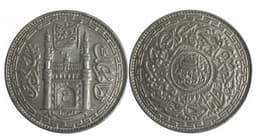
Mir Ahmed Ali Khan
Emperor · Modern
48.5Total

Napoleon Bonaparte
General · Modern
70.9Total
Basic Information
Born
1857
1769
Died
1869
1821
Era
Modern
Modern
Nationality
India
France
Occupation
Emperor
General
Civilization
Indian
Western
Score Comparison
Military (10%)
20.0
94.0
Political (20%)
68.0
72.0
Influence (20%)
51.0
40.0
Legacy (20%)
40.0
80.0
Leadership (15%)
64.0
78.0
Strategy (15%)
39.6
90.0
TOTAL
48.5
70.9
Mir Ahmed Ali Khan — Complete Timeline
1869 AD
Accession as Nizam of HyderabadPolitical Action◆ Major
Mir Ahmed Ali Khan became the 6th Nizam of Hyderabad at a young age after his father's death. His reign was short and marked by regency.
SuccessionRegency
Impact: regional
Death from IllnessOther◆ Major
Mir Ahmed Ali Khan died from an illness after ruling for only a few months. His death led to his uncle, Mir Mahbub Ali Khan, becoming the next Nizam.
DeathShort Reign
Impact: regionaltragic
Napoleon Bonaparte — Complete Timeline
1799 AD
Coup of 18 BrumaireOther◆ Major
Napoleon Bonaparte, with support from his brother Lucien and key political figures, overthrew the Directory in a bloodless coup. He established the Consulate with himself as First Consul, effectively becoming the ruler of France. This event ended the French Revolution's most unstable period.
French RevolutionCoupRise to Power
Impact: regional
1804 AD
Promulgation of the Napoleonic CodeOther◆ Major
Napoleon enacted the Civil Code of the French, known as the Napoleonic Code, a comprehensive set of laws that replaced the fragmented feudal legal systems. The code established legal equality, protected property rights, and secularized law. It became the basis for legal systems in many European and world countries.
Legal ReformNapoleonic CodeCivil Law
Impact: globalconstructive
1805 AD
Battle of AusterlitzWar◆ Major
Napoleon's Grande Arm
Napoleonic WarsBattleDecisive Victory
Impact: global
1812 AD
Invasion of RussiaWar◆ Major
Napoleon led the Grande Arm
Napoleonic WarsInvasionDisaster
Impact: globaldestructive
1815 AD
Battle of WaterlooWar◆ Major
Napoleon's French army was defeated by the combined forces of the Duke of Wellington's Anglo-Allied army and Gebhard Leberecht von Bl
Napoleonic WarsBattleFinal Defeat
Impact: globaldestructive
Expert Analysis
mir-ahmed-ali-khan-vs-napoleon-bonaparte
# The Emperor and the Prince: Two Fates in an Age of Upheaval
On a June morning in 1815, Napoleon Bonaparte watched from a ridge as his Imperial Guard marched into the muzzles of British cannon at Waterloo. The sun had dried the mud, the Prussians were arriving, and the man who had crowned himself Emperor of Europe was about to lose everything. Half a century later and thousands of miles away, a twelve-year-old boy named Mir Ahmed Ali Khan ascended the throne of Hyderabad, one of the wealthiest princely states in India, only to die of illness within months. One man shook the world and was consumed by it. The other barely had time to leave a footprint. What drove such different trajectories? The answer lies not merely in talent, but in the currents of history that lifted one and swallowed the other.
Origins
Napoleon was born in 1769 on the island of Corsica, a place that had only recently become French. His family was minor nobility, poor enough to feel the sting of status without its comforts. He entered a world where the old order was cracking—the French Revolution would erupt when he was twenty, sweeping away kings and opening paths for ambitious men of modest birth. Corsica taught him that power was a prize to be seized, not inherited.
Mir Ahmed Ali Khan was born in 1857, the year of the Great Rebellion that shook British rule in India. He was the heir to the Nizam of Hyderabad, a dynasty that had ruled for over a century under the shadow of the British East India Company. His world was one of careful deference, where sovereignty meant managing an occupying power rather than defying it. While Napoleon learned to storm barricades, the young Nizam learned to navigate protocols.
Rise to Power
Napoleon’s ascent was a masterpiece of timing and nerve. By 1793, at age twenty-four, he had driven the British out of Toulon. By 1796, he commanded the Army of Italy and turned a ragged force into a conquering machine. He did not inherit power—he took it, first as First Consul in 1799, then as Emperor in 1804. Each step was a gamble, each victory a referendum on his genius.
Mir Ahmed Ali Khan’s path was quieter. His father, the Nizam, died in 1869, and the twelve-year-old prince became ruler by succession, not conquest. The British Resident in Hyderabad oversaw his education and his treasury. His rise was a ceremony, not a campaign. Where Napoleon had to prove himself against armies, the young Nizam had only to survive long enough to learn his role.
Leadership & Governance
Napoleon ruled with a combination of iron discipline and revolutionary energy. He reformed French law with the Napoleonic Code, standardizing justice across a fractured nation. He built roads, schools, and a centralized bureaucracy. His military genius—scoring 94 in strategy—was matched by a political mind that understood propaganda, patronage, and the power of spectacle. He governed through constant motion, always campaigning, always reforming.
Mir Ahmed Ali Khan’s reign was too short to govern in any meaningful sense. He ascended in 1869 and died the same year. His score of 80.5 in leadership suggests potential—perhaps a natural dignity or intelligence—but he never had the chance to exercise it. The British had already restructured Hyderabad after 1857, reducing the Nizam’s military power and fiscal independence. His role was to sign papers, not to shape policy.
Triumph & Tragedy
Napoleon’s greatest triumph was the Battle of Austerlitz in 1805, where he destroyed a combined Russian and Austrian army and crowned himself master of Central Europe. His greatest tragedy was the invasion of Russia in 1812—a hubristic gamble that cost half a million men and shattered his aura of invincibility. Waterloo was the final act, but the seeds of his fall were sown in the snows of Moscow.
Mir Ahmed Ali Khan’s triumph was simply his accession—a moment of hope for Hyderabad’s nobility, who saw in the young prince a chance to revive the dynasty’s prestige. His tragedy was his death from illness in 1869, after only a few months of rule. He was buried before he could govern, his potential extinguished by a fever. The contrast is stark: Napoleon’s tragedy was the consequence of his ambition; the Nizam’s was the cruelty of fate.
Character & Destiny
Napoleon was driven by an insatiable hunger for glory. “Impossible is a word to be found only in the dictionary of fools,” he once said. His personality—restless, calculating, charismatic—shaped every decision. He trusted no one completely, demanded total loyalty, and believed that history was a ledger of great men’s deeds. That belief made him great; it also made him blind to his limits.
Mir Ahmed Ali Khan, by contrast, remains a cipher. We know little of his personality, only that he was young, probably intelligent, and died before he could reveal himself. His destiny was not of his making. He was born into a world where a dozen-year-old boy could be a king, but where real power lay in London and Calcutta. His character, whatever it was, never had the chance to shape events.
Legacy
Napoleon’s legacy is immense. The Napoleonic Code influenced legal systems across Europe and beyond. His campaigns redefined warfare. His rise and fall became the template for the modern dictator. He is remembered as both a liberator and a tyrant, a genius and a warmonger. His score of 82.4 overall reflects a figure who still divides opinion two centuries later.
Mir Ahmed Ali Khan left almost no legacy. His uncle, Mir Mahbub Ali Khan, succeeded him and ruled for decades, leaving a deeper mark on Hyderabad. The young Nizam is a footnote, remembered only by specialists. His score of 60.3 is not a judgment of his abilities but a measure of his obscurity. He is a reminder that history does not remember those who never acted.
Conclusion
Standing at Waterloo, Napoleon could look back on a life that had remade the world. The young Nizam, buried before his beard grew, never had that chance. But their stories are not simply about greatness versus obscurity. They are about how history opens doors for some and closes them for others. Napoleon was born into revolution, an age that rewarded audacity. Mir Ahmed Ali Khan was born into empire, an age that rewarded compliance. One seized his moment; the other never had one. In the end, both were defeated—one by his own ambition, the other by a fever. The difference is that Napoleon’s defeat was spectacular, while the Nizam’s was silent. And history, as always, prefers noise.
Rankings
🥇
Napoleon BonaparteLeader
Mil: 94.0Pol: 72.0Inf: 40.0
70.9
🥈
Mir Ahmed Ali Khan
Mil: 20.0Pol: 68.0Inf: 51.0
48.5
+22.4 behind
How This Comparison Works
Algorithm
Each figure is scored on 6 dimensions (0—100 scale) based on structured historical data: Military (10%), Political (20%), Influence (20%), Legacy (20%), Leadership (15%), Strategy (15%). The weighted total produces the final ranking.
Data Sources
Scores are computed from structured sub-indicators in the database. Scale factors adjust for era (Ancient ×0.85, Modern ×1.0) and civilization size (Eastern ×1.05, Other ×0.80) to account for differences in population and military scale.
Maximum 3 Figures
Comparisons are limited to 2—3 figures to ensure readability and statistical meaningfulness.
Error Margins
±5 points per dimension — Sub-scores are derived from historical records with inherent uncertainty. Two figures within 5 points on a dimension should be considered roughly equivalent in that area.
Total Score Accuracy
±3 points overall — The weighted combination of 6 dimensions produces a total score with approximately ±3 points of uncertainty. Differences of less than 3 points are not statistically significant— the figures are effectively tied.
Known Limitations
- Historical records are incomplete and uneven across civilizations
- Figures from oral-tradition societies may be underrepresented
- Occupation labels can misclassify multi-role figures
- Scores measure capability and impact, not moral character
- Quantitative scoring is a comparison tool, not absolute truth
Capability Radar
Military (10%) — Battles & Warfare
Battles
5
95
Win Rate
5
90
Expansion
5
95
Political (20%) — Governance & Reform
Reform
50
95
Diplomacy
45
80
Economy
40
85
Influence (20%) — Cultural & Global Reach
Cultural
30
85
Global
15
90
Legacy (20%) — Historical Impact
Historical
30
95
Longevity
20
90
Leadership (15%) — Power & Stability
Tenure
40
85
Stability
35
70
Strategy (15%) — Tactics & Innovation
Strategy
10
95
Tactics
10
98
Reform
20
92
Similar Comparisons
Comments & Discussion
CampaignLogician6/17/2026
Military historians love their "great man" theory, but let's be real: comparing a 12-year-old prince who died of fever to Napoleon is like debating whether a candle flicker matches a volcano. Waterloo wasn't lost by some childhood ailment—Bonaparte faced 72,000 Prussians arriving mid-battle after outmaneuvering the Allies for years. The kid never even lit a match; he's a historical footnote, not a peer. This matchup makes me rank, not rank-and-file.
数据侦探6/17/2026
数据不撒谎,但这场对比纯属闹剧。拿破仑打了60多场战役,管理过帝国,死时51岁;这位王子活了12年,在位时间比一包牛奶的保质期还短。拿出生年份(1857年,印度起义)硬扯历史语境,不过是堆砌背景掩盖零成就。比才华?比的是一生战绩 vs. 一个连本能留下痕迹的男孩。这不是分析,是数字暴力——空对空,无意义。
历史迷6/17/2026
听着,我不是贬低这位小王子,但拿破仑的名字是历史的雷鸣,而这位王子连回声都算不上。别忽略具体事实:拿破仑在滑铁卢的失败是因为格鲁希元帅的犹豫而非他本人无能,而这位12岁少年只在1857年动荡中短暂统治,连一个政策都没传下来。拿印度起义背景当深度?那只是装饰。历史不是平权运动——某些人根本不该上台比较。
Historian5396/17/2026
This comparison screams orientalist framing—pitting a "failed" Indian prince against a European "genius" to reinforce a narrative of Western superiority. But let's ground it: Napoleon's rise relied on the vacuum of a revolution; Mir Ahmed Ali Khan's death at 12 was a personal tragedy, not a weakness of his line. The analysis glosses over colonialism's chokehold—British guns shaped Hyderabad more than any prince could. Real comparison? Talk systems, not just men.
Chronicler58086/17/2026
From Plutarch to now, we compare lives for moral lessons, not equal billing. Napoleon conjured an empire from Corsican poverty—think Austerlitz, 1805, where he crushed a Russo-Austrian army with 73,000 men against 85,000. Mir Ahmed Ali Khan inherited Hyderabad's treasury but ruled weeks; he's a symbol of British puppet fragility. The lesson here? Ambition ignites change, but birthright without time fizzles. One blazed a path; the other stumbled on a stage too big.