Loading...
Ahmed Vefik Pasha vs Ricardo Lagos
Ricardo Lagos leads by 1.3 pts · 2 figures compared
…
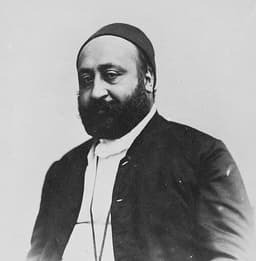
Ahmed Vefik Pasha
Politician · Modern
47.0Total
Ricardo Lagos
Politician · Modern
48.3Total
Basic Information
Born
1823
1938
Died
1891
—
Era
Modern
Modern
Nationality
Ottoman Empire
Chile
Occupation
Politician
Politician
Civilization
Middle Eastern
Western
Score Comparison
Military (10%)
47.1
13.0
Political (20%)
43.7
45.0
Influence (20%)
55.7
56.4
Legacy (20%)
42.5
45.8
Leadership (15%)
45.0
72.0
Strategy (15%)
44.6
38.6
TOTAL
47.0
48.3
Ahmed Vefik Pasha — Complete Timeline
1863 AD
Served as Governor of BursaPolitical Action
As governor of Bursa, Ahmed Vefik Pasha implemented modernization projects including road construction, public buildings, and educational reforms. He also established the first theater in Bursa and promoted cultural activities.
GovernorModernizationBursa
constructive
1870 AD
Translated Molière's Works into TurkishCultural◆ Major
Ahmed Vefik Pasha translated several plays by Moli
TranslationTheaterCultural Exchange
Impact: nationalconstructive
1876 AD
Published the First Turkish DictionaryCultural◆ Major
Ahmed Vefik Pasha compiled and published 'Lehce-i Osmani', a comprehensive dictionary of Ottoman Turkish. This work standardized Turkish vocabulary and grammar, becoming a foundational text for modern Turkish linguistics.
DictionaryLanguageScholarship
Impact: nationalconstructive
1878 AD
Appointed Grand VizierPolitical Action◆ Major
Ahmed Vefik Pasha served as Grand Vizier for a brief period in 1878 during the aftermath of the Russo-Turkish War. His tenure lasted only a few months as he was unable to stabilize the empire's finances or secure peace terms.
Grand VizierRusso-Turkish War
Impact: national
Ricardo Lagos — Complete Timeline
1990 AD
Appointed as Minister of EducationPolitical Action
Lagos served as Minister of Education under President Patricio Aylwin from 1990 to 1992. He oversaw the expansion of the school system and the implementation of educational reforms following the return to democracy in Chile.
EducationMinistryChile
Impact: nationalconstructive
2000 AD
Elected President of ChilePolitical Action◆ Major
Ricardo Lagos won the 1999-2000 presidential election as the candidate of the Concertaci
Chilean PresidencyConcertaciónDemocracy
Impact: nationalconstructive
2002 AD
Implemented the AUGE Health PlanReform◆ Major
Lagos launched the Universal Access with Explicit Guarantees (AUGE) health reform in 2002, which guaranteed timely access to treatment for a list of priority diseases. The plan expanded healthcare coverage and reduced waiting times for patients in Chile.
Healthcare ReformSocial PolicyChile
Impact: nationalprogressive
2003 AD
Signed the Chile-United States Free Trade AgreementPolitical Action◆ Major
Lagos signed the U.S.-Chile Free Trade Agreement on June 6, 2003, which was ratified by both countries and entered into force on January 1, 2004. The agreement eliminated tariffs and strengthened economic ties between Chile and the United States.
Free TradeEconomic PolicyInternational Relations
Impact: regionalconstructive
2005 AD
Presided over the Commission on the Social Determinants of HealthPolitical Action
After his presidency, Lagos was appointed by the World Health Organization to chair the Commission on the Social Determinants of Health from 2005 to 2008. The commission produced a report linking health outcomes to social and economic factors.
Global HealthWHOSocial Policy
Impact: globalconstructive
Expert Analysis
Origins
Ahmed Vefik Pasha was born in 1823 in Constantinople to a family of diplomats; his father was a high-ranking official. He studied in Paris and Vienna, gaining fluency in French and German, and served as a translator for the Ottoman government. His early career included diplomatic posts in Europe, which shaped his reformist views.
Ricardo Lagos was born in 1938 in Santiago, Chile, into a middle-class family. He studied law at the University of Chile and later earned a PhD in economics from Duke University. His father was a farmer, and his mother a teacher. Lagos became a professor and a member of the Socialist Party, involved in opposition to the Pinochet regime.
Rise to Power
Ahmed Vefik Pasha rose through diplomatic service, serving as ambassador to France and Iran. His key turning point came in 1878 when he was appointed Grand Vizier during the turbulent aftermath of the Russo-Turkish War. However, his tenure lasted only a few months, as he was dismissed due to political infighting and opposition from conservative factions.
Ricardo Lagos rose to prominence as a leading figure in the Concertación coalition after the end of Pinochet's dictatorship. He served as Minister of Education (1990-1992) and Minister of Public Works (1998-1999), where he oversaw infrastructure projects. He won the presidency in 2000, defeating Joaquín Lavín in a runoff election.
Leadership & Governance
Ahmed Vefik Pasha, as governor of Bursa, implemented modernization projects including road construction, public buildings, and educational reforms. He also commissioned the first Turkish dictionary, 'Lehce-i Osmani', to standardize the language. However, his brief term as Grand Vizier limited his impact at the national level. His leadership score of 45.0 reflects his constrained authority.
Ricardo Lagos governed Chile from 2000 to 2006, focusing on social and economic reforms. He signed the U.S.-Chile Free Trade Agreement in 2003, boosting trade, and implemented the AUGE health plan, guaranteeing access to treatment for specific diseases. His leadership score of 72.0 is significantly higher than Pasha's, indicating effective governance.
Triumph & Tragedy
Ahmed Vefik Pasha's greatest success was his cultural contribution: translating Molière's plays into Turkish, introducing Western theater, and publishing the first Turkish dictionary. His failures include his short-lived grand vizierate (only a few months) and inability to implement lasting political reforms. He scored 42.5 on Legacy.
Ricardo Lagos's triumphs include the free trade agreement and health reform, which improved living standards. His tragedy was the failure to fully address inequality; his political score of 45.0 reflects moderate political maneuvering. He scored 45.8 on Legacy, slightly higher than Pasha.
Character & Destiny
Ahmed Vefik Pasha was a scholar and reformer, but his character—intellectual and uncompromising—led to conflicts with conservative elites. His destiny was to be a transitional figure, remembered more for his cultural works than political achievements.
Ricardo Lagos was a pragmatic socialist, willing to work within the Concertación coalition. His character—diplomatic and determined—allowed him to pass significant reforms. His destiny was to be a successful president who stabilized Chile's democracy.
Legacy
Ahmed Vefik Pasha's legacy endures in Turkish language and literature; his dictionary influenced modern Turkish, and his translations remain studied. He scored 55.7 on Influence, reflecting his cultural impact.
Ricardo Lagos's legacy includes the free trade agreement and AUGE plan, which shaped Chile's economy and healthcare. His influence score of 56.4 is slightly higher than Pasha's, and his leadership score of 72.0 far exceeds Pasha's 45.0.
Conclusion
While Ahmed Vefik Pasha made notable cultural contributions, Ricardo Lagos had greater impact through tangible governance reforms that improved millions of lives. Lagos's total score of 48.3 edges out Pasha's 47.0, and his leadership score of 72.0 versus Pasha's 45.0 confirms his superior effectiveness. Lagos's policies—free trade and health reform—directly enhanced Chile's development, whereas Pasha's political influence was fleeting. Therefore, Ricardo Lagos emerges as the more impactful figure.
Rankings
🥇
Ricardo LagosLeader
Mil: 13.0Pol: 45.0Inf: 56.4
48.3
🥈
Ahmed Vefik Pasha
Mil: 47.1Pol: 43.7Inf: 55.7
47.0
+1.3 behind
How This Comparison Works
Algorithm
Each figure is scored on 6 dimensions (0—100 scale) based on structured historical data: Military (10%), Political (20%), Influence (20%), Legacy (20%), Leadership (15%), Strategy (15%). The weighted total produces the final ranking.
Data Sources
Scores are computed from structured sub-indicators in the database. Scale factors adjust for era (Ancient ×0.85, Modern ×1.0) and civilization size (Eastern ×1.05, Other ×0.80) to account for differences in population and military scale.
Maximum 3 Figures
Comparisons are limited to 2—3 figures to ensure readability and statistical meaningfulness.
Error Margins
±5 points per dimension — Sub-scores are derived from historical records with inherent uncertainty. Two figures within 5 points on a dimension should be considered roughly equivalent in that area.
Total Score Accuracy
±3 points overall — The weighted combination of 6 dimensions produces a total score with approximately ±3 points of uncertainty. Differences of less than 3 points are not statistically significant— the figures are effectively tied.
Known Limitations
- Historical records are incomplete and uneven across civilizations
- Figures from oral-tradition societies may be underrepresented
- Occupation labels can misclassify multi-role figures
- Scores measure capability and impact, not moral character
- Quantitative scoring is a comparison tool, not absolute truth
Capability Radar
Military (10%) — Battles & Warfare
Battles
20
19
Win Rate
26
25
Expansion
28
27
Political (20%) — Governance & Reform
Reform
35
65
Diplomacy
40
60
Economy
30
55
Influence (20%) — Cultural & Global Reach
Cultural
45
40
Global
20
40
Legacy (20%) — Historical Impact
Historical
30
45
Longevity
25
30
Leadership (15%) — Power & Stability
Tenure
15
60
Stability
20
50
Strategy (15%) — Tactics & Innovation
Strategy
29
32
Tactics
31
35
Reform
39
38
Similar Comparisons
Comments & Discussion
No comments yet. Be the first to share your thoughts!