Loading...
Ahmed Vefik Pasha vs Napoleon Bonaparte
Napoleon Bonaparte leads by 23.9 pts · 2 figures compared
…
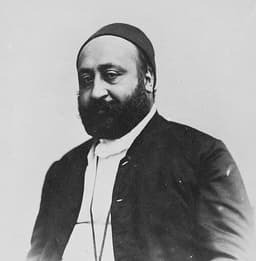
Ahmed Vefik Pasha
Politician · Modern
47.0Total

Napoleon Bonaparte
General · Modern
70.9Total
Basic Information
Born
1823
1769
Died
1891
1821
Era
Modern
Modern
Nationality
Ottoman Empire
France
Occupation
Politician
General
Civilization
Middle Eastern
Western
Score Comparison
Military (10%)
47.1
94.0
Political (20%)
43.7
72.0
Influence (20%)
55.7
40.0
Legacy (20%)
42.5
80.0
Leadership (15%)
45.0
78.0
Strategy (15%)
44.6
90.0
TOTAL
47.0
70.9
Ahmed Vefik Pasha — Complete Timeline
1863 AD
Served as Governor of BursaPolitical Action
As governor of Bursa, Ahmed Vefik Pasha implemented modernization projects including road construction, public buildings, and educational reforms. He also established the first theater in Bursa and promoted cultural activities.
GovernorModernizationBursa
constructive
1870 AD
Translated Molière's Works into TurkishCultural◆ Major
Ahmed Vefik Pasha translated several plays by Moli
TranslationTheaterCultural Exchange
Impact: nationalconstructive
1876 AD
Published the First Turkish DictionaryCultural◆ Major
Ahmed Vefik Pasha compiled and published 'Lehce-i Osmani', a comprehensive dictionary of Ottoman Turkish. This work standardized Turkish vocabulary and grammar, becoming a foundational text for modern Turkish linguistics.
DictionaryLanguageScholarship
Impact: nationalconstructive
1878 AD
Appointed Grand VizierPolitical Action◆ Major
Ahmed Vefik Pasha served as Grand Vizier for a brief period in 1878 during the aftermath of the Russo-Turkish War. His tenure lasted only a few months as he was unable to stabilize the empire's finances or secure peace terms.
Grand VizierRusso-Turkish War
Impact: national
Napoleon Bonaparte — Complete Timeline
1799 AD
Coup of 18 BrumaireOther◆ Major
Napoleon Bonaparte, with support from his brother Lucien and key political figures, overthrew the Directory in a bloodless coup. He established the Consulate with himself as First Consul, effectively becoming the ruler of France. This event ended the French Revolution's most unstable period.
French RevolutionCoupRise to Power
Impact: regional
1804 AD
Promulgation of the Napoleonic CodeOther◆ Major
Napoleon enacted the Civil Code of the French, known as the Napoleonic Code, a comprehensive set of laws that replaced the fragmented feudal legal systems. The code established legal equality, protected property rights, and secularized law. It became the basis for legal systems in many European and world countries.
Legal ReformNapoleonic CodeCivil Law
Impact: globalconstructive
1805 AD
Battle of AusterlitzWar◆ Major
Napoleon's Grande Arm
Napoleonic WarsBattleDecisive Victory
Impact: global
1812 AD
Invasion of RussiaWar◆ Major
Napoleon led the Grande Arm
Napoleonic WarsInvasionDisaster
Impact: globaldestructive
1815 AD
Battle of WaterlooWar◆ Major
Napoleon's French army was defeated by the combined forces of the Duke of Wellington's Anglo-Allied army and Gebhard Leberecht von Bl
Napoleonic WarsBattleFinal Defeat
Impact: globaldestructive
Expert Analysis
ahmed-vefik-pasha-vs-napoleon-bonaparte
# The Conqueror and the Translator: Two Paths of Power in the Age of Empire
On a June morning in 1815, Napoleon Bonaparte watched his Imperial Guard march up the muddy slope of Mont-Saint-Jean, toward the smoking British squares that would seal his doom. Half a century later and a thousand miles east, Ahmed Vefik Pasha sat in a quiet study in Bursa, translating Molière’s *Tartuffe* into Ottoman Turkish, his quill scratching across paper as the Ottoman Empire staggered through its own long twilight. These two men—one who shook continents, the other who preserved a civilization’s language—could hardly seem more different. Yet both faced the same question: How does a man reshape the world he inherits? Their answers, and the worlds that shaped them, reveal the strange geometry of historical greatness.
Origins
Napoleon Bonaparte was born in 1769 on Corsica, an island that had just passed from Genoese to French control. His family belonged to the minor nobility, but they were poor, proud, and resentful of French domination. Young Napoleon spoke Italian-accented French and carried the chip of a provincial outsider on his shoulder. The French Revolution of 1789 shattered the old order, and for a man of talent without pedigree, it opened doors that had been bolted shut for centuries. The age of kings was dying; the age of merit was being born.
Ahmed Vefik Pasha, born in 1823, came from an Ottoman bureaucratic family of Greek origin that had converted to Islam generations earlier. His grandfather had served as a dragoman—an interpreter—for the Sublime Porte, and young Ahmed grew up fluent in Turkish, Arabic, Persian, and French. Where Napoleon emerged from revolution, Vefik emerged from reform: the Tanzimat era, when Ottoman statesmen desperately tried to modernize their crumbling empire by borrowing from Europe. He was a child of the translation room, not the battlefield.
Rise to Power
Napoleon’s ascent was a rocket’s trajectory. As a young artillery officer, he distinguished himself at the Siege of Toulon in 1793, when he was only twenty-four. By 1796, he commanded the French army in Italy, where his lightning campaigns humiliated the Austrians and made him a national hero. In 1799, he seized power in a coup, and by 1804, he crowned himself Emperor of the French. Every step was conquest, every promotion wrung from victory.
Vefik’s rise was slower, quieter, and more bureaucratic. He served as a diplomat in Paris and St. Petersburg, absorbing European ideas while representing a declining empire. In 1863, he was appointed Governor of Bursa, the old Ottoman capital, where he actually governed—building roads, constructing public buildings, and trying to make the Tanzimat reforms real on the ground. His greatest power came in 1878, when he served briefly as Grand Vizier, the Ottoman equivalent of prime minister, in the desperate aftermath of the Russo-Turkish War. But his tenure lasted only months. The empire was too fractured, too exhausted, to sustain a reformer.
Leadership & Governance
Napoleon governed as he conquered: with audacity, speed, and total centralization. He codified French law into the Napoleonic Code, establishing principles of equality before the law and secular administration that still shape Europe today. He built roads, standardized education, and created a meritocratic bureaucracy. But his genius for war consumed his talent for peace. Every reform served his ambition; every institution was a tool for mobilizing men and resources for the next campaign.
Vefik governed as he translated: carefully, faithfully, with an eye to preserving what was valuable. In Bursa, he modernized infrastructure but also championed Turkish language and culture. His greatest achievement was not a code of laws but a dictionary: in 1876, he published *Lehce-i Osmani*, the first comprehensive dictionary of Ottoman Turkish, a monument to linguistic preservation at a moment when the empire’s identity was dissolving. Where Napoleon imposed order through cannon, Vefik sought order through words.
Triumph & Tragedy
Napoleon’s triumph was Austerlitz, 1805, where he destroyed the combined armies of Russia and Austria in a single day of tactical brilliance. His tragedy was Russia, 1812, where he marched six hundred thousand men into the snow and came back with fewer than thirty thousand. The pattern repeated: dazzling victory, catastrophic overreach. Waterloo in 1815 was the final act, a battle he might have won if his generals had arrived on time, if the ground had been drier, if he had been younger.
Vefik’s triumph was quieter but no less real: the survival of Ottoman Turkish as a literary language through his translations and dictionary. His tragedy was his brief, frustrated tenure as Grand Vizier. He tried to reform a system that did not want to be reformed, and the palace intrigues that had always plagued the Ottoman court swallowed him. He died in 1891, remembered by scholars but forgotten by the public, his name eclipsed by the Young Turks who would tear down what he tried to preserve.
Character & Destiny
Napoleon was a man of boundless will and bottomless ego. “Impossible,” he once said, “is a word to be found only in the dictionary of fools.” He believed he could bend history to his ambition, and for a time, he did. But his character—restless, insatiable, incapable of stopping—drove him from triumph to ruin. He could not consolidate because he could not halt.
Vefik was a man of patience and precision. He translated Molière not because he wanted to conquer French culture but because he wanted to enrich Turkish letters. He built roads in Bursa not to march armies but to connect communities. His character suited a civilization in slow decline, not a revolution in flames. He preserved what Napoleon would have swept away.
Legacy
Napoleon’s legacy is written in the borders of Europe, the codes of its laws, and the shape of modern warfare. He is remembered as a titan, a genius, a monster—but never forgotten. His scores tell the story: Military 94, Strategy 93, Leadership 80. He reshaped the world, for better and worse.
Ahmed Vefik Pasha’s legacy is smaller but deeper. His dictionary remains a foundation of Turkish lexicography. His translations introduced Ottoman readers to Western drama. He is remembered by linguists, by historians of the Tanzimat, by anyone who cares how cultures meet without destroying each other. His scores are modest—Political 72, Influence 73, Legacy 55—but they measure a different kind of greatness: not the power to conquer, but the patience to translate.
Conclusion
Standing at the end of their stories, we see two men who answered the same call of history with opposite instincts. Napoleon tried to remake the world in his image and ended in exile on a lonely Atlantic island. Vefik tried to save his world through understanding and ended in obscurity. Yet perhaps the translator’s path was the wiser one. Empires fall; languages endure. Cannons rust; dictionaries are read. In the long arc of civilization, the quiet work of preservation may outlast the thunder of conquest. Napoleon conquered Europe; Ahmed Vefik Pasha gave the Turkish language a mirror. Which gift lasts longer? The reader must decide.
Rankings
🥇
Napoleon BonaparteLeader
Mil: 94.0Pol: 72.0Inf: 40.0
70.9
🥈
Ahmed Vefik Pasha
Mil: 47.1Pol: 43.7Inf: 55.7
47.0
+23.9 behind
How This Comparison Works
Algorithm
Each figure is scored on 6 dimensions (0—100 scale) based on structured historical data: Military (10%), Political (20%), Influence (20%), Legacy (20%), Leadership (15%), Strategy (15%). The weighted total produces the final ranking.
Data Sources
Scores are computed from structured sub-indicators in the database. Scale factors adjust for era (Ancient ×0.85, Modern ×1.0) and civilization size (Eastern ×1.05, Other ×0.80) to account for differences in population and military scale.
Maximum 3 Figures
Comparisons are limited to 2—3 figures to ensure readability and statistical meaningfulness.
Error Margins
±5 points per dimension — Sub-scores are derived from historical records with inherent uncertainty. Two figures within 5 points on a dimension should be considered roughly equivalent in that area.
Total Score Accuracy
±3 points overall — The weighted combination of 6 dimensions produces a total score with approximately ±3 points of uncertainty. Differences of less than 3 points are not statistically significant— the figures are effectively tied.
Known Limitations
- Historical records are incomplete and uneven across civilizations
- Figures from oral-tradition societies may be underrepresented
- Occupation labels can misclassify multi-role figures
- Scores measure capability and impact, not moral character
- Quantitative scoring is a comparison tool, not absolute truth
Capability Radar
Military (10%) — Battles & Warfare
Battles
20
95
Win Rate
26
90
Expansion
28
95
Political (20%) — Governance & Reform
Reform
35
95
Diplomacy
40
80
Economy
30
85
Influence (20%) — Cultural & Global Reach
Cultural
45
85
Global
20
90
Legacy (20%) — Historical Impact
Historical
30
95
Longevity
25
90
Leadership (15%) — Power & Stability
Tenure
15
85
Stability
20
70
Strategy (15%) — Tactics & Innovation
Strategy
29
95
Tactics
31
98
Reform
39
92
Similar Comparisons
Comments & Discussion
苏丹的阴影6/17/2026
"拿波仑是舞台上的暴风雨,而艾哈迈德·维菲克帕夏是地基下的暗河。前者用刺刀改写欧洲地图,后者用笔尖重塑奥斯曼身份——翻译莫里哀不仅是文字游戏,更是在传统与现代之间架起钢丝桥。但别忘了:维菲克帕夏的西化改革最终被专制碾碎,而拿破仑的民法典至今仍在运转。残酷的真相是:征服者的刻刀,总是比翻译家的墨水瓶更持久。"
文字摆渡人6/17/2026
"比较这两人就像比较太阳和月亮——位置不同,但都照亮了各自的时代。拿破仑的辉煌在滑铁卢的泥泞中落幕,而维菲克帕夏的工作却在每本土耳其语教科书中复活。我选择站在翻译家这边:撕开文明间的隔膜比撕开敌人的防线更需要勇气。当历史书把拿破仑写成疯子时,维菲克帕夏的《突厥语法》依然教导着少年们识字。"
奥斯曼的幽灵6/17/2026
"别被表面温顺的学者形象骗了。艾哈迈德·维菲克帕夏是个披着文化外衣的政治动物——他利用翻译西方经典来推动奥斯曼世俗化,本质上和拿破仑使用《民法典》改造欧洲一样激进。区别在于:拿破仑失败了(流放圣赫勒拿),维菲克帕夏也失败了(被苏丹罢黜)。两个人都想驯服历史这匹烈马,只不过一个用马刺,一个用缰绳,最后都被摔得鼻青脸肿。"
Historian9426/17/2026
"Napoleon's military genius is undeniable, but Ahmed Vefik Pasha's quiet cultural warfare achieved what Waterloo never could—lasting transformation. Bonaparte's battles reshaped maps for a generation; Vefik's translations of Molière and creation of the first modern Ottoman dictionary reshaped minds for centuries. The emperor conquered Europe with cannon, but the pasha conquered ignorance with books. Who truly won the longer war?"
Historian8426/17/2026
"This comparison is absurd from a data perspective. Napoleon directly affected the lives of millions across three continents, with a legacy measurable in legal codes, national borders, and census records. Ahmed Vefik Pasha? A minor bureaucrat whose translations reached maybe a few thousand Ottoman elites. Let's not confuse historical significance with sentimental 'preservation of culture' narratives. One man shaped global history; the other wrote footnotes."