Loading...
Ahmet Davutoglu vs Tony Blair
Tony Blair leads by 2.5 pts · 2 figures compared
…
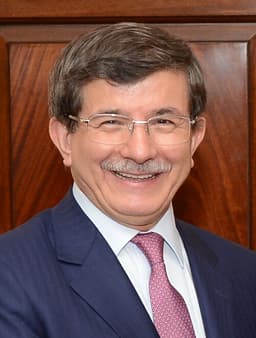
Ahmet Davutoglu
Politician · Modern
51.0Total

Tony Blair
Politician · Modern
53.5Total
Basic Information
Born
1959
1953
Died
—
—
Era
Modern
Modern
Nationality
Turkey
United Kingdom
Occupation
Politician
Politician
Civilization
Middle Eastern
Western
Score Comparison
Military (10%)
48.6
27.7
Political (20%)
61.3
55.0
Influence (20%)
55.7
65.0
Legacy (20%)
42.5
54.0
Leadership (15%)
55.3
66.0
Strategy (15%)
40.7
28.0
TOTAL
51.0
53.5
Ahmet Davutoglu — Complete Timeline
2001 AD
Published 'Strategic Depth'Cultural◆ Major
Davutoglu published 'Strategic Depth: Turkey's International Position', outlining a foreign policy doctrine based on historical and geographical depth. The book influenced Turkey's neo-Ottoman foreign policy.
Foreign PolicyNeo-OttomanismStrategy
Impact: globalconstructive
2009 AD
Appointed Minister of Foreign AffairsPolitical Action◆ Major
Davutoglu was appointed Foreign Minister under Prime Minister Erdogan. He implemented his 'zero problems with neighbors' policy, improving relations with Middle Eastern countries and engaging in peace mediation.
Foreign AffairsDiplomacyTurkey
Impact: regionalconstructive
2014 AD
Became Prime Minister of TurkeyPolitical Action◆ Major
Davutoglu became Prime Minister after Erdogan was elected President. He served until 2016, continuing AKP policies but facing tensions with Erdogan over executive power.
Prime MinisterAKPLeadership
Impact: national
2016 AD
Resigned as Prime MinisterPolitical Action◆ Major
Davutoglu resigned as Prime Minister and AKP leader after reported disagreements with President Erdogan over policy and party control. He was succeeded by Binali Yildirim.
ResignationPolitical ConflictTurkey
Impact: national
Tony Blair — Complete Timeline
1997 AD
Election as Prime MinisterPolitical Action◆ Major
Blair led the Labour Party to a landslide victory in the general election, ending 18 years of Conservative rule. He became the youngest prime minister since 1812, promising modernization and a 'Third Way' in politics.
ElectionLabour PartyThird Way
Impact: nationalconstructive
1998 AD
Good Friday AgreementPolitical Action
Blair played a key role in negotiating the Good Friday Agreement, which brought an end to the Troubles in Northern Ireland. The agreement established a power-sharing government and was approved by referendums in both Northern Ireland and the Republic of Ireland.
Northern IrelandPeace ProcessGood Friday Agreement
Impact: regionalconstructive
2003 AD
Decision to Join the Iraq WarPolitical Action◆ Major
Blair committed British forces to the US-led invasion of Iraq, based on intelligence about weapons of mass destruction. The war was controversial, and the failure to find WMDs damaged Blair's credibility, leading to accusations of misleading Parliament.
Iraq WarWMDForeign Policy
Impact: globaldestructive
Expert Analysis
Origins
Ahmet Davutoglu was born on February 26, 1959, in Taşköprü, Turkey. He studied political science and international relations at Boğaziçi University, earning a PhD in 1990. His academic career included professorships at several Turkish universities, where he developed his signature concept of "strategic depth," arguing that Turkey's historical and geographical position gave it unique influence as a central power. This intellectual foundation later became the blueprint for Turkish foreign policy.
Tony Blair was born on May 6, 1953, in Edinburgh, Scotland. He studied law at St John's College, Oxford, and became a barrister. Entering politics early, he was elected to Parliament in 1983 for the Labour Party. Blair rose through the ranks as a modernizer, advocating for moving Labour away from traditional socialist policies toward a centrist "Third Way." His charisma and communication skills propelled him to become Labour leader in 1994, at age 41.
Rise to Power
Davutoglu's rise was intellectual rather than electoral. After the 2002 AKP victory, he was appointed chief foreign policy advisor to Prime Minister Erdogan, translating his strategic depth theory into policy. His key turning point came in 2009 when he was appointed Foreign Minister, implementing the "zero problems with neighbors" policy. This improved relations with Syria, Iraq, and Iran, and elevated Turkey's regional role. In 2014, after Erdogan became president, Davutoglu assumed the prime ministership, but his authority was constrained by Erdogan's dominance.
Blair's rise was swift and electoral. In 1994, after the sudden death of Labour leader John Smith, Blair won the leadership on a platform of modernizing the party, scrapping Clause IV (commitment to public ownership). He led Labour to a landslide victory in 1997, winning 418 seats, ending 18 years of Conservative rule. At 43, he became the youngest prime minister since 1812. His early popularity was built on economic competence and social reforms, including the minimum wage and devolution for Scotland and Wales.
Leadership & Governance
Davutoglu's governance was characterized by intellectualism and foreign policy activism. He scored 55.3 in leadership, reflecting his role as a thinker-politician. Domestically, he continued AKP's conservative economic policies, but his focus remained on foreign affairs. He pursued a policy of mediation, engaging in conflicts like the Israel-Palestine issue and the Iran nuclear program. However, his "zero problems" approach collapsed with the Syrian civil war, turning neighbors into adversaries. His leadership was constrained by Erdogan's centralization of power, leading to tensions over policy direction.
Blair's leadership was dynamic and transformative, scoring 66.0 in leadership. Domestically, he implemented constitutional reforms (Human Rights Act, Freedom of Information), invested in health and education, and presided over a strong economy. Internationally, he championed humanitarian intervention, leading NATO's Kosovo campaign in 1999. However, his decision to join the US-led Iraq War in 2003, based on flawed intelligence about WMDs, severely damaged his credibility. Blair's governing style was presidential, often bypassing cabinet and party structures, which later contributed to internal dissent.
Triumph & Tragedy
Davutoglu's greatest triumph was the articulation and initial implementation of the strategic depth doctrine, which made Turkey a more assertive regional actor. His diplomacy with Iran and Syria initially expanded Turkish influence. However, his tragedy was the failure of the "zero problems" policy as the Arab Spring erupted. The Syrian civil war led to a refugee crisis and strained relations with Russia, Iran, and the West. His political downfall came in 2016 when he resigned as prime minister, unable to reconcile his vision with Erdogan's authoritarian turn.
Blair's triumph was the Good Friday Agreement in 1998, which ended decades of sectarian violence in Northern Ireland. He also achieved sustained economic growth and public service investment. His tragedy was the Iraq War, which cost thousands of lives, destabilized the Middle East, and led to accusations of deception. The war overshadowed his domestic legacy, and his reputation never recovered. The Chilcot Inquiry (2016) criticized his decision-making, citing flawed intelligence and inadequate preparation.
Character & Destiny
Davutoglu was an intellectual idealist, believing in the power of historical and cultural ties to reshape geopolitics. He scored 40.7 in strategy, reflecting a grand vision that lacked tactical flexibility. His character was shaped by academic detachment, leading to policies that underestimated the realpolitik of regional powers. His destiny was to be a transitional figure, unable to withstand the centralization of power under Erdogan, who ultimately sidelined him.
Blair was a pragmatic modernizer with strong convictions, particularly about the West's role in spreading democracy. He scored 28.0 in strategy, indicating a tendency to rely on conviction over long-term planning. His character was charismatic but controlling, and his belief in the moral case for war led him to ignore dissenting views. His destiny was to be defined by the Iraq War, despite a decade of domestic achievements. He remains a polarizing figure, admired for his electoral success but condemned for his foreign policy choices.
Legacy
Davutoglu's legacy is primarily intellectual. His strategic depth concept influenced a generation of Turkish diplomats and remains a reference point for Turkish foreign policy, even as its implementation failed. His tenure saw Turkey's shift from a reactive to a proactive foreign policy. However, his practical impact was limited by the AKP's internal power struggles. He scored 42.5 in legacy, reflecting a mixed but enduring doctrinal influence.
Blair's legacy is contested. Domestically, he transformed the Labour Party and the UK economy, creating the "New Labour" brand that dominated British politics for over a decade. The Good Friday Agreement remains a lasting peace settlement. However, the Iraq War casts a long shadow, shaping public distrust in government and influencing subsequent foreign policy caution. He scored 54.0 in legacy, indicating a significant but tainted impact.
Conclusion
Tony Blair had greater overall impact than Ahmet Davutoglu. With a total score of 53.5 to Davutoglu's 51.0, Blair's influence on global events—through the Iraq War and Northern Ireland peace process—was more consequential. While Davutoglu's strategic depth theory reshaped Turkish foreign policy discourse, its practical failures limited its effect. Blair's tenure reshaped British politics and international relations, for better or worse. His decisions had direct, measurable consequences on millions of lives, whereas Davutoglu's impact remained largely regional and theoretical. Therefore, Blair's legacy, though deeply flawed, is more significant.
Rankings
🥇
Tony BlairLeader
Mil: 27.7Pol: 55.0Inf: 65.0
53.5
🥈
Ahmet Davutoglu
Mil: 48.6Pol: 61.3Inf: 55.7
51.0
+2.5 behind
How This Comparison Works
Algorithm
Each figure is scored on 6 dimensions (0—100 scale) based on structured historical data: Military (10%), Political (20%), Influence (20%), Legacy (20%), Leadership (15%), Strategy (15%). The weighted total produces the final ranking.
Data Sources
Scores are computed from structured sub-indicators in the database. Scale factors adjust for era (Ancient ×0.85, Modern ×1.0) and civilization size (Eastern ×1.05, Other ×0.80) to account for differences in population and military scale.
Maximum 3 Figures
Comparisons are limited to 2—3 figures to ensure readability and statistical meaningfulness.
Error Margins
±5 points per dimension — Sub-scores are derived from historical records with inherent uncertainty. Two figures within 5 points on a dimension should be considered roughly equivalent in that area.
Total Score Accuracy
±3 points overall — The weighted combination of 6 dimensions produces a total score with approximately ±3 points of uncertainty. Differences of less than 3 points are not statistically significant— the figures are effectively tied.
Known Limitations
- Historical records are incomplete and uneven across civilizations
- Figures from oral-tradition societies may be underrepresented
- Occupation labels can misclassify multi-role figures
- Scores measure capability and impact, not moral character
- Quantitative scoring is a comparison tool, not absolute truth
Capability Radar
Military (10%) — Battles & Warfare
Battles
23
8
Win Rate
23
12
Expansion
28
15
Political (20%) — Governance & Reform
Reform
40
70
Diplomacy
55
60
Economy
35
55
Influence (20%) — Cultural & Global Reach
Cultural
25
55
Global
40
65
Legacy (20%) — Historical Impact
Historical
35
60
Longevity
20
45
Leadership (15%) — Power & Stability
Tenure
30
65
Stability
20
50
Strategy (15%) — Tactics & Innovation
Strategy
32
21
Tactics
35
23
Reform
35
24
Similar Comparisons
Comments & Discussion
No comments yet. Be the first to share your thoughts!