Loading...
Ahmose I vs Gelimer
Ahmose I leads by 23.2 pts · 2 figures compared
…
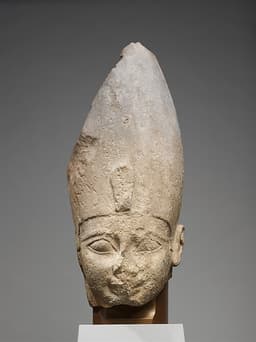
Ahmose I
Emperor · Ancient
62.2Total

Gelimer
Emperor · Ancient
39.0Total
Basic Information
Born
-1550
480
Died
-1525
553
Era
Ancient
Ancient
Nationality
Egypt
Vandals
Occupation
Emperor
Emperor
Civilization
Middle Eastern
Western
Score Comparison
Military (10%)
76.0
50.0
Political (20%)
78.0
25.0
Influence (20%)
56.7
46.3
Legacy (20%)
40.0
36.7
Leadership (15%)
78.0
38.1
Strategy (15%)
70.0
38.3
TOTAL
62.2
39.0
Ahmose I — Complete Timeline
1550 BC
Expulsion of the HyksosWar
Ahmose I, a Theban king, captured the Hyksos capital of Avaris after a siege, expelling the Hyksos from Egypt. This victory ended the Second Intermediate Period and marked the beginning of the New Kingdom, Egypt's most powerful era.
HyksosExpulsionNew Kingdom
Impact: regionalconstructive
Reunification of EgyptPolitical Action◆ Major
After expelling the Hyksos, Ahmose I reunified Egypt under Theban rule, ending the division of the Second Intermediate Period. He reestablished central authority and initiated a period of stability, prosperity, and imperial expansion.
UnificationThebesStability
Impact: nationalconstructive
1549 BC
Siege of SharuhenWar◆ Major
Ahmose I pursued the defeated Hyksos into southern Canaan and besieged the fortress of Sharuhen. After a three-year siege, the city fell, eliminating the Hyksos threat and extending Egyptian influence into the Levant.
SiegeCanaanMilitary
Impact: regional
Gelimer — Complete Timeline
530 AD
Coup against HildericPolitical Action◆ Major
Gelimer overthrew his cousin King Hilderic, accusing him of incompetence and excessive deference to the Byzantine Empire. Gelimer imprisoned Hilderic and assumed the Vandal throne, initiating a reign that would face immediate external threats.
Vandal KingdomCoupDynastic Struggle
Impact: regionaldestructive
533 AD
Battle of Ad DecimumWar
Gelimer's forces engaged the Byzantine army under Belisarius near Carthage. Despite initial success, the Vandals were defeated due to poor coordination. Gelimer fled, and Belisarius captured Carthage, effectively ending Vandal control of North Africa.
Vandal KingdomByzantine ReconquestBattle
Impact: regionaltragic
Battle of TricamarumWar
Gelimer made a final stand against Belisarius at Tricamarum, near Carthage. The Vandal army was decisively defeated, and Gelimer fled into the mountains. This battle marked the complete collapse of the Vandal Kingdom.
Vandal KingdomByzantine ReconquestBattle
Impact: regionaltragic
534 AD
Surrender and Paraded in TriumphPolitical Action◆ Major
After months of siege in a mountain fortress, Gelimer surrendered to Belisarius. He was taken to Constantinople and paraded in Belisarius's triumph, a humiliating spectacle. Gelimer was later granted estates in Galatia and lived out his life in retirement.
Vandal KingdomByzantine TriumphExile
Impact: regionaltragic
Expert Analysis
Origins
Ahmose I (c. 1560-1525 BCE) was born into the Theban royal family of the 17th Dynasty, a period when Egypt was fragmented and partially occupied by the Hyksos, a Semitic people who ruled the Nile Delta. His father, Seqenenre Tao, died in battle against the Hyksos, and his brother, Kamose, continued the war but also perished. Ahmose ascended the throne as a child, likely around age 10. He was raised in a court determined to reclaim northern Egypt.
Gelimer (c. 480-533 CE) was a member of the Hasdingi dynasty, the ruling family of the Vandal Kingdom in North Africa. The Vandals had conquered Roman Africa in 429-439 CE under King Gaiseric. Gelimer was the grandson of Gaiseric. Little is known of his early life, but he was a prince with military command experience. He overthrew his cousin King Hilderic in 530 CE, accusing him of pro-Byzantine policies and incompetence.
Rise to Power
Ahmose I became pharaoh at a young age, with his mother Ahhotep serving as regent. He continued his family's war against the Hyksos. Around his 15th regnal year, he captured the Hyksos capital of Avaris after a siege, driving the Hyksos out of Egypt. He then pursued them into southern Canaan, besieging the fortress of Sharuhen for three years until it fell. This campaign eliminated Hyksos power and secured Egypt's borders. Ahmose I then reunified Egypt under Theban rule, ending the Second Intermediate Period.
Gelimer seized power in a coup in 530 CE, imprisoning King Hilderic. Hilderic had been an ally of the Byzantine emperor Justinian I, who demanded Gelimer release him. Gelimer refused, and Justinian used this as a pretext to invade the Vandal Kingdom. In 533 CE, a Byzantine expedition under Belisarius landed in North Africa. Gelimer's forces were caught unprepared. At the Battle of Ad Decimum (September 13, 533), Gelimer's army initially drove back the Byzantine vanguard, but poor coordination led to a rout. Gelimer fled, and Carthage fell to the Byzantines. At the Battle of Tricamarum (December 533), Gelimer's army was decisively defeated. Gelimer fled into the mountains, where he held out for months before surrendering.
Leadership & Governance
Ahmose I's leadership score of 78.0 reflects his effective governance. After expelling the Hyksos, he reestablished centralized administration, repaired temples, and restarted building projects. He reorganized the army, introducing chariotry and bronze weapons on a large scale. He also launched campaigns into Nubia to secure Egypt's southern borders. His political score of 78.0 indicates his success in consolidating power and legitimizing his dynasty.
Gelimer's leadership score of 38.1 and political score of 25.0 are low. His coup alienated the pro-Byzantine faction and gave Justinian a pretext for war. His military strategy was flawed: he failed to prevent Belisarius's landing, and his tactical decisions at Ad Decimum were poor. He showed no ability to rally his kingdom after initial defeats. His reign lasted only three years (530-533 CE).
Triumph & Tragedy
Ahmose I's greatest success was the expulsion of the Hyksos and reunification of Egypt, which founded the New Kingdom (c. 1550-1070 BCE), a period of unprecedented wealth, power, and cultural achievement. His military score of 76.0 reflects his successful campaigns. However, his legacy score of 40.0 is modest because his achievements were overshadowed by later pharaohs like Thutmose III. His tragedy: he died relatively young, probably in his 30s, after a reign of about 25 years. Some of his building projects were modest compared to later New Kingdom pharaohs.
Gelimer's greatest success was overthrowing Hilderic and briefly ruling the Vandal Kingdom. But his reign was a disaster. His failure to defend the kingdom led to its destruction. The Vandal kingdom was annexed by Byzantium, and Gelimer was paraded in Belisarius's triumph in Constantinople (534 CE). His influence score of 46.3 is inflated by his role as the last Vandal king. His legacy score of 36.7 is low; he is remembered as a failed ruler.
Character & Destiny
Ahmose I was determined and persistent. He continued his family's war from a young age, showing strategic patience (three-year siege of Sharuhen). He was also a consolidator, focusing on rebuilding Egypt after the war. His character shaped his destiny: he died young but succeeded in his main goal.
Gelimer was impulsive and short-sighted. His coup was a gamble, and he failed to prepare for Byzantine retaliation. He showed poor strategic judgment and an inability to coordinate his forces. His character led to the swift collapse of his kingdom. Historical assessments view him as a weak ruler who hastened the end of Vandal Africa.
Legacy
Ahmose I's legacy is foundational. He established the 18th Dynasty, which included pharaohs like Hatshepsut, Akhenaten, and Tutankhamun. The New Kingdom became the most powerful period in ancient Egyptian history. His military innovations influenced later Egyptian armies. He is remembered as a unifier and liberator. In contrast, Gelimer's legacy is that of a failed king who lost a kingdom. The Vandal kingdom disappeared, and North Africa became a Byzantine province. Gelimer is a footnote in history, a cautionary tale of poor leadership. His total score of 39.0 reflects his limited impact.
Conclusion
Ahmose I had a far greater impact than Gelimer. His military (76.0 vs 50.0), political (78.0 vs 25.0), and leadership (78.0 vs 38.1) scores are significantly higher. Ahmose I founded a dynasty that shaped the ancient world for centuries. Gelimer's reign was brief and destructive. The 23.2-point gap in total scores (62.2 vs 39.0) reflects this disparity. Ahmose I changed history by restoring Egyptian independence and ushering in an era of empire. Gelimer failed to maintain his kingdom and contributed to its extinction. Ahmose I's impact was positive and enduring; Gelimer's was negative and fleeting.
Rankings
🥇
Ahmose ILeader
Mil: 76.0Pol: 78.0Inf: 56.7
62.2
🥈
Gelimer
Mil: 50.0Pol: 25.0Inf: 46.3
39.0
+23.2 behind
How This Comparison Works
Algorithm
Each figure is scored on 6 dimensions (0—100 scale) based on structured historical data: Military (10%), Political (20%), Influence (20%), Legacy (20%), Leadership (15%), Strategy (15%). The weighted total produces the final ranking.
Data Sources
Scores are computed from structured sub-indicators in the database. Scale factors adjust for era (Ancient ×0.85, Modern ×1.0) and civilization size (Eastern ×1.05, Other ×0.80) to account for differences in population and military scale.
Maximum 3 Figures
Comparisons are limited to 2—3 figures to ensure readability and statistical meaningfulness.
Error Margins
±5 points per dimension — Sub-scores are derived from historical records with inherent uncertainty. Two figures within 5 points on a dimension should be considered roughly equivalent in that area.
Total Score Accuracy
±3 points overall — The weighted combination of 6 dimensions produces a total score with approximately ±3 points of uncertainty. Differences of less than 3 points are not statistically significant— the figures are effectively tied.
Known Limitations
- Historical records are incomplete and uneven across civilizations
- Figures from oral-tradition societies may be underrepresented
- Occupation labels can misclassify multi-role figures
- Scores measure capability and impact, not moral character
- Quantitative scoring is a comparison tool, not absolute truth
Capability Radar
Military (10%) — Battles & Warfare
Battles
75
25
Win Rate
80
20
Expansion
75
10
Political (20%) — Governance & Reform
Reform
85
15
Diplomacy
75
20
Economy
70
20
Influence (20%) — Cultural & Global Reach
Cultural
70
20
Global
75
15
Legacy (20%) — Historical Impact
Historical
85
25
Longevity
80
15
Leadership (15%) — Power & Stability
Tenure
70
30
Stability
75
15
Strategy (15%) — Tactics & Innovation
Strategy
85
25
Tactics
70
30
Reform
80
10
Similar Comparisons
Comments & Discussion
No comments yet. Be the first to share your thoughts!