Loading...
Ahmose I vs Attalus II of Pergamon
Ahmose I leads by 10.4 pts · 2 figures compared
…
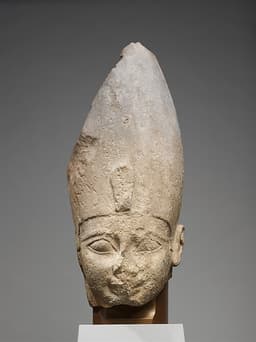
Ahmose I
Emperor · Ancient
62.2Total

Attalus II of Pergamon
Emperor · Ancient
51.8Total
Basic Information
Born
-1550
-220
Died
-1525
-138
Era
Ancient
Ancient
Nationality
Egypt
Pergamon
Occupation
Emperor
Emperor
Civilization
Middle Eastern
Western
Score Comparison
Military (10%)
76.0
50.0
Political (20%)
78.0
68.0
Influence (20%)
56.7
52.5
Legacy (20%)
40.0
45.8
Leadership (15%)
78.0
40.0
Strategy (15%)
70.0
60.0
TOTAL
62.2
51.8
Ahmose I — Complete Timeline
1550 BC
Expulsion of the HyksosWar
Ahmose I, a Theban king, captured the Hyksos capital of Avaris after a siege, expelling the Hyksos from Egypt. This victory ended the Second Intermediate Period and marked the beginning of the New Kingdom, Egypt's most powerful era.
HyksosExpulsionNew Kingdom
Impact: regionalconstructive
Reunification of EgyptPolitical Action◆ Major
After expelling the Hyksos, Ahmose I reunified Egypt under Theban rule, ending the division of the Second Intermediate Period. He reestablished central authority and initiated a period of stability, prosperity, and imperial expansion.
UnificationThebesStability
Impact: nationalconstructive
1549 BC
Siege of SharuhenWar◆ Major
Ahmose I pursued the defeated Hyksos into southern Canaan and besieged the fortress of Sharuhen. After a three-year siege, the city fell, eliminating the Hyksos threat and extending Egyptian influence into the Levant.
SiegeCanaanMilitary
Impact: regional
Attalus II of Pergamon — Complete Timeline
160 BC
Diplomatic mission to RomePolitical Action
Attalus II traveled to Rome to secure continued Roman support against threats from Bithynia and the Seleucids. His diplomacy reinforced the alliance and ensured Pergamon's autonomy under Roman hegemony.
DiplomacyRoman Alliance
Impact: regionalconstructive
156 BC
Defense of Pergamon against Prusias IIWar◆ Major
Attalus II successfully defended Pergamon against an invasion by Prusias II of Bithynia, with Roman support. He repelled the attack and later negotiated a peace, maintaining Pergamon's territorial integrity.
Bithynian WarDefenseRoman Alliance
Impact: regionalconstructive
150 BC
Foundation of AttaleiaCultural
Attalus II founded the city of Attaleia (modern Antalya) on the southern coast of Asia Minor. This colony served as a naval base and trade hub, strengthening Pergamon's influence in the region.
City FoundationColonizationTrade
constructive
Expert Analysis
Origins
Ahmose I was born around 1560 BCE into the Theban royal family, the son of Seqenenre Tao and Ahhotep I. His father died fighting the Hyksos, and his brother Kamose continued the war but died young. Ahmose I ascended the throne as a child, likely around 1550 BCE, inheriting a fragmented Egypt under Hyksos rule in the north. He was raised in a court focused on liberation.
Attalus II was born around 220 BCE in Pergamon, the second son of Attalus I Soter and Apollonis. His father had established Pergamon as a major power in Asia Minor after defeating the Galatians. Attalus II was educated in Greek culture and military arts, but he was never expected to rule, as his older brother Eumenes II was heir. He served as a loyal general and diplomat under Eumenes.
Rise to Power
Ahmose I began his reign by continuing the war against the Hyksos, a Semitic people who had ruled Lower Egypt for over a century. Around 1540 BCE, he captured the Hyksos capital of Avaris after a siege, expelling them from Egypt. He then pursued them into southern Canaan, besieging the fortress of Sharuhen for three years until it fell. These victories ended the Second Intermediate Period and reunified Egypt under Theban rule. Ahmose I reestablished central administration, reopened trade routes, and restored temples.
Attalus II rose to prominence as a general under his brother Eumenes II, fighting alongside the Romans against the Seleucid king Antiochus III at the Battle of Magnesia in 190 BCE. He later served as a diplomat, traveling to Rome to secure support. When Eumenes died in 159 BCE, Attalus II became regent for Eumenes' young son, but he soon took the throne himself, ruling from 159 to 138 BCE. His rise was based on loyalty and diplomacy rather than conquest.
Leadership & Governance
Ahmose I ruled as a pharaoh with absolute authority, centralizing power in Thebes. He reorganized the army, creating a professional force with chariotry and infantry. He launched campaigns into Nubia to secure the southern border and reopened mines and quarries. His governance focused on restoring Egyptian traditions after the Hyksos occupation. He built a new capital at Thebes and commissioned construction projects, including the expansion of the Temple of Amun at Karnak.
Attalus II ruled as a Hellenistic king but was heavily dependent on Rome. He maintained the alliance with Rome by sending troops and tribute, and he avoided major wars. He founded the city of Attaleia (modern Antalya) to strengthen Pergamon's naval presence and trade. He also supported arts and culture, endowing libraries and sponsoring artists. His leadership scored 40.0, reflecting his limited autonomy and reactive policies.
Triumph & Tragedy
Ahmose I's greatest triumph was the expulsion of the Hyksos and the reunification of Egypt, which scored 76.0 in military and 78.0 in political. He founded the New Kingdom, which became the most prosperous period in Egyptian history. However, his legacy was overshadowed by later pharaohs like Thutmose III. His failure was the incomplete expulsion of Hyksos remnants, who remained in Canaan and later became the Philistines.
Attalus II's triumph was successfully defending Pergamon against Prusias II of Bithynia in 156-154 BCE, with Roman support. He also founded Attaleia, which became an important city. His tragedy was his subservience to Rome; he could not act independently, and his kingdom was ultimately bequeathed to Rome by his nephew Attalus III in 133 BCE. His political score of 68.0 reflects his diplomatic skill, but his military score of 50.0 shows his reliance on others.
Character & Destiny
Ahmose I was determined and strategic, focusing on the goal of liberation. He was aggressive in warfare but also a capable administrator. His character drove him to complete the work of his father and brother, and his destiny was to found a dynasty that lasted for centuries. Historical assessments credit him with restoring Egyptian pride and power.
Attalus II was cautious and diplomatic, preferring negotiation to battle. He was loyal to his brother and to Rome, but this loyalty limited his options. His character was shaped by the need to preserve Pergamon in a world dominated by Rome. He died in 138 BCE, having kept his kingdom stable but never truly independent.
Legacy
Ahmose I's legacy is immense: he founded the New Kingdom, which produced some of Egypt's greatest pharaohs, including Hatshepsut, Thutmose III, and Ramesses II. His military campaigns set the pattern for Egyptian imperialism in the Near East. He scored 40.0 in legacy, but his influence (56.7) is seen in every subsequent pharaoh. The New Kingdom lasted nearly 500 years.
Attalus II's legacy is more modest. His city Attaleia survives as Antalya, a major Turkish city. His diplomatic approach set a precedent for client kings under Roman rule. However, his kingdom was absorbed by Rome within a decade of his death. He scored 45.8 in legacy, but his influence (52.5) is limited to the Hellenistic period.
Conclusion
Ahmose I had a greater impact than Attalus II, as shown by his higher total score of 62.2 versus 51.8. Ahmose I transformed Egypt from a divided state into an empire that dominated the ancient Near East, while Attalus II merely preserved a small kingdom under Roman hegemony. Ahmose I's actions shaped the course of Egyptian history for centuries, whereas Attalus II's achievements were ephemeral. The data supports this: Ahmose I scored higher in military (76.0 vs 50.0), political (78.0 vs 68.0), and leadership (78.0 vs 40.0). Attalus II's only comparable score was in legacy (45.8 vs 40.0), but this reflects the survival of his city rather than his own impact. Thus, Ahmose I is the more significant historical figure.
Rankings
🥇
Ahmose ILeader
Mil: 76.0Pol: 78.0Inf: 56.7
62.2
🥈
Attalus II of Pergamon
Mil: 50.0Pol: 68.0Inf: 52.5
51.8
+10.4 behind
How This Comparison Works
Algorithm
Each figure is scored on 6 dimensions (0—100 scale) based on structured historical data: Military (10%), Political (20%), Influence (20%), Legacy (20%), Leadership (15%), Strategy (15%). The weighted total produces the final ranking.
Data Sources
Scores are computed from structured sub-indicators in the database. Scale factors adjust for era (Ancient ×0.85, Modern ×1.0) and civilization size (Eastern ×1.05, Other ×0.80) to account for differences in population and military scale.
Maximum 3 Figures
Comparisons are limited to 2—3 figures to ensure readability and statistical meaningfulness.
Error Margins
±5 points per dimension — Sub-scores are derived from historical records with inherent uncertainty. Two figures within 5 points on a dimension should be considered roughly equivalent in that area.
Total Score Accuracy
±3 points overall — The weighted combination of 6 dimensions produces a total score with approximately ±3 points of uncertainty. Differences of less than 3 points are not statistically significant— the figures are effectively tied.
Known Limitations
- Historical records are incomplete and uneven across civilizations
- Figures from oral-tradition societies may be underrepresented
- Occupation labels can misclassify multi-role figures
- Scores measure capability and impact, not moral character
- Quantitative scoring is a comparison tool, not absolute truth
Capability Radar
Military (10%) — Battles & Warfare
Battles
75
45
Win Rate
80
50
Expansion
75
35
Political (20%) — Governance & Reform
Reform
85
40
Diplomacy
75
70
Economy
70
50
Influence (20%) — Cultural & Global Reach
Cultural
70
40
Global
75
35
Legacy (20%) — Historical Impact
Historical
85
45
Longevity
80
40
Leadership (15%) — Power & Stability
Tenure
70
55
Stability
75
60
Strategy (15%) — Tactics & Innovation
Strategy
85
45
Tactics
70
40
Reform
80
30
Similar Comparisons
Comments & Discussion
No comments yet. Be the first to share your thoughts!