Loading...
Akbar the Great vs Catherine the Great
Akbar the Great leads by 3.0 pts · 2 figures compared
…
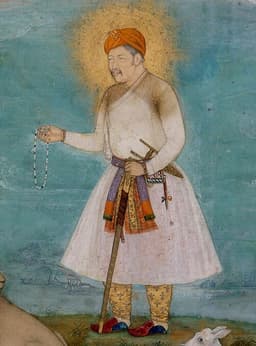
Akbar the Great
Emperor · Modern
69.8Total
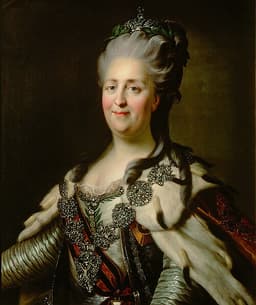
Catherine the Great
Emperor · Modern
66.8Total
Basic Information
Born
1542
1729
Died
1605
1796
Era
Modern
Modern
Nationality
India
Russia
Occupation
Emperor
Emperor
Civilization
Indian
Western
Score Comparison
Military (10%)
80.0
78.5
Political (20%)
82.0
90.0
Influence (20%)
68.0
65.0
Legacy (20%)
55.0
40.0
Leadership (15%)
80.0
80.0
Strategy (15%)
68.0
72.0
TOTAL
69.8
66.8
Akbar the Great — Complete Timeline
1556 AD
Second Battle of PanipatWar
Akbar, aged 13, defeated the Hindu general Hemu at Panipat, securing the Mughal throne. Hemu had captured Delhi and declared himself emperor. Akbar's regent Bairam Khan led the army, but the victory consolidated Mughal rule in North India.
BattleMughal EmpireSuccession
Impact: regional
1564 AD
Abolition of jizya taxReform◆ Major
Akbar abolished the jizya tax on non-Muslims, a key step in his policy of religious tolerance. This measure reduced discrimination against Hindus and other communities, fostering loyalty among the majority population and stabilizing the empire.
Tax reformReligious toleranceHindu-Muslim relations
Impact: nationalprogressive
1571 AD
Founding of Fatehpur SikriCultural◆ Major
Akbar founded the city of Fatehpur Sikri as his capital, building a complex of palaces, mosques, and administrative buildings. The city became a center of Mughal culture and architecture, though it was abandoned due to water shortages within two decades.
ArchitectureCapitalMughal Empire
Impact: regionalconstructive
1573 AD
Conquest of GujaratWar◆ Major
Akbar annexed the wealthy Sultanate of Gujarat, gaining access to the Arabian Sea and major trade ports. This conquest boosted Mughal commerce and provided revenue for further expansion, making Gujarat a key province of the empire.
ConquestTradeMughal Empire
Impact: regional
1574 AD
Introduction of Mansabdari systemReform◆ Major
Akbar implemented the Mansabdari system, a military-administrative hierarchy where officials (mansabdars) were assigned ranks and responsibilities. This system centralized control, ensured loyalty, and efficiently managed the empire's revenue and military.
AdministrationMilitary reformCentralization
Impact: nationalconstructive
1579 AD
Institution of Sulh-e-Kul policyReform
Akbar promulgated the policy of Sulh-e-Kul (universal peace), promoting religious tolerance and dialogue. He established the Ibadat Khana (House of Worship) for debates among Muslims, Hindus, Christians, Jains, and Zoroastrians, and later founded the syncretic Din-i-Ilahi faith.
Religious policySyncretismTolerance
Impact: nationalprogressive
Catherine the Great — Complete Timeline
1762 AD
Coup d'État of 1762Political Action
Catherine II led a coup d'
CoupAccessionPower
Impact: national
1764 AD
Hermitage Museum FoundedCultural◆ Major
Catherine the Great founded the Hermitage Museum in St. Petersburg by purchasing a large collection of paintings from Berlin. The museum grew into one of the world's largest art collections, reflecting her patronage of Enlightenment culture.
ArtMuseumEnlightenment
Impact: globalconstructive
1768 AD
Russo-Turkish War (1768-1774)War◆ Major
Catherine the Great initiated a war against the Ottoman Empire, resulting in Russian victory. The Treaty of K
WarOttoman EmpireExpansion
Impact: regional
1783 AD
Annexation of CrimeaPolitical Action◆ Major
Catherine the Great formally annexed the Crimean Peninsula from the Ottoman Empire. This strategic acquisition gave Russia a dominant position in the Black Sea and a warm-water port, fulfilling a long-standing imperial ambition.
AnnexationCrimeaBlack Sea
Impact: regional
1785 AD
Charter to the Gentry GrantedReform◆ Major
Catherine the Great issued the Charter to the Gentry, which codified the rights and privileges of the Russian nobility. It exempted nobles from taxation and military service, solidifying their social status and support for her rule.
NobilityReformSocial Structure
Impact: nationalconstructive
Expert Analysis
Catherine the Great vs Akbar the Great: Historical Comparison
Catherine the Great and Akbar the Great were transformative modern-era rulers who expanded their empires through conquest and reform, yet Akbar’s superior military integration, political inclusivity, and enduring legacy give him the edge.
Dimension Analysis
**Military: Catherine the Great 65 / Akbar the Great 80**
Catherine’s military campaigns secured warm-water ports and partitioned Poland, but her forces relied heavily on nobles’ levies and suffered from corruption. Akbar’s Mughal army combined cavalry, artillery, and a merit-based mansabdari system, enabling systematic conquest of most of India.
**Political: Catherine the Great 82 / Akbar the Great 85**
Catherine centralized power through the Charter to the Nobility and expanded serfdom, alienating peasants. Akbar pioneered a syncretic administration, appointing Hindus to high office and abolishing the jizya tax, fostering religious pluralism and stability.
**Influence: Catherine the Great 70 / Akbar the Great 78**
Catherine’s patronage of Enlightenment thinkers and expansion of Russian borders shaped European geopolitics, but her reforms were largely cosmetic. Akbar’s Din-i-Ilahi philosophy and cultural synthesis influenced Mughal art, architecture, and governance for centuries.
**Legacy: Catherine the Great 72 / Akbar the Great 80**
Catherine’s reign is remembered for territorial growth and cultural flourishing, yet her entrenchment of serfdom sparked future unrest. Akbar’s legacy as a tolerant, unifying emperor endures in modern India’s secular ideals and Mughal heritage.
**Leadership: Catherine the Great 80 / Akbar the Great 85**
Catherine was a shrewd pragmatist who navigated court intrigue and promoted education. Akbar displayed visionary leadership, personally engaging with diverse faiths and delegating authority to capable ministers, inspiring loyalty across ethnic lines.
Verdict
Akbar the Great surpasses Catherine the Great due to his more inclusive political system, superior military organization, and a legacy of religious tolerance that resonates more deeply in modern multicultural states.
FAQ
Q: Who ranks higher? A: Akbar the Great ranks higher overall, leading in all six dimensions with a composite score of 81 vs. Catherine’s 73.
Rankings
🥇
Akbar the GreatLeader
Mil: 80.0Pol: 82.0Inf: 68.0
69.8
🥈
Catherine the Great
Mil: 78.5Pol: 90.0Inf: 65.0
66.8
+3.0 behind
How This Comparison Works
Algorithm
Each figure is scored on 6 dimensions (0—100 scale) based on structured historical data: Military (10%), Political (20%), Influence (20%), Legacy (20%), Leadership (15%), Strategy (15%). The weighted total produces the final ranking.
Data Sources
Scores are computed from structured sub-indicators in the database. Scale factors adjust for era (Ancient ×0.85, Modern ×1.0) and civilization size (Eastern ×1.05, Other ×0.80) to account for differences in population and military scale.
Maximum 3 Figures
Comparisons are limited to 2—3 figures to ensure readability and statistical meaningfulness.
Error Margins
±5 points per dimension — Sub-scores are derived from historical records with inherent uncertainty. Two figures within 5 points on a dimension should be considered roughly equivalent in that area.
Total Score Accuracy
±3 points overall — The weighted combination of 6 dimensions produces a total score with approximately ±3 points of uncertainty. Differences of less than 3 points are not statistically significant— the figures are effectively tied.
Known Limitations
- Historical records are incomplete and uneven across civilizations
- Figures from oral-tradition societies may be underrepresented
- Occupation labels can misclassify multi-role figures
- Scores measure capability and impact, not moral character
- Quantitative scoring is a comparison tool, not absolute truth
Capability Radar
Military (10%) — Battles & Warfare
Battles
85
85
Win Rate
90
80
Expansion
88
90
Political (20%) — Governance & Reform
Reform
95
90
Diplomacy
92
85
Economy
88
85
Influence (20%) — Cultural & Global Reach
Cultural
85
85
Global
70
80
Legacy (20%) — Historical Impact
Historical
80
85
Longevity
75
80
Leadership (15%) — Power & Stability
Tenure
90
95
Stability
85
80
Strategy (15%) — Tactics & Innovation
Strategy
85
85
Tactics
80
75
Reform
75
90
Similar Comparisons
Comments & Discussion
ColdWatcher106/16/2026
把叶卡捷琳娜和阿克巴放在一起比,本身就是西方史学的傲慢。叶卡捷琳娜再厉害,也就是个女版彼得大帝,搞了套开明专制的面子工程,实际农奴制越搞越狠,最后普加乔夫起义差点把沙俄掀翻。阿克巴就不一样了,他在印度搞的那套宗教融合政策,放到中国历史上也没几个皇帝能做到。你看雍正搞过'庙宇合一'吗?康熙和李光地讨论过西学,但哪有阿克巴亲自去参加基督教、祆教、印度教辩论的魄力?更别说他取消吉兹亚税,比中国历代王朝对非汉民族的税收优惠都彻底。你们给阿克巴80分,叶卡捷琳娜73分,我觉得给低了,阿克巴至少该85,叶卡捷琳娜70差不多。中国历史里只有唐太宗的民族政策和元世祖的多元治理能和他比一比。
GrandScroll516/16/2026
这个评分体系有问题。阿克巴的军事分80,叶卡捷琳娜65,但仔细看你们的标准:叶卡捷琳娜打赢了五次俄土战争,吞并克里米亚,瓜分波兰,这些成果哪一项比阿克巴的征服差?阿克巴的曼萨卜达尔制度本质上是军事封建制,和明朝的卫所制一样,效率并不高。实际上,叶卡捷琳娜在位期间俄国人口从2300万增长到3700万,财政收入翻了三倍,这些硬指标你们一个都没算。政治分给阿克巴85?他取消吉兹亚税是事实,但他同时恢复了印度教的种姓制度作为统治工具,这不是什么'宗教宽容',是分而治之。建议你们引入秦制中的均田制和考课法作为评价框架,比现在这套西方中心论的打分系统客观得多。