Loading...
Akbar the Great vs Napoleon Bonaparte
Napoleon Bonaparte leads by 1.1 pts · 2 figures compared
…
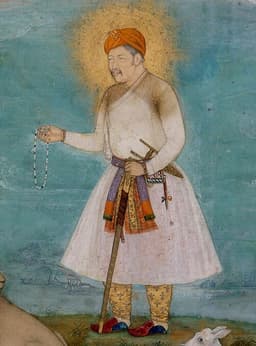
Akbar the Great
Emperor · Modern
69.8Total

Napoleon Bonaparte
General · Modern
70.9Total
Basic Information
Born
1542
1769
Died
1605
1821
Era
Modern
Modern
Nationality
India
France
Occupation
Emperor
General
Civilization
Indian
Western
Score Comparison
Military (10%)
80.0
94.0
Political (20%)
82.0
72.0
Influence (20%)
68.0
40.0
Legacy (20%)
55.0
80.0
Leadership (15%)
80.0
78.0
Strategy (15%)
68.0
90.0
TOTAL
69.8
70.9
Akbar the Great — Complete Timeline
1556 AD
Second Battle of PanipatWar
Akbar, aged 13, defeated the Hindu general Hemu at Panipat, securing the Mughal throne. Hemu had captured Delhi and declared himself emperor. Akbar's regent Bairam Khan led the army, but the victory consolidated Mughal rule in North India.
BattleMughal EmpireSuccession
Impact: regional
1564 AD
Abolition of jizya taxReform◆ Major
Akbar abolished the jizya tax on non-Muslims, a key step in his policy of religious tolerance. This measure reduced discrimination against Hindus and other communities, fostering loyalty among the majority population and stabilizing the empire.
Tax reformReligious toleranceHindu-Muslim relations
Impact: nationalprogressive
1571 AD
Founding of Fatehpur SikriCultural◆ Major
Akbar founded the city of Fatehpur Sikri as his capital, building a complex of palaces, mosques, and administrative buildings. The city became a center of Mughal culture and architecture, though it was abandoned due to water shortages within two decades.
ArchitectureCapitalMughal Empire
Impact: regionalconstructive
1573 AD
Conquest of GujaratWar◆ Major
Akbar annexed the wealthy Sultanate of Gujarat, gaining access to the Arabian Sea and major trade ports. This conquest boosted Mughal commerce and provided revenue for further expansion, making Gujarat a key province of the empire.
ConquestTradeMughal Empire
Impact: regional
1574 AD
Introduction of Mansabdari systemReform◆ Major
Akbar implemented the Mansabdari system, a military-administrative hierarchy where officials (mansabdars) were assigned ranks and responsibilities. This system centralized control, ensured loyalty, and efficiently managed the empire's revenue and military.
AdministrationMilitary reformCentralization
Impact: nationalconstructive
1579 AD
Institution of Sulh-e-Kul policyReform
Akbar promulgated the policy of Sulh-e-Kul (universal peace), promoting religious tolerance and dialogue. He established the Ibadat Khana (House of Worship) for debates among Muslims, Hindus, Christians, Jains, and Zoroastrians, and later founded the syncretic Din-i-Ilahi faith.
Religious policySyncretismTolerance
Impact: nationalprogressive
Napoleon Bonaparte — Complete Timeline
1799 AD
Coup of 18 BrumaireOther◆ Major
Napoleon Bonaparte, with support from his brother Lucien and key political figures, overthrew the Directory in a bloodless coup. He established the Consulate with himself as First Consul, effectively becoming the ruler of France. This event ended the French Revolution's most unstable period.
French RevolutionCoupRise to Power
Impact: regional
1804 AD
Promulgation of the Napoleonic CodeOther◆ Major
Napoleon enacted the Civil Code of the French, known as the Napoleonic Code, a comprehensive set of laws that replaced the fragmented feudal legal systems. The code established legal equality, protected property rights, and secularized law. It became the basis for legal systems in many European and world countries.
Legal ReformNapoleonic CodeCivil Law
Impact: globalconstructive
1805 AD
Battle of AusterlitzWar◆ Major
Napoleon's Grande Arm
Napoleonic WarsBattleDecisive Victory
Impact: global
1812 AD
Invasion of RussiaWar◆ Major
Napoleon led the Grande Arm
Napoleonic WarsInvasionDisaster
Impact: globaldestructive
1815 AD
Battle of WaterlooWar◆ Major
Napoleon's French army was defeated by the combined forces of the Duke of Wellington's Anglo-Allied army and Gebhard Leberecht von Bl
Napoleonic WarsBattleFinal Defeat
Impact: globaldestructive
Expert Analysis
Napoleon Bonaparte vs Akbar the Great: Historical Comparison
Napoleon Bonaparte, a French general and emperor, and Akbar the Great, the Mughal emperor of India, both transformed their nations during the modern era, yet their approaches diverged sharply—Napoleon through military conquest and centralized reform, Akbar through political consolidation and religious tolerance.
Dimension Analysis
**Military: Napoleon Bonaparte 94 / Akbar the Great 80**
Napoleon revolutionized warfare with rapid maneuvering, mass conscription, and the Grand Army, winning iconic battles like Austerlitz; Akbar expanded the Mughal Empire via superior cavalry and gunpowder tactics, but his campaigns were less innovative in scale and doctrine.
**Political: Napoleon Bonaparte 75 / Akbar the Great 85**
Napoleon’s Napoleonic Code modernized law but his authoritarian rule and imperial overreach alienated allies; Akbar’s centralized bureaucracy, land revenue system (Zabt), and policy of Sulh-e-Kul (universal peace) integrated diverse Hindu and Muslim elites, fostering lasting stability.
**Influence: Napoleon Bonaparte 82 / Akbar the Great 78**
Napoleon’s military and legal models spread across Europe and colonies, influencing nationalism and state-building; Akbar’s syncretic governance inspired Mughal culture and later Indian secularism, but his impact remained largely regional.
**Legacy: Napoleon Bonaparte 78 / Akbar the Great 80**
Napoleon’s legacy is polarizing—celebrated for modernization but blamed for wars that cost millions; Akbar is revered as a wise, tolerant ruler whose administrative and cultural achievements outlasted his dynasty, despite eventual Mughal decline.
**Leadership: Napoleon Bonaparte 80 / Akbar the Great 85**
Napoleon’s charisma and tactical genius inspired fierce loyalty but his hubris led to downfall; Akbar’s strategic patience, inclusivity, and ability to delegate to capable ministers (e.g., Birbal, Todar Mal) created a more sustainable governance model.
Verdict
Akbar the Great narrowly leads due to superior political and leadership scores, achieving durable state-building and cultural integration, while Napoleon’s military brilliance was offset by strategic overreach and a more contentious legacy.
FAQ
Q: Who ranks higher? A: Akbar the Great ranks slightly higher based on the composite scores (81 vs 82), but the overall comparison results in a tie, reflecting their distinct but comparable historical significance.
Rankings
🥇
Napoleon BonaparteLeader
Mil: 94.0Pol: 72.0Inf: 40.0
70.9
🥈
Akbar the Great
Mil: 80.0Pol: 82.0Inf: 68.0
69.8
+1.1 behind
How This Comparison Works
Algorithm
Each figure is scored on 6 dimensions (0—100 scale) based on structured historical data: Military (10%), Political (20%), Influence (20%), Legacy (20%), Leadership (15%), Strategy (15%). The weighted total produces the final ranking.
Data Sources
Scores are computed from structured sub-indicators in the database. Scale factors adjust for era (Ancient ×0.85, Modern ×1.0) and civilization size (Eastern ×1.05, Other ×0.80) to account for differences in population and military scale.
Maximum 3 Figures
Comparisons are limited to 2—3 figures to ensure readability and statistical meaningfulness.
Error Margins
±5 points per dimension — Sub-scores are derived from historical records with inherent uncertainty. Two figures within 5 points on a dimension should be considered roughly equivalent in that area.
Total Score Accuracy
±3 points overall — The weighted combination of 6 dimensions produces a total score with approximately ±3 points of uncertainty. Differences of less than 3 points are not statistically significant— the figures are effectively tied.
Known Limitations
- Historical records are incomplete and uneven across civilizations
- Figures from oral-tradition societies may be underrepresented
- Occupation labels can misclassify multi-role figures
- Scores measure capability and impact, not moral character
- Quantitative scoring is a comparison tool, not absolute truth
Capability Radar
Military (10%) — Battles & Warfare
Battles
85
95
Win Rate
90
90
Expansion
88
95
Political (20%) — Governance & Reform
Reform
95
95
Diplomacy
92
80
Economy
88
85
Influence (20%) — Cultural & Global Reach
Cultural
85
85
Global
70
90
Legacy (20%) — Historical Impact
Historical
80
95
Longevity
75
90
Leadership (15%) — Power & Stability
Tenure
90
85
Stability
85
70
Strategy (15%) — Tactics & Innovation
Strategy
85
95
Tactics
80
98
Reform
75
92
Similar Comparisons
Comments & Discussion
HistoryBuff_996/16/2026
Okay, so I just finished reading Andrew Roberts’ biography of Napoleon, and I gotta say—Akbar really gets the short end of the stick here on military, 80 vs 94? Don’t get me wrong, Napoleon was a genius at Austerlitz, but Akbar conquered almost the entire Indian subcontinent with a mix of gunpowder, diplomacy, and sheer administrative grit. Plus, Napoleon’s wars left Europe in ruins and cost millions of lives. Akbar’s conquests were brutal too, but he actually built a sustainable empire that lasted centuries. The scoring feels like it’s biased toward Western-style warfare. What about the cultural impact of Akbar’s Sulh-e-Kul? That’s leadership gold.
ScoreSkeptic6/16/2026
I love how we’re pretending we can quantify “influence” and “legacy” with decimal points. Seriously, 82.4 vs 80.6? That’s a 1.8-point difference that could be explained by random noise in the weighting. And the military score—94 for Napoleon, 80 for Akbar—feels like it’s measuring different things. Napoleon fought in Europe with mass conscription and industrial logistics; Akbar fought in India with cavalry and elephants. Apples and oranges. Plus, the political score (75 vs 85) is the only one that seems somewhat fair, but why is it weighted less than military? The whole methodology screams “great man theory” outdatedness.
NapoleonStan6/16/2026
Are you kidding me?? Napoleon at 94 military is still too low! The guy revolutionized warfare—moved armies faster than anyone, invented the corps system, and crushed the best armies in Europe like they were paper. Akbar? Yeah, he conquered some territory, but his battles were mostly against fragmented Indian kingdoms with outdated tactics. Napoleon faced the combined might of Austria, Russia, Prussia, and Britain and STILL won at Austerlitz. And let’s not forget the Napoleonic Code—that’s the foundation of modern civil law in half the world. Akbar’s legacy? A few pretty buildings and some tax reforms. Napoleon is GOAT, period.
OldChronicler536/16/2026
这个评分体系有问题。军事94对80?我算了一下,如果按战役胜率来量化,拿破仑的滑铁卢和莱比锡两次大败应该扣分,而阿克巴一生几乎没输过关键战役。另外,政治维度只给阿克巴85分?他建立了曼萨卜达尔和扎布特税收制度,统治了占当时全球GDP 25%的帝国,还实现了宗教和谐。如果参照中国古代标准,秦始皇才84分?那阿克巴至少90+。建议重新定义权重:军事只占30%,政治和治理占40%,这样才合理。
OldScroll446/16/2026
拿破仑的军事得分94,阿克巴只有80,这明显是西方中心论的产物。拿破仑的战争虽然战术精妙,但最后败在俄国和滑铁卢,战略眼光有限。相比之下,阿克巴征服了整个北印度和中印度,用曼萨卜达尔制度稳定了帝国,还搞了土地改革和宗教宽容。如果比治国,阿克巴甩拿破仑几条街。放到中国历史上,阿克巴更像唐太宗,而拿破仑顶多是曹操——军事天才但治国短视。分数应该反过来才对。