Loading...
Akhtar Mengal vs Harold Macmillan
Harold Macmillan leads by 10.9 pts · 2 figures compared
…

Akhtar Mengal
Politician · Modern
47.5Total
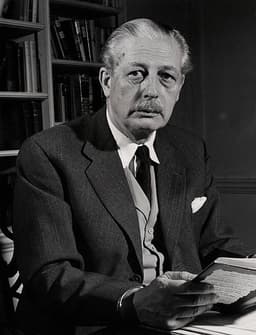
Harold Macmillan
Politician · Modern
58.4Total
Basic Information
Born
1962
1894
Died
—
1986
Era
Modern
Modern
Nationality
Pakistan
United Kingdom
Occupation
Politician
Politician
Civilization
Indian
Western
Score Comparison
Military (10%)
46.6
50.0
Political (20%)
33.6
72.0
Influence (20%)
51.0
60.0
Legacy (20%)
40.8
50.0
Leadership (15%)
58.8
72.0
Strategy (15%)
60.0
43.1
TOTAL
47.5
58.4
Akhtar Mengal — Complete Timeline
1997 AD
Founded Balochistan National Party (Mengal)Political Action◆ Major
Akhtar Mengal established the Balochistan National Party (Mengal) as a political vehicle for Baloch nationalist aspirations. The party advocated for provincial autonomy and the rights of the Baloch people within Pakistan.
Baloch NationalismPolitical PartyProvincial Autonomy
Impact: regionalconstructive
Elected Chief Minister of BalochistanPolitical Action◆ Major
Mengal became the Chief Minister of Balochistan after his party won the provincial elections. His tenure focused on Baloch rights and development, but he faced opposition from the federal government.
Chief MinisterBalochistanProvincial Government
Impact: regionalconstructive
1998 AD
Resigned as Chief MinisterPolitical Action◆ Major
Mengal resigned as Chief Minister of Balochistan in protest against the federal government's policies, particularly the handling of the Kohlu incident and military operations in the province. His resignation highlighted tensions between Baloch nationalists and the central government.
ResignationProtestFederal Tensions
Impact: regionaldestructive
2006 AD
Arrested and ImprisonedPolitical Action◆ Major
Mengal was arrested by Pakistani authorities on charges of sedition and inciting violence. He was imprisoned for several years, becoming a symbol of Baloch nationalist resistance against state repression.
ArrestImprisonmentBaloch Resistance
Impact: regionaltragic
2008 AD
Released from PrisonPolitical Action
Mengal was released from prison after the new PPP-led government dropped charges against him. His release was part of a broader effort to reconcile with Baloch nationalists, though tensions remained.
ReleaseReconciliationBalochistan
Impact: regionalconstructive
Harold Macmillan — Complete Timeline
1957 AD
Elected Prime MinisterPolitical Action
Macmillan succeeded Anthony Eden as Prime Minister after the Suez Crisis. He led the Conservative Party to a landslide victory in the 1959 general election, consolidating his power.
Prime MinisterConservative Party
Impact: national
Delivered 'You've Never Had It So Good' SpeechCultural◆ Major
Macmillan gave a speech in Bedford stating that Britons had 'never had it so good,' referring to post-war prosperity. The phrase became emblematic of his premiership and the era of rising living standards.
SpeechEconomic Prosperity
Impact: nationalconstructive
Signed the Treaty of RomePolitical Action◆ Major
Macmillan's government signed the Treaty of Rome, establishing the European Economic Community (EEC). However, the UK did not join at this time, as Macmillan prioritized the European Free Trade Association (EFTA).
European IntegrationEEC
Impact: global
1960 AD
Wind of Change SpeechCultural◆ Major
Macmillan delivered the 'Wind of Change' speech to the South African Parliament, acknowledging the rise of African nationalism and the inevitability of decolonization. This signaled Britain's shift away from empire.
DecolonizationAfrica
Impact: global
1963 AD
Profumo AffairPolitical Action◆ Major
The Profumo affair, a sex scandal involving War Minister John Profumo, damaged Macmillan's government. Macmillan's handling of the crisis was criticized, contributing to his resignation later that year.
ScandalGovernment
Impact: nationaldestructive
Resigned as Prime MinisterPolitical Action◆ Major
Macmillan resigned as Prime Minister in October 1963, citing ill health. He was succeeded by Alec Douglas-Home. His resignation marked the end of a premiership defined by prosperity and decolonization.
ResignationConservative Party
Impact: national
Expert Analysis
Origins
Akhtar Mengal was born in 1955 in Wadh, Balochistan, Pakistan, into a prominent political family. His father, Ataullah Mengal, was a former Chief Minister of Balochistan. Akhtar Mengal studied at the University of Balochistan and later entered politics. His early life was shaped by the marginalization of Baloch people, fueling his nationalist activism.
Harold Macmillan was born in 1894 in London, England, into a wealthy publishing family. He was educated at Eton and Balliol College, Oxford. His early life included service in World War I, where he was wounded, and later a career in publishing and politics. He entered Parliament in 1924 as a Conservative MP.
Rise to Power
Akhtar Mengal founded the Balochistan National Party (Mengal) in 1997, advocating for Baloch rights and autonomy. In 1998, he was elected Chief Minister of Balochistan after his party won provincial elections. However, his tenure lasted only until 1999 when he resigned over the Kohlu incident—a military operation that killed civilians. His resignation turned him into a symbol of resistance.
Harold Macmillan rose to power after the Suez Crisis in 1956. He succeeded Anthony Eden as Prime Minister in 1957. His calm leadership restored party morale, and he led the Conservatives to a landslide victory in the 1959 general election, capitalizing on post-war prosperity.
Leadership & Governance
Mengal's leadership focused on Baloch nationalism, demanding greater provincial autonomy and resource rights. As Chief Minister, he prioritized development projects and Baloch representation but faced opposition from the federal government. His governance was marked by frequent confrontations with Islamabad, leading to his arrest in 2006 on sedition charges. He scored 58.8 in leadership and 60.0 in strategy, reflecting his tactical but constrained approach.
Macmillan's governance was pragmatic and expansionist. He pursued 'Middle Way' policies, balancing nationalization and privatization. He oversaw decolonization in Africa, with the 'Wind of Change' speech in 1960 acknowledging African nationalism. His economic policies led to a consumer boom, but his score of 72.0 in political skills contrasts with 43.1 in strategy, indicating reactive rather than visionary planning.
Triumph & Tragedy
Mengal's greatest success was bringing Baloch grievances to national attention. His party's persistence kept the Baloch issue alive. His tragedy was his imprisonment—he was arrested in 2006 and spent years in jail, which weakened his movement. His political score of 33.6 reflects limited institutional impact.
Macmillan's triumphs include the 1959 election victory and the decolonization process. However, the Profumo Affair in 1963 severely damaged his government, and his failure to join the EEC early was a strategic mistake. He scored 50.0 in legacy, indicating mixed long-term influence.
Character & Destiny
Mengal was a principled but inflexible nationalist. His decision to resign as Chief Minister demonstrated integrity but limited his political effectiveness. His arrest made him a martyr, but his movement remained fragmented. His total score of 47.5 reflects a leader constrained by systemic forces.
Macmillan was urbane and pragmatic, known for his wit and calm. He adapted to changing times but was indecisive on key issues like Europe. His handling of the Profumo affair was criticized as aloof, leading to his resignation in 1963. His total score of 58.4 highlights a more effective but flawed leader.
Legacy
Mengal's legacy is primarily symbolic for Baloch nationalism. He inspired a generation of activists, but his party's influence waned after his imprisonment. His score of 40.8 in legacy reflects limited enduring change.
Macmillan's legacy includes the 'You've Never Had It So Good' era of prosperity and the decolonization of Africa. He also set the stage for UK's later EEC entry. His score of 50.0 in legacy indicates a lasting but debated impact.
Conclusion
Harold Macmillan had greater impact, with a total score of 58.4 compared to Mengal's 47.5. Macmillan shaped British politics and global decolonization, while Mengal's influence remained regional and constrained. Despite Mengal's principled stand, Macmillan's broader reach and institutional power give him a clearer edge.
Rankings
🥇
Harold MacmillanLeader
Mil: 50.0Pol: 72.0Inf: 60.0
58.4
🥈
Akhtar Mengal
Mil: 46.6Pol: 33.6Inf: 51.0
47.5
+10.9 behind
How This Comparison Works
Algorithm
Each figure is scored on 6 dimensions (0—100 scale) based on structured historical data: Military (10%), Political (20%), Influence (20%), Legacy (20%), Leadership (15%), Strategy (15%). The weighted total produces the final ranking.
Data Sources
Scores are computed from structured sub-indicators in the database. Scale factors adjust for era (Ancient ×0.85, Modern ×1.0) and civilization size (Eastern ×1.05, Other ×0.80) to account for differences in population and military scale.
Maximum 3 Figures
Comparisons are limited to 2—3 figures to ensure readability and statistical meaningfulness.
Error Margins
±5 points per dimension — Sub-scores are derived from historical records with inherent uncertainty. Two figures within 5 points on a dimension should be considered roughly equivalent in that area.
Total Score Accuracy
±3 points overall — The weighted combination of 6 dimensions produces a total score with approximately ±3 points of uncertainty. Differences of less than 3 points are not statistically significant— the figures are effectively tied.
Known Limitations
- Historical records are incomplete and uneven across civilizations
- Figures from oral-tradition societies may be underrepresented
- Occupation labels can misclassify multi-role figures
- Scores measure capability and impact, not moral character
- Quantitative scoring is a comparison tool, not absolute truth
Capability Radar
Military (10%) — Battles & Warfare
Battles
46
28
Win Rate
44
31
Expansion
48
36
Political (20%) — Governance & Reform
Reform
25
55
Diplomacy
30
70
Economy
15
65
Influence (20%) — Cultural & Global Reach
Cultural
30
40
Global
15
50
Legacy (20%) — Historical Impact
Historical
25
50
Longevity
20
40
Leadership (15%) — Power & Stability
Tenure
35
60
Stability
20
60
Strategy (15%) — Tactics & Innovation
Strategy
55
40
Tactics
53
40
Reform
57
45
Similar Comparisons
Comments & Discussion
No comments yet. Be the first to share your thoughts!