Loading...
Akhtar Mengal vs Harry S. Truman
Harry S. Truman leads by 16.2 pts · 2 figures compared
…

Akhtar Mengal
Politician · Modern
47.5Total
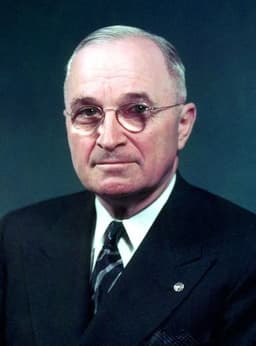
Harry S. Truman
Politician · Modern
63.7Total
Basic Information
Born
1962
1884
Died
—
1972
Era
Modern
Modern
Nationality
Pakistan
United States
Occupation
Politician
Politician
Civilization
Indian
Western
Score Comparison
Military (10%)
46.6
30.0
Political (20%)
33.6
55.0
Influence (20%)
51.0
68.0
Legacy (20%)
40.8
72.0
Leadership (15%)
58.8
79.8
Strategy (15%)
60.0
55.0
TOTAL
47.5
63.7
Akhtar Mengal — Complete Timeline
1997 AD
Founded Balochistan National Party (Mengal)Political Action◆ Major
Akhtar Mengal established the Balochistan National Party (Mengal) as a political vehicle for Baloch nationalist aspirations. The party advocated for provincial autonomy and the rights of the Baloch people within Pakistan.
Baloch NationalismPolitical PartyProvincial Autonomy
Impact: regionalconstructive
Elected Chief Minister of BalochistanPolitical Action◆ Major
Mengal became the Chief Minister of Balochistan after his party won the provincial elections. His tenure focused on Baloch rights and development, but he faced opposition from the federal government.
Chief MinisterBalochistanProvincial Government
Impact: regionalconstructive
1998 AD
Resigned as Chief MinisterPolitical Action◆ Major
Mengal resigned as Chief Minister of Balochistan in protest against the federal government's policies, particularly the handling of the Kohlu incident and military operations in the province. His resignation highlighted tensions between Baloch nationalists and the central government.
ResignationProtestFederal Tensions
Impact: regionaldestructive
2006 AD
Arrested and ImprisonedPolitical Action◆ Major
Mengal was arrested by Pakistani authorities on charges of sedition and inciting violence. He was imprisoned for several years, becoming a symbol of Baloch nationalist resistance against state repression.
ArrestImprisonmentBaloch Resistance
Impact: regionaltragic
2008 AD
Released from PrisonPolitical Action
Mengal was released from prison after the new PPP-led government dropped charges against him. His release was part of a broader effort to reconcile with Baloch nationalists, though tensions remained.
ReleaseReconciliationBalochistan
Impact: regionalconstructive
Harry S. Truman — Complete Timeline
1945 AD
Ordered atomic bombings of Hiroshima and NagasakiWar
Truman authorized the use of atomic bombs against Japan. Hiroshima was bombed on August 6, Nagasaki on August 9. Japan surrendered on August 15, ending World War II. The bombings caused massive civilian casualties and initiated the nuclear age.
World War IINuclear WeaponsJapan
Impact: globaldestructive
1947 AD
Announced the Truman DoctrinePolitical Action◆ Major
Truman declared that the United States would provide political, military, and economic assistance to all democratic nations under threat from authoritarian forces. This policy was first applied to Greece and Turkey, marking the start of the Cold War containment strategy.
Cold WarContainmentForeign Policy
Impact: globalconstructive
1948 AD
Desegregated the U.S. armed forcesReform◆ Major
Truman issued Executive Order 9981, mandating equality of treatment and opportunity for all persons in the armed services regardless of race. This order began the process of racial integration in the U.S. military, a major step in the civil rights movement.
Civil RightsMilitaryDesegregation
Impact: nationalprogressive
Signed the Marshall Plan into lawPolitical Action◆ Major
Truman signed the Economic Cooperation Act, implementing the Marshall Plan. This program provided over $12 billion in economic aid to rebuild Western European economies after World War II, stabilizing the region and countering Soviet influence.
Cold WarEconomic AidEurope
Impact: globalconstructive
1950 AD
Ordered U.S. intervention in the Korean WarWar◆ Major
After North Korea invaded South Korea, Truman committed U.S. forces under a United Nations mandate. The war lasted until 1953, ended in an armistice, and solidified the division of Korea. It also led to the militarization of the Cold War.
Korean WarCold WarMilitary Intervention
Impact: global
Expert Analysis
Origins
Akhtar Mengal, born in 1962 in Wadh, Balochistan, Pakistan, hails from a prominent Baloch political family. His father, Ataullah Mengal, served as the first Chief Minister of Balochistan. Akhtar Mengal studied at the University of Balochistan, where he became involved in student politics. His early exposure to Baloch nationalist movements shaped his political identity.
Harry S. Truman, born on May 8, 1884, in Lamar, Missouri, grew up on a farm. He did not attend college due to financial constraints, instead working various jobs. Truman's political career began with his service as a judge in Jackson County, Missouri, and later as a U.S. Senator. His humble origins and practical experience defined his straightforward approach.
Rise to Power
Mengal rose to prominence in the 1990s by advocating for Baloch rights. In 1997, he founded the Balochistan National Party (Mengal) (BNP-M), which won provincial elections. He became Chief Minister of Balochistan in 1997, but his tenure was short-lived. He resigned in 1998 after the Kohlu incident, where security forces killed civilians, protesting federal policies.
Truman's rise was marked by his unexpected ascent to the presidency after Franklin D. Roosevelt's death in 1945. As Vice President for only 82 days, Truman was thrust into leadership during World War II's final stages. His decisive actions, such as authorizing the atomic bomb, solidified his authority.
Leadership & Governance
Mengal's leadership focused on Baloch autonomy and development. He advocated for provincial rights and opposed federal exploitation of Balochistan's resources. His governance was constrained by central government opposition, leading to his resignation and later imprisonment. His political score of 33.6 reflects limited national impact.
Truman's leadership was defined by major Cold War initiatives. He announced the Truman Doctrine in 1947, committing the U.S. to contain communism. He signed the Marshall Plan, providing $12 billion for European recovery. Domestically, he desegregated the armed forces via Executive Order 9981. His leadership score of 79.8 indicates effective governance.
Triumph & Tragedy
Mengal's greatest success was establishing BNP-M as a voice for Baloch nationalism, scoring 51.0 in influence. His tragedy was his inability to achieve lasting autonomy, with his resignation and imprisonment marking failures. His legacy score of 40.8 reflects limited long-term impact.
Truman's triumphs include ending WWII with atomic bombs and initiating the Marshall Plan, scoring 72.0 in legacy. His tragedies include the Korean War stalemate and the escalation of Cold War tensions. His decision to use atomic bombs remains controversial, scoring 55.0 in strategy.
Character & Destiny
Mengal is characterized as a principled but stubborn nationalist. His refusal to compromise led to political isolation. His destiny was shaped by the central government's resistance, resulting in imprisonment. His strategic score of 60.0 shows some tactical skill.
Truman was known for his blunt, decisive nature. He famously kept a "The Buck Stops Here" sign on his desk. His character led to bold decisions, like the atomic bomb and Korean intervention. His political score of 55.0 reflects mixed approval.
Legacy
Mengal's legacy is confined to Baloch nationalist movements. He remains a symbol of resistance for Baloch activists but has limited national or global impact. His influence score of 51.0 indicates regional significance.
Truman's legacy is vast: he shaped Cold War policy, established NATO, and integrated the military. His decisions set precedents for American global leadership. His legacy score of 72.0 underscores his lasting impact.
Conclusion
Harry S. Truman clearly had greater impact, with a total score of 63.7 versus Mengal's 47.5. Truman's decisions shaped global geopolitics for decades, while Mengal's influence remained regional. Despite the disparity in scale, both faced significant challenges within their contexts. Truman's leadership in the Cold War era and his domestic reforms cement his place as a pivotal 20th-century figure.
Rankings
🥇
Harry S. TrumanLeader
Mil: 30.0Pol: 55.0Inf: 68.0
63.7
🥈
Akhtar Mengal
Mil: 46.6Pol: 33.6Inf: 51.0
47.5
+16.2 behind
How This Comparison Works
Algorithm
Each figure is scored on 6 dimensions (0—100 scale) based on structured historical data: Military (10%), Political (20%), Influence (20%), Legacy (20%), Leadership (15%), Strategy (15%). The weighted total produces the final ranking.
Data Sources
Scores are computed from structured sub-indicators in the database. Scale factors adjust for era (Ancient ×0.85, Modern ×1.0) and civilization size (Eastern ×1.05, Other ×0.80) to account for differences in population and military scale.
Maximum 3 Figures
Comparisons are limited to 2—3 figures to ensure readability and statistical meaningfulness.
Error Margins
±5 points per dimension — Sub-scores are derived from historical records with inherent uncertainty. Two figures within 5 points on a dimension should be considered roughly equivalent in that area.
Total Score Accuracy
±3 points overall — The weighted combination of 6 dimensions produces a total score with approximately ±3 points of uncertainty. Differences of less than 3 points are not statistically significant— the figures are effectively tied.
Known Limitations
- Historical records are incomplete and uneven across civilizations
- Figures from oral-tradition societies may be underrepresented
- Occupation labels can misclassify multi-role figures
- Scores measure capability and impact, not moral character
- Quantitative scoring is a comparison tool, not absolute truth
Capability Radar
Military (10%) — Battles & Warfare
Battles
46
0
Win Rate
44
0
Expansion
48
0
Political (20%) — Governance & Reform
Reform
25
65
Diplomacy
30
75
Economy
15
60
Influence (20%) — Cultural & Global Reach
Cultural
30
55
Global
15
80
Legacy (20%) — Historical Impact
Historical
25
80
Longevity
20
70
Leadership (15%) — Power & Stability
Tenure
35
70
Stability
20
60
Strategy (15%) — Tactics & Innovation
Strategy
55
70
Tactics
53
0
Reform
57
60
Similar Comparisons
Comments & Discussion
No comments yet. Be the first to share your thoughts!