Loading...
Al-Hajjaj ibn Yusuf vs Cimon
Al-Hajjaj ibn Yusuf leads by 8.6 pts · 2 figures compared
…
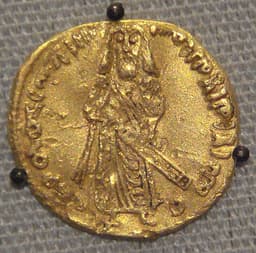
Al-Hajjaj ibn Yusuf
General · Ancient
64.2Total

Cimon
General · Ancient
55.6Total
Basic Information
Born
-661
-510
Died
—
-450
Era
Ancient
Ancient
Nationality
Umayyad Caliphate
Greece
Occupation
General
General
Civilization
Middle Eastern
Western
Score Comparison
Military (10%)
90.0
76.0
Political (20%)
68.0
40.8
Influence (20%)
57.2
56.4
Legacy (20%)
50.0
48.3
Leadership (15%)
71.0
68.0
Strategy (15%)
76.0
55.0
TOTAL
64.2
55.6
Al-Hajjaj ibn Yusuf — Complete Timeline
694 AD
Appointed Governor of IraqPolitical Action◆ Major
Caliph Abd al-Malik appointed Al-Hajjaj ibn Yusuf as governor of Iraq. He was tasked with restoring order after years of rebellion and instability. His appointment marked the beginning of a harsh and effective administration.
GovernorshipIraqUmayyad
Impact: regional
700 AD
Reform of the Arabic ScriptCultural◆ Major
Al-Hajjaj ibn Yusuf commissioned the introduction of diacritical marks (dots) to the Arabic script to standardize the reading of the Quran and prevent mispronunciation. This reform had a lasting impact on Arabic writing and Islamic scholarship.
Language ReformArabic ScriptQuran
Impact: globalconstructive
701 AD
Battle of Dayr al-JamajimWar◆ Major
Al-Hajjaj ibn Yusuf led Umayyad forces to a decisive victory over the rebel army of Abd al-Rahman ibn al-Ash'ath at Dayr al-Jamajim in Iraq. The victory crushed a major rebellion and solidified Umayyad control over Iraq and the eastern provinces.
BattleRebellionUmayyad
Impact: regionaldestructive
Cimon — Complete Timeline
476 BC
Siege of EionWar
Cimon captured the Persian-held fortress of Eion on the Strymon River in Thrace. The victory secured Athenian control over the region and opened up trade routes. It was one of the first major successes of the Delian League under Cimon's command.
Delian LeagueThracePersian Garrison
Impact: regionalconstructive
466 BC
Battle of the EurymedonWar◆ Major
Cimon led the Delian League fleet to a double victory over the Persians at the Eurymedon River in Pamphylia. He destroyed a Persian fleet and then defeated a land army on the same day, securing Greek control over the eastern Mediterranean.
Delian LeagueGreco-Persian WarsNaval Victory
Impact: regional
461 BC
Ostracism from AthensPolitical Action◆ Major
Cimon was ostracized from Athens for ten years due to political opposition from the democratic faction led by Ephialtes and Pericles. His pro-Spartan policies and the failure of his expedition to help Sparta during the helot revolt contributed to his exile.
OstracismAthenian PoliticsExile
Impact: nationaldestructive
450 BC
Battle of Salamis in CyprusWar◆ Major
Cimon was recalled from exile and led a Delian League expedition to Cyprus. He won a naval and land victory at Salamis in Cyprus against the Persians. However, he died during the siege of Citium, ending the campaign.
Delian LeagueCyprus CampaignDeath
Impact: regional
Expert Analysis
Origins
Al-Hajjaj ibn Yusuf was born around 661 CE in Taif, Arabia, into the Thaqif tribe. His father was a respected teacher, but Al-Hajjaj showed early ambition and military aptitude. He became a teacher himself before joining the Umayyad army, where his ruthlessness caught the attention of Caliph Abd al-Malik. In contrast, Cimon was born around 510 BCE in Athens, Greece, into the powerful Philaid clan. His father was Miltiades, the hero of Marathon, but died in disgrace after a failed expedition. Cimon inherited a debt and had to rebuild his family's reputation through military service.
Rise to Power
Al-Hajjaj's rise began when Caliph Abd al-Malik sent him to Iraq in 694 CE to quell rebellions. He marched with a small force to Kufa, delivered a famously harsh sermon, and executed thousands of rebels. His decisive action restored order, and he was appointed governor of Iraq and the eastern provinces. Cimon's rise came after the Persian Wars. He distinguished himself at the Battle of Salamis (480 BCE) and later led the Delian League in campaigns against Persia. His victory at the Battle of the Eurymedon (466 BCE) made him the leading Athenian general, securing his political influence.
Leadership & Governance
Al-Hajjaj ruled with an iron fist, using terror and execution to maintain control. He reformed the administrative system, introduced standard Arabic script with diacritical marks, and improved tax collection. His governance was efficient but brutal, earning him widespread hatred. Cimon led by example, inspiring loyalty through generous distribution of war spoils and public works. He pursued a pro-Spartan policy and opposed radical democracy. His leadership style was more collaborative, but his aristocratic leanings made him vulnerable to democratic rivals.
Triumph & Tragedy
Al-Hajjaj's greatest triumph was crushing the rebellion of Abd al-Rahman ibn al-Ash'ath at the Battle of Dayr al-Jamajim (701 CE), securing Umayyad control over Iraq. He also expanded the caliphate into Central Asia. His tragedy was his legacy of cruelty; he died in 714 CE, hated by many, and his policies contributed to later anti-Umayyad sentiment. Cimon's triumph was the double victory at the Eurymedon, where he destroyed a Persian fleet and army. His tragedy was his ostracism in 461 BCE due to political opposition, though he was later recalled. He died at the Siege of Citium in Cyprus in 450 BCE during a campaign.
Character & Destiny
Al-Hajjaj was calculating, ruthless, and unwavering. His harsh methods were effective but created deep resentment, which ultimately fueled the Abbasid revolution. Historical assessments note his efficiency but condemn his brutality. Cimon was generous, charismatic, and committed to Athenian hegemony. His pro-Spartan stance and aristocratic values clashed with the democratic tide, leading to his ostracism. Both men's characters shaped their fates: Al-Hajjaj's cruelty ensured his name would be reviled, while Cimon's magnanimity earned him posthumous respect despite political setbacks.
Legacy
Al-Hajjaj's administrative reforms, especially the standardization of Arabic script, had a lasting impact on Islamic civilization. His military campaigns secured Umayyad rule for decades, but his harshness contributed to the dynasty's downfall. His total score of 64.2 reflects his high military (90.0) and political (68.0) scores but lower influence (57.2) and legacy (50.0). Cimon's legacy is more mixed: he expanded Athenian power but his policies were reversed by Pericles. His military score of 76.0 and leadership of 68.0 are notable, but his political score (40.8) and influence (56.4) are lower. The Delian League continued after him, but his personal impact faded.
Conclusion
Al-Hajjaj ibn Yusuf had a more decisive impact on history. His military and political scores (90.0 and 68.0) significantly exceed Cimon's (76.0 and 40.8). While Cimon's victories were important, they did not fundamentally alter the course of Greek history. Al-Hajjaj's reforms and campaigns shaped the Islamic world for centuries. Despite his brutality, his influence on governance and script was enduring. Cimon's total score of 55.6 versus Al-Hajjaj's 64.2 underscores this gap. Al-Hajjaj's greater effect on state-building and cultural development makes him the more significant figure.
Rankings
🥇
Al-Hajjaj ibn YusufLeader
Mil: 90.0Pol: 68.0Inf: 57.2
64.2
🥈
Cimon
Mil: 76.0Pol: 40.8Inf: 56.4
55.6
+8.6 behind
How This Comparison Works
Algorithm
Each figure is scored on 6 dimensions (0—100 scale) based on structured historical data: Military (10%), Political (20%), Influence (20%), Legacy (20%), Leadership (15%), Strategy (15%). The weighted total produces the final ranking.
Data Sources
Scores are computed from structured sub-indicators in the database. Scale factors adjust for era (Ancient ×0.85, Modern ×1.0) and civilization size (Eastern ×1.05, Other ×0.80) to account for differences in population and military scale.
Maximum 3 Figures
Comparisons are limited to 2—3 figures to ensure readability and statistical meaningfulness.
Error Margins
±5 points per dimension — Sub-scores are derived from historical records with inherent uncertainty. Two figures within 5 points on a dimension should be considered roughly equivalent in that area.
Total Score Accuracy
±3 points overall — The weighted combination of 6 dimensions produces a total score with approximately ±3 points of uncertainty. Differences of less than 3 points are not statistically significant— the figures are effectively tied.
Known Limitations
- Historical records are incomplete and uneven across civilizations
- Figures from oral-tradition societies may be underrepresented
- Occupation labels can misclassify multi-role figures
- Scores measure capability and impact, not moral character
- Quantitative scoring is a comparison tool, not absolute truth
Capability Radar
Military (10%) — Battles & Warfare
Battles
85
65
Win Rate
90
70
Expansion
75
55
Political (20%) — Governance & Reform
Reform
85
40
Diplomacy
60
65
Economy
75
50
Influence (20%) — Cultural & Global Reach
Cultural
40
45
Global
55
35
Legacy (20%) — Historical Impact
Historical
65
50
Longevity
50
40
Leadership (15%) — Power & Stability
Tenure
80
60
Stability
50
55
Strategy (15%) — Tactics & Innovation
Strategy
85
65
Tactics
80
60
Reform
70
30
Similar Comparisons
Comments & Discussion
No comments yet. Be the first to share your thoughts!