Loading...
Al-Hajjaj ibn Yusuf vs Napoleon Bonaparte
Napoleon Bonaparte leads by 6.7 pts · 2 figures compared
…
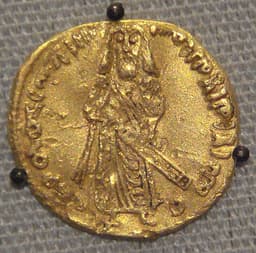
Al-Hajjaj ibn Yusuf
General · Ancient
64.2Total

Napoleon Bonaparte
General · Modern
70.9Total
Basic Information
Born
-661
1769
Died
—
1821
Era
Ancient
Modern
Nationality
Umayyad Caliphate
France
Occupation
General
General
Civilization
Middle Eastern
Western
Score Comparison
Military (10%)
90.0
94.0
Political (20%)
68.0
72.0
Influence (20%)
57.2
40.0
Legacy (20%)
50.0
80.0
Leadership (15%)
71.0
78.0
Strategy (15%)
76.0
90.0
TOTAL
64.2
70.9
Al-Hajjaj ibn Yusuf — Complete Timeline
694 AD
Appointed Governor of IraqPolitical Action◆ Major
Caliph Abd al-Malik appointed Al-Hajjaj ibn Yusuf as governor of Iraq. He was tasked with restoring order after years of rebellion and instability. His appointment marked the beginning of a harsh and effective administration.
GovernorshipIraqUmayyad
Impact: regional
700 AD
Reform of the Arabic ScriptCultural◆ Major
Al-Hajjaj ibn Yusuf commissioned the introduction of diacritical marks (dots) to the Arabic script to standardize the reading of the Quran and prevent mispronunciation. This reform had a lasting impact on Arabic writing and Islamic scholarship.
Language ReformArabic ScriptQuran
Impact: globalconstructive
701 AD
Battle of Dayr al-JamajimWar◆ Major
Al-Hajjaj ibn Yusuf led Umayyad forces to a decisive victory over the rebel army of Abd al-Rahman ibn al-Ash'ath at Dayr al-Jamajim in Iraq. The victory crushed a major rebellion and solidified Umayyad control over Iraq and the eastern provinces.
BattleRebellionUmayyad
Impact: regionaldestructive
Napoleon Bonaparte — Complete Timeline
1799 AD
Coup of 18 BrumaireOther◆ Major
Napoleon Bonaparte, with support from his brother Lucien and key political figures, overthrew the Directory in a bloodless coup. He established the Consulate with himself as First Consul, effectively becoming the ruler of France. This event ended the French Revolution's most unstable period.
French RevolutionCoupRise to Power
Impact: regional
1804 AD
Promulgation of the Napoleonic CodeOther◆ Major
Napoleon enacted the Civil Code of the French, known as the Napoleonic Code, a comprehensive set of laws that replaced the fragmented feudal legal systems. The code established legal equality, protected property rights, and secularized law. It became the basis for legal systems in many European and world countries.
Legal ReformNapoleonic CodeCivil Law
Impact: globalconstructive
1805 AD
Battle of AusterlitzWar◆ Major
Napoleon's Grande Arm
Napoleonic WarsBattleDecisive Victory
Impact: global
1812 AD
Invasion of RussiaWar◆ Major
Napoleon led the Grande Arm
Napoleonic WarsInvasionDisaster
Impact: globaldestructive
1815 AD
Battle of WaterlooWar◆ Major
Napoleon's French army was defeated by the combined forces of the Duke of Wellington's Anglo-Allied army and Gebhard Leberecht von Bl
Napoleonic WarsBattleFinal Defeat
Impact: globaldestructive
Expert Analysis
al-hajjaj-ibn-yusuf-vs-napoleon-bonaparte
# The Iron Hand and the Eagle's Grip
On a dusty plain in southern Iraq, in the year 701, a general named Al-Hajjaj ibn Yusuf watched his cavalry cut down the last remnants of a rebel army. The bodies of thousands littered the field of Dayr al-Jamajim, and the Tigris ran red. Half a world away and more than a century later, a young artillery officer from Corsica stood before the crumbling walls of Toulon, calculating the exact angle to place his guns. Both men would reshape their worlds through blood and iron, yet their names echo through history with vastly different tones—one as a tyrant whose cruelty became proverbial, the other as a genius whose ambition still stirs the European imagination. What made the difference?
Origins
Napoleon Bonaparte was born in 1769 on the island of Corsica, a place only recently annexed by France. His family was minor nobility, poor enough that young Napoleon wore hand-me-down uniforms at military school, where his classmates mocked his accent. He read voraciously—Rousseau, Plutarch, the campaigns of Alexander—and burned with the fury of the outsider desperate to prove himself. Corsica had taught him that power was fragile, and that a man with nothing had everything to gain.
Al-Hajjaj ibn Yusuf came from Ta'if, in the highlands of Arabia, around 661. His tribe, the Thaqif, were known for their shrewdness and their late conversion to Islam. Unlike Napoleon, Al-Hajjaj grew up in a world where loyalty to the Umayyad Caliphate was the only path to advancement. His father was a schoolteacher, and the young Al-Hajjaj learned to read and write at a time when most Arabs were illiterate—a skill that would later serve him in bureaucracy and war alike. Where Napoleon's childhood bred ambition, Al-Hajjaj's bred discipline.
Rise to Power
Napoleon seized his moment at the Siege of Toulon in 1793. The revolutionary government needed someone to dislodge the British from the port; the 24-year-old captain devised a plan that worked. Within three years, he was commanding the Army of Italy, winning battles against the Austrians with a speed that stunned Europe. His rise was meteoric because the Revolution had shattered the old aristocracy—talent, not birth, now opened doors. Napoleon walked through them, each victory a stepping stone toward the throne.
Al-Hajjaj's path was different. He entered history as a minor officer in the Umayyad army, but his break came when Caliph Abd al-Malik needed a man ruthless enough to pacify Iraq. In 694, the Caliph appointed him governor of a province seething with rebellion. Al-Hajjaj did not wait for victories to accumulate; he made a single, brutal statement. Riding into Kufa, he delivered a sermon in which he told the assembled Iraqis: "I see heads before me that are ripe for the harvest." He then executed hundreds. The message was clear: order would come through fear.
Leadership & Governance
Napoleon governed through a blend of glory and law. The Napoleonic Code, completed in 1804, standardized French law across his empire, abolishing feudal privileges and establishing equality before the law. He built roads, founded banks, reformed education. His military genius lay in speed and concentration—he moved armies faster than his enemies could react, striking at their flanks and rear. At Austerlitz in 1805, he lured the Austrians and Russians into a trap so perfect that it is still studied in war colleges.
Al-Hajjaj governed through terror and efficiency. He crushed the rebellion of Ibn al-Ash'ath at Dayr al-Jamajim in 701, then hunted down survivors for years. But he also reformed the tax system, ensuring that revenues flowed steadily to Damascus. He standardized the Arabic script by introducing diacritical marks—dots that distinguish letters—making the Quran easier to read and administration more uniform. Where Napoleon built institutions to inspire loyalty, Al-Hajjaj built systems to enforce obedience.
Triumph & Tragedy
Napoleon's greatest triumph was Austerlitz, where he defeated a combined army twice his size. His greatest tragedy was the invasion of Russia in 1812. He marched 600,000 men into the frozen vastness; fewer than 100,000 returned. The disaster broke his aura of invincibility. Exiled to Elba, he escaped, raised another army, and met his final defeat at Waterloo in 1815. The man who had conquered Europe died alone on a remote Atlantic island.
Al-Hajjaj's triumph was the pacification of Iraq. He turned a rebellious province into the bedrock of Umayyad power. His tragedy was his legacy: he became the archetype of the cruel governor in Islamic memory. When he died in 714, some say the people of Iraq danced in the streets. He had secured the Caliphate, but at the cost of being remembered as the man who watered his garden with blood.
Character & Destiny
Napoleon was driven by an insatiable hunger for glory. "I live only for posterity," he once said. His ambition was boundless, but so was his energy—he worked eighteen-hour days, dictated letters to multiple secretaries simultaneously, and believed that nothing was impossible. That conviction made him great, but it also blinded him. He could not stop, could not consolidate, could not accept limits.
Al-Hajjaj was driven by a cold, calculating will to order. He once said, "I am the son of a humble schoolmaster, but I rule with a rod of iron." He had no illusions about being loved. His cruelty was strategic—he believed that Iraq could only be controlled through fear. Where Napoleon's character led him to overreach, Al-Hajjaj's led him to overpunish. Both were products of their times: Napoleon of a revolutionary age that worshipped genius, Al-Hajjaj of an age when the sword was the only law.
Legacy
Napoleon's legacy is written in the laws of Europe. The Napoleonic Code influenced legal systems from Italy to Louisiana. His military innovations shaped warfare for a century. He is remembered as a titan, flawed but magnificent, a man who remade the world.
Al-Hajjaj's legacy is more ambiguous. He is remembered in Islamic history as a tyrant, but also as an administrator who strengthened the Umayyad state. The diacritical marks he introduced to Arabic script are still used today, every time someone reads the Quran. Yet his name remains a curse in Iraqi folklore.
Conclusion
Why does Napoleon inspire while Al-Hajjaj repels? Partly it is a matter of scale—Napoleon's stage was continental, Al-Hajjaj's provincial. Partly it is a matter of narrative—Napoleon's story has tragedy and redemption, while Al-Hajjaj's is unrelenting darkness. But perhaps the deepest reason is this: Napoleon offered a vision of what humanity could achieve, while Al-Hajjaj offered only a lesson in what it would endure. Both were iron hands, but one gilded the fist.
Rankings
🥇
Napoleon BonaparteLeader
Mil: 94.0Pol: 72.0Inf: 40.0
70.9
🥈
Al-Hajjaj ibn Yusuf
Mil: 90.0Pol: 68.0Inf: 57.2
64.2
+6.7 behind
How This Comparison Works
Algorithm
Each figure is scored on 6 dimensions (0—100 scale) based on structured historical data: Military (10%), Political (20%), Influence (20%), Legacy (20%), Leadership (15%), Strategy (15%). The weighted total produces the final ranking.
Data Sources
Scores are computed from structured sub-indicators in the database. Scale factors adjust for era (Ancient ×0.85, Modern ×1.0) and civilization size (Eastern ×1.05, Other ×0.80) to account for differences in population and military scale.
Maximum 3 Figures
Comparisons are limited to 2—3 figures to ensure readability and statistical meaningfulness.
Error Margins
±5 points per dimension — Sub-scores are derived from historical records with inherent uncertainty. Two figures within 5 points on a dimension should be considered roughly equivalent in that area.
Total Score Accuracy
±3 points overall — The weighted combination of 6 dimensions produces a total score with approximately ±3 points of uncertainty. Differences of less than 3 points are not statistically significant— the figures are effectively tied.
Known Limitations
- Historical records are incomplete and uneven across civilizations
- Figures from oral-tradition societies may be underrepresented
- Occupation labels can misclassify multi-role figures
- Scores measure capability and impact, not moral character
- Quantitative scoring is a comparison tool, not absolute truth
Capability Radar
Military (10%) — Battles & Warfare
Battles
85
95
Win Rate
90
90
Expansion
75
95
Political (20%) — Governance & Reform
Reform
85
95
Diplomacy
60
80
Economy
75
85
Influence (20%) — Cultural & Global Reach
Cultural
40
85
Global
55
90
Legacy (20%) — Historical Impact
Historical
65
95
Longevity
50
90
Leadership (15%) — Power & Stability
Tenure
80
85
Stability
50
70
Strategy (15%) — Tactics & Innovation
Strategy
85
95
Tactics
80
98
Reform
70
92
Similar Comparisons
Comments & Discussion
IRON TIGRIS6/17/2026
People miss the real point: Al-Hajjaj wasn't a "tyrant" by his era's standards—he was a masterful counterinsurgent. Napoleon faced conventional armies; Hajjaj faced a rebellion that had already murdered one governor and shattered another. At Dayr al-Jamajim, he didn't just crush Abd al-Rahman ibn al-Ash'ath—he systematically dismantled the religious hypocrisy of "we fight for piety" while they allied with Zoroastrian Persians. Napoleon's tactical genius is overrated; Hajjaj built an empire from
弯刀与鹰旗6/17/2026
拿破仑的滑铁卢是战术失误,哈贾吉的库法城是战略艺术。拿破仑输给威灵顿,哈贾吉却让伊拉克二十五年无叛乱。他建瓦西特城时把军队驻地放在正中,四周是平民,这不是暴政,是机器般精密的社会控制。拿破仑被流放两次,哈贾吉死在任上权力顶峰——谁更懂统治?历史偏爱浪漫的失败者罢了。
DATA DETECTIVE6/17/2026
Let's quantify "cruelty." Al-Hajjaj's body count at Dayr al-Jamajim: estimated 10,000 dead. Napoleon's Russian campaign alone: 500,000. Yet Hajjaj is "bloodthirsty" and Napoleon a "genius"? That's narrative bias, not data. Also, Hajjaj governed for 20 years with one major rebellion. Napoleon had 15 years of near-constant war. Power metrics are clear: stability per capita, stability per year—Hajjaj wins hands down. The "tyrant" label is Orientalist framing.
沙漠与凯旋门6/17/2026
罗马史家会告诉你:拿破仑是第二个凯撒,哈贾吉是第二个马略。凯撒写了《高卢战记》自己包装,拿破仑有圣赫勒拿岛的回忆录洗白。哈贾吉没文人帮他写书,他的形象全由阿拔斯王朝敌人编造。想想看,一个能把阿拉伯语变成伊拉克行政语言的人,会是单纯暴君?那是文化工程,不是屠杀。你们被胜者的历史骗了。
CLASSROOM REBEL6/17/2026
Every textbook calls Napoleon a "military genius" but skips his slavery restoration in 1802. Al-Hajjaj, on the other hand, standardized the Quranic orthography we still use today. One man expanded freedom of thought by fixing sacred texts; the other re-enslaved Haitians. Yet guess who gets the hero treatment? Western historiography has a type: white, European, preferably writing their own memoirs. Hajjaj was Arab, bureaucratic, and his enemies wrote the first draft of history.