Loading...
Al-Mamun vs Theudebert I
Al-Mamun leads by 3.5 pts · 2 figures compared
…
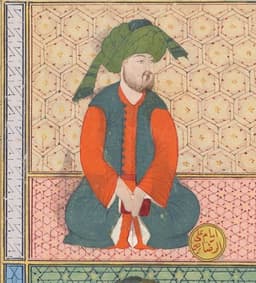
Al-Mamun
Emperor · Medieval
56.6Total
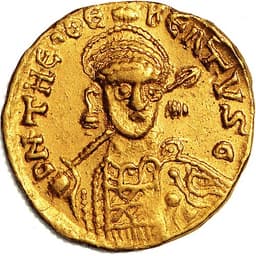
Theudebert I
Emperor · Medieval
53.1Total
Basic Information
Born
786
500
Died
833
548
Era
Medieval
Medieval
Nationality
Abbasid Caliphate
Frankish Empire
Occupation
Emperor
Emperor
Civilization
Middle Eastern
Western
Score Comparison
Military (10%)
30.0
30.0
Political (20%)
70.3
61.3
Influence (20%)
40.0
51.8
Legacy (20%)
65.0
43.3
Leadership (15%)
77.2
74.0
Strategy (15%)
52.5
60.0
TOTAL
56.6
53.1
Al-Mamun — Complete Timeline
813 AD
Victory in the Abbasid Civil WarWar◆ Major
Al-Mamun defeated his brother Al-Amin in a civil war over succession, culminating in the siege of Baghdad. Al-Amin was killed, and Al-Mamun became the sole caliph, but the conflict devastated the city and weakened the caliphate's authority.
Civil WarSuccessionBaghdad
Impact: regionaldestructive
830 AD
Military Campaigns Against the Byzantine EmpireWar
Al-Mamun led multiple campaigns into Byzantine territory, capturing several fortresses including Loulon. These campaigns, though not decisive, secured the eastern frontier and demonstrated Abbasid military capability.
Byzantine WarsMilitary CampaignFrontier
Impact: regional
Foundation of the House of WisdomCultural
Al-Mamun established the Bayt al-Hikma (House of Wisdom) in Baghdad as an academy and library. It became the leading center for translation, research, and scholarship, attracting scholars from diverse backgrounds and advancing mathematics, astronomy, and medicine.
House of WisdomScienceTranslation
Impact: globalconstructive
Astronomical Observations at ShammasiyyaInvention◆ Major
Al-Mamun ordered the construction of an observatory in the Shammasiyya district of Baghdad. Astronomers there made precise measurements of the solar year and planetary movements, improving the accuracy of astronomical tables and influencing later Islamic and European science.
AstronomyObservatoryScience
Impact: globalconstructive
833 AD
Introduction of the Mihna (Inquisition)Political Action◆ Major
Al-Mamun instituted the Mihna, a religious inquisition that required scholars to affirm the doctrine of the createdness of the Quran. This policy persecuted traditionalist scholars like Ahmad ibn Hanbal and created deep divisions within Islamic society.
MihnaReligious PersecutionTheology
Impact: regionaldestructive
Theudebert I — Complete Timeline
534 AD
Minting of Gold Coins in His Own NamePolitical Action◆ Major
Theudebert I issued gold solidi bearing his own name and image, a direct challenge to Byzantine imperial authority. This act asserted Frankish sovereignty and independence from the Eastern Roman Empire, marking a shift in Merovingian coinage.
MerovingianCoinageByzantine
Impact: regionalconstructive
536 AD
Expansion into Raetia and NoricumWar
Theudebert I extended Frankish control into the Roman provinces of Raetia and Noricum (modern Switzerland and Austria). This expansion brought the Franks into direct contact with the Lombards and Bavarians, increasing Theudebert's influence in Central Europe.
MerovingianExpansionAlps
Impact: regional
539 AD
Campaign in ItalyWar◆ Major
Theudebert I led a Frankish army into Italy during the Gothic War, plundering Liguria and the Po Valley. His forces defeated both Byzantine and Ostrogothic armies, but a plague among his troops forced him to withdraw. The campaign demonstrated Frankish military power.
MerovingianItalyGothic War
Impact: regionaldestructive
540 AD
Letter to Emperor JustinianPolitical Action
Theudebert I wrote a letter to Byzantine Emperor Justinian I, boasting of his conquests and claiming dominion over many peoples. The letter, preserved in historical records, reveals Theudebert's ambition to be seen as an equal to the Roman emperor.
MerovingianDiplomacyByzantine
Impact: regional
Expert Analysis
Origins
Al-Mamun (786-833 CE) was born in Baghdad to Harun al-Rashid, the fifth Abbasid caliph, and a Persian concubine named Marajil. He was raised in the cosmopolitan court of the Abbasid Caliphate, receiving education in Islamic theology, philosophy, and the sciences. His early exposure to diverse intellectual traditions shaped his patronage of learning. In contrast, Theudebert I (c. 500-548 CE) was a Merovingian king of the Franks, born into the dynasty founded by Clovis I. He was the son of King Theuderic I and succeeded his father in 533 CE. Theudebert grew up in a warrior culture, with little formal education, but learned statecraft through military campaigns and tribal politics. His upbringing was rooted in the Germanic traditions of the Franks.
Rise to Power
Al-Mamun rose to power through the Abbasid Civil War (811-813 CE). After Harun al-Rashid's death, Al-Mamun and his half-brother Al-Amin fought for control. Al-Mamun, based in Khorasan, secured support from Persian military commanders and defeated Al-Amin's forces, culminating in the siege of Baghdad in 813 CE. Al-Amin was killed, and Al-Mamun became caliph. Theudebert I inherited the throne of Austrasia in 533 CE without a major civil war, but he expanded his authority through military exploits. He intervened in the Gothic War in Italy, leading campaigns against both Byzantines and Ostrogoths, and extended Frankish influence into Raetia and Noricum. His successes allowed him to assert independence from Byzantine suzerainty.
Leadership & Governance
Al-Mamun's leadership was defined by intellectual patronage and religious centralization. He founded the House of Wisdom (Bayt al-Hikma) in Baghdad, which became a premier center for translation and research, fostering advancements in astronomy, mathematics, and medicine. He also established observatories, such as the one at Shammasiyya, where scientists measured the solar year with precision. However, his introduction of the Mihna (Inquisition) in 833 CE forced scholars to accept the Mu'tazilite doctrine of the createdness of the Quran, alienating traditionalist scholars. Theudebert I governed as a warrior-king, minting gold coins in his own name to challenge Byzantine authority. He expanded Frankish territory through military campaigns and wrote a letter to Emperor Justinian I boasting of his conquests. His governance was less centralized, relying on feudal bonds and tribal allegiance.
Triumph & Tragedy
Al-Mamun's greatest triumph was the House of Wisdom, which catalyzed the Islamic Golden Age and preserved classical knowledge. His patronage of astronomy led to significant advances, such as improved astronomical tables. However, his Mihna was a tragic failure, creating lasting religious divisions and persecuting scholars like Ahmad ibn Hanbal. The policy was eventually abandoned by later caliphs. Theudebert I's triumph was his successful minting of coins, asserting Frankish sovereignty, and his military campaigns in Italy that brought wealth and prestige. His tragedy was the temporary nature of his gains; his successors could not maintain his influence, and his kingdom fragmented after his death. His letter to Justinian I reveals ambition but also overreach.
Character & Destiny
Al-Mamun was intellectually curious and decisive, but his rationalism led to authoritarian enforcement of religious orthodoxy. His character combined openness to Greek philosophy with intolerance for dissent, which ultimately fueled Sunni traditionalism. Theudebert I was ambitious and bold, with a warrior's pragmatism. He defied the Byzantine Empire but lacked the institutional foundation to sustain his achievements. His character is reflected in his coinage: a statement of power but also of ephemeral glory.
Legacy
Al-Mamun's legacy endures through the House of Wisdom, which influenced later European Renaissance. His support for translation of Greek texts preserved works of Aristotle, Galen, and Ptolemy. The Mihna, though short-lived, shaped Islamic theology by provoking a reaction. Theudebert I's legacy is more limited; his coins are historical artifacts, and his campaigns are footnotes in the Gothic War. He scored 43.3 in legacy versus Al-Mamun's 65.0.
Conclusion
Al-Mamun had a greater impact due to his cultivation of knowledge that transcended his era. While Theudebert I scored 53.1 overall and Al-Mamun 56.6, the difference in legacy (65.0 vs 43.3) is decisive. Al-Mamun's House of Wisdom catalyzed centuries of scientific and philosophical progress, whereas Theudebert's military expansions were ephemeral. The intellectual infrastructure Al-Mamun built outlasted the Abbasid Caliphate itself, making him the more consequential figure.
Rankings
🥇
Al-MamunLeader
Mil: 30.0Pol: 70.3Inf: 40.0
56.6
🥈
Theudebert I
Mil: 30.0Pol: 61.3Inf: 51.8
53.1
+3.5 behind
How This Comparison Works
Algorithm
Each figure is scored on 6 dimensions (0—100 scale) based on structured historical data: Military (10%), Political (20%), Influence (20%), Legacy (20%), Leadership (15%), Strategy (15%). The weighted total produces the final ranking.
Data Sources
Scores are computed from structured sub-indicators in the database. Scale factors adjust for era (Ancient ×0.85, Modern ×1.0) and civilization size (Eastern ×1.05, Other ×0.80) to account for differences in population and military scale.
Maximum 3 Figures
Comparisons are limited to 2—3 figures to ensure readability and statistical meaningfulness.
Error Margins
±5 points per dimension — Sub-scores are derived from historical records with inherent uncertainty. Two figures within 5 points on a dimension should be considered roughly equivalent in that area.
Total Score Accuracy
±3 points overall — The weighted combination of 6 dimensions produces a total score with approximately ±3 points of uncertainty. Differences of less than 3 points are not statistically significant— the figures are effectively tied.
Known Limitations
- Historical records are incomplete and uneven across civilizations
- Figures from oral-tradition societies may be underrepresented
- Occupation labels can misclassify multi-role figures
- Scores measure capability and impact, not moral character
- Quantitative scoring is a comparison tool, not absolute truth
Capability Radar
Military (10%) — Battles & Warfare
Battles
45
35
Win Rate
50
40
Expansion
35
55
Political (20%) — Governance & Reform
Reform
85
40
Diplomacy
75
55
Economy
80
50
Influence (20%) — Cultural & Global Reach
Cultural
90
30
Global
75
20
Legacy (20%) — Historical Impact
Historical
85
35
Longevity
80
25
Leadership (15%) — Power & Stability
Tenure
70
60
Stability
65
45
Strategy (15%) — Tactics & Innovation
Strategy
60
50
Tactics
55
45
Reform
40
30
Similar Comparisons
Comments & Discussion
No comments yet. Be the first to share your thoughts!