Loading...
Francis I of France vs Theudebert I
Francis I of France leads by 9.9 pts · 2 figures compared
…
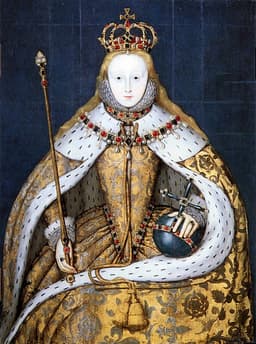
Francis I of France
Emperor · Medieval
63.0Total
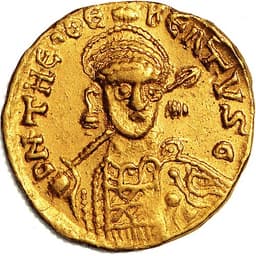
Theudebert I
Emperor · Medieval
53.1Total
Basic Information
Born
1494
500
Died
1547
548
Era
Medieval
Medieval
Nationality
France
Frankish Empire
Occupation
Emperor
Emperor
Civilization
Western
Western
Score Comparison
Military (10%)
52.5
30.0
Political (20%)
60.0
61.3
Influence (20%)
72.0
51.8
Legacy (20%)
58.0
43.3
Leadership (15%)
72.0
74.0
Strategy (15%)
55.0
60.0
TOTAL
63.0
53.1
Francis I of France — Complete Timeline
1515 AD
Battle of MarignanoWar◆ Major
Francis I led a French army to victory against the Swiss at Marignano, securing control of the Duchy of Milan. This battle established Francis I as a major military leader and marked the beginning of his Italian campaigns.
Italian WarsBattleCapetian
Impact: regional
1516 AD
Patronage of Leonardo da VinciCultural◆ Major
Francis I invited Leonardo da Vinci to France, providing him with the Ch
RenaissancePatronageCapetian
Impact: globalconstructive
Concordat of BolognaPolitical Action◆ Major
Francis I signed the Concordat of Bologna with Pope Leo X, which gave the French king the right to appoint bishops and abbots. This agreement strengthened royal control over the French Church and reduced papal influence in France.
Church-State RelationsTreatyCapetian
Impact: nationalconstructive
1525 AD
Capture at the Battle of PaviaWar
Francis I was defeated and captured by Imperial forces at the Battle of Pavia. He was imprisoned in Spain and forced to sign the Treaty of Madrid, renouncing French claims in Italy. This was a major setback for French ambitions.
Italian WarsDefeatCapetian
Impact: globaltragic
Theudebert I — Complete Timeline
534 AD
Minting of Gold Coins in His Own NamePolitical Action◆ Major
Theudebert I issued gold solidi bearing his own name and image, a direct challenge to Byzantine imperial authority. This act asserted Frankish sovereignty and independence from the Eastern Roman Empire, marking a shift in Merovingian coinage.
MerovingianCoinageByzantine
Impact: regionalconstructive
536 AD
Expansion into Raetia and NoricumWar
Theudebert I extended Frankish control into the Roman provinces of Raetia and Noricum (modern Switzerland and Austria). This expansion brought the Franks into direct contact with the Lombards and Bavarians, increasing Theudebert's influence in Central Europe.
MerovingianExpansionAlps
Impact: regional
539 AD
Campaign in ItalyWar◆ Major
Theudebert I led a Frankish army into Italy during the Gothic War, plundering Liguria and the Po Valley. His forces defeated both Byzantine and Ostrogothic armies, but a plague among his troops forced him to withdraw. The campaign demonstrated Frankish military power.
MerovingianItalyGothic War
Impact: regionaldestructive
540 AD
Letter to Emperor JustinianPolitical Action
Theudebert I wrote a letter to Byzantine Emperor Justinian I, boasting of his conquests and claiming dominion over many peoples. The letter, preserved in historical records, reveals Theudebert's ambition to be seen as an equal to the Roman emperor.
MerovingianDiplomacyByzantine
Impact: regional
Expert Analysis
Origins
Francis I was born in 1494 at Cognac, France, to Charles, Count of Angoulême, and Louise of Savoy. His father died when he was two, and his mother oversaw his education, which emphasized chivalry and humanist learning. He became heir to the throne in 1498 after his cousin Louis XII had no surviving sons. Theudebert I, born around 500, was the son of King Theuderic I of the Franks and a concubine. His grandfather was Clovis I, the founder of the Merovingian dynasty. Raised in a court where Frankish traditions mixed with Roman influences, Theudebert learned warfare and governance from an early age.
Rise to Power
Francis ascended the French throne in 1515 at age 20, immediately leading an army across the Alps to claim the Duchy of Milan. On September 13-14, 1515, he won the Battle of Marignano against the Swiss, a victory that established his reputation and secured Milan for France. This triumph earned him the title "Father of Letters" from humanists. Theudebert I became king of the eastern Frankish kingdom of Austrasia upon his father's death in 533. He quickly asserted independence from his uncles, the other Merovingian kings, and began expanding his realm. His major turning point came during the Gothic War (535-554) in Italy, when he intervened against both Byzantines and Ostrogoths.
Leadership & Governance
Francis I centralized royal power in France. He signed the Concordat of Bologna in 1516 with Pope Leo X, granting the king the right to appoint bishops and abbots, effectively controlling the French Church. This gave him a political score of 60.0. He also built the Château de Chambord and moved the royal court to the Loire Valley, fostering Renaissance culture. However, his military strategy was often flawed, leading to a strategy score of 55.0. Theudebert I, with a leadership score of 74.0, governed through traditional Frankish assemblies but also adopted Roman administrative practices. He minted gold solidi bearing his own image, a bold assertion of sovereignty against Byzantine claims. His military score of 30.0 reflects his limited direct combat successes, but his political score of 61.3 shows effective expansion through diplomacy and marriage.
Triumph & Tragedy
Francis's greatest triumph was the Battle of Marignano (1515), which secured his reign and Milan. His patronage of Leonardo da Vinci brought the Mona Lisa and other masterpieces to France. His tragedy came in 1525 at the Battle of Pavia, where he was captured by Imperial forces and imprisoned in Spain. He was forced to sign the Treaty of Madrid, renouncing claims in Italy. Theudebert's triumph was his Italian campaign (539-540), where his forces plundered Liguria and the Po Valley, defeating both Byzantine and Ostrogothic armies. His minting of gold coins with his own name was a major assertion of independence. His tragedy was his premature death in 548, possibly from illness, which prevented him from consolidating his gains. His young son Theudebald succeeded him but died childless, leading to the division of his kingdom.
Character & Destiny
Francis was ambitious and cultured, with a love for art and warfare. His impulsiveness led to the disaster at Pavia, where he disregarded advice and attacked a fortified position. He spent his later years fighting the Habsburgs without major success. Theudebert I was pragmatic and expansionist. His letter to Emperor Justinian boasted of his conquests, showing a desire for recognition. He died at the height of his power, leaving a legacy of Frankish independence. Historians note that Francis's cultural impact was greater, while Theudebert's political maneuvering was ahead of his time.
Legacy
Francis I is remembered as the "Father of Letters" for his patronage of the Renaissance. He introduced Italian art to France and built the Louvre as a royal palace. His concordat shaped French church-state relations until the Revolution. Theudebert I is less known but significant for his coinage, which influenced later medieval monarchs. His expansion into Raetia and Noricum brought areas under Frankish control that remained part of the empire. Francis scores 72.0 in influence and 58.0 in legacy, while Theudebert scores 51.8 and 43.3 respectively.
Conclusion
Francis I had greater overall impact due to his cultural patronage and centralization of power. His total score of 63.0 exceeds Theudebert's 53.1 by 9.9 points. While Theudebert showed bold political independence, his achievements were less enduring. Francis's legacy in art and governance shaped France for centuries, whereas Theudebert's kingdom fragmented soon after his death. Thus, Francis I emerges as the more significant historical figure.
Rankings
🥇
Francis I of FranceLeader
Mil: 52.5Pol: 60.0Inf: 72.0
63.0
🥈
Theudebert I
Mil: 30.0Pol: 61.3Inf: 51.8
53.1
+9.9 behind
How This Comparison Works
Algorithm
Each figure is scored on 6 dimensions (0—100 scale) based on structured historical data: Military (10%), Political (20%), Influence (20%), Legacy (20%), Leadership (15%), Strategy (15%). The weighted total produces the final ranking.
Data Sources
Scores are computed from structured sub-indicators in the database. Scale factors adjust for era (Ancient ×0.85, Modern ×1.0) and civilization size (Eastern ×1.05, Other ×0.80) to account for differences in population and military scale.
Maximum 3 Figures
Comparisons are limited to 2—3 figures to ensure readability and statistical meaningfulness.
Error Margins
±5 points per dimension — Sub-scores are derived from historical records with inherent uncertainty. Two figures within 5 points on a dimension should be considered roughly equivalent in that area.
Total Score Accuracy
±3 points overall — The weighted combination of 6 dimensions produces a total score with approximately ±3 points of uncertainty. Differences of less than 3 points are not statistically significant— the figures are effectively tied.
Known Limitations
- Historical records are incomplete and uneven across civilizations
- Figures from oral-tradition societies may be underrepresented
- Occupation labels can misclassify multi-role figures
- Scores measure capability and impact, not moral character
- Quantitative scoring is a comparison tool, not absolute truth
Capability Radar
Military (10%) — Battles & Warfare
Battles
65
35
Win Rate
45
40
Expansion
55
55
Political (20%) — Governance & Reform
Reform
65
40
Diplomacy
60
55
Economy
55
50
Influence (20%) — Cultural & Global Reach
Cultural
75
30
Global
60
20
Legacy (20%) — Historical Impact
Historical
70
35
Longevity
65
25
Leadership (15%) — Power & Stability
Tenure
70
60
Stability
40
45
Strategy (15%) — Tactics & Innovation
Strategy
55
50
Tactics
60
45
Reform
50
30
Similar Comparisons
Comments & Discussion
No comments yet. Be the first to share your thoughts!